
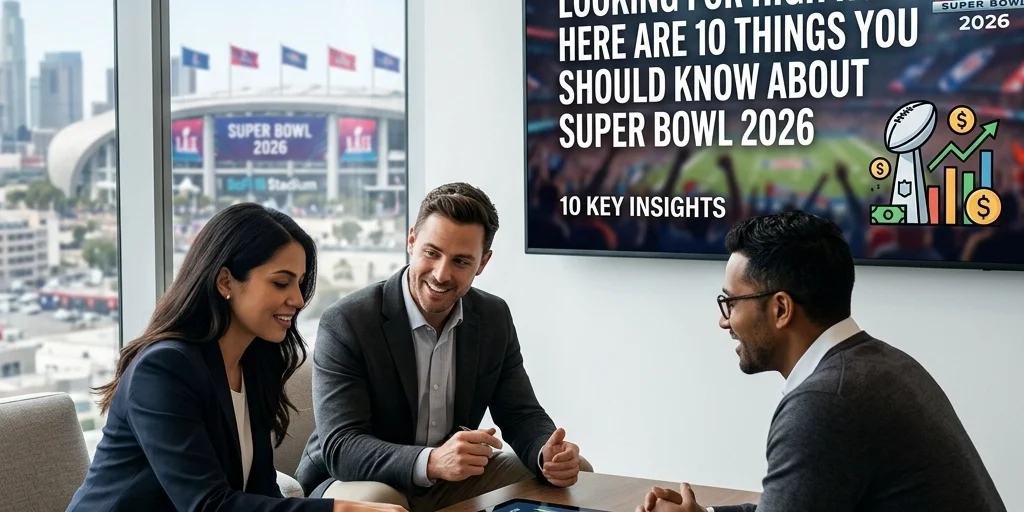
As we navigate the business landscape of mid-2026, the dust has settled on one of the most significant marketing milestones of the decade: Super Bowl LX. For companies looking to scale, the Big Game has always been the "North Star" of advertising, but 2026 proved to be a transformative year for Return on Investment (ROI).
At USA Entertainment Ventures LLC, led by our CEO Dan Kost, we have spent decades analyzing the intersection of media, entertainment, and business growth. When we talk about high-stakes events, we aren't just talking about viewership; we are talking about the precision required to turn a 30-second window into a long-term revenue engine.
As Dan often says, "In this business, you don't just buy a slot; you buy a legacy." This year, the focus shifted from mere brand awareness to veteran-level precision. To truly understand why 2026 was a benchmark year for ROI, we need to look at the data, the strategy, and the 40-year legacy that makes these results possible.
Dominating the Arena: A 40-Year Legacy
Success at the Super Bowl level doesn't happen by accident. Our partners at Sports Media have demonstrated this through their 40-year legacy at the event. This level of experience is what differentiates a "lucky" campaign from a calculated financial victory. When you are dealing with budgets in the millions, veteran precision isn't just a luxury: it’s a requirement.
In a recent press release, the focus was clear: dominating the arena requires more than just a creative ad. It requires an understanding of the infrastructure, the media buying landscape, and the psychological state of the consumer.
https://www.youtube.com/watch?v=l6J-0zileKE
As the video above illustrates, the scale of Super Bowl 2026 was unprecedented. But for the savvy investor or CMO, the real story lies in the ten key factors that defined high ROI this year.
1. Record-Breaking Peak Reach
Super Bowl LX didn't just meet expectations; it shattered them. The game reached a peak of 137.8 million viewers, the highest in U.S. television history. While the average hovered around 124.9 million, the peak moments provided a 25X audience advantage over typical high-performing television programs. For brands, this meant that the cost-per-impression (CPM) remained competitive despite the rising price of entry.
2. The Stability of Ad Costs
Interestingly, the average price for a 30-second spot held steady at approximately $8 million. This was the first time in several years that we did not see a massive year-over-year price hike. This price stability allowed mid-market brands to enter the fray more confidently, knowing their budget wouldn't be cannibalized by sudden inflation in media rates. However, premium slots (kickoff and halftime) still commanded upwards of $10 million, proving that "location" within the broadcast remains a high-value commodity.

3. ROI Has Nearly Doubled
According to recent industry data, the average ROI for Super Bowl advertising improved to $5.20 per dollar invested. This is a significant jump from the $2.70 ROI measured in 2020. This efficiency is driven by the fact that Super Bowl ads are now approximately 20 times more effective than regular television advertising. The concentrated attention of 130 million people creates a cultural "echo chamber" that regular ads simply cannot replicate.
4. Veteran Precision vs. Amateur Enthusiasm
One of the biggest takeaways from 2026 was the failure of "flash-in-the-pan" digital brands that lacked a traditional media backbone. Brands that worked with consultants like USA Entertainment Ventures LLC benefited from "veteran precision." This means knowing when to release teasers, how to leverage the 40-year legacy of sports media, and how to ensure the supply chain is ready for the post-game surge.

5. The "All-In" Budget Reality
To achieve high ROI, you must look beyond the $8 million media buy. Data shows that the most successful brands allocated an additional $2-5 million for production and another $5-10 million for amplification. If you aren't spending on the "surround sound" of the ad, the ad itself won't reach its full potential. The ROI is found in the ecosystem, not just the 30-second clip.
6. The Social Media Multiplier Effect
In 2026, the Super Bowl generated over $550 million in earned media value (EMV) on social platforms. This "free" exposure is where the ROI truly spikes. Brands that created "meme-able" or highly shareable content saw their initial investment pay off three or four times over through organic shares and discussions. Social media is no longer a "side dish" to the Super Bowl; it is the primary engine of the campaign's longevity.
7. Multi-Platform Amplification
The modern Super Bowl campaign doesn't start on Sunday; it starts in early January. By utilizing media consulting strategies, brands are now extending their ROI by leaking "behind-the-scenes" footage and celebrity partnerships weeks in advance. This multi-platform approach ensures that by the time the ad airs, the audience is already invested in the story.

8. Enhanced Analytics and Attribution
We can now track the consumer journey from a TV ad to a website purchase with more accuracy than ever before. In 2026, brands used advanced AI-driven attribution models to see exactly how many people visited their site or downloaded their app during the broadcast. This data allows for real-time adjustments in follow-up marketing campaigns, ensuring no lead is left behind.
9. High Purchase Intent
It’s not just about "brand awareness." 43% of Super Bowl viewers reported that the ads they saw directly increased their interest in purchasing or visiting the brand's website. This is a massive conversion metric. When nearly half of your 130-million-person audience is ready to move down the sales funnel, the ROI potential is astronomical.
10. Long-Term Strategy and Stock Performance
While the immediate ROI is impressive, brands must also consider the long game. Historically, companies that advertise during the Super Bowl can see a short-term boost, but some research suggests a potential lag in stock performance against the S&P 500 in the six months following the game if the campaign isn't sustained. This is why business consulting is vital. You need a strategy that carries the momentum through the rest of the fiscal year.

Moving Toward the Future
The lessons of Super Bowl 2026 are clear: the arena is larger, the stakes are higher, but the tools for measuring and achieving ROI are more sophisticated than ever. For businesses looking to make a mark, the key is to blend the new-age digital metrics with the "veteran precision" of those who have been in the trenches for decades.
At USA Entertainment Ventures LLC, we believe in the power of these massive cultural moments to transform businesses. Whether you are looking at technology or events, the principles of ROI remain the same: preparation, precision, and a willingness to dominate the arena.
As we look toward the 2027 season, now is the time to evaluate your media strategy. Are you playing for the moment, or are you building a legacy?

For more insights into how to navigate the complex world of high-level business consulting and media, visit our business category page. Let’s make sure your next big investment is backed by the precision it deserves.





