
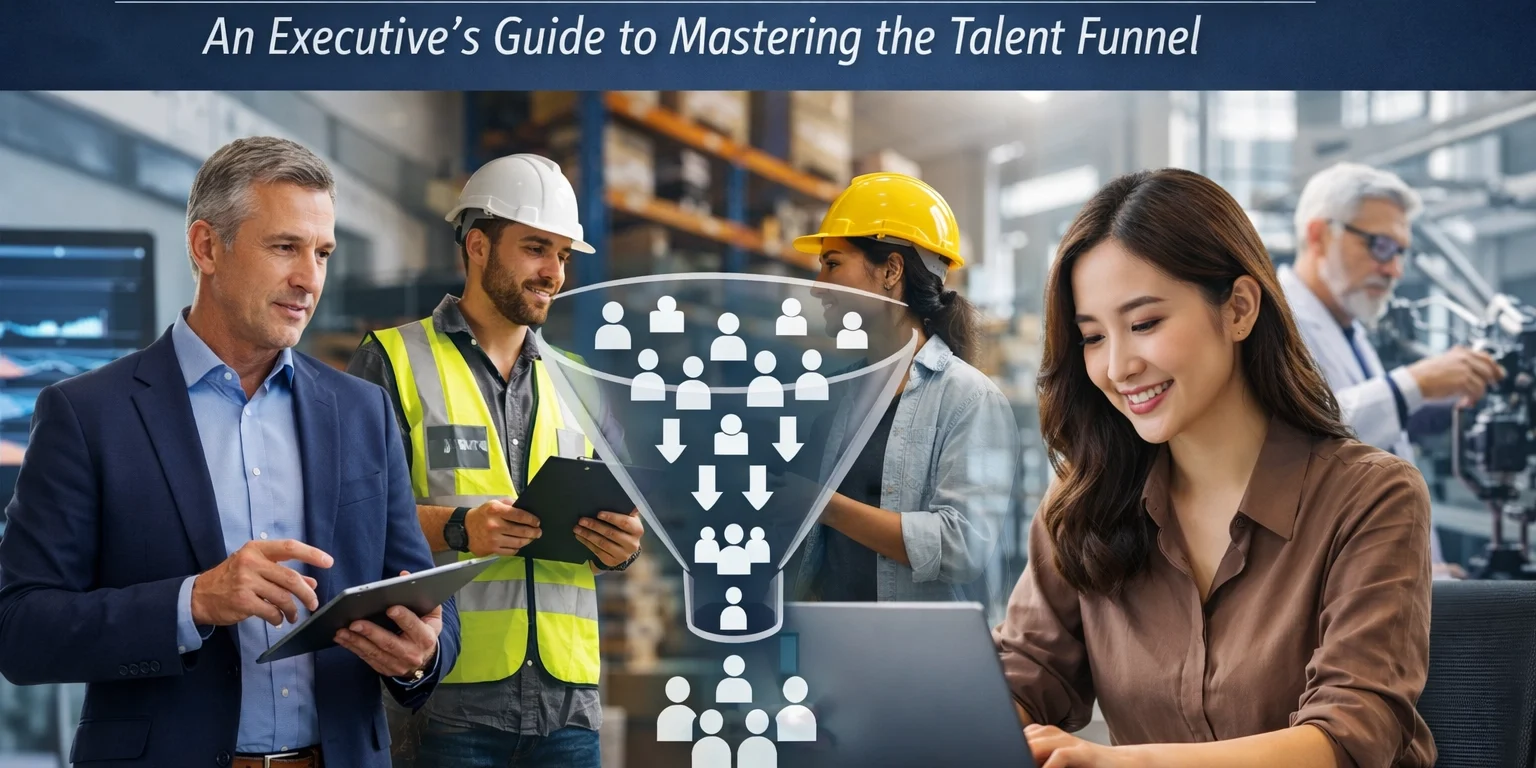
As we navigate the first quarter of 2026, the American economic landscape is undergoing a transformation not seen since the industrial revolution. The convergence of massive federal investment, the rapid evolution of artificial intelligence, and a fundamental shift in logistics has created a unique "talent funnel" crisis. For Fortune 100 executives, the challenge is no longer just finding employees; it is the strategic oversight of the national workforce infrastructure required to sustain growth.
The scale of this shift is staggering. Current data suggests that national infrastructure investments are on track to create more than 11 million direct and indirect jobs. However, nearly half of these roles require education and training beyond the traditional high school diploma, yet outside the scope of a four-year degree. This "middle-skill" gap represents the single greatest risk to corporate scaling in the next decade.
To master this funnel, leadership must move beyond reactive hiring and embrace a proactive, infrastructure-based approach to talent development.
The New Mandate: Career-Ready Infrastructure
In previous decades, "workforce development" was often relegated to human resources departments as a secondary function of recruitment. In 2026, it has become a core operational pillar. The rollout of career-ready infrastructure involves creating a physical and digital network that prepares individuals for the workforce long before they submit an application.
This infrastructure is built on three specific tiers:
- Strategic Sector Partnerships: Collaborations between industry leaders, community colleges, and government boards.
- Technological Literacy On-Ramps: Utilizing existing consumer behaviors to teach high-level technical skills.
- Physical Distribution Systems: Leveraging logistics hubs as localized training centers.
By treating the workforce as a component of national infrastructure: much like power grids or fiber-optic networks: executives can ensure a steady flow of "career-ready" talent.

The 'Trojan Horse' of Esports: Scaling Cloud and AI Literacy
One of the most innovative developments in the 2026 talent funnel is the use of esports and competitive gaming as a "Trojan Horse" for high-level technical literacy. For years, gaming was viewed strictly as entertainment. Today, savvy organizations recognize it as a sophisticated training ground for the digital economy.
The technical requirements of modern esports: low-latency networking, server management, edge computing, and real-time data analysis: parallel the skills required to manage enterprise-level cloud and AI environments. When a young adult learns to optimize a gaming rig or manage a decentralized tournament platform, they are inadvertently mastering the fundamentals of digital infrastructure.
Executives are now leveraging esports platforms to identify "latent talent." By supporting localized esports hubs, corporations can foster a pipeline of individuals who possess high AI literacy and troubleshooting capabilities. These programs act as a bridge, moving participants from high-interest gaming into high-value careers in cybersecurity, data science, and AI operations without the friction of traditional academic barriers.
Physical Distribution: The New Classroom for Workforce Development
As the demand for rapid delivery and localized manufacturing continues to rise, the physical distribution system has become the backbone of American commerce. However, the most forward-thinking firms are now viewing their distribution networks as more than just logistics chains; they are viewing them as the physical classrooms for workforce development.
The "middle-mile" of the supply chain: the warehouses, sorting centers, and trucking hubs: is perfectly positioned to serve as regional training centers. This model provides several advantages:
- Proximity: Training occurs where the jobs are located, reducing the barrier of transportation for the workforce.
- Applied Learning: Workers engage in on-the-job training with the exact technologies and hardware they will use in their permanent roles.
- Scalability: Existing logistics footprints can be retrofitted with training modules, allowing for a rapid national rollout of "career-ready" sites.
This physical distribution of knowledge ensures that rural and underserved urban areas are not left behind as the economy shifts toward automation and advanced manufacturing.

The Executive Framework: Integrating Federal Support and Sector Partnerships
Navigating the national workforce infrastructure requires a sophisticated understanding of the available resources. The Department of Labor and various federal initiatives have allocated billions specifically for expanding workforce training to meet sector demands. For a Fortune 100 executive, the task is to align corporate strategy with these funding streams.
1. Leverage the Infrastructure Investment and Jobs Act (IIJA)
With $1 billion dedicated specifically to workforce training, organizations should be active participants in defining the standards for these programs. By engaging in business consulting that focuses on government relations, companies can help shape the curriculum to ensure it produces candidates with the exact skill sets required by the private sector.
2. Implement Sector Partnerships
Sector partnerships are no longer optional. These collaborations connect employers within a specific industry to training providers and workforce boards. This collective approach allows for the identification of common skill standards and the creation of industry-recognized credentials that carry weight across the entire talent funnel.
3. Focus on Human Capital Management (HCM)
Mastering the talent funnel requires a shift in human resources philosophy. Strategic workforce planning should involve a thorough assessment of available talent sources beyond traditional pipelines. This includes engaging with part-time workers seeking full-time positions and individuals from underrepresented communities who may require wraparound services, such as childcare or transportation assistance, to complete their training.

Actionable Takeaways for the C-Suite
To secure a competitive advantage in 2026, executives should consider the following immediate actions:
- Audit Your Technological Entry Points: Evaluate how your organization can use gamification or esports-style engagement to attract younger demographics into technical training paths.
- Repurpose Physical Assets: Assess your current logistics and distribution footprint. Can a portion of these facilities be used for regional training "labs" in partnership with local community colleges?
- Diversify Talent Sourcing: Move beyond the "degree-required" mindset. Focus on "skill-certified" candidates who have come through pre-apprenticeship and work-based learning programs.
- Engage in Government Advocacy: Ensure your leadership team is involved in research and policy discussions regarding national workforce standards to ensure federal training dollars are being spent effectively.
Conclusion: Building a Resilient Legacy
The development of a national workforce infrastructure is not merely a social good; it is a business imperative. By viewing the talent funnel through the lens of infrastructure: complete with physical hubs, digital on-ramps, and strategic partnerships: Fortune 100 leaders can insulate their organizations against the volatility of the labor market.
As we look toward the remainder of 2026 and into 2027, the companies that thrive will be those that stopped "searching" for talent and started "building" the systems that produce it. USA Entertainment Ventures LLC remains committed to helping organizations navigate these complex transitions, ensuring that the intersection of entertainment, technology, and industry remains a fertile ground for the next generation of the American workforce.

The future of the American economy depends on our ability to turn latent potential into career-ready reality. The infrastructure is being built today. The only question is whether your organization is a passive observer or a primary architect of this new talent funnel.





