
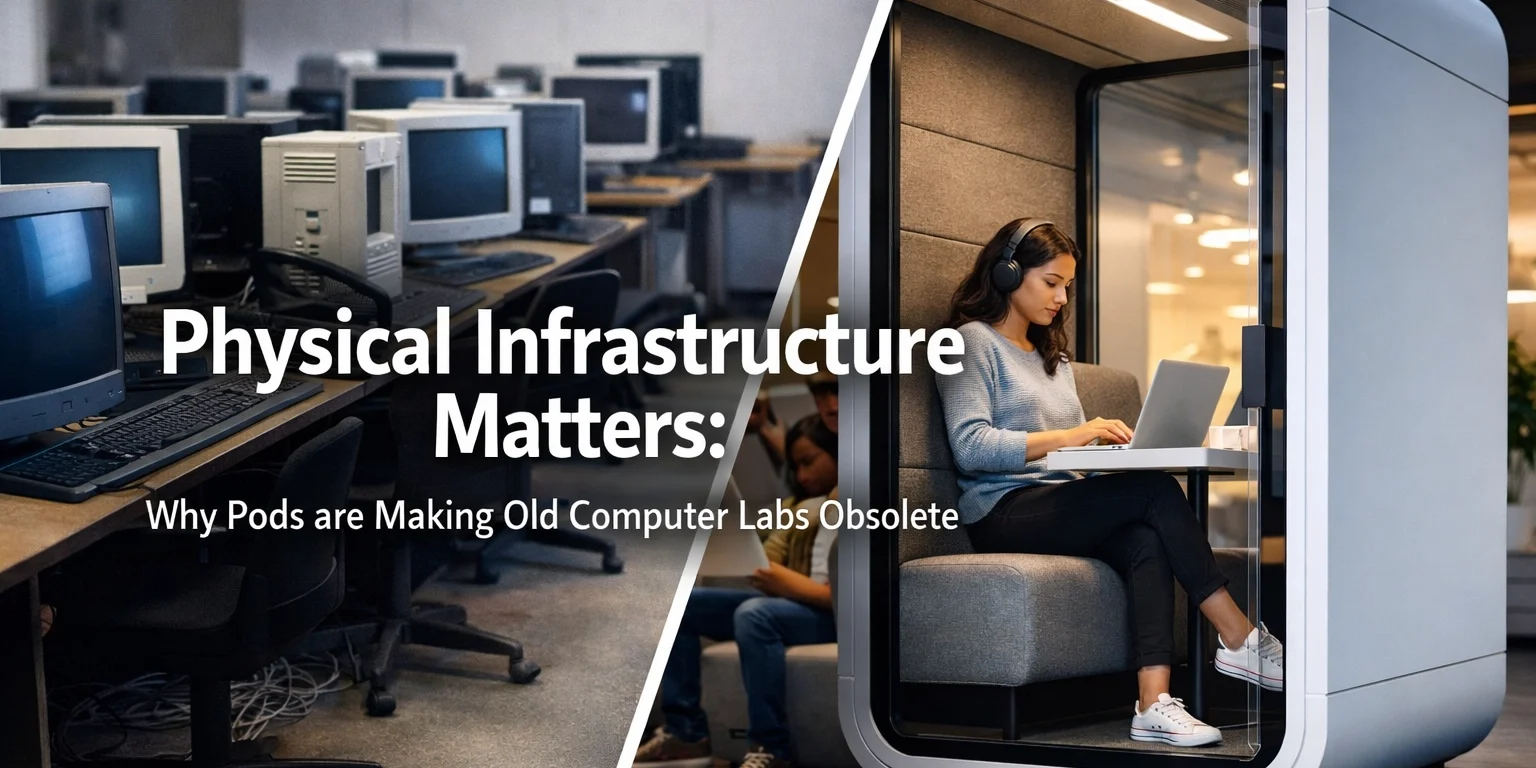
Remember the traditional computer lab? The faint hum of thirty beige towers, the unmistakable scent of ozone and dust, and the flickering fluorescent lights that felt like a low-budget horror movie set. For decades, this was the "temple of tech" in schools and office buildings. But walk into a modern innovation hub today, and you’re more likely to see sleek, modular units: Pods: rather than rows of static desks.
At USA Entertainment Ventures LLC, we spend a lot of time thinking about how physical space dictates professional success. The shift from the sprawling, rigid computer lab to the agile, self-contained Pod isn't just a trend in interior design; it is a fundamental shift in how we approach work, education, and physical infrastructure.
The reality is that static infrastructure is becoming a liability. In an era where technology evolves faster than a software update notification, the way we house that technology has to keep up. Here is why Pods are effectively making the old-school computer lab a relic of the past.
The Flexibility Frontier: Moving Beyond Bricks and Mortar
Traditional computer labs are, by definition, stuck. If you want to reconfigure a lab for a new purpose: say, moving from a coding bootcamp to a high-end video editing suite: you’re looking at a logistical nightmare. You need contractors, new HVAC considerations, lighting overhauls, and months of downtime.
Pods change the game through operational flexibility. According to industry research, traditional labs require months of construction for even minor permanent modifications. In contrast, Pods can be deployed in hours. They are self-contained ecosystems. If your curriculum changes or your business pivots, you simply swap the internal hardware or move the Pod to a different floor.
Think of it like this: a computer lab is a landline, and a Pod is a smartphone. One is tethered to the wall and expensive to move; the other goes where the action is. This adaptability addresses the core problem of "infrastructure obsolescence." When you invest in a permanent lab, you are betting that your needs won't change for ten years. In today's business climate, that is a very risky bet.

The Economics of the Pod: From Sunk Costs to Mobile Assets
Let's talk money, because at the end of the day, the CEO's office cares about the bottom line. Building a traditional lab involves massive capital expenditure (CapEx). You are paying for permanent fixtures that effectively become "sunk costs." If the building’s purpose changes or the company moves, those renovations stay behind. You can't take the HVAC ducts with you.
Pods, however, are mobile assets. They represent a longer-term investment because they are relocatable. If a rural training initiative finishes its three-month cycle in one town, the Pods can be loaded onto a truck and moved to the next city. This geographic distribution is a massive win for workforce development.
Furthermore, cloud-based pod systems eliminate the need for maintaining dozens of physical servers on-site. Software updates can be deployed simultaneously across a network of pods, rather than requiring an IT technician to walk from desk to desk in a 50-person lab. For any organization looking at business consulting advice on scaling, the modular route is almost always the more cost-effective path.
Career Pathways: How Pods Fuel the New Economy
The shift to Pod-based infrastructure isn't just about the "box": it’s about what happens inside it. The modular nature of Pods creates specialized environments that prepare people for high-demand career pathways.
1. The Logistics Revolution
Behind every successful Pod rollout is a sophisticated logistics network. We aren't just talking about moving boxes; we’re talking about the lifecycle management of advanced technology. Careers in logistics now require an understanding of modular deployments, remote monitoring, and rapid-response maintenance. As companies shift to decentralized "micro-offices" or mobile training units, the demand for logistics experts who can manage these assets is skyrocketing.
2. Cybersecurity: The Air-Gapped Advantage
Cybersecurity training in a traditional, open lab is often a headache for IT departments. You don't exactly want students practicing "vulnerability exercises" on the same network that handles the school’s payroll.
Pods provide a naturally isolated environment. They are perfect for "air-gapped" network testing. Because each Pod can be its own self-contained network, students can conduct high-stakes security simulations without any risk of disrupting the broader institutional infrastructure. It’s a safe sandbox for the next generation of digital defenders.
3. Content Creation and the "Studio" Vibe
The creator economy demands specific physical conditions: acoustic isolation, controlled lighting, and high-performance rendering power. A traditional computer lab is too loud and too bright for professional-grade studio work.
Pods are being designed as mini-studios. Whether it's a podcasting booth or a 4K video editing suite, the physical infrastructure of a Pod allows for the specialized environments that "old school" labs simply can't provide without a massive renovation budget.
Scalability and the End of Geographic Barriers
One of the most significant advantages of Pod infrastructure is its ability to bridge the rural-urban divide. In the past, if you lived in a remote area, your access to high-end tech training was limited by whether or not a local college could afford to build a million-dollar lab.
With Pods, we can bring the lab to the student. These systems support asynchronous learning, allowing participants to complete modules on their own schedules. This is a game-changer for workers who are balancing a 9-to-5 job with the need to upskill for a new career. You no longer have to wait for "lab hours" when the Pod is available 24/7 and can be located in a community center or even a parking lot.
A Data-Driven Shift
The move toward modular systems is backed by a clear trend: the move from permanence to performance. As noted in recent infrastructure studies, Pods deliberately sacrifice some "density" (you might fit fewer people in the same square footage compared to cramming them into rows) to create collaborative areas that mirror actual modern workplace dynamics.
In a traditional lab, everyone stares at a wall. In a Pod setup, the environment is designed for interaction, mirroring the collaborative nature of modern software development and creative industries.
Final Thoughts: The Future is Modular
At USA Entertainment Ventures LLC, we see the writing on the wall (and it’s not written in the dust of an old computer lab). The future of physical infrastructure is modular, adaptable, and focused on the user experience.
Whether you are a business looking to upgrade your training facilities or an educator looking to provide your students with the best possible tools, it is time to look beyond the four walls of a traditional room. The Pod isn't just a place to put a computer; it's a mobile, scalable gateway to the careers of tomorrow.
The transition from static to modular isn't just about saving money on HVAC: it's about creating an environment that moves at the speed of innovation. If your infrastructure is still bolted to the floor, you might just find yourself left behind.

For more insights into the intersection of technology, business, and entertainment, check out our latest updates or browse our portfolio to see how we're shaping the future of the industry. The world is changing fast( make sure your infrastructure can keep up.)





