
Let’s take a quick trip down memory lane. Close your eyes and think back to your high school or college computer lab. What do you see? If you’re like most of us, you see a sea of beige towers, tangled nests of gray cables that looked like a plate of techno-spaghetti, and monitors so deep they required their own zip codes. The air was thick with the scent of ozone and disappointment, punctuated by the rhythmic whirring of cooling fans that sounded like a jet engine trying to take off but failing miserably.
Those labs were the "cutting edge" of 1998. But here’s the kicker: in many places, the "modern" version hasn't changed that much. Sure, the monitors are thinner and the towers are black instead of beige, but the philosophy is the same, a big, static room where you sit in a row and hope the Wi-Fi doesn't give up the ghost the moment you try to do something meaningful.
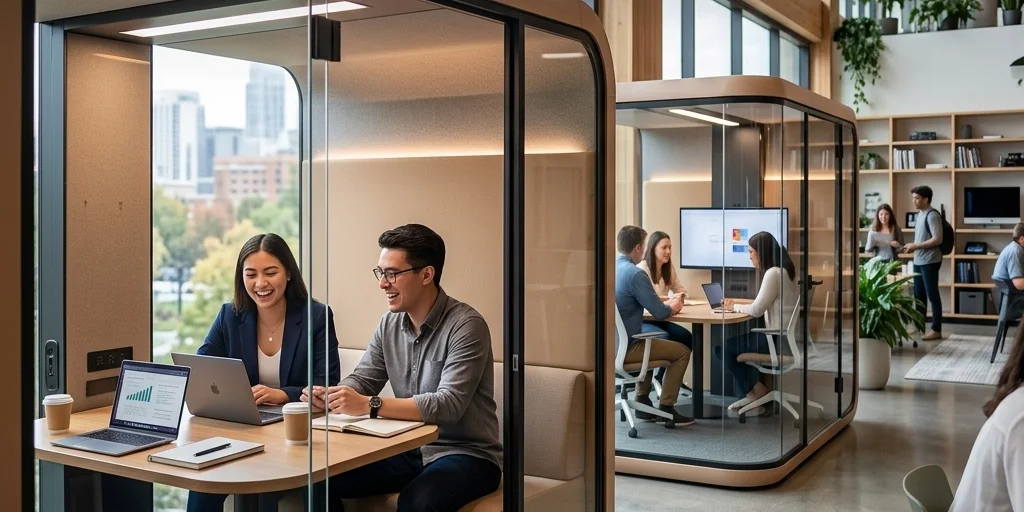
Enter the "Pod."
At USA Entertainment Ventures LLC, we spend a lot of time looking at how technology changes the way we work and learn. And let me tell you, the old-school lab is dead. It just doesn't know it yet. The future belongs to physical infrastructure that is modular, high-performance, and, dare I say, actually pleasant to be in.
We’re talking about Pods. And no, not the kind you put in your laundry or the ones that whales travel in. We’re talking about self-contained, hybrid-architecture learning and working environments that make your old computer lab look like a stone tablet and a chisel.
The Problem with "Just Going Cloud"
For the last decade, the industry told us that physical infrastructure didn't matter. "Put everything in the cloud!" they shouted. "Chromebooks for everyone!"
It sounded great on paper. Until it didn't.
If you’ve ever tried to edit 8K video, run a complex logistics simulation, or defend a network against a simulated cyber-attack using only the cloud and a spotty school Wi-Fi connection, you know the truth: latency is a soul-crusher. When the internet hiccups, a cloud-only lab becomes a very expensive room full of paperweights.
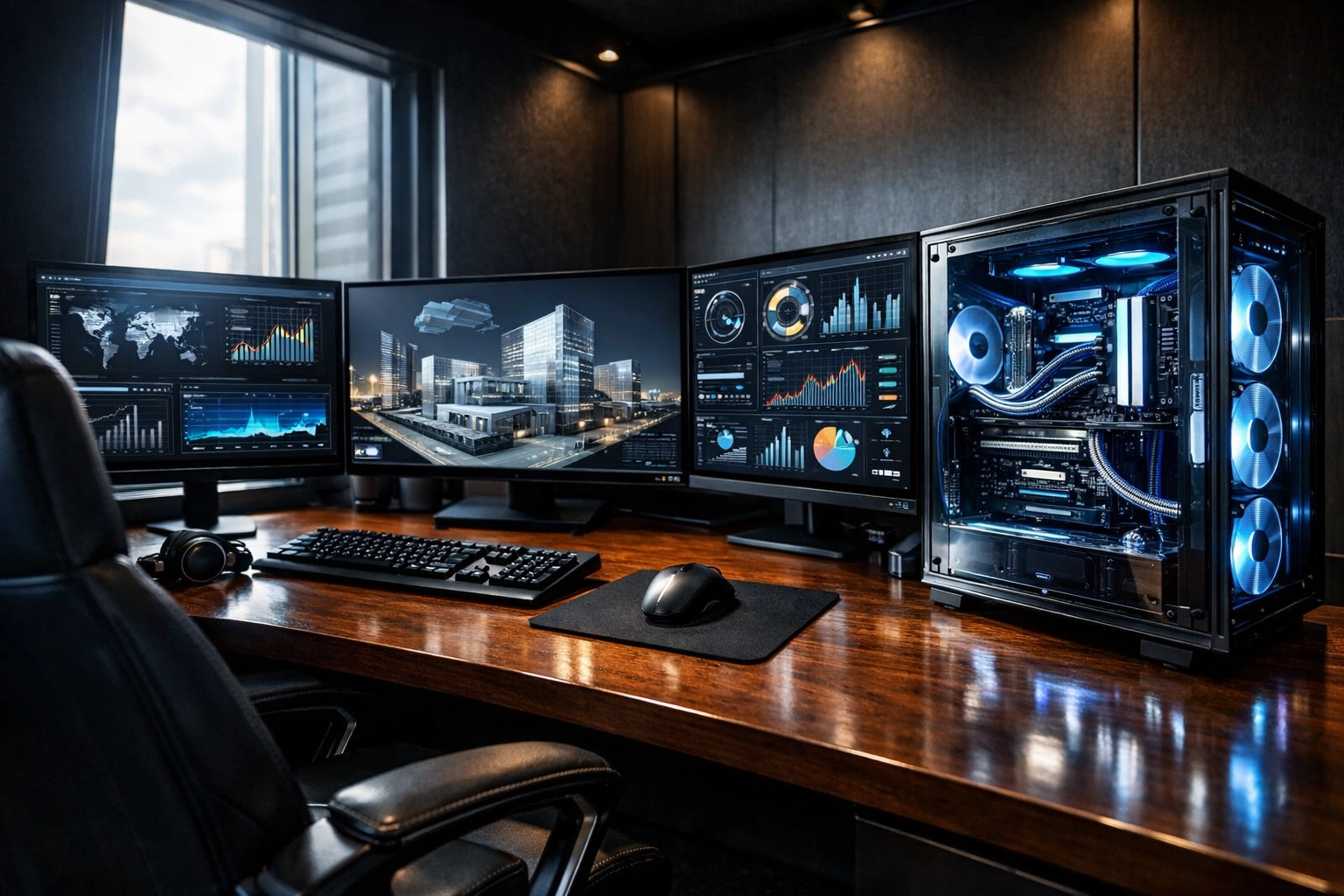
Pods solve this by using hybrid architecture. This is a fancy way of saying they combine the best of both worlds: local, high-performance hardware and cloud connectivity. By keeping the heavy lifting local, Pods eliminate the lag that kills productivity. It turns out that when you’re training for a high-stakes career, a two-second delay isn't just annoying: it’s a barrier to learning.
Career Pathway #1: The Logistics Revolution
When most people hear the word "logistics," they think of a guy driving a truck or someone moving boxes in a warehouse. That is the old way. Today, logistics is a high-tech game of chess played with real-time data, AI-driven supply chains, and "digital twin" simulations.
Modern logistics professionals need to be able to visualize global shipping routes, manage autonomous fleet data, and react to supply chain disruptions in milliseconds. You can't do that on a machine that struggles to open a PDF.
Pods provide the physical infrastructure needed to run high-intensity business simulations. Students and trainees can step into a Pod and use professional-grade software to manage a virtual port or a multi-national delivery network. Because the hardware is standardized across all Pods in a network, a student in rural Montana is getting the exact same high-fidelity experience as someone in downtown Manhattan.
Career Pathway #2: Cybersecurity (Where You Can’t Afford to Lag)
If there is one field where "good enough" infrastructure isn't good enough, it’s cybersecurity.
You cannot learn to defend a network against sophisticated threats on a locked-down, general-purpose computer lab machine. Cybersecurity requires "sandboxed" environments: isolated spaces where you can actually play with fire (code) without burning down the entire school’s network.
Pods offer a controlled, high-performance environment perfect for cyber-labs. Because they have local computing power, they can run multiple virtual machines simultaneously, allowing trainees to set up complex "attacker vs. defender" scenarios.
Standardization is key here too. In the old days, every computer in a lab had a slightly different set of updates or a different amount of RAM, leading to the "it works on my machine" excuse. In a Pod-based infrastructure, the environment is identical for every user. This ensures that when you’re measuring a student’s ability to stop a breach, you’re measuring their skill, not the quirks of a five-year-old motherboard.

Career Pathway #3: Content Creation and the Media Surge
We are living in the "Creator Economy," but the tools required to actually compete in that economy are getting more demanding by the day. We’ve moved past the era of grainy webcam footage. Today’s top media projects involve 8K video, real-time 3D rendering (think Unreal Engine), and complex spatial audio.
Try doing that in your old computer lab. Go ahead. I’ll wait while the computer fan melts through the desk.
Pods are designed for the high-throughput needs of modern content creation. They provide the GPU power necessary for real-time rendering, which is essential for careers in game design, film production, and digital marketing. By providing a physical space optimized for these tasks: complete with acoustic treatments and ergonomic setups: Pods move the needle from "I'm trying to learn" to "I'm actually producing."
The "Frictionless" Factor: Why Physical Matters
There’s a psychological component to this as well. There’s a specific kind of "friction" that comes with traditional computer labs. It’s the friction of things not working, of cables being unplugged, of the room being too hot, or the chairs being designed by someone who clearly hates spines.
Pods remove that friction. They are designed as cohesive units. When you walk into a Pod, you aren't just sitting at a desk; you’re entering an optimized workspace.
Research suggests that using professional-grade equipment from day one significantly increases student engagement. When a student uses the same gear they’ll see on their first day of work at a Fortune 100 company, it changes their perspective. It’s no longer "school work"; it’s professional development.
The Bottom Line for Businesses and Schools
If you’re a decision-maker looking at a budget, the word "infrastructure" usually sounds like "expensive." But here’s the plot twist: Pods are actually a massive cost-saver.
Traditional labs are expensive to maintain. You have to cool the whole room, wire the whole room, and constantly play Whac-A-Mole with hardware failures across 30 different machines. Recent data shows that institutions moving to pod-based infrastructure can see 50% to 75% cost savings compared to traditional labs.
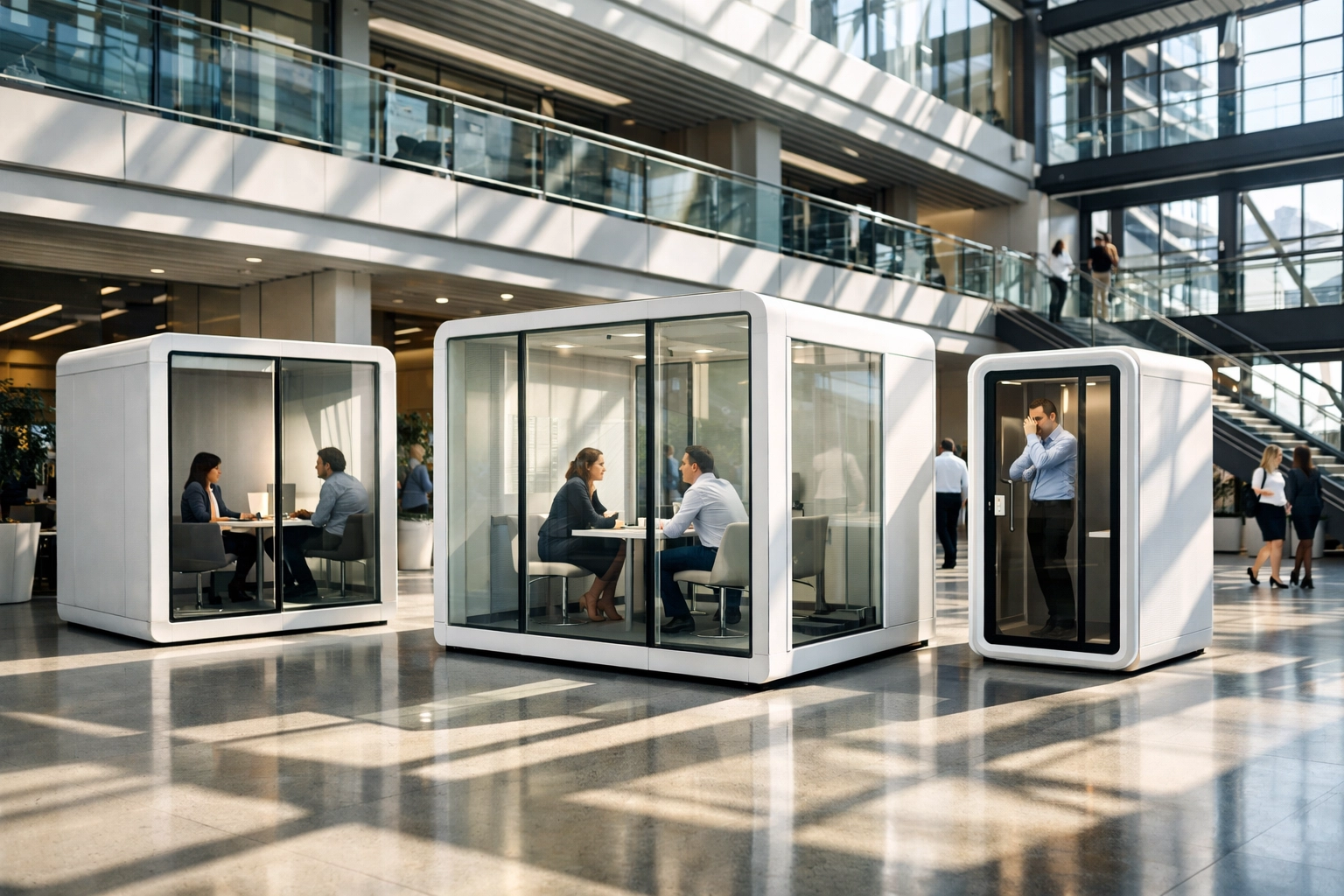
Why? Because you’re investing in a modular, standardized system. Updates are easier. Maintenance is predictable. And because they are self-contained, you don't need to renovate an entire wing of a building just to provide high-end computing power. You just drop in a Pod and get to work.
Reliability in an Unreliable World
We often take for granted that the internet will just "be there," like oxygen. But for many communities: especially those in underserved or rural areas: the "digital divide" is very real.
If your entire educational or workforce strategy depends 100% on a high-speed fiber connection that might go down the next time a backhoe hits a line three towns over, you’re in trouble. Pods provide a "fail-safe" for education. Because they have that local hardware we mentioned earlier, the learning doesn't stop when the Wi-Fi bar drops to one.
Students can continue their simulations, finish their edits, or keep practicing their code locally, and then sync to the cloud once the connection is restored. It’s about building resilience into our infrastructure.
Wrapping It Up (Without the Beige)
The era of the computer lab as a "room full of stuff" is over. We are entering the era of the Pod: a physical infrastructure that is as smart, modular, and high-performance as the software we run on it.
Whether you’re looking to launch a career in the complex world of logistics, defend the front lines of cybersecurity, or create the next viral media sensation, the environment you learn in matters. Physical infrastructure isn't just a background detail: it's the foundation of everything else.
At USA Entertainment Ventures LLC, we’re excited to see how these Pods are leveling the playing field, providing professional-grade opportunities to anyone, anywhere. So, let’s leave the beige towers and the ozone-scented rooms in the past where they belong. The future is modular, it’s high-speed, and it’s already here.
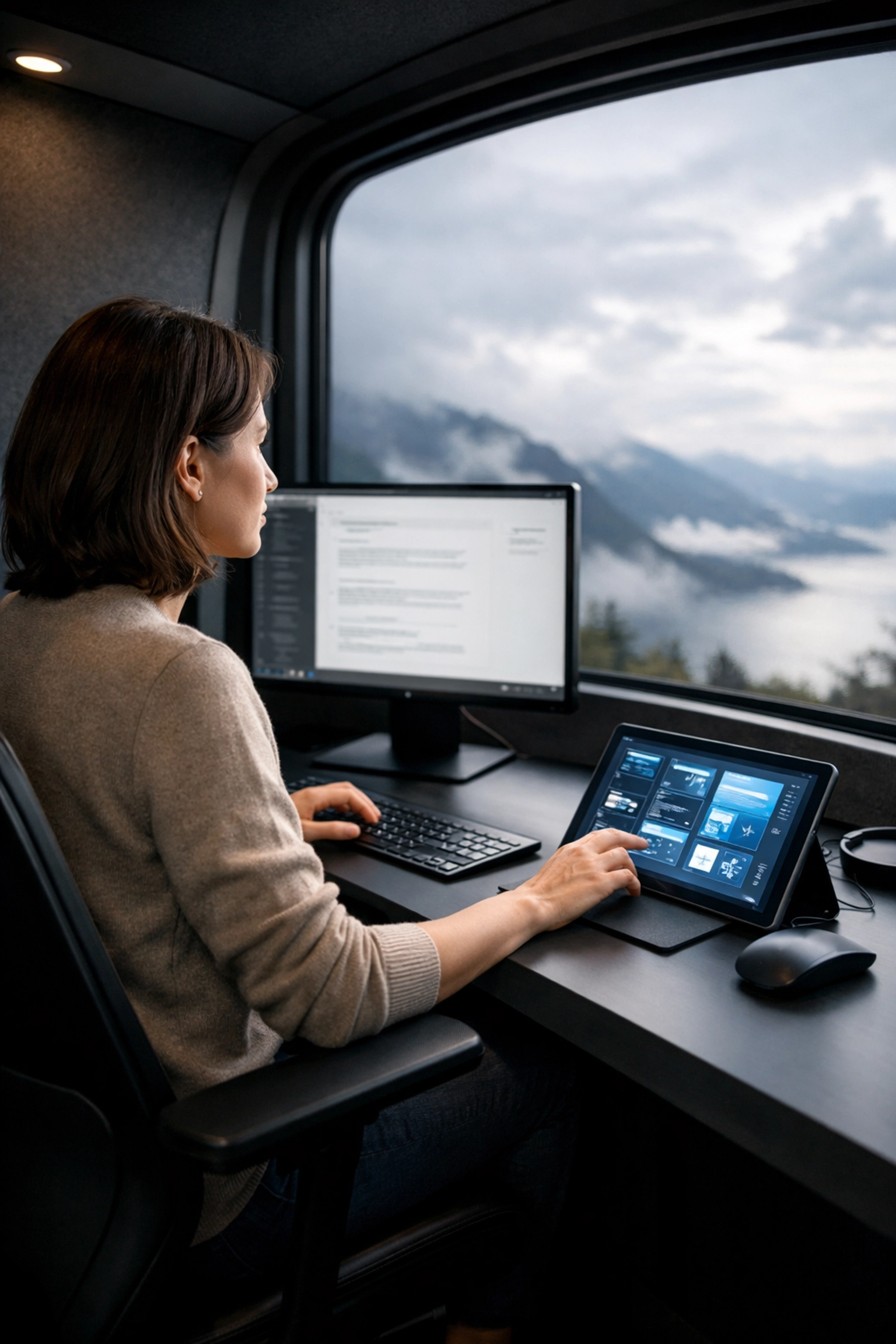
Looking for more insights into the intersection of business, tech, and the future of work? Check out our latest projects to see how we’re helping shape the next generation of industry leaders. In the meantime, if you see an old computer lab, give it a respectful nod for its service: and then go find yourself a Pod.





