The Super Bowl remains America's most-watched television event, drawing over 100 million viewers annually. Yet beneath the spectacle of celebrity commercials and halftime performances, a quiet revolution in advertising strategy has been unfolding. While brands pay record-breaking sums for fleeting seconds of airtime, a select group of marketers has discovered a more effective approach: one that traditional broadcast advertisers would prefer remained under wraps.
The shift involves out-of-home (OOH) digital networks, specifically those that allow brands to own the physical environment surrounding the game itself. This strategy represents a fundamental rethinking of Super Bowl advertising, moving beyond the limitations of a 30-second spot to create immersive brand experiences that last throughout the entire event.
The True Cost of Traditional Super Bowl Advertising
Super Bowl commercials for 2026 command between $8 million and $10 million for a single 30-second spot. This figure represents only the media placement cost. When accounting for production expenses, creative development, and celebrity talent fees, total campaign expenditures can easily double or triple. A brand investing in a standard Super Bowl commercial may spend $15 million to $20 million for half a minute of audience attention.
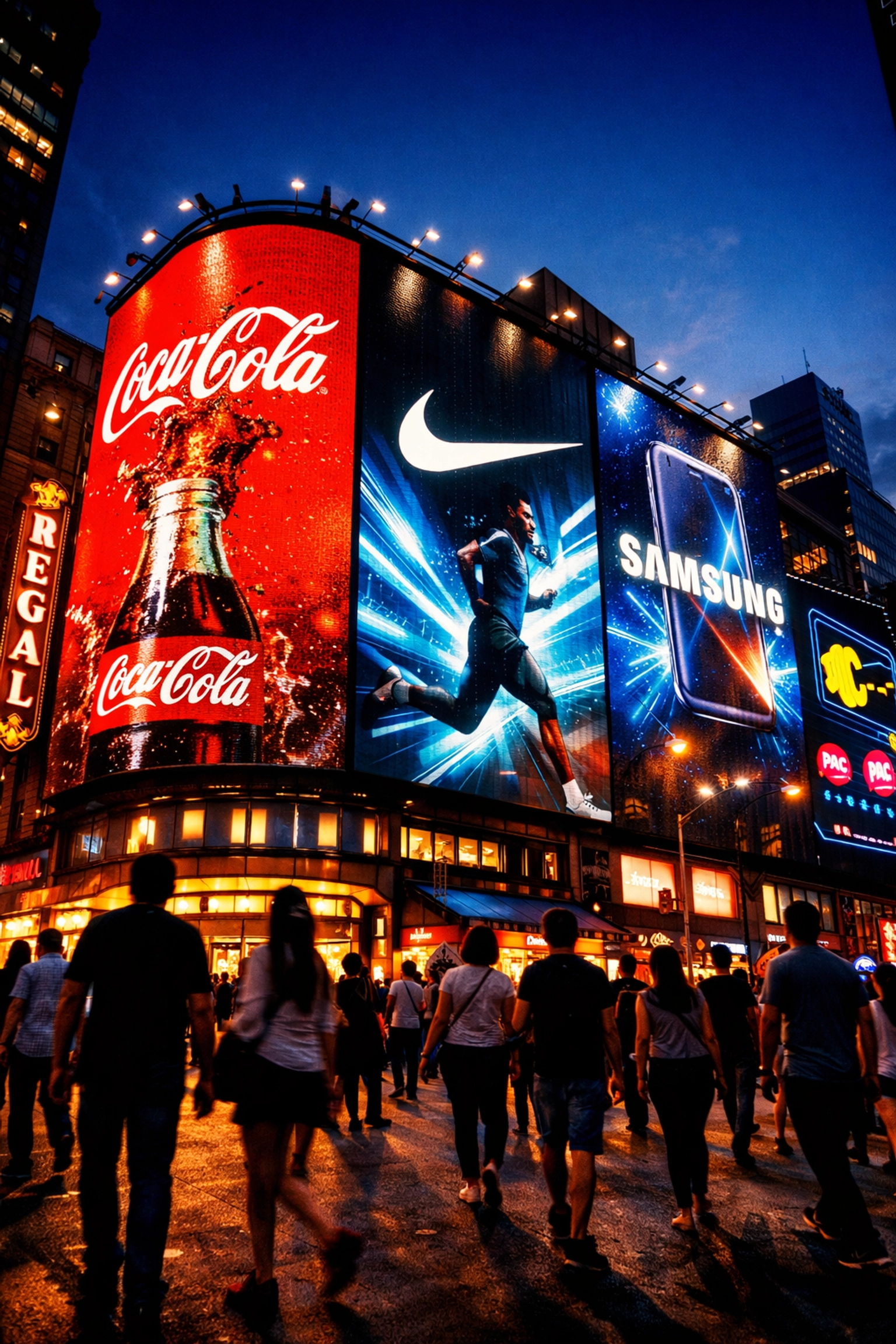
The economics become particularly striking when compared to alternative media investments. That same $8 million budget could purchase up to 267 million impressions on Google Search, 800 million to 1.6 billion TikTok impressions, or enough prime-time network television spots to run every night for four months. The disparity raises an essential question: Are brands paying for actual advertising effectiveness, or simply for the prestige of saying they advertised during the Super Bowl?
More importantly, traditional broadcast spots suffer from a fundamental limitation. Once the commercial airs, the moment passes. Viewers who leave for refreshments, engage in conversation, or simply look away miss the message entirely. The brand receives no second chance, no extended engagement, no opportunity to create a lasting impression beyond those fleeting 30 seconds.
Environmental Ownership Through Digital OOH Networks
Out-of-home digital networks operate on an entirely different principle. Rather than competing for attention during commercial breaks, these systems allow brands to dominate the physical spaces where audiences gather, travel, and celebrate. Digital billboards, stadium displays, venue screens, and transit networks create persistent brand presence that audiences encounter repeatedly throughout their Super Bowl experience.
The Sporttron Digital Network exemplifies this approach. By deploying high-impact digital displays in strategic locations surrounding major sporting events, brands can achieve what traditional commercials cannot: environmental ownership. Fans encounter the brand message while traveling to viewing parties, walking through entertainment districts, waiting in venue concourses, and celebrating after the game. Each exposure reinforces the previous one, building cumulative brand awareness that far exceeds what a single broadcast spot can accomplish.

The psychological impact of environmental advertising differs fundamentally from broadcast commercials. When audiences see a brand message integrated into their physical surroundings: particularly during a high-engagement event like the Super Bowl: they process it as part of the experience itself rather than as an interruption. This contextual integration creates stronger memory formation and more positive brand associations.
Consider the typical Super Bowl viewer journey. They begin planning days in advance, discussing where to watch and what to bring. They travel to viewing locations, whether bars, restaurants, or friends' homes. They engage in pre-game festivities, watch the broadcast, participate in post-game discussions, and travel home. At each stage, strategically placed digital OOH networks can deliver brand messages that feel native to the experience rather than intrusive.
The Sporttron Advantage: Case Study in Environmental Dominance
The video above demonstrates how Sporttron's digital network transforms standard OOH advertising into experiential brand dominance. Unlike static billboards or standard digital displays, these networks offer dynamic content that can shift messaging throughout the event cycle, respond to game developments in real-time, and integrate with broader marketing campaigns across multiple channels.
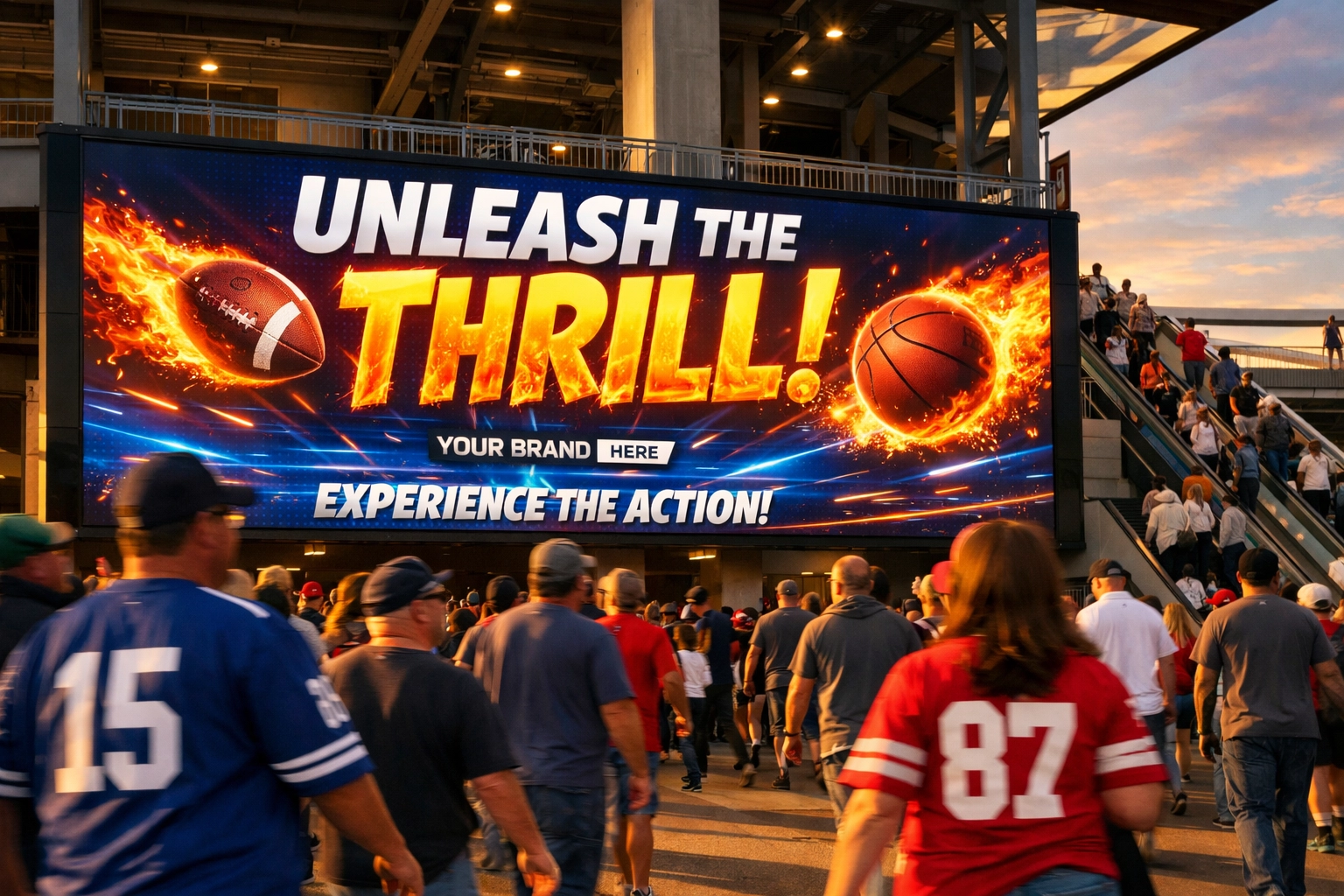
Sporttron's approach centers on three core principles: strategic placement, technical excellence, and integrated campaign architecture. Displays are positioned not just for maximum visibility, but for maximum contextual relevance. A screen positioned near a popular sports bar delivers different messaging than one located in a transit hub, despite both targeting Super Bowl audiences. This granular targeting allows brands to customize messages based on audience mindset and immediate context.
The technical specifications matter significantly. High-brightness displays remain visible even in direct sunlight. Large format screens command attention in crowded environments. Dynamic content capabilities allow real-time updates that traditional printed OOH cannot match. During Super Bowl 2026, brands utilizing these networks will be able to adjust messaging based on game developments, weather conditions, crowd movements, and social media trends as they unfold.
Perhaps most importantly, Sporttron-style networks integrate seamlessly with digital marketing campaigns. QR codes on displays can drive mobile engagement. Social media handles encourage user-generated content. Hashtags create trackable conversation threads. The physical advertisement becomes a gateway to extended digital interaction rather than a standalone message.
Why Leading Brands Are Making the Shift
The migration toward OOH digital networks reflects broader changes in how audiences consume media and interact with brands. Traditional broadcast television audiences have been fragmenting for years as streaming services, mobile devices, and on-demand content reshape viewing habits. Even during the Super Bowl, second-screen usage remains prevalent, with viewers simultaneously engaging with smartphones and tablets.
Digital OOH networks, by contrast, exist in the physical world where attention fragmentation decreases. When someone walks past a large-format digital display, they cannot skip it or mute it. The message enters their visual field whether they consciously choose to engage or not. This forced exposure: absent the negative connotations that phrase typically carries: actually increases advertising effectiveness when executed with appropriate creativity and restraint.
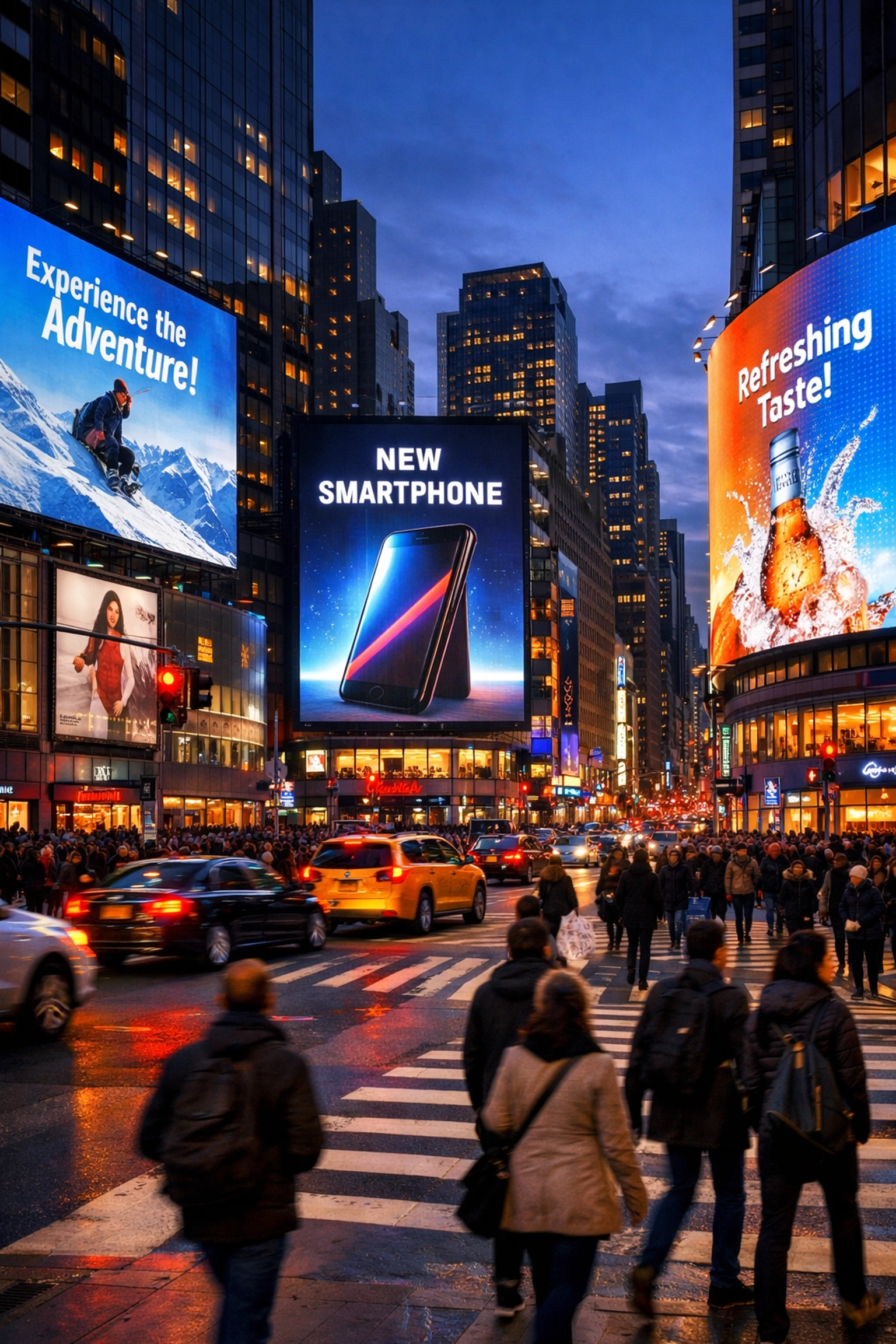
Cost efficiency provides another compelling motivation. While a $7 million television spot delivers a single 30-second exposure to viewers who may or may not be paying attention, the same investment in a comprehensive OOH digital network campaign can deliver thousands of impressions per viewer over multiple days. The extended exposure window means audiences encounter the brand message repeatedly during the most engaged, receptive period surrounding the Super Bowl.
Measurement capabilities have also improved dramatically. Modern OOH digital networks incorporate audience analytics, foot traffic monitoring, and attribution tracking that allow brands to quantify campaign performance with increasing precision. While these metrics may not match the granular detail of digital advertising, they provide sufficient data to calculate return on investment and optimize future campaigns.
Implementing an Environmental Ownership Strategy
Brands considering a shift toward OOH digital networks for major sporting events should begin with clear strategic objectives. Environmental ownership requires different planning than traditional media buying. Key considerations include:
Timing and Placement: OOH campaigns achieve maximum effectiveness when launched several days before the event and maintained through the following day. This extended window captures pre-game excitement and post-game discussion periods when engagement remains elevated.
Creative Adaptation: Messages designed for 30-second television spots rarely translate effectively to OOH formats. Successful environmental campaigns utilize bold visuals, minimal text, and immediately recognizable branding that registers within seconds of exposure.
Integration Architecture: The most effective campaigns treat OOH networks as anchor points within larger marketing ecosystems. Physical displays drive traffic to digital properties, social media campaigns reference OOH creative, and mobile experiences extend engagement initiated through environmental exposures.
Local Relevance: Super Bowl host cities offer unique opportunities for geographically targeted campaigns that national broadcast spots cannot match. Brands can customize messaging for local audiences while maintaining broader campaign consistency.
The future of Super Bowl advertising likely involves hybrid approaches that combine traditional broadcast with strategic environmental ownership. Brands willing to challenge conventional wisdom and explore alternative strategies stand to gain significant competitive advantages while competitors continue paying premium prices for diminishing returns.
As Super Bowl 2026 approaches, the question facing marketing decision-makers is not whether to advertise during America's biggest sporting event, but rather how to maximize impact per dollar invested. Digital OOH networks like Sporttron represent a proven alternative that delivers superior reach, engagement, and cost efficiency compared to traditional broadcast spots. The brands dominating the physical environment around the game may ultimately achieve more lasting impact than those dominating commercial breaks during it.