
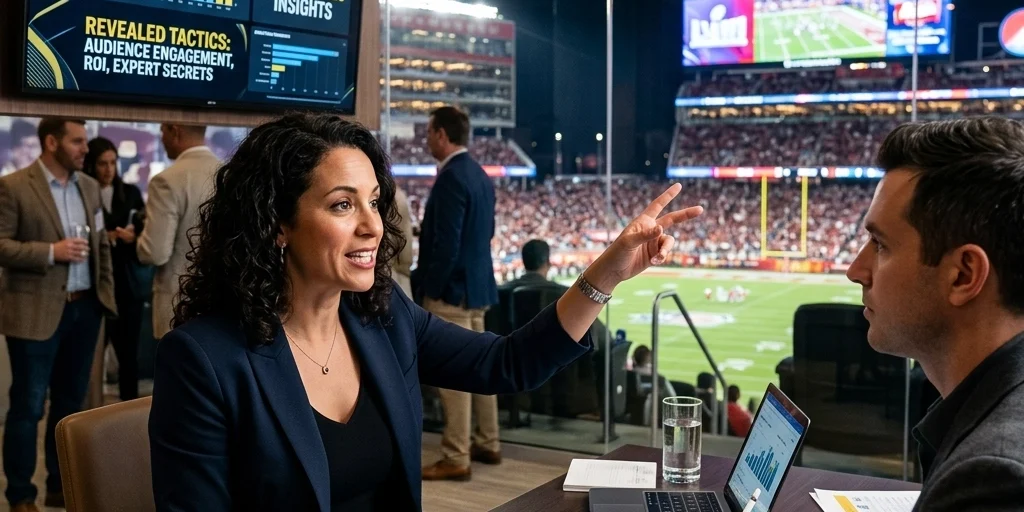
The dust has finally settled on Super Bowl LX in Santa Clara, and while the highlights reel focuses on the touchdowns and the halftime spectacle, the real game was played in the boardrooms of the world’s largest brands. For decades, the Super Bowl was defined by the "Big Ad": a singular, high-budget 30-second spot designed to capture the nation's attention for a fleeting moment. However, as we look back from April 2026, it is clear that the rules of high-stakes branding have fundamentally changed.
At USA Entertainment Ventures LLC, we have monitored the shift from traditional media buys to integrated cultural ecosystems. The "secrets" that industry insiders are now whispering about aren't just about creative flair; they are about a clinical, data-driven approach to consumer psychology and multi-platform dominance. If you thought a $7 million price tag for a commercial was the peak of the mountain, you’re only looking at the base.
The $7 Million Entry Fee: Why the "Big Ad" Is Now Just a Business Card
In 2026, the most successful brands treated their broadcast airtime not as the destination, but as an entry fee. Industry data suggests that brands relying solely on their 30-second spot saw a diminishing return on investment (ROI) compared to those who viewed the Super Bowl as a "surround sound" marketing event. Experts are now revealing that the broadcast spot is essentially a high-priced business card: it introduces you to the room, but it doesn't close the deal.
The true secret to 2026’s branding success was the "Newsletter: The Super Bowl Playbook – Sports Media's Advertising Strategy." This playbook emphasizes that modern branding is no longer about a single moment of impact; it is about building a multi-week ecosystem that lives before, during, and long after the final whistle.
https://www.youtube.com/watch?v=l6J-0zileKE
As seen in the strategy breakdown above, the shift toward a holistic approach is no longer optional. Brands that succeeded this year moved away from "interruption marketing" and toward "cultural integration."
The Three-Wave Strategy: Timing Is the Invisible Variable
One of the best-kept secrets of elite branding agencies is the Three-Wave Calendar Strategy. Most businesses assume the work begins in January and ends on Super Bowl Sunday. The experts, however, follow a much more disciplined timeline that ensures the brand is "top of mind" well before the coin toss.
Wave 1: The Early Priming Phase
Successful campaigns in 2026 began as early as November. By using teaser content and short-form video on platforms like TikTok and YouTube, brands primed their audiences. This wasn't about showing the product yet; it was about creating a narrative "hook." By the time the Super Bowl arrived, the audience was already invested in the story.
Wave 2: The Social Proof Surge
Two weeks before the game, the strategy shifted to what experts call "Product Proof." This involves heavy integration with influencers and third-party creators. Statistics from this year’s game show that influencer-driven content delivered roughly 70% higher cost-per-click efficiency than brand-led creative. This wave builds the "muscle" of the campaign, providing the social validation needed to make a $7 million ad feel credible.
Wave 3: The Retargeting Blitz
The secret that experts rarely discuss is what happens after the game. The "Retargeting Blitz" uses the data gathered from the first two waves to hit consumers with personalized offers and follow-up messaging. In 2026, the winners were the brands that didn't just want you to watch their ad: they wanted you in their sales funnel by Monday morning.

Clarity Over Comedy: The Death of the "Wacky" Ad
For years, the Super Bowl was a race to see who could be the funniest or the most bizarre. But 2026 marked a return to "Product Clarity." In an era of economic scrutiny, consumers have become weary of abstract humor that leaves them wondering what was actually being sold.
The secret revealed by top marketing consultants is that high-stakes branding must prioritize the value proposition. Whether it’s a new fintech app or a sustainable energy solution, the brands that "won" 2026 were those that explicitly demonstrated how their product solves a problem. Celebrity cameos are still present, but they are now used as vehicles for product explanation rather than just being a recognizable face.

The "Spine and Muscle" Strategy: AI and OOH Integration
Technology has allowed for a level of personalization that was previously impossible. One of the most sophisticated "secrets" of the 2026 season was the integration of Artificial Intelligence (AI) with Out-of-Home (OOH) advertising: a strategy known as "Spine and Muscle."
The "Spine" consists of physical activations: billboards in major hubs like Las Vegas, New York, and the host city. The "Muscle" is the digital layer. Using predictive analytics and mobile geofencing, brands could target individuals who had physically passed a billboard with a synchronized mobile ad within minutes. This creates a sense of "omnipresence" that makes a brand feel much larger than its actual budget might suggest.
At USA Entertainment Ventures LLC, we see this as a critical evolution in business consulting. It’s not just about where you spend your money; it’s about how those spending channels talk to each other.
Real-World Activations: The Digital Trap
While digital metrics are easy to track, experts are now admitting that "digital-only" marketing is a trap. The most impactful brands of 2026 invested heavily in real-world activations. Whether it was a pop-up experience in the host city or a localized event in a major market, physical presence creates a "tangible brand anchoring" that digital pixels cannot replicate.
Consumers in 2026 are looking for authenticity. They want to touch, feel, and experience a brand. By combining high-tech digital targeting with high-touch physical experiences, brands created a 360-degree environment that dominated the cultural conversation.

Actionable Takeaways for Your Brand
You don't need a $7 million budget to apply these "secrets" to your own business strategy. High-stakes branding is a mindset, not just a line item in a budget. Here are three practical changes you can implement today:
- Stop Thinking in Campaigns, Start Thinking in Ecosystems: Don't just launch a product; create a multi-week narrative that primes, proves, and retargets.
- Prioritize Clarity: If an 8-year-old can't explain what your business does after seeing your marketing, your message is too complex.
- Leverage the "Spine and Muscle": Even on a local level, ensure your physical presence (signage, events) is supported by digital retargeting.
Looking Toward the Future of Sports Media
As we look toward Super Bowl LXI and beyond, the trend toward personalization and integrated media will only accelerate. The "secrets" of today will become the standard operating procedures of tomorrow. At USA Entertainment Ventures LLC, we believe that the intersection of entertainment, technology, and strategic consulting is where the next generation of industry leaders will be forged.
The high-stakes branding of the Super Bowl is a laboratory for what works in the wider world of business. By understanding these expert insights: moving beyond the 30-second spot, mastering the three-wave calendar, and choosing clarity over gimmicks: any business can elevate its brand to a championship level.

If you are ready to move your brand from the sidelines to the center of the field, it’s time to rethink your strategy. Whether you are navigating the complexities of media or looking for innovative ways to engage your audience, the principles of high-stakes branding remain the same: be clear, be consistent, and be everywhere.
For more insights into the evolving landscape of business and entertainment, feel free to contact us or explore our latest research in the business category. The game has changed( make sure you have the right playbook.)





