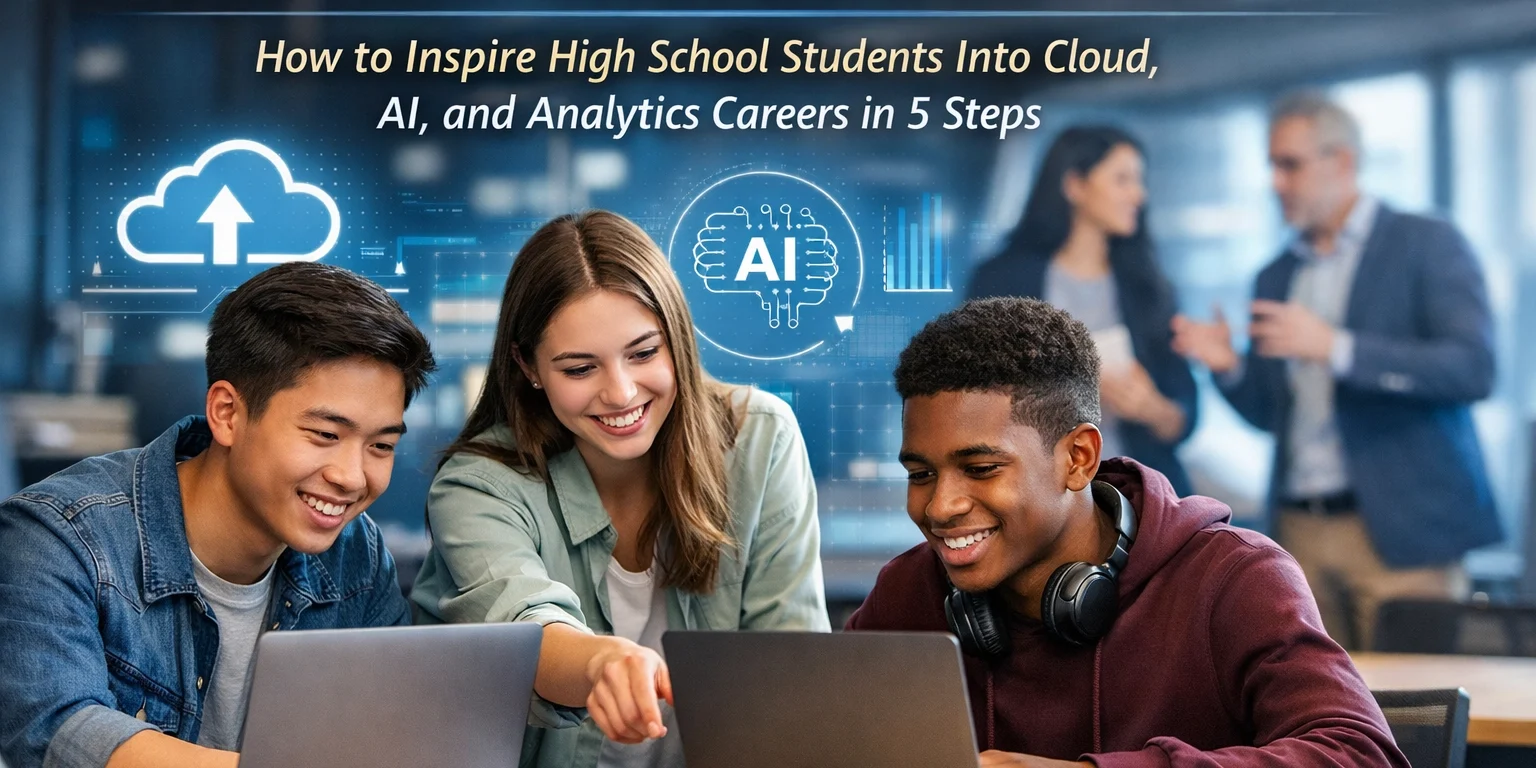
The talent shortage in cloud computing, artificial intelligence, and data analytics has reached critical levels. Companies across industries report difficulty filling positions in machine learning engineering, cloud architecture, and data science: roles essential to maintaining competitive advantage in an increasingly digital economy. The pipeline problem is clear: too few candidates possess the technical skills and practical experience required for these specialized positions.
The solution, however, does not lie in intensified recruiting efforts aimed at already scarce experienced professionals. Rather, it requires a fundamental shift in strategy: one that moves upstream to engage students before they make career decisions that take them away from these fields. High schools represent the critical intervention point where companies can shape the next generation of technical talent, long before competitors recognize the opportunity.
Why High School Is the Strategic Talent Entry Point
By the time students reach college, many have already eliminated technology careers from consideration. They have formed beliefs about their aptitude for STEM subjects, made decisions about their academic trajectory, and developed interests that may not align with emerging industry needs. This represents a lost opportunity that companies can no longer afford.
High school students, by contrast, remain in a formative phase. They are developing their sense of professional identity and remain open to exploring career pathways that may not have been on their radar. Importantly, they are also more receptive to guidance from external professionals and organizations that can provide real-world context for abstract technical concepts taught in classrooms.

Companies that establish presence in high schools now position themselves to influence this critical decision-making period. The investment required is modest compared to the cost of recruiting scarce talent in an overheated market, and the potential return: a steady pipeline of well-prepared candidates who already understand your industry and potentially your organization: is substantial.
Step 1: Support STEM Foundation Building
The bedrock of any career in cloud, AI, or analytics is mathematics and computer science. Students require proficiency in algebra, calculus, and statistics, combined with foundational programming skills. Companies can contribute to this foundation through several practical mechanisms.
Funding for advanced coursework represents one direct intervention. Many schools lack resources to offer AP computer science, advanced mathematics, or specialized technology courses. Corporate sponsorship that enables schools to hire qualified instructors or purchase necessary software and equipment removes barriers that prevent students from accessing these critical classes.
Beyond funding, companies can provide curriculum consultation. Technology professionals can advise schools on which programming languages, tools, and platforms will prove most relevant to actual industry needs. This ensures that student learning time is invested in skills that translate directly to employability, rather than outdated or tangential technologies.
Guest lectures and classroom visits from working professionals humanize these career paths. When students meet data scientists, cloud engineers, and AI researchers, they gain concrete understanding of what these roles entail and recognize that real people: not just abstract job titles: fill these positions.
Step 2: Create Hands-On Learning Opportunities
Theoretical knowledge alone does not prepare students for technical careers. They require practical experience working with actual tools, platforms, and data sets. Companies possess unique capability to provide this hands-on learning that schools cannot easily replicate.

Structured training programs, modeled on successful initiatives like Google Career Launchpad, offer one approach. These programs provide on-demand courses with hands-on labs where students practice structuring, storing, and visualizing data using real cloud tools. Companies can develop similar programs tailored to their specific technology stack, creating familiarity with platforms and approaches they use internally.
Capstone projects represent another powerful learning mechanism. Students working through complex, multi-week projects that mirror real business challenges develop not only technical skills but also project management capabilities, problem-solving approaches, and professional work habits. Companies can provide project briefs, data sets, and evaluation criteria that reflect actual business needs.
Platform access is critical. Students cannot learn AWS, Azure, or Google Cloud without access to these platforms. Companies can provide educational licenses, sandbox environments, or dedicated learning accounts that enable students to experiment and build competency with industry-standard tools.
Step 3: Facilitate Direct Work Experience
Classroom and structured learning programs provide foundation, but nothing replaces actual work experience. Internship and mentorship programs designed specifically for high school students offer this direct exposure while remaining appropriate for younger learners still balancing academic obligations.
Summer internships targeting high school students: like the Veritas AI Internship Program: demonstrate the viability of this approach. These programs engage students in real projects over eight-week periods, working alongside industry professionals on challenges such as developing predictive algorithms and analyzing large-scale datasets. Students emerge with portfolio-worthy work examples and genuine understanding of professional expectations.
Companies need not wait for established programs to create these opportunities. Small cohorts of two to five students working on well-scoped projects under supervision of junior or mid-level staff can provide meaningful experience while requiring modest organizational investment. The key is providing genuine work: not busy work: that contributes to actual business objectives.

Mentorship programs complement internships by providing ongoing relationship and guidance. Pairing students with professionals who can answer questions, provide career advice, and offer encouragement creates lasting connections that persist beyond any single work experience. These relationships often prove decisive in students' ultimate career selection.
Step 4: Expose Students to Broader Technology Impact
Technical careers extend beyond coding and configuration. The most effective technology professionals understand the business context, ethical implications, and societal impact of their work. Companies that help students develop this broader perspective cultivate more well-rounded future employees.
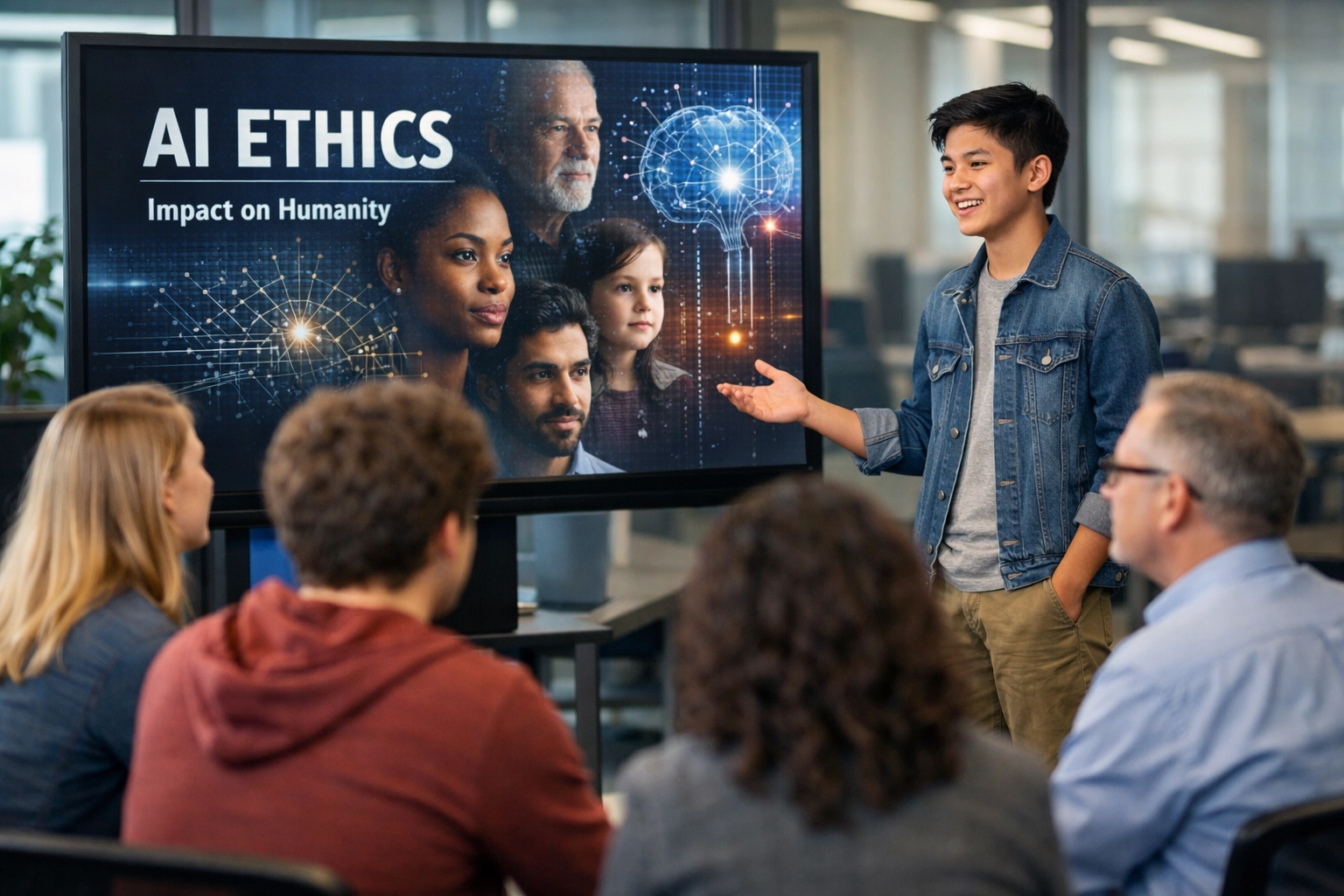
Ethics in AI and cloud computing has emerged as a critical consideration. Students should encounter concepts like algorithmic bias, data privacy, responsible AI development, and the societal implications of automation. Companies can facilitate discussion of these topics through workshops, panel discussions, or case studies drawn from real situations.
This ethical dimension attracts students who might otherwise view technology careers as purely technical and therefore unappealing to their interests in social issues, policy, or human behavior. Students interested in psychology, philosophy, or public policy represent an untapped talent pool that companies can access by highlighting these dimensions of technology work.
Cross-functional exposure also matters. Students benefit from understanding how data science teams interact with marketing, how cloud architecture decisions affect customer experience, or how AI implementations require input from domain experts. Companies can arrange shadowing experiences or presentations that illuminate these connections.
Step 5: Provide Credentials and Portfolio Development Support
Concrete achievements that students can point to when applying for college programs or entry-level positions represent powerful outcomes. Companies can facilitate credential acquisition and portfolio development that gives participating students competitive advantages.
Industry-recognized certifications from organizations like Google, AWS, Microsoft, or other platform providers carry weight with both universities and employers. Companies can sponsor students through certification programs, covering exam fees and providing study resources or preparation courses. These credentials validate skills in standardized ways that transcend individual school reputations.
Portfolio development requires ongoing support. Students need guidance on how to document their work, present technical achievements to non-technical audiences, and build professional online presence. Companies can provide workshops on portfolio creation, LinkedIn optimization, and professional communication that prepare students for eventual job search activities.
Competition sponsorship represents another credential-building opportunity. Supporting student participation in data science competitions, hackathons, or technology challenges provides portfolio material while also exposing students to peer networks of similarly interested young people. These experiences build confidence and demonstrate capability.
The Business Case for Early Engagement
The benefits to companies that execute these strategies extend beyond altruistic talent development. Early engagement with high school students creates awareness of your organization and industry among emerging talent before they commit to other sectors. Students who have worked with your tools, understand your business challenges, and have relationships with your employees are significantly more likely to consider employment with you when they enter the workforce.
The cost efficiency is notable. Investment in high school programs costs a fraction of experienced hire recruiting, signing bonuses, and retention efforts required in today's competitive market. Companies that build robust high school pipelines reduce dependence on the scarce pool of experienced professionals while developing talent aligned with their specific needs.
Brand positioning also benefits. Organizations known for investing in youth development and education gain reputation advantages that extend beyond recruiting. Customers, investors, and communities view these companies more favorably, recognizing their commitment to long-term industry development rather than short-term talent extraction.
Looking Forward
The talent shortage in cloud, AI, and analytics will not resolve through traditional recruiting approaches. Companies that recognize high schools as the strategic intervention point: and that invest systematically in student development through STEM support, hands-on learning, work experience, broader exposure, and credential building: will secure competitive advantage in the coming decade.
The students entering high schools today will be entering the workforce in 2030 and beyond. Their career decisions are being made now, influenced by the opportunities and exposure they receive during these formative years. Companies that establish presence and provide meaningful engagement during this critical period will reap returns for years to come, while those that wait will find themselves competing for the same limited pool of experienced candidates that frustrates them today.
The next-gen talent funnel begins in high school. The question for organizations is not whether to engage at this level, but how quickly they can establish effective programs that inspire and prepare these students for the careers their businesses desperately need to fill.