The Super Bowl represents the apex of advertising strategy. Brands spend millions on thirty-second spots, coordinate multi-week campaigns, and orchestrate social media war rooms to capture viewer attention during the year's most-watched event. Yet the most sophisticated Fortune 100 companies understand a critical insight: the same strategies that win customers during the Super Bowl can be adapted to win something far more valuable: top talent.
In an era where talent acquisition costs have risen by 50% over the past five years and time-to-fill metrics stretch beyond 45 days for specialized roles, forward-thinking organizations are borrowing from sports marketing's most successful playbook. These companies recognize that recruiting exceptional employees requires the same strategic precision, multi-channel coordination, and sustained engagement that characterizes Super Bowl advertising campaigns.
The parallel becomes evident when examining workforce challenges. Just as brands compete for viewer attention in a saturated media environment, employers compete for candidate attention in a fragmented talent marketplace. Both scenarios demand innovative approaches that cut through noise, build authentic connections, and convert interest into committed action.

Strategy 1: The Dual-Track Approach: National Brand with Local Activation
Fortune 100 brands have evolved beyond relying exclusively on expensive national campaigns. The most effective advertisers now employ a dual-track strategy that pairs broad-reach messaging with localized, targeted activation through Name, Image, and Likeness (NIL) partnerships with college athletes. This approach delivers national brand visibility while creating authentic connections in specific regional markets at a fraction of traditional celebrity endorsement costs.
Talent acquisition leaders can apply this same principle through what industry professionals call "distributed workforce infrastructure." Rather than centralizing all recruiting efforts at corporate headquarters, organizations establish regional talent hubs: physical or virtual spaces that serve as local activation points for national employer branding campaigns.
These hubs function similarly to NIL partnerships. Instead of generic corporate messaging, companies partner with regional educational institutions, workforce development programs, and community organizations to create localized pathways into their talent pipelines. A technology company might maintain its national "careers at our company" messaging while simultaneously operating coding bootcamps in partnership with regional colleges, creating authentic local touchpoints that resonate with candidates in specific markets.
The economic advantage mirrors the NIL model's efficiency. A Fortune 500 manufacturer reported reducing cost-per-hire by 37% after establishing regional SkillBridge partnerships with military transition programs, reaching qualified candidates at local bases rather than competing for attention through expensive national job boards.
Strategy 2: Multi-Week Cultural Campaigns Replace Single-Event Recruiting
The Super Bowl advertising landscape has transformed from a single broadcast moment into a multi-week cultural event. Brands release teaser content weeks in advance, generate media coverage through strategic previews, and build anticipation across social platforms before game day arrives. This extended timeline allows companies to capture attention throughout the broader cultural conversation, not merely during the broadcast itself.
Progressive talent acquisition strategies mirror this shift from event-based recruiting to sustained narrative building. Rather than treating hiring as a transactional moment: posting a job, collecting resumes, conducting interviews: organizations construct multi-week candidate journeys that build authentic relationships before a position officially opens.
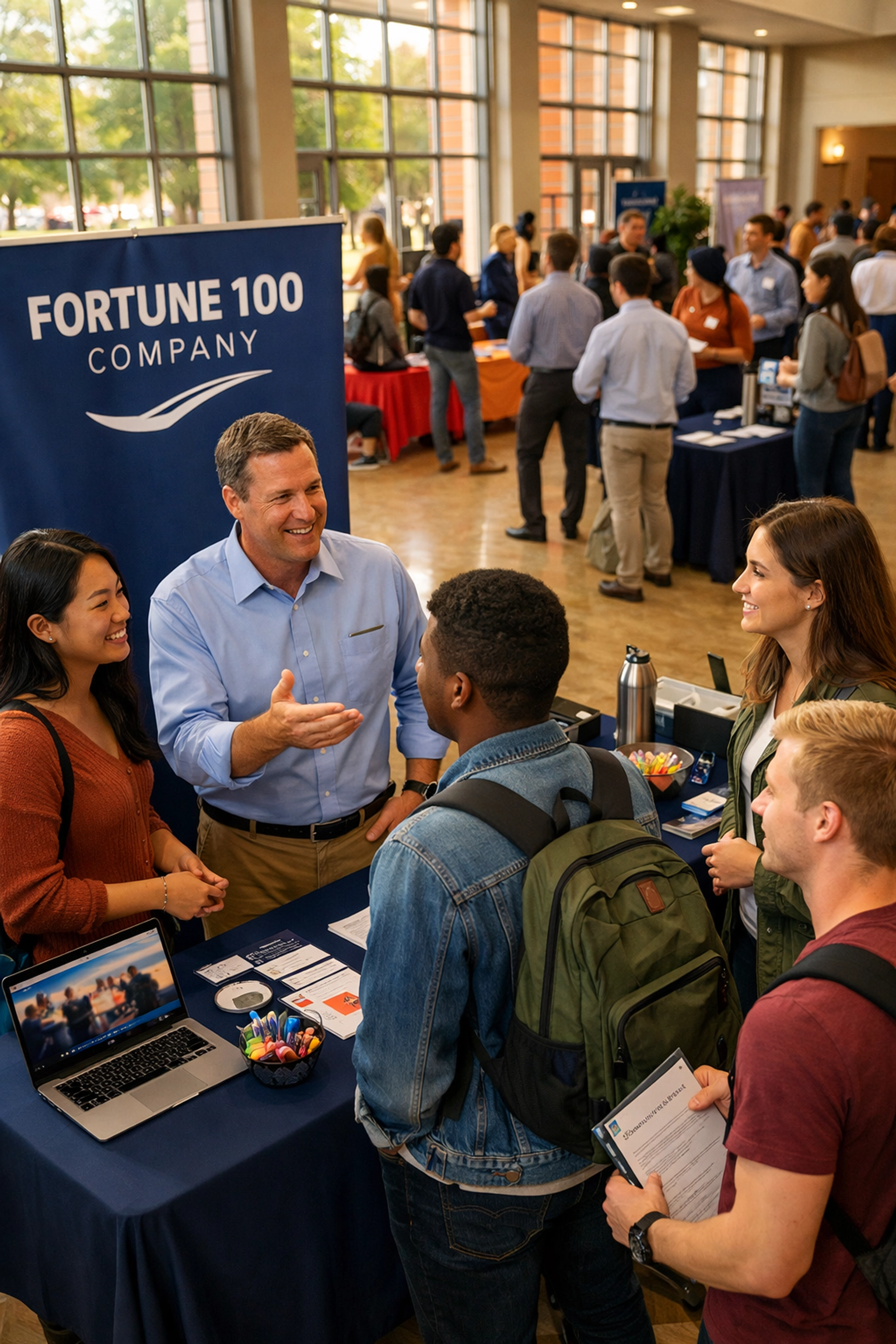
Consider how automotive manufacturers approach engineering talent. Instead of waiting until a specific role becomes vacant, leading companies engage potential candidates through monthly technical webinars, quarterly innovation showcases, and ongoing social media content featuring employee projects. When a position eventually opens, candidates arrive already familiar with the company's culture, technology stack, and career development philosophy.
This approach addresses a fundamental challenge in competitive talent markets: the strongest candidates are rarely actively job searching. Research from LinkedIn indicates that 70% of the global workforce consists of passive talent not actively seeking new opportunities. Multi-week cultural campaigns reach these individuals before they begin job searches, positioning an employer as their natural first choice when career changes become relevant.
The sustained engagement model also improves quality-of-hire metrics. Candidates who engage with employer content over weeks or months demonstrate higher retention rates and faster time-to-productivity compared to those who respond to single job postings. One financial services firm reported that candidates who engaged with their content series for at least four weeks before applying showed 28% higher one-year retention rates than traditional applicants.
Strategy 3: Real-Time Engagement and Social Listening War Rooms
During the Super Bowl, leading brands operate sophisticated social media war rooms that monitor conversations in real time, enabling immediate responses to trending moments, viewer reactions, and competitor activities. This capability transforms advertising from a one-way broadcast into a dynamic conversation that capitalizes on cultural moments as they unfold.
Talent acquisition teams are adapting this real-time engagement approach through what workforce strategists call "always-on recruiting operations." These teams monitor industry conversations, track competitor hiring announcements, respond to candidate questions across social platforms, and engage with potential talent discussing career transitions: all in real time rather than through batch-processed responses.
The strategic advantage becomes clear during industry events, conference seasons, or market disruptions. When a competitor announces layoffs, proactive recruiting teams immediately engage affected professionals through targeted outreach. When industry conferences generate discussions about emerging skills or career challenges, responsive organizations join those conversations with relevant content and opportunities.
Technology enables this approach at scale. Recruiting teams employ social listening tools that track keywords related to career interests, skill development, and industry trends. When aerospace engineers discuss challenges with legacy technology stacks on professional forums, forward-thinking aerospace companies can engage those conversations with content about their modern development environments and innovation cultures.

A healthcare technology company exemplified this strategy during a major industry conference. Their recruiting war room monitored conference hashtags, identified attendees discussing career frustrations, and engaged those individuals with relevant content and personal outreach. The three-day operation generated 47 qualified candidates and ultimately filled six specialized roles that had remained open for months through traditional recruiting channels.
Strategy 4: Multi-Channel Integration Across All Touchpoints
Successful Super Bowl campaigns integrate television advertising, digital marketing, stadium signage, influencer partnerships, and branded merchandise into cohesive narratives that reinforce consistent messages across multiple touchpoints. This integration ensures that viewers encounter brand messaging regardless of how they engage with the event: whether through traditional broadcast, social media, or physical presence.
Talent acquisition excellence requires similar multi-channel orchestration. The strongest employer brands coordinate messaging across job boards, company career sites, employee social media advocacy, industry events, educational partnerships, and community engagement initiatives. Each channel reinforces consistent narratives about culture, opportunity, and values while adapting format and tone to platform-specific expectations.
Consider how technology companies approach developer recruiting. Rather than relying solely on job postings, they maintain active GitHub repositories showcasing their technology stack, sponsor hackathons that introduce their development culture, publish technical blogs demonstrating their engineering challenges, and encourage employees to speak at conferences representing the company's innovation approach. Each touchpoint serves different candidate preferences while building a unified employer brand.
This integration proves particularly valuable for reaching diverse talent pools. Research from the Society for Human Resource Management indicates that different demographic groups prefer different job search channels. Multi-channel strategies ensure that employer messaging reaches candidates regardless of their preferred platforms, improving diversity outcomes without requiring separate recruiting initiatives for different groups.
The measurement advantage also matters. Integrated campaigns enable attribution analysis that reveals which channel combinations produce the highest quality candidates. One manufacturing company discovered that candidates who engaged with both their LinkedIn content and attended local community events showed 41% higher offer acceptance rates than those who encountered only single touchpoints.
Strategy 5: Extended Post-Game Storytelling and Sustained Momentum
The most sophisticated Super Bowl advertisers understand that campaign impact shouldn't end when the final whistle blows. Leading brands extend their narratives into the days and weeks following the game through sustained social media engagement, follow-up content releases, and continued conversation participation. This extended storytelling counteracts the natural attention decline after major events.
Talent acquisition teams can apply this principle through what workforce development professionals call "candidate nurture sequences." Rather than allowing candidate relationships to end after initial applications or interviews: even when specific roles don't materialize: organizations maintain ongoing engagement through regular content, skill development resources, and periodic check-ins.
These extended relationships transform recruiting from a series of isolated transactions into sustained talent community building. A candidate who interviews for a role but doesn't receive an offer shouldn't disappear from the organization's awareness. Instead, they enter nurture sequences that provide valuable content, invite them to company events, and alert them to future opportunities matching their interests.
The long-term value proves substantial. Research from the Talent Board indicates that candidates who receive positive experiences even when not hired are 38% more likely to apply for future roles and significantly more likely to recommend the employer to others in their network. Extended storytelling converts unsuccessful applications into future pipeline strength.
Applying the Playbook: Sports Media Strategy for Talent Acquisition
The convergence of sports marketing principles and talent acquisition strategy represents more than theoretical alignment. Organizations are actively implementing these approaches through innovative platforms that combine entertainment engagement with workforce development.
Watch how this strategy comes to life through integrated sports media and talent development:

This video demonstrates the practical application of Super Bowl advertising principles to talent acquisition strategy, showing how sports media engagement creates authentic pathways into workforce development programs.
The Future of Talent Acquisition
Fortune 100 brands spend an average of $7 million for thirty seconds of Super Bowl advertising because they understand the value of strategic, multi-channel campaigns that build sustained engagement. The same principles apply to talent acquisition, where the cost of a bad hire or prolonged vacancy often exceeds the price of a Super Bowl commercial.
Organizations that adapt sports marketing sophistication to recruiting operations gain measurable advantages: lower cost-per-hire, reduced time-to-fill, improved quality-of-hire, and stronger retention metrics. More importantly, they build talent communities that provide sustained competitive advantage rather than transactional candidate pools that disappear after each hiring cycle.
The playbook exists. The strategies have proven effectiveness in the world's most competitive marketing environment. The question for talent acquisition leaders is whether they'll apply these principles before their competitors do: or whether they'll continue running recruiting plays designed for an era when talent was abundant and attention was easy to capture.
For organizations ready to implement next-generation talent acquisition strategies that combine the engagement power of sports marketing with practical workforce development, USA Entertainment Ventures LLC provides consulting frameworks that transform recruiting operations from cost centers into strategic competitive advantages.