
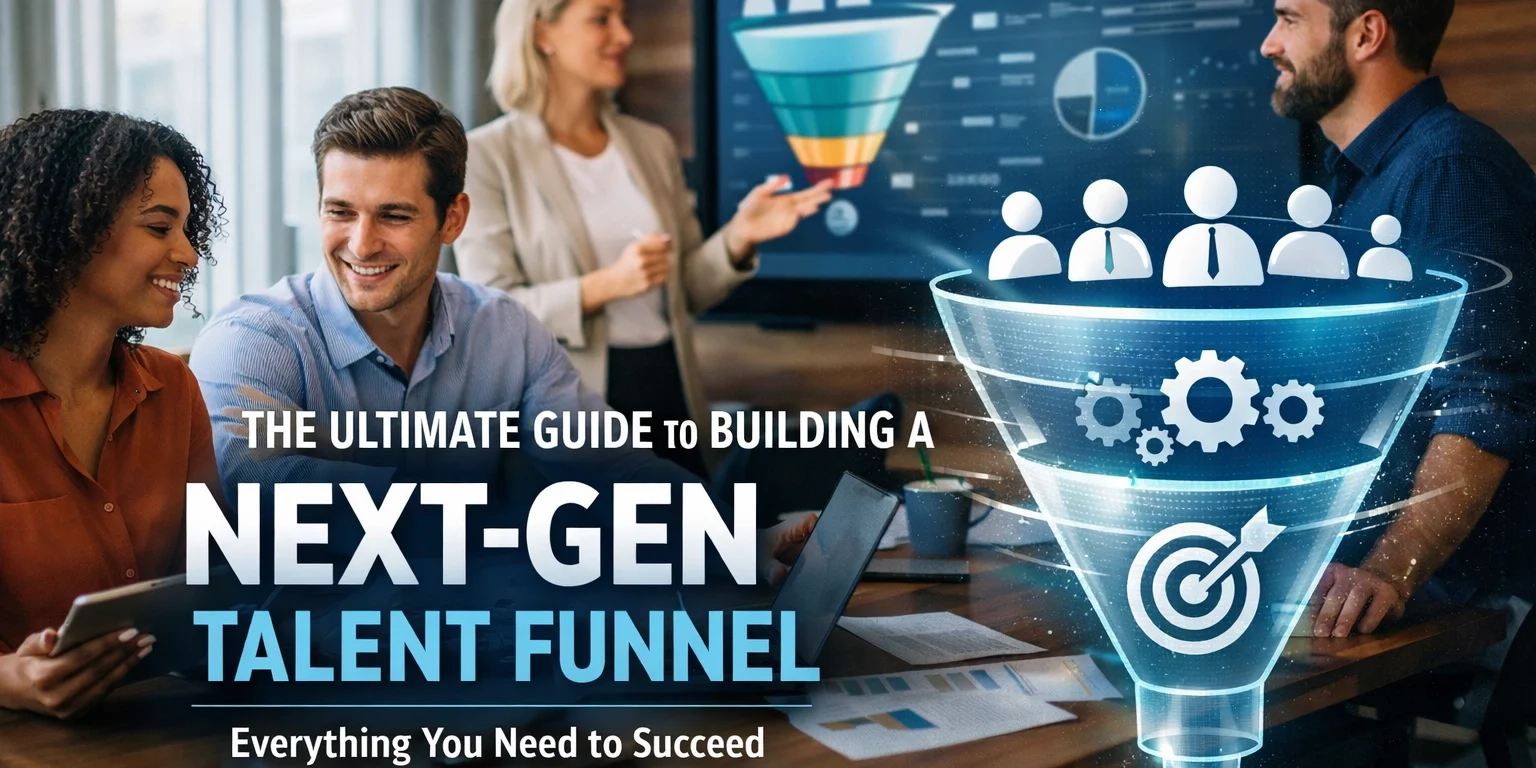
As we navigate the business landscape of 2026, the competition for specialized talent has reached a critical tipping point. In sectors like Artificial Intelligence (AI), Cloud Computing, and Data Analytics, the demand for skilled professionals consistently outstrips the supply produced by traditional higher education. For many organizations, the realization has set in: waiting until a student reaches their senior year of college to begin recruitment is a strategy destined for failure.
By the time a top-tier student graduates from university, they are likely already holding multiple offers from global tech giants. To secure the future of your organization, you must move upstream. The "Next-Gen Talent Funnel" is no longer a luxury for the Fortune 500; it is a fundamental requirement for any business looking to maintain a competitive edge. This guide explores why high school engagement is the new front line of talent acquisition and how to build a pipeline that lasts.
The Shift: From Selection to Development
Traditionally, recruitment was a "selection" model. Companies posted a job description, reviewed resumes of finished products (graduates), and selected the best fit. However, the rapid evolution of technology, specifically the shift toward autonomous AI agents and complex cloud architectures, means that the skills required change faster than college curricula can keep up.
The Next-Gen Talent Funnel replaces the selection model with a "development" model. Instead of looking for talent that already exists, companies now focus on building it. This strategic framework establishes relationships with potential talent during their high school years, shaping their skills, mindset, and loyalty long before they enter the open job market.
By engaging early, your business can influence what students learn and provide early exposure to the specific proprietary tools your company uses. This creates a "funnel-grown" workforce that arrives on day one with a deep understanding of your culture and technical ecosystem.

Why High Schools are the New Front Line
Why target high schoolers? At this age, students are in a phase of high cognitive flexibility. They are beginning to make decisions about their career paths, yet they haven't been locked into specific academic silos.
- Brand Affinity: Establishing a presence in a student's life when they are 15 or 16 builds a level of brand loyalty that is difficult to replicate later.
- Skill Customization: If your organization relies heavily on specific Data Analytics platforms or Cloud providers, you can sponsor high school programs that teach those exact skills.
- Democratization: Reaching out to high schools allows you to find "hidden gems", high-aptitude students who might not have the resources to attend elite universities but possess the raw talent to excel in AI and data roles.
Organizations that ignore the high school demographic are essentially conceding the best talent to competitors who are already in the classrooms. For those looking to evolve their hiring practices, visiting our career opportunities page can provide insights into how modern roles are being redefined.
Implementing the Three-Tiered Funnel
A successful Next-Gen Talent Funnel is built in stages. You cannot simply offer a high school sophomore a full-time engineering role. Instead, you create a pathway.
Tier 1: Awareness and Inspiration
The goal here is to introduce students to the possibilities of the industry. This is achieved through guest speaking engagements, sponsoring local science fairs, or hosting "Day in the Life" virtual tours. At this stage, you are building your "top of funnel" awareness.
Tier 2: Hands-On Exploration
Once students are interested, they need a place to practice. This is where organizations provide practical, skill-building opportunities.
- Weekend Hackathons: Focus on solving real-world problems using AI or data sets.
- Summer Boot Camps: Intensive programs that teach the basics of Cloud architecture.
- Coding Club Sponsorships: Providing the hardware or software licenses a high school coding club needs to thrive.

Tier 3: Practical Integration and Internships
For the most promising students, the funnel leads to internships. These are no longer just "coffee runs." In a next-gen funnel, high school interns work on actual data cleaning, basic model testing, or cloud documentation. This provides the student with resume-building experience and the company with a low-risk way to vet future full-time hires. You can see how we structure our professional outreach at USA Entertainment Ventures Services.
Prioritizing Skills Over Credentials
One of the most significant shifts in 2026 is the move away from academic credentials as the primary filter for hiring. In fields like AI and Data Analytics, what a candidate can do is far more important than where they went to school: or if they have graduated yet.
The Next-Gen Talent Funnel relies on skills-based assessments. By using coding challenges, data visualization projects, and logic tests, companies can identify high-aptitude individuals based on performance. This approach removes the bias inherent in traditional hiring and opens the door for a more diverse, capable workforce. If a seventeen-year-old can build a functional neural network during a sponsored hackathon, their potential value to your company is immense, regardless of their lack of a college degree.

The Hybrid Engagement Model: Virtual Backbone, Local Heart
Scaling a talent funnel requires a balance between digital reach and physical presence.
The Virtual Backbone:
To reach talent in rural or underserved areas, companies must utilize online learning modules and remote mentorship. A centralized digital platform allows students from anywhere to access your curriculum, submit projects, and receive feedback from your engineers.
In-Person Touchpoints:
Digital engagement is efficient, but human connection builds loyalty. Quarterly regional workshops, summer intensives, and local office visits provide the "in-person" element that makes a student feel like part of a community. This hybrid approach ensures you are casting a wide net while still building deep, tangible connections.
Measuring the ROI of Early Engagement
Building a talent funnel is a long-term investment. You cannot measure success through quarterly hiring quotas. Instead, organizations must track longitudinal data:
- Engagement Depth: How many hours are students spending in your sponsored modules or workshops?
- Skill Progression: Are students earning certifications or completing more advanced projects over time?
- Conversion Rate: What percentage of your high school program participants eventually apply for college internships or junior roles within your company?
- Retention Rate: Early data suggests that "funnel-grown" employees have significantly higher retention rates. Because they have been part of the culture since high school, their "onboarding" effectively lasted years, not weeks.
By focusing on these metrics, businesses can justify the expenditure as a capital investment in human infrastructure rather than just an HR expense.

Diversifying the Pipeline
A major benefit of the Next-Gen Talent Funnel is the ability to improve diversity and inclusion. Traditional university recruitment often limits companies to the same few elite institutions. By going into high schools: particularly those in diverse socioeconomic neighborhoods: companies can reach talent that has historically been overlooked.
This isn't just about corporate social responsibility; it is about better business outcomes. Diverse teams are essential for building unbiased AI models and understanding global data sets. A talent funnel that starts in high school democratizes access to high-paying tech careers and ensures your company is drawing from the widest possible pool of brilliance.
Conclusion: The Future belongs to the Proactive
The era of "post and pray" recruitment is over. In a world driven by AI and data, your most valuable asset is your talent pipeline. Building a Next-Gen Talent Funnel requires a shift in mindset: seeing yourself not just as a consumer of talent, but as a producer of it.
By entering high schools now, you are securing your workforce for 2030 and beyond. You are building a community of loyal, highly skilled professionals who are ready to tackle the challenges of tomorrow because you were there to guide them today.
If you are ready to rethink your business strategy and how you connect with the next generation of talent, we invite you to contact us to learn more about how we can help your organization navigate these changes. The future is being built in classrooms today; make sure your brand is part of the conversation.





