
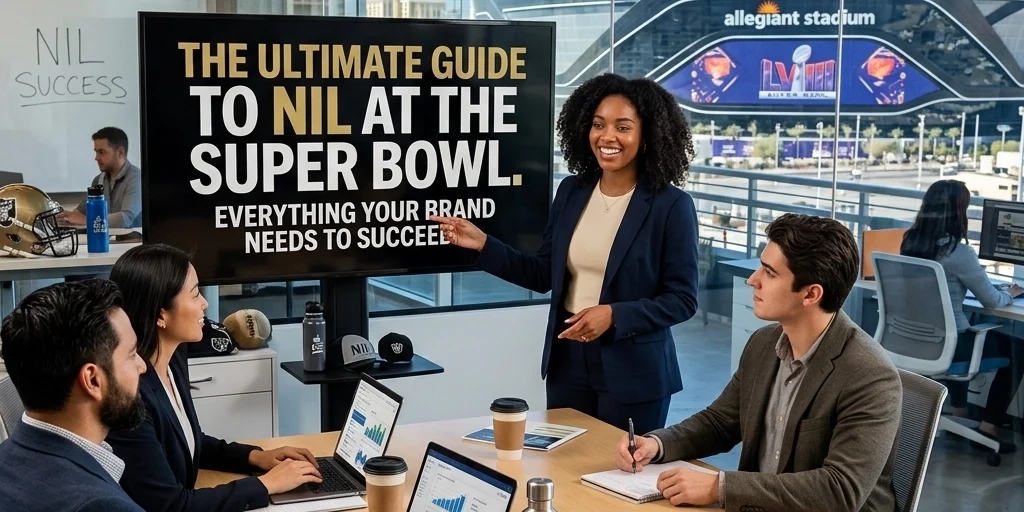
The landscape of sports marketing has shifted. As of April 2026, the traditional Super Bowl commercial: once the undisputed heavyweight champion of brand awareness: is no longer enough to move the needle for Fortune 100 companies. While a 30-second spot during the broadcast still carries prestige, the real battle for consumer attention is being fought on the "second screen."
This is the era of the NIL (Name, Image, and Likeness) revolution. For brands looking to bridge the gap between passive television viewership and active digital engagement, the Super Bowl represents the ultimate proving ground. At USA Entertainment Ventures LLC, we have observed that the most successful campaigns are those that don’t just broadcast at an audience, but instead integrate into the cultural conversation through the voices consumers trust most: the athletes themselves.
The High Cost of Silence: Why Traditional Ads Aren't Enough
In the current media environment, a multi-million dollar television spot is a "top-of-funnel" play. It creates awareness, but it often fails to drive immediate action. Data from the 2026 season suggests that over 75% of Super Bowl viewers are engaging with a smartphone or tablet while the game is on. If your brand exists only on the television screen, you are missing the primary focus of your target demographic.
Fortune 100 brands are increasingly shifting portions of their massive Super Bowl budgets toward NIL strategies. The reason is simple: authenticity. A corporate-produced commercial is viewed as an interruption; a post from a student-athlete or a rising pro feels like a recommendation. By leveraging the 20,000 Voice Advantage, brands can distribute their message across thousands of influential nodes rather than betting everything on a single creative execution.

The Three-Phase NIL Strategy for Maximum ROI
To succeed at the scale of the Super Bowl, brands must move away from "one-off" posts. A sophisticated NIL strategy is divided into three distinct phases: the Pre-Game Build, the Game Day Activation, and the Post-Game Saturation.
Phase 1: The Pre-Game Build (The "Road to the Big Game")
Effective NIL campaigns begin months before the coin toss. Starting in January, brands should partner with athletes to share narrative-driven content. This might include "Road to the Championship" vlogs, recovery routines, or behind-the-scenes training highlights.
This phase serves a critical purpose: it builds a "warm" audience. By the time the Super Bowl arrives, your brand is already associated with the athlete’s journey. This allows for lower retargeting costs and higher engagement rates when the high-traffic game day window opens.
Phase 2: Game Day Activation (Dominating the Second Screen)
During the game, agility is the greatest asset. While a traditional commercial is locked in months in advance, an NIL athlete can react to a spectacular touchdown, a controversial call, or a viral halftime moment in real-time.
When an athlete shares a live reaction or hosts a Q&A session on social media during the game, they are capturing the "second-screen" audience. For a brand, this means your product is being viewed in the context of the live event, but with the added benefit of social proof. Fortune 100 companies are using this phase to drive traffic to specific digital storefronts using tracked links and athlete-specific promo codes.
Phase 3: Post-Game Saturation (Converting the Afterglow)
The week following the Super Bowl is often the most overlooked period in sports marketing, yet it represents the peak conversion opportunity. After the confetti has fallen, athletes can share recap content, "what’s next" videos, and exclusive post-game offers.
This phase transforms the emotional high of the game into measurable business growth. By using tracked links, brands can see a direct correlation between an athlete’s post and a completed purchase, moving beyond vanity metrics like "likes" and toward hard ROI.

Data-Driven Talent Selection: Beyond Follower Counts
One common mistake brands make is selecting talent based solely on follower counts. In the 2026 NIL landscape, engagement rates and audience sentiment are far more valuable than raw numbers.
For a Fortune 100 brand, the selection process should be rigorous. Does the athlete’s personal brand align with your corporate values? Does their audience demographic match your target consumer? For example, a technology company might find more value in a STEM-major college athlete who has a highly engaged, tech-focused following than a national superstar with a broad but passive audience.
At USA Entertainment Ventures LLC, we advocate for a data-driven approach to business consulting that prioritizes alignment over star power.
The "20,000 Voice Advantage"
The most significant shift in NIL strategy is the move toward "distributed influence." Rather than spending a $5 million budget on one retired NFL legend, brands are now deploying that same capital across a network of hundreds or even thousands of student-athletes.
This creates a "surround sound" effect. When a consumer sees your brand mentioned by their favorite local quarterback, a rising track star, and a popular volleyball player all within the same week, it creates a sense of ubiquity that a single commercial cannot replicate. This is the "20,000 Voice Advantage": the ability to scale personal, peer-to-peer recommendations to a national level.

Integrating Video into the Narrative
Visual storytelling is the heart of the NIL revolution. It isn't just about static images; it’s about motion, emotion, and connection. High-quality video production that maintains an "authentic" feel is essential for Super Bowl campaigns.
Below is a prime example of how the NIL landscape is evolving and how brands can bridge the gap during the biggest sporting event of the year:
https://www.youtube.com/watch?v=l6J-0zileKE
As shown in the video, the convergence of media, sports, and technology is creating new avenues for brand growth that were previously inaccessible.
Measuring Success: Moving Toward Hard ROI
For any Fortune 100 brand, the ultimate question is ROI. In the past, sports sponsorships were often treated as "brand tax": necessary for visibility but difficult to measure. NIL has changed that.
By integrating advanced marketing technology, brands can now track:
- Conversion Attribution: Directly linking sales to specific athlete posts.
- Sentiment Analysis: Measuring how an NIL partnership changes the public perception of the brand.
- Engagement Quality: Moving beyond clicks to measure how long a user interacts with NIL-driven content.

The Future of NIL and the Super Bowl
As we look toward 2027 and beyond, the integration of NIL into major sporting events will only deepen. We expect to see more "NIL Houses" in the Super Bowl host city, more real-time collaborative content between brands and athletes, and more sophisticated use of AI to match brands with the perfect athlete advocates.
The brands that will win are those that stop viewing NIL as a "tactic" and start viewing it as a core pillar of their media strategy. It is the bridge between the scale of traditional media and the intimacy of social media.
Actionable Takeaways for Your Brand
If you are a marketing executive at a Fortune 100 company, here are three practical steps you can take today to prepare for the next Super Bowl cycle:
- Audit Your Second-Screen Presence: Is your brand actually visible where the audience is looking during the game?
- Diversify Your Talent Roster: Move away from the "one big star" model and explore a distributed influence strategy.
- Invest in Pre-Game Narrative: Don’t wait until February to start the conversation. Build audience investment early to maximize game-day impact.
At USA Entertainment Ventures LLC, we specialize in helping brands navigate these complex shifts in the media and entertainment landscape. The NIL revolution is here, and it is changing the way we think about the Super Bowl forever.
For more insights on how to leverage these trends, visit our business consulting section or explore our latest marketing strategies. The future of sports marketing is personal, digital, and distributed; is your brand ready?





