Super Bowl LX in 2026 represents more than a single game: it's a multi-day cultural event that draws hundreds of thousands of attendees into a concentrated geographic area. While brands traditionally compete for 30-second broadcast slots at premium prices, a fundamental shift is occurring in how strategic advertisers approach this opportunity. Out-of-home (OOH) advertising now offers a compelling alternative, delivering sustained brand presence throughout the entire attendee experience rather than fleeting moments during commercial breaks.
The economics reveal the strategic advantage: a television spot reaches viewers for seconds before disappearing, while OOH placements dominate the physical environment for days or weeks. This guide examines the proven strategies that enable brands to own the Super Bowl environment through comprehensive OOH campaigns that create lasting impressions with the most engaged, high-value audience segment.
Understanding the Complete Fan Journey
Effective OOH strategies begin with mapping the predictable path Super Bowl attendees follow from arrival through departure. This journey creates multiple touchpoints where strategic advertising placements generate repeated brand exposures.
The typical attendee experience includes airport arrival and terminal navigation, hotel check-in and lobby interactions, visits to entertainment districts and restaurants, pre-game festivities, stadium approach and entry, and post-game celebrations. Each represents an advertising opportunity. Research consistently demonstrates that marketing effectiveness increases exponentially with repeated exposure across different contexts. When attendees encounter your brand at the airport, see floor graphics in their hotel lobby, and pass transit shelter ads walking to the stadium, you achieve the frequency that television advertisers pursue far less efficiently.
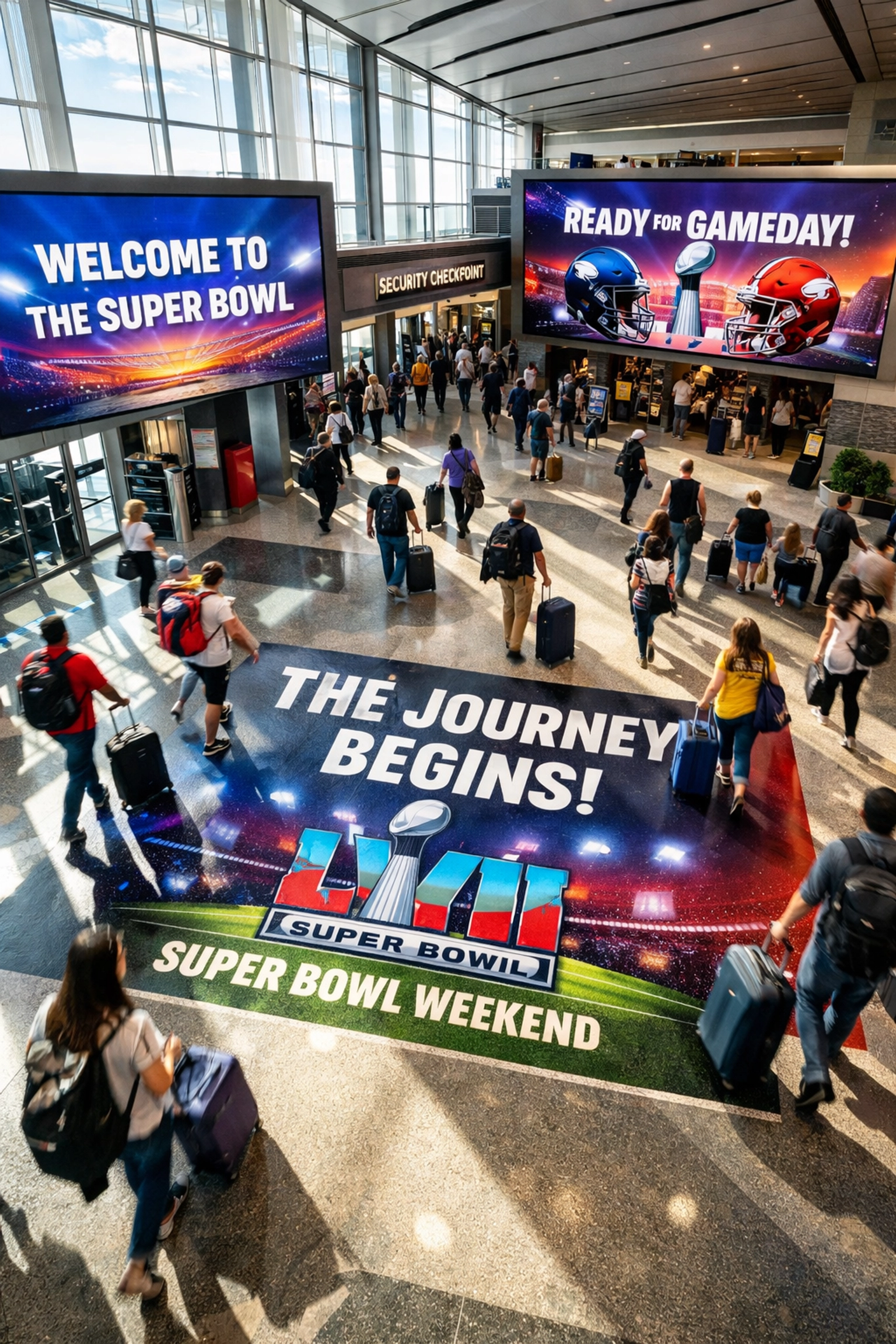
This multi-touchpoint approach transforms passive viewing into an integrated brand experience. The strategic value emerges not from any single placement but from the cumulative effect of environmental saturation: a state where brand presence becomes so pervasive that it shapes the overall experience and becomes part of attendee event memories.
Implementing Multi-Format Environmental Ownership
Modern OOH strategies extend beyond traditional billboards to create a cohesive brand ecosystem through diverse formats working in concert. This approach reflects how consumers actually experience environments: they scan vertically and horizontally, process information at different speeds, and engage with messaging differently based on context.
Digital billboards deliver dynamic content that evolves throughout the day. A single placement can promote breakfast offerings at 8 AM, game-time specials at noon, and post-game venue promotions by evening. This flexibility keeps messaging relevant to audience needs as they change, maximizing the value of each placement.
Street-level placements including transit shelters and kiosks capture pedestrian attention with detailed messaging that highway speeds don't permit. Floor graphics in high-traffic areas like convention centers and transportation hubs create impossible-to-ignore brand moments. When executed strategically, these formats work together to create 360-degree brand presence that dominates the attendee experience.
The Sporttron Digital Network Advantage
Understanding how to leverage premium digital networks represents a critical component of Super Bowl OOH success. The Sporttron Digital Network and similar platforms demonstrate the evolution of OOH advertising from static billboards to dynamic, content-rich experiences that engage audiences in real-time.
These networks offer brands the ability to deliver targeted messaging across multiple venues simultaneously, adjust creative based on time of day or audience demographics, and integrate live content like social media feeds or game statistics. The technology transforms OOH from one-way broadcasting into responsive, relevant brand experiences that align with what attendees are doing and thinking at specific moments.
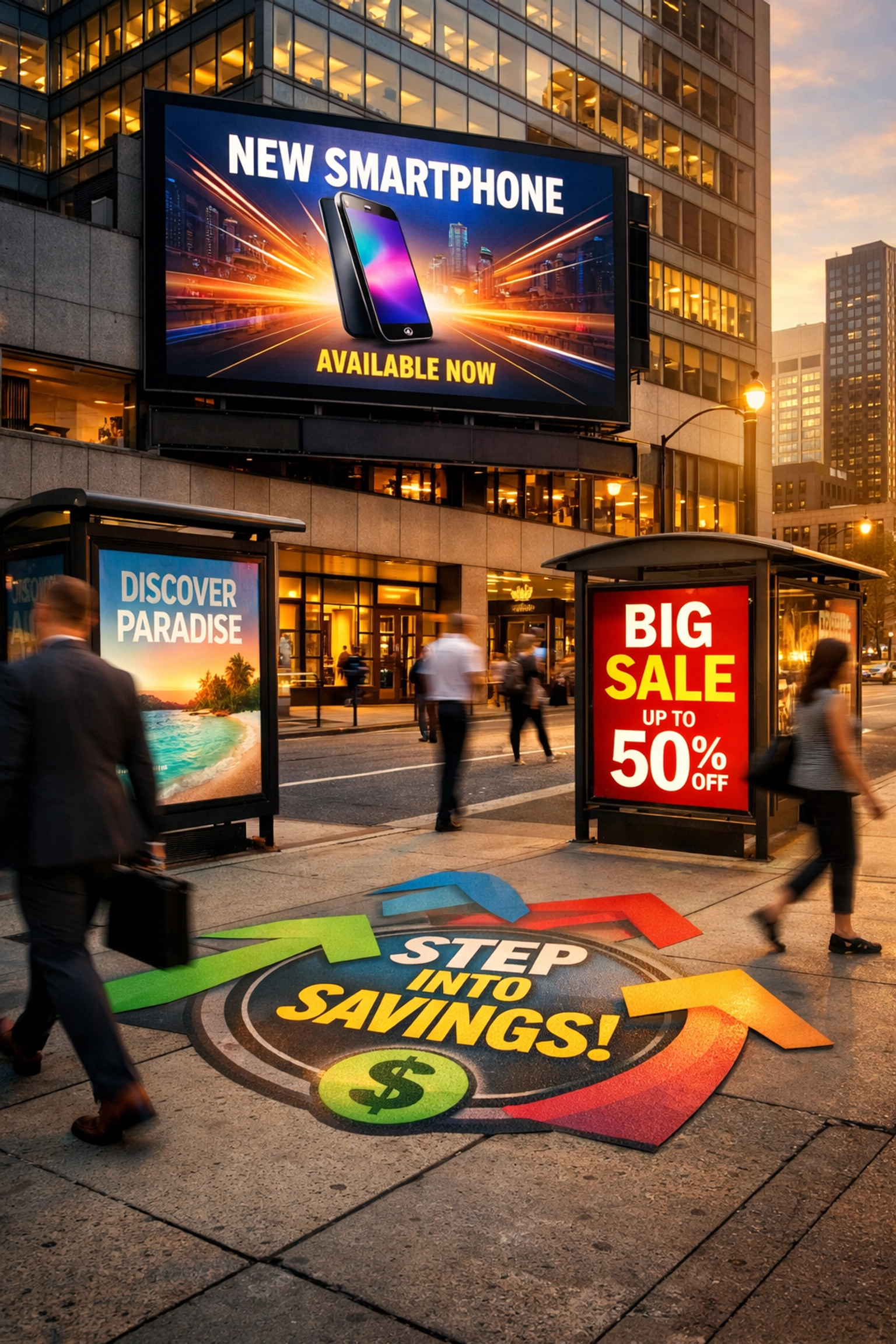
The strategic advantage becomes clear when considering the concentrated nature of Super Bowl attendance. Unlike typical advertising campaigns spread across broad geographies, Super Bowl OOH enables brands to dominate a specific environment where their entire target audience will be present. This concentration amplifies impact and efficiency simultaneously.
Integrating OOH with Digital and Social Channels
The most sophisticated campaigns leverage OOH as a physical anchor for broader multi-channel strategies that extend reach and drive measurable engagement. This integration approach recognizes that modern consumers move fluidly between physical and digital experiences, and effective marketing must follow that same pattern.
Effective integration tactics include QR codes on transit ads driving immediate mobile engagement, branded hashtags on digital billboards encouraging social sharing, and location-based mobile campaigns retargeting audiences who pass specific OOH placements. These mechanisms transform OOH from isolated brand encounters into launchpads for deeper engagement.
A practical example demonstrates the power of this approach: a digital billboard near the stadium features a live social media feed of fan photos using a branded hashtag, while simultaneous Instagram campaigns encourage fans to post selfies with OOH placements for contest entry. This creates a multiplier effect where fans actively amplify your message through their own networks, generating earned media that extends reach far beyond the initial OOH investment.
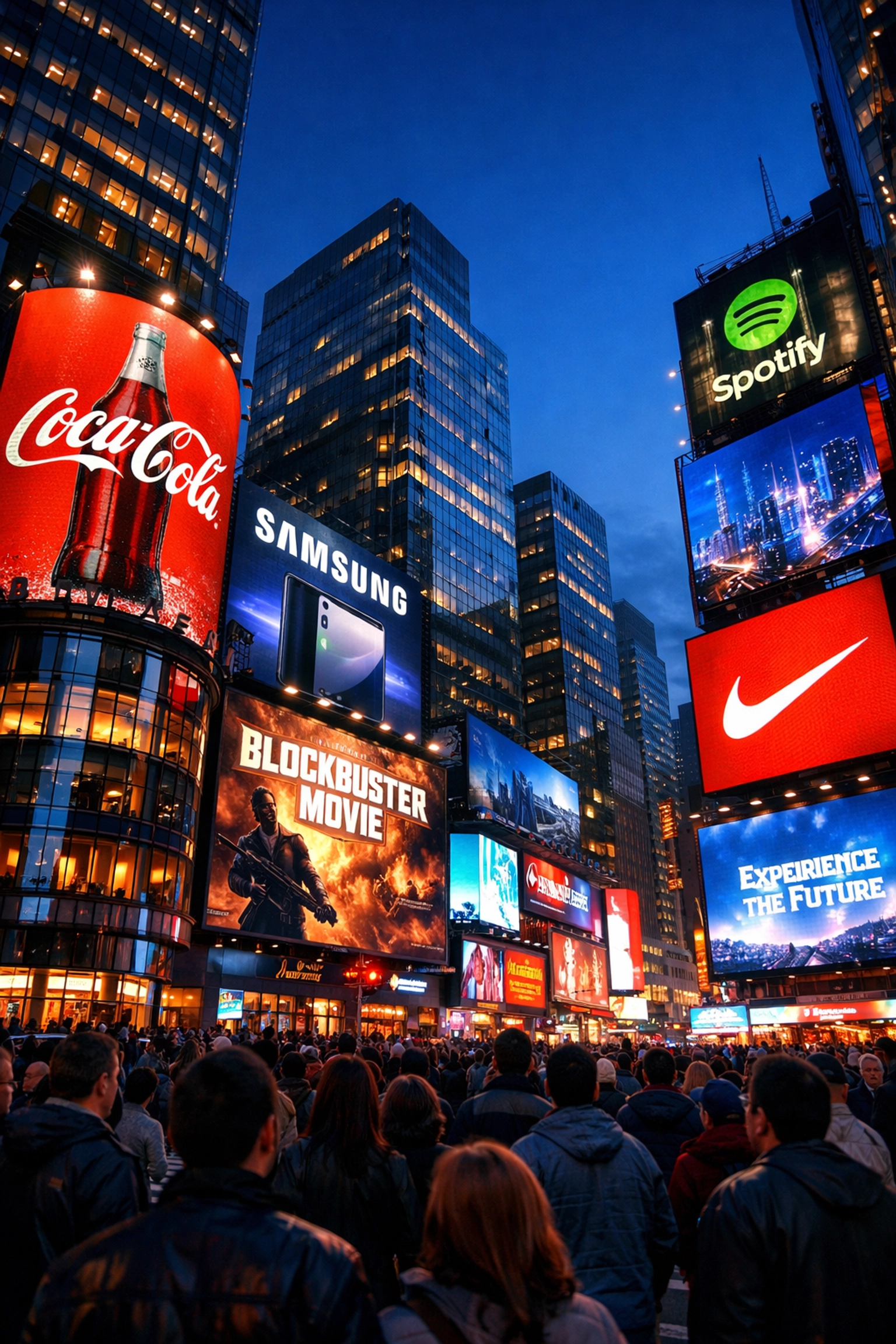
The data generated from these integrated campaigns provides valuable insights previously unavailable in OOH advertising. Tracking QR code scans, monitoring social media engagement, and analyzing foot traffic patterns enables brands to measure effectiveness with unprecedented precision. This data-driven approach allows for real-time optimization and provides clear ROI metrics that justify OOH investment.
Prioritizing Sustained Visibility Over Momentary Spikes
OOH operates on an entirely different temporal scale than broadcast media, offering continuous presence that accumulates impression value over days and weeks. This fundamental difference reshapes how brands should think about Super Bowl advertising strategy.
Television spots vanish in 30 seconds. Digital ads disappear with a scroll. OOH campaigns can dominate the entire event window: from championship matchup confirmation through attendee arrival and beyond. This sustained presence creates environmental saturation that shapes attendee perceptions in ways momentary exposures cannot achieve.
The economic comparison becomes compelling when examining impression costs. While a 30-second Super Bowl commercial might reach 100 million viewers for fleeting seconds at premium prices, strategic OOH placements deliver millions of impressions over multiple days to actual event attendees: the most engaged, high-value audience segment. The cost per sustained impression frequently proves more favorable with OOH than with broadcast alternatives.
Actionable Framework for Campaign Success
Four key principles guide effective Super Bowl 2026 OOH strategies that deliver measurable results:
Think beyond the broadcast window. The Super Bowl experience extends far beyond three hours of game time. Attendees arrive days before kickoff and remain in the area afterward. Effective campaigns reflect this broader reality, maintaining presence throughout the entire event cycle rather than concentrating solely on game day.
Embrace format diversity. Different advertising formats serve different purposes and reach audiences in different mindsets. Comprehensive strategies leverage multiple formats for environmental dominance rather than relying on any single placement type. The synergy between formats amplifies overall impact.
Integrate physical and digital touchpoints. OOH placements should serve as starting points for engagement journeys that continue through mobile and social channels. This integration transforms passive viewing into active participation and generates measurable data on campaign effectiveness.
Build sustained presence over momentary spikes. Brand awareness and preference require repeated exposure over time. The cumulative effect of sustained OOH presence throughout the Super Bowl period creates deeper impression than any single moment, regardless of how memorable that moment might be.
Looking Forward to Super Bowl LX
Super Bowl 2026 represents an opportunity for brands to demonstrate sophistication in their marketing approach by moving beyond the traditional broadcast model toward comprehensive environmental strategies. The data supporting OOH effectiveness continues to strengthen, and the technology enabling measurement and integration advances rapidly.
Brands that succeed will be those that understand how audiences experience the Super Bowl event, map strategic touchpoints along their journey, and create sustained brand presence that transforms passive viewing into active engagement. The competitive advantage no longer belongs exclusively to those with the largest broadcast advertising budgets, but to those who most effectively own the physical environment where the experience actually happens.
The time to plan comprehensive OOH strategies for Super Bowl LX is now, as premium placements and partnerships become secured well in advance. The question facing marketing leaders is not whether OOH belongs in their Super Bowl strategy, but how extensively they'll commit to owning the environment their most valuable audiences will inhabit.