
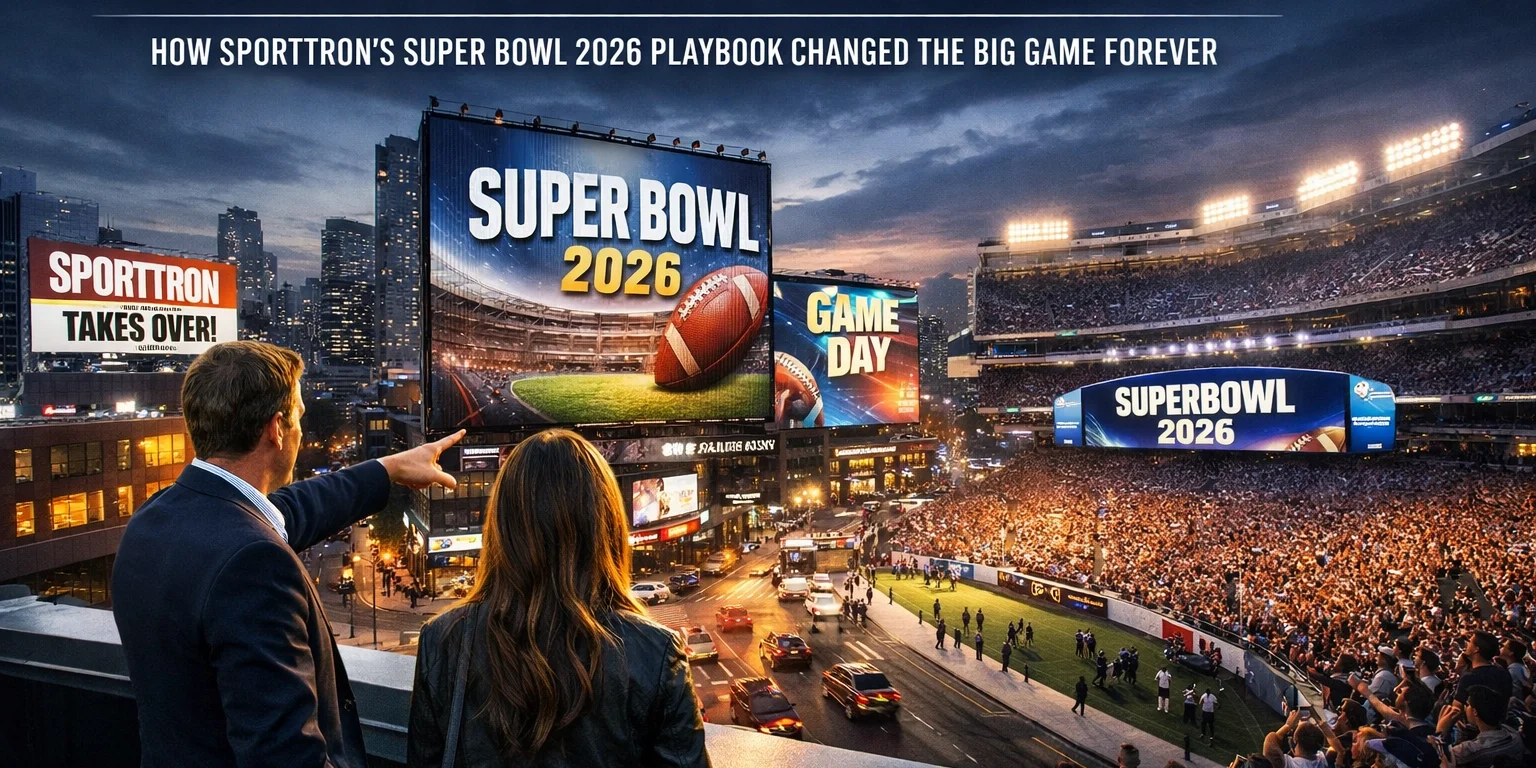
When Super Bowl LX arrived at Levi's Stadium in Santa Clara, something fundamental shifted in how brands approached the biggest advertising stage in sports. While millions focused on the rematch between the Seattle Seahawks and New England Patriots, a quieter revolution was unfolding across 780+ venues nationwide. Sporttron's out-of-home (OOH) advertising network demonstrated what coordinated, strategic venue placement can achieve when traditional television spots are no longer enough.
The numbers tell a compelling story. According to industry data, strategic OOH campaigns during major sporting events can amplify brand presence by reaching audiences in high-engagement environments where they're already primed for the experience. This isn't about replacing television advertising: it's about owning the entire environment around the event itself.
The Infrastructure Behind the Domination
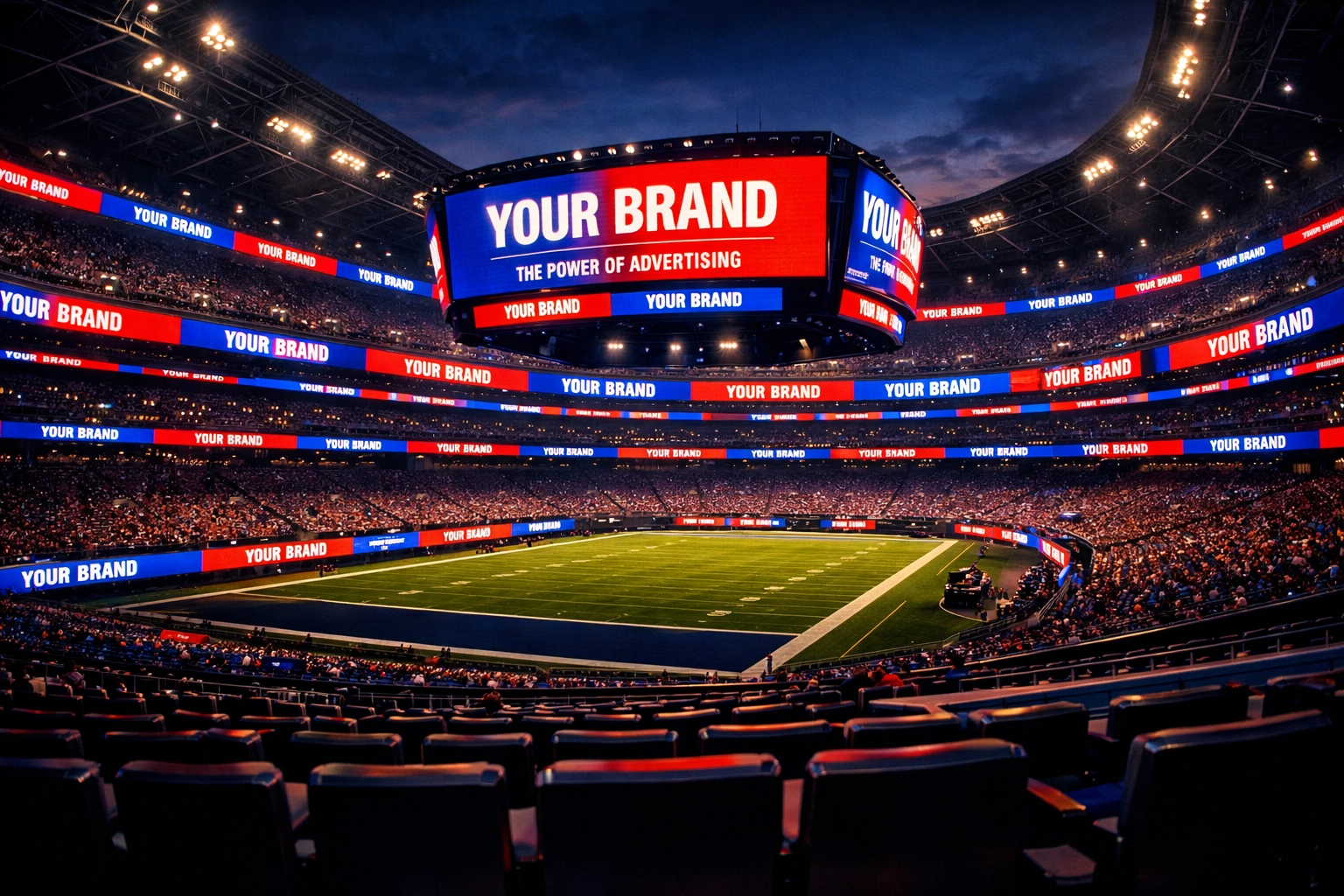
Sporttron operates as part of Sports Media Inc.'s OOH division, and their proprietary digital network spans an impressive footprint across the nation. This infrastructure represents more than simple billboard placement; it's a coordinated system of touchpoints designed to intercept audiences at multiple moments throughout their fan journey.
The network includes three primary advertising channels that work in concert:
Digital displays form the backbone of the system. Ribbon boards and jumbotrons across connected venues create a synchronized advertising experience. When a brand message appears on screens at Levi's Stadium, complementary creative can simultaneously deploy across partner venues nationwide, creating a unified brand presence that transcends geographical limitations.
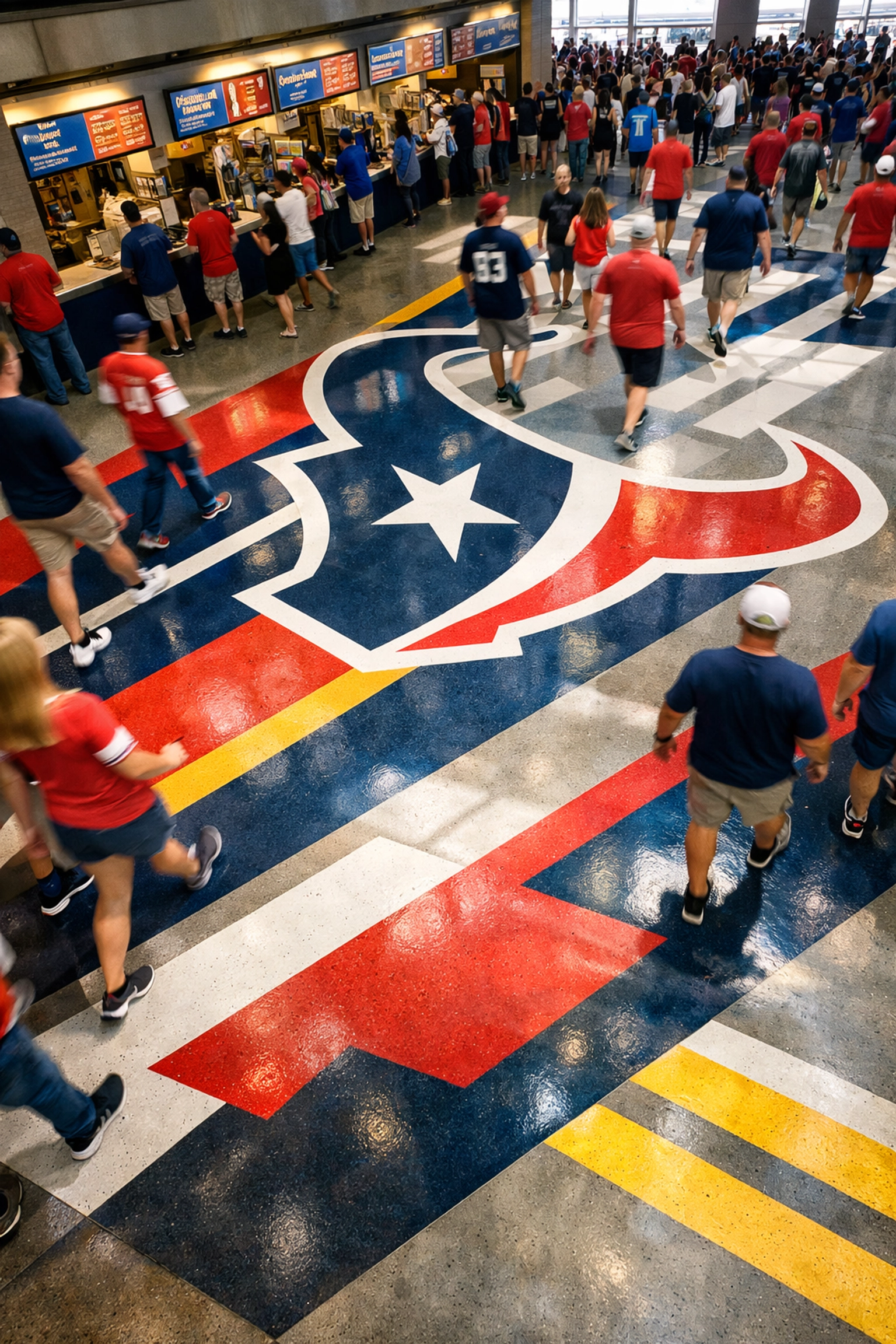
Physical spaces provide tangible brand interactions. Billboards, concourse floor graphics, and venue environment designs transform passive advertising into immersive brand experiences. These installations capture attention during the high-dwell time moments: when fans are moving through spaces, waiting in lines, or seeking their seats.
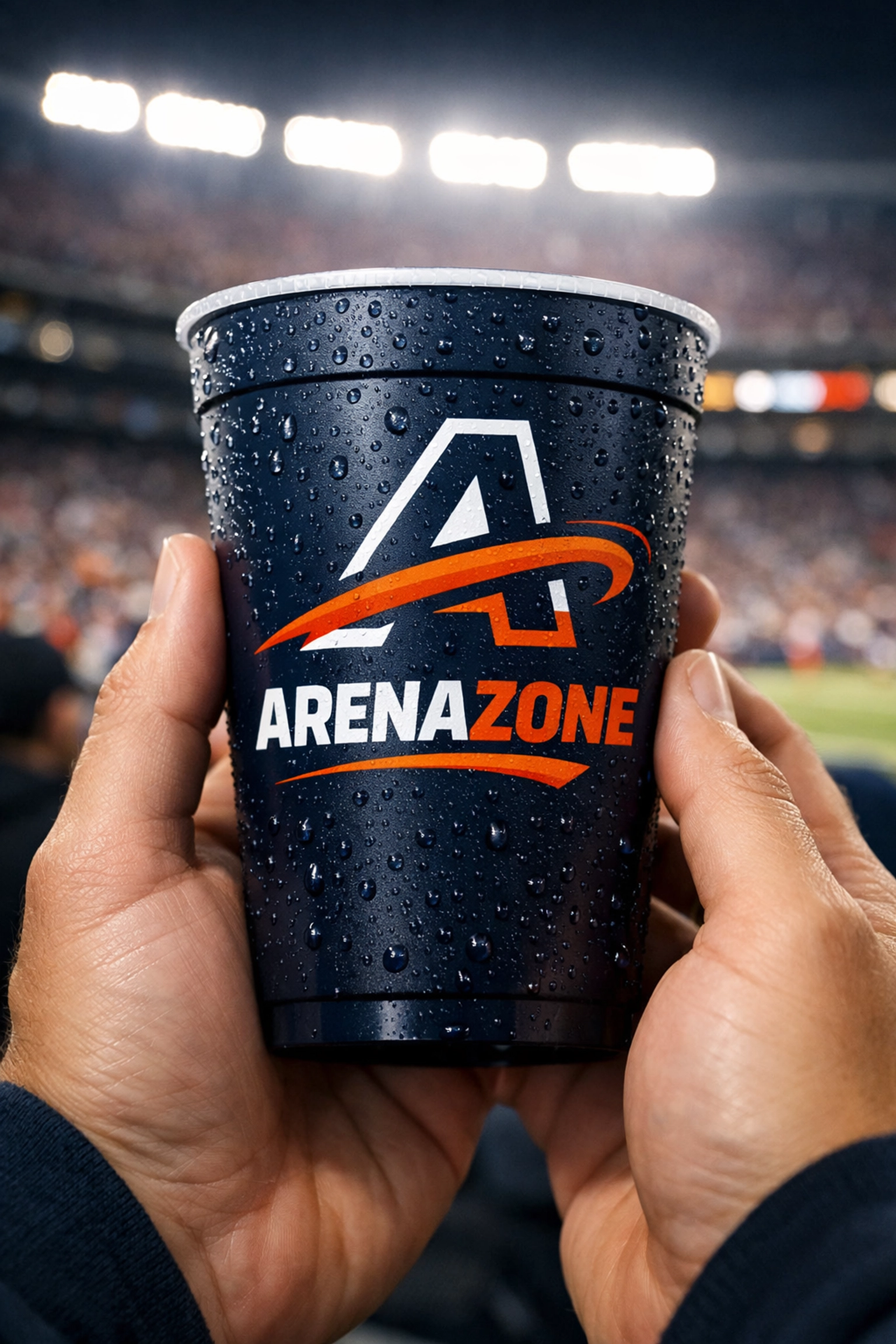
Fan touchpoints represent the most innovative element of the strategy. High-touch concession platforms and branded cup holders place brand messages directly into fans' hands. This physical interaction creates a lasting impression that extends beyond the visual stimuli of digital and static displays.
The coordination of these three channels creates what industry professionals call "environmental ownership": the ability to shape the entire sensory experience of event attendance rather than competing for attention within a single medium.
Watch the Big Game Strategy in Action
Why OOH Matters More Than Ever
The effectiveness of OOH during Super Bowl LX stems from a fundamental shift in consumer behavior. Audiences are increasingly fragmented across streaming platforms, ad-blocking technologies, and on-demand content consumption. The Super Bowl remains one of the few shared cultural moments, but even here, viewers engage differently than they did a decade ago.
OOH advertising capitalizes on this environment by reaching audiences when they're physically present and emotionally invested. The fan attending a Super Bowl watch party at a connected venue experiences brand messaging in a context where advertising feels like part of the celebration rather than an interruption.
Industry research supports this positioning. Strategic venue placement during major sporting events achieves higher engagement rates because the audience is already in an entertainment mindset. They're seeking experiences, not avoiding advertisements. This psychological positioning transforms OOH from background noise into anticipated content.
For Super Bowl LX specifically, the rematch narrative between the Seahawks and Patriots created heightened emotional investment. Fans remembered Super Bowl XLIX, and that nostalgia amplified their engagement with everything surrounding the event: including brand messaging deployed through Sporttron's network.
The Complementary Strategies That Multiply Impact
What separates Sporttron's approach from traditional venue advertising is the integration of complementary strategies that extend reach beyond physical locations. The company's Name, Image, and Likeness (NIL) platform connects brands with over 20,000 student athletes, creating a bridge to younger demographics who increasingly consume sports content through social media rather than traditional broadcasts.
This dual-channel approach recognizes a crucial reality: environmental domination requires both physical presence and digital amplification. When student athletes share content featuring brands visible in Sporttron's venue network, the OOH investment multiplies its impact through authentic, peer-to-peer social distribution.
The strategy transforms static venue advertising into a dynamic, multi-platform campaign. A fan sees a brand message on a jumbotron, encounters it again on a concourse floor graphic, receives a branded cup holder at concessions, and then sees their favorite college athlete post about the same brand on Instagram. The repetition creates familiarity without fatigue because each touchpoint feels contextually appropriate.
This approach also addresses a critical challenge in modern advertising: trust. Younger audiences particularly respond to messaging that feels organic rather than purchased. When a student athlete they follow engages with a brand that's also visibly present at venues they attend, the credibility of both the athlete and the brand increases.
Predictive Modeling and Fan Sentiment Analysis
The effectiveness of Sporttron's Super Bowl LX strategy wasn't accidental. Sports Media Inc. employs predictive modeling and fan sentiment analysis to optimize placement and creative execution. This data-driven approach identifies which venues will see the highest engagement, which visual formats perform best in specific contexts, and how to time message deployment for maximum impact.
For Super Bowl LX, these analytics revealed patterns that informed real-time adjustments. Fan sentiment tracking identified which aspects of the Seahawks-Patriots rivalry resonated most strongly, allowing brands to pivot creative messaging to align with audience emotions. When nostalgia for Super Bowl XLIX surged on social media, coordinated OOH messaging could echo those themes within hours.
This responsiveness represents a significant evolution in OOH advertising, which historically operated on much longer lead times. The integration of digital displays across Sporttron's network enables the kind of agility traditionally reserved for digital-only campaigns.
Actionable Takeaways for Brand Strategists

The lessons from Sporttron's Super Bowl LX playbook extend well beyond a single event. Organizations seeking to maximize OOH effectiveness during major sporting events should consider several strategic imperatives.
First, environmental ownership requires coordinated deployment across multiple touchpoints. Single-location advertising, no matter how prominent, cannot achieve the reinforcement effect that builds brand recall. Brands must think in terms of ecosystems rather than individual placements.
Second, the integration of digital and physical spaces creates opportunities for real-time optimization that static OOH cannot match. Investing in networks that enable rapid creative updates allows brands to respond to cultural moments as they unfold rather than committing to predetermined messaging months in advance.
Third, complementary amplification through authentic social distribution multiplies the impact of physical presence. Partnerships with athletes, influencers, or content creators who can extend OOH messaging into digital spaces create a synergistic effect that increases both reach and credibility.
Fourth, data-driven placement informed by predictive modeling and sentiment analysis ensures that advertising spend concentrates on high-value opportunities. The difference between successful OOH campaigns and wasteful ones often comes down to strategic selection rather than creative execution.
Looking Forward
The Super Bowl LX case study demonstrates that OOH advertising is entering a new phase of sophistication and effectiveness. As television audiences continue fragmenting and digital advertising faces increasing skepticism, strategic venue placement offers brands a way to reach engaged audiences in environments where advertising feels like part of the experience.
The future of OOH lies in this integration: physical presence amplified by digital distribution, data-informed placement enhanced by creative excellence, and environmental ownership that transforms venues into immersive brand experiences. Sporttron's playbook for Super Bowl 2026 changed the big game by proving that dominating the environment around an event can be as valuable as the broadcast itself.
For organizations evaluating their marketing strategies for major sporting events, the question is no longer whether to invest in OOH, but how to coordinate that investment across channels, platforms, and touchpoints to achieve true environmental domination. The brands that master this coordination will define the next generation of sports marketing, owning not just commercial breaks but the entire fan experience.





