The Infrastructure Advantage in Talent Development
The American workforce development landscape is undergoing a fundamental transformation. While most Fortune 100 companies continue to invest millions in traditional recruitment channels and training programs, a smaller subset of forward-thinking organizations has recognized a critical insight: physical infrastructure itself can serve as the most effective talent pipeline.
Recent infrastructure investments under federal programs have allocated billions toward building and modernizing America's physical systems. Yet the workforce development strategies embedded within these initiatives reveal something more profound than construction jobs. They demonstrate how strategic placement of career-ready infrastructure creates geographic advantages in talent acquisition that digital-only competitors cannot replicate.

Consider the data from major metropolitan infrastructure projects. When Los Angeles Metro, the Port of Long Beach, and the Port of Los Angeles integrated workforce development into infrastructure planning, they didn't simply create jobs: they built talent ecosystems. Denver's Regional Transportation District achieved retention rates above industry standards by placing over 700 workers through programs that combined infrastructure expansion with intentional career pathways. These weren't accidents. They were deliberate strategies that recognized physical presence as competitive advantage.
The Physical Distribution Model for Workforce Development
The concept is straightforward yet frequently overlooked: workforce development scales most effectively when distributed through physical touchpoints rather than centralized hubs. This approach mirrors successful retail and logistics strategies but applies them to human capital development.
Traditional workforce development operates through isolated training centers, community colleges, and corporate campuses. These centralized models create geographic barriers that limit reach and accessibility. The distributed infrastructure model, by contrast, establishes career-ready facilities in underserved communities, creating what industry analysts call "last-mile workforce development."
The mechanism works through three core components. First, physical facilities provide consistent access points where individuals encounter career opportunities regardless of their existing professional networks. Second, these locations serve as visible community anchors that signal employer commitment beyond temporary recruitment campaigns. Third, the infrastructure itself becomes training ground: exposing individuals to technology, operational systems, and professional environments that would otherwise remain inaccessible.
Philadelphia's recent $1.9 million in workforce development funding tied to infrastructure grants exemplifies this approach. The investment didn't flow solely into classroom training. It created physical spaces where individuals could interact with the actual systems, technologies, and workflows of emerging industries.

Esports Infrastructure as the Gateway to Cloud and AI Literacy
Perhaps the most innovative application of physical infrastructure for workforce development lies in competitive gaming facilities. This strategy initially appears counterintuitive to executives focused on enterprise technology talent. The connection becomes clear upon examination of the underlying technology stack.
Modern esports operations run entirely on cloud infrastructure. Competitive gaming requires real-time data processing, low-latency networking, content streaming, and performance analytics: the same technical foundations as enterprise AI and cloud computing. When organizations establish esports facilities in communities, they create environments where individuals develop cloud-native thinking without the intimidation factor of corporate technology training.
The demographic alignment further strengthens the strategy. Esports attracts precisely the age group that companies struggle to reach through traditional workforce programs: individuals aged 16-24 who possess digital fluency but lack structured pathways into technology careers. By meeting this population where their interests naturally lie, organizations create on-ramps to technology careers that bypass the credential barriers of conventional hiring.
This approach functions as what strategists call a "Trojan Horse" for technical literacy. Participants arrive for gaming but encounter broadcast production, network administration, event management, and data analytics. The skills transfer directly to enterprise technology roles, yet the learning occurs in an environment that feels recreational rather than vocational.
Building Sector Partnerships Through Physical Presence
The research on infrastructure workforce development consistently identifies sector partnerships as the highest-performing strategy. Organizations within similar industries collaborate on recruitment, training, and placement for workers with overlapping skill requirements. However, these partnerships require more than signed memoranda of understanding. They need physical infrastructure to function effectively.
Consider the zero-emission transportation sector. Multiple organizations need workers skilled in battery technology, electric powertrains, and renewable energy systems. When these companies establish shared training facilities or co-locate career development infrastructure, they transform abstract partnerships into operational reality. Workers gain exposure to multiple potential employers through single locations. Companies reduce individual training costs while expanding their talent pool.
The physical infrastructure model enables what traditional workforce development cannot: simultaneous exposure to multiple career pathways within single facilities. This design addresses a persistent challenge in talent development: individuals often commit to training programs before understanding actual job requirements or organizational cultures. Distributed infrastructure allows exploration before commitment, reducing early-career turnover and improving employer-employee matching.

The Retention Economics of Infrastructure-Based Development
Workforce development traditionally focuses on placement metrics: how many individuals complete training and accept positions. This emphasis overlooks the more critical factor: retention. Denver's WIN program achieved its success not through higher placement numbers but through sustained employment. The distinction matters significantly to enterprise workforce planning.
Retention correlates strongly with what researchers call "psychosocial integration": the sense that employment fits within one's identity and community connections. Physical infrastructure builds this integration by establishing visible, permanent presence in communities. Unlike temporary hiring events or remote training programs, infrastructure-based workforce development signals long-term employer commitment.
The economic impact extends beyond individual companies. When multiple organizations adopt distributed infrastructure approaches within geographic regions, they create career ecosystems that reduce community-wide brain drain. Talented individuals no longer need to relocate to access career opportunities. This geographic stability strengthens local economies and reduces the recruitment costs associated with relocation packages and retention bonuses in high-cost metropolitan areas.
Implementation Framework for Enterprise Scale
Fortune 100 organizations considering infrastructure-based workforce development face legitimate questions about capital requirements, operational complexity, and return on investment. The successful models provide clear frameworks.
The strategy begins with geographic analysis identifying communities where talent exists but career infrastructure does not. This typically includes mid-sized metropolitan areas, rural regions with strong educational systems, and urban neighborhoods underserved by existing employers. The goal is not placing facilities in areas with the most immediate talent need but rather in locations where physical presence creates disproportionate advantage.
Next comes partnership development with local stakeholders: educational institutions, workforce boards, and community organizations. These partnerships reduce individual company costs while increasing program legitimacy within communities. The shared-cost model that proved effective in Los Angeles and Santa Clara Valley enables infrastructure investment that would be prohibitive for single organizations.
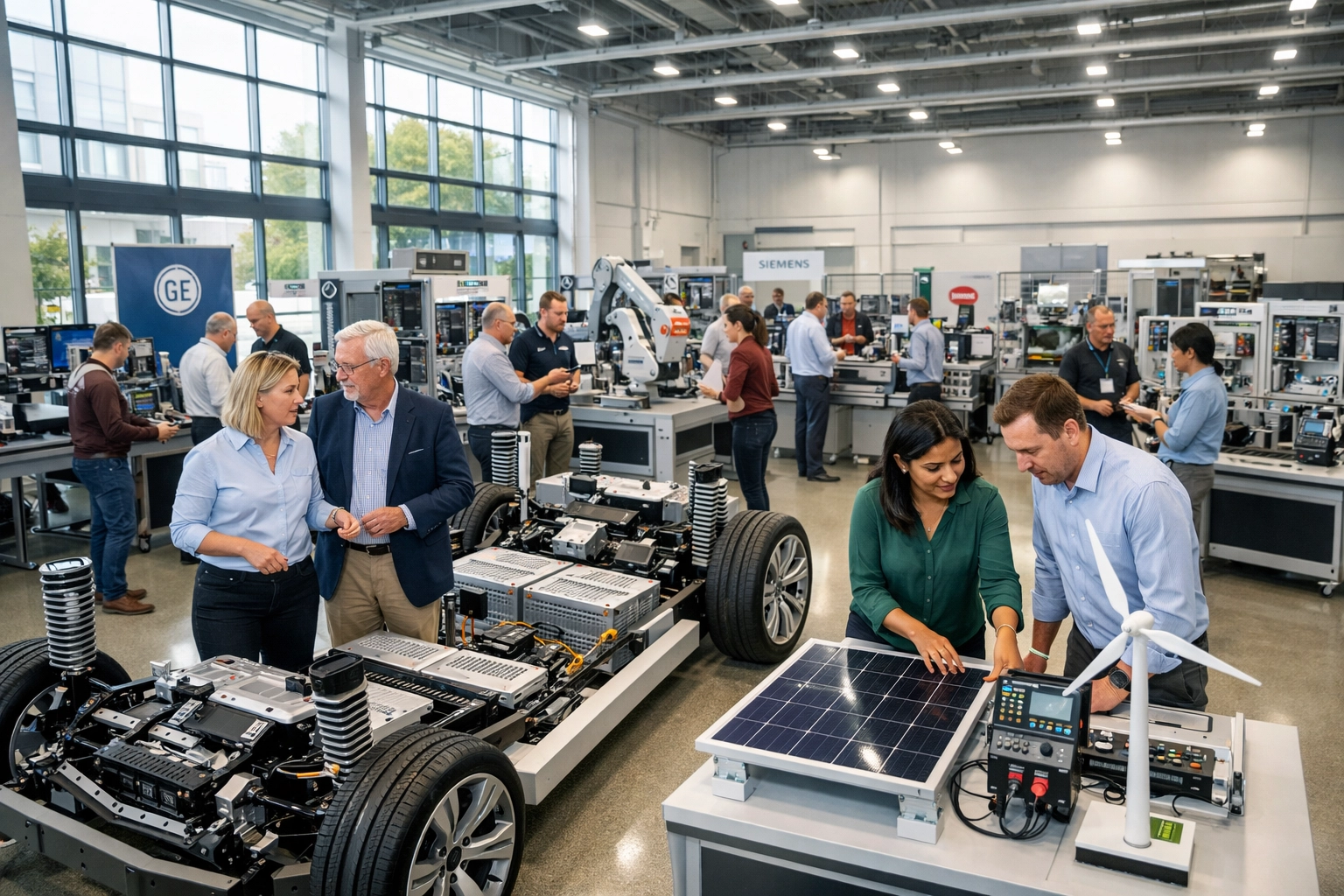
The facility design itself should prioritize flexibility over specialization. Spaces that accommodate multiple training modalities, technology demonstrations, and community events generate higher utilization and broader community impact than single-purpose facilities. The esports model demonstrates this principle: facilities serve competitive gaming, technology education, content creation, and community gathering depending on time and need.
Finally, integration with existing talent systems ensures the infrastructure functions as pipeline rather than isolated program. This requires connecting facility operations with corporate recruiting, HR systems, and manager development programs. The physical infrastructure serves as entry point, but sustainable impact requires organizational systems that recognize and advance individuals who enter through these pathways.
The Competitive Timeline
The workforce development advantage of physical infrastructure compounds over time. Early adopters establish community presence, build relationships with local stakeholders, and become associated with career opportunity in ways that later entrants struggle to replicate. This first-mover advantage operates similarly to retail site selection: the best locations get claimed first, and subsequent competitors face higher costs for inferior positions.
Current federal infrastructure investment creates a limited window for establishing these positions. As projects advance and funding allocates, the opportunities for workforce development integration diminish. Organizations that move decisively in 2026 can establish distributed infrastructure networks before competitors recognize the strategy's value.
The question facing Fortune 100 leadership is not whether physical infrastructure matters for workforce development: the data from successful implementations demonstrates clear impact. The question is whether to lead this transition or follow competitors who recognize the strategic value of career-ready infrastructure as talent acquisition tool. The companies that answer correctly will possess significant advantage in the decade-long competition for next-generation technical talent.