
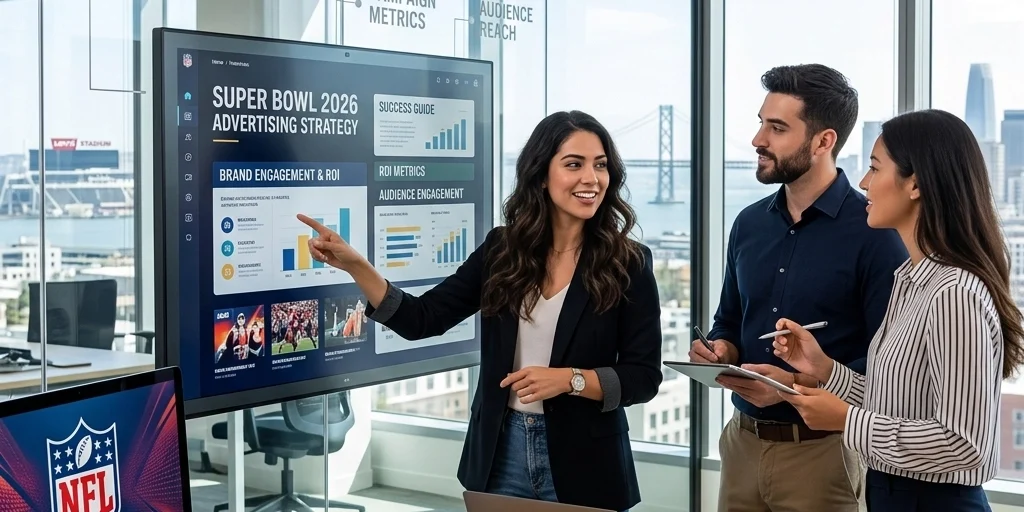
The Super Bowl remains the undisputed heavyweight champion of the advertising world. As we look back at the conclusion of Super Bowl 60 in early 2026, the landscape of sports marketing has undergone a seismic shift. For brands and business consultants alike, the game is no longer just about a single 30-second window of television airtime; it is about a multi-month, AI-driven ecosystem designed to capture attention across every conceivable screen.
At USA Entertainment Ventures LLC, we have watched these trends evolve. Under the leadership of our CEO, Dan Kost, we have prioritized understanding the intersection of traditional media and emerging technology. Whether you are a legacy brand or a rising startup, navigating the "Big Game" requires a strategy that balances the massive reach of broadcast with the surgical precision of digital platforms.
The State of Play: Advertising in 2026
In 2026, a 30-second Super Bowl television commercial commanded a record-breaking price tag of $8 million to $10 million. While the sticker shock is real, the value proposition has shifted. Data from this past season indicates that while the broadcast spot provides the "halo effect" and cultural relevance, the actual Return on Investment (ROI) is increasingly found in the digital periphery.
Research shows that YouTube view campaigns during the Super Bowl window achieved view rates between 56% and 64%. Simultaneously, Meta platforms delivered cost-per-lead efficiencies up to 70% higher than traditional broadcast spots. The modern advertiser must ask: "How do I make my $10 million investment work across all channels?"

The Three-Phase Campaign Framework
Success in 2026 is defined by a three-phase framework that begins weeks before the kickoff and extends long after the trophy is raised. This structure ensures that a brand is not just a "one-hit wonder" but a sustained topic of conversation.
Phase 1: The Pre-Game Hype (The Build-Up)
The "Super Bowl season" now begins in mid-January. Launching campaigns at least three weeks before the game is essential for establishing retargeting pools. According to industry analysis, click campaigns launched in mid-January saw 16% to 30% higher cost-per-click efficiency compared to those that waited until game week.
Key tactics in this phase include:
- Teaser Content: Releasing high-production snippets that hint at celebrity cameos.
- Influencer Partnerships: Collaborating with digital creators to provide behind-the-scenes access. In 2026, these partnerships achieved engagement rates of nearly 47%.
- Early Releases: Brands that released their full commercials 3 to 5 days before the game saw a 40% to 60% increase in total campaign reach.
Phase 2: Game-Day Execution
On game day, the strategy shifts to "second-screen" dominance. As viewers watch the broadcast, they are simultaneously engaging with social media, betting apps, and group chats. Brands must have "standby" ad sets ready to react to the game’s narrative: whether it is a blowout, a historic comeback, or a viral halftime moment.
Strategic placement remains vital. The first half and halftime periods continue to perform best for broad audiences, particularly those skewing female. However, the real victory occurs when a TV spot triggers an immediate media launch on YouTube and paid social platforms to capture the "second-screen" viewer.

Phase 3: Post-Game Saturation (The Long Tail)
The week following the Super Bowl often realizes the highest ROI. This is the "Long Tail" of the campaign. Search volume for viral moments and highlight reels spikes during this period. Successful advertisers use this time for aggressive retargeting, utilizing high-impact digital units like TikTok TopView or homepage takeovers to ensure their message stays top-of-mind.
The AI Revolution in Advertising
The defining characteristic of 2026 advertising is the seamless integration of Artificial Intelligence (AI). AI has moved from a novelty to the primary engine behind production efficiency and creative experimentation.
Brands are now using AI to generate hyper-personalized ad variants. Imagine a single commercial that features different background music, localized references, or even specific product placements based on the viewer's demographic segment. This level of AI-powered contextual placement ensures that the ad feels like a natural part of the viewer's experience rather than a disruptive interruption.
As Dan Kost often emphasizes at USA Entertainment Ventures LLC, the goal of technology should be to enhance the human connection. AI allows brands to speak to millions of people while making each individual feel seen.
Case Studies: Who Won Super Bowl 60?
The 2026 roster of advertisers was a mix of classic brands and tech giants. Levi's made a triumphant return to the Super Bowl stage for the first time since 2003, pairing their spot with an immersive pop-up experience in San Francisco. Meta utilized its ad space to promote its latest AI capabilities, soundtracked by Travis Scott, signaling its commitment to the future of the metaverse and social AI.
Other notable mentions include:
- Pepsi: Focused on "The Choice," a campaign celebrating consumer preference.
- Volkswagen: Tapped into nostalgia with "The Great Invitation: Drivers Wanted."
- Paramount Pictures: Leveraged the massive audience to build hype for "Scream 7."
- Star Wars/Lucasfilm: Delighted fans with a look at "The Mandalorian" featuring Grogu.
These campaigns succeeded because they didn't just sell a product; they told a story. Data proves that ads failing to evoke strong emotional responses: humor, inspiration, or nostalgia: are forgotten by the audience within 48 hours.
Strategic Insights for Business Consultants
For those of us in business consulting, the Super Bowl serves as a laboratory for broader market trends. The shift toward multi-channel integration is a signal for all businesses, regardless of size. You do not need a $10 million budget to apply these principles.
- Audience Layering: Combine demographic segments (e.g., "tech enthusiasts" with "outdoor explorers") to deliver creative that feels personal.
- Emotional Resonance: Always lead with the "why" of your brand.
- Data-Driven Decisions: Use real-time analytics to pivot your strategy based on what is actually performing.
At USA Entertainment Ventures LLC, we help our clients navigate these complexities. You can explore more of our work and partnerships through our portfolio or learn about our specific divisions like SportsMedia and 360 Sports Media.
The Super Bowl Playbook
If you want to dive deeper into the mechanics of these high-stakes campaigns, we recommend following the latest industry newsletters. "The Super Bowl Playbook – Sports Media's Advertising Strategy" is an essential resource for staying ahead of the curve. It breaks down the play-by-play tactics used by the world's most successful CMOs.
To see these strategies in action, watch this comprehensive breakdown of sports media's latest advertising maneuvers:
https://www.youtube.com/watch?v=l6J-0zileKE
Final Thoughts
The Super Bowl is more than a game; it is a cultural moment that defines the advertising standard for the rest of the year. In 2026, the brands that succeeded were those that embraced AI, planned for the long tail, and understood that the "second screen" is just as important as the first.
As we move forward, the lessons learned from Super Bowl 60 will shape how we approach marketing across all industries. The barrier to entry may be high, but the potential for impact has never been greater.

For more insights into the intersection of entertainment, business, and media, stay tuned to the USA Entertainment Ventures LLC blog. You can also find our full index of resources to help your business grow in this fast-paced environment.
Interested in how these trends apply to your specific industry? Contact our team at USA Entertainment Ventures LLC to discuss your next big move.





