
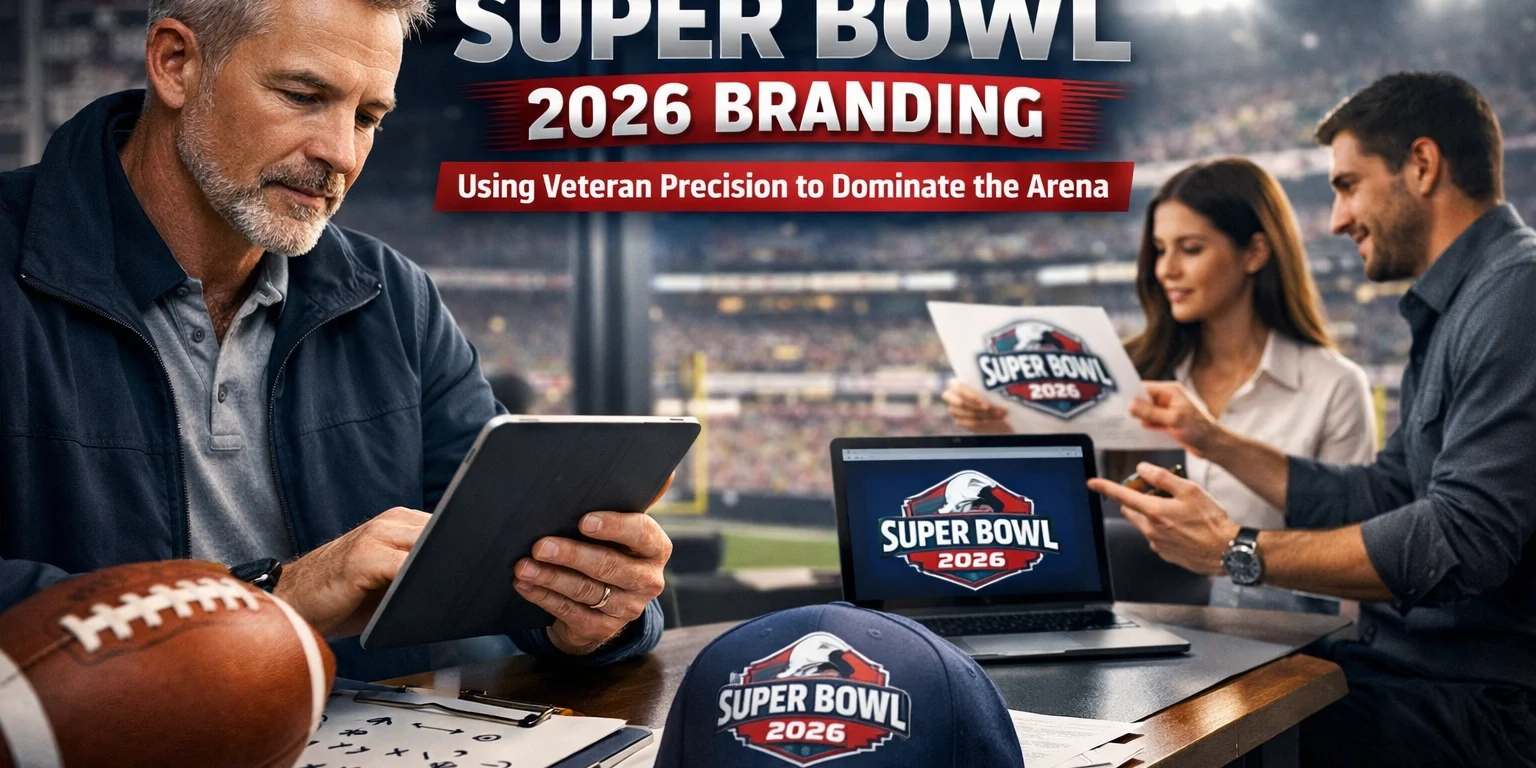
Super Bowl 2026 is not “one ad on one night.” It is a compressed, high-stakes marketplace where attention is scarce, competition is relentless, and mistakes are expensive. Brands that win do not rely on spectacle alone, they operate with veteran precision: disciplined planning, repeatable systems, fast decision-making, and ruthless focus on measurable ROI.
That mindset is at the center of our press release, “Dominating the Arena – Sports Media’s 40-Year Legacy at Super Bowl 2026.” It highlights a simple truth: when you treat the Big Game as a multi-week campaign ecosystem (not a single-day stunt), you create more touchpoints, more data, and more opportunities to convert interest into revenue.
“Without data, you’re just another person with an opinion.” , W. Edwards Deming
This principle is especially relevant during Super Bowl season, where the difference between a “memorable” campaign and a profitable one is measurement discipline.
Below is a field-tested guide you can use to plan, execute, and optimize Super Bowl 2026 branding with the precision of a seasoned operator, built around three phases, clear ROI targets, and a compliance-first approach.
Watch: “Dominating the Arena” (40-Year Legacy + ROI-First Execution)
Use this video as context for how veteran teams structure Super Bowl campaigns: planning early, controlling variables, and building a durable media machine rather than chasing a one-night spike.
https://www.youtube.com/watch?v=l6J-0zileKE
The ROI Reality: What You’re Really Buying During Super Bowl Week
Most teams overpay for the wrong thing. They buy exposure, then hope for results. Veteran precision flips that: you define the business outcome first, then purchase the media, creative, and experiences that reliably produce it.
Here are the outcomes that matter, and how to translate them into measurable goals:
- Revenue impact: direct sales, qualified leads, bookings, subscriptions
- Customer acquisition efficiency: cost per acquisition (CPA), cost per lead (CPL)
- Brand demand lift: branded search growth, share of search, site direct traffic
- Retail and distribution impact: store foot traffic, partner sell-through, coupon redemption
- Long-tail value: email/SMS list growth, app installs, retargeting pool size, first-party data capture
A strong Super Bowl 2026 campaign is best viewed as a three-phase funnel: build demand early, capture attention during peak, then convert and retain after the game.
The Three-Phase Campaign Framework (Veteran Precision Edition)
Research from recent Super Bowl-era campaigns shows the most successful strategies run as an integrated ecosystem across pre-game, game day, and post-game momentum, not as a standalone ad buy.
Phase 1: Pre-Game Hype (Start 3–4 Weeks Early)
If you wait until game day, you are paying premium prices to talk to an audience that has already been saturated by competitors. Starting early gives you cheaper impressions, higher attention quality, and time to build retargeting audiences.
Your Phase 1 priorities:
- Clarify a one-sentence idea. The best campaigns can be explained fast, often in under 10 seconds of attention.
- Seed the narrative across channels. Teasers, creator partnerships, behind-the-scenes, PR hooks, and short-form video.
- Build retargeting pools. You are not just “getting views.” You are building the audiences you will convert later.
- Create a reason to opt in. Early access, limited drops, preorders, waitlists, VIP experiences, or a content series.
“The aim of marketing is to know and understand the customer so well the product or service fits them and sells itself.” , Peter Drucker
Pre-game planning is where that understanding becomes targeting, segmentation, and measurable intent signals.
Practical checklist (Phase 1):
- Launch teaser creative in multiple aspect ratios (9:16, 1:1, 16:9)
- Set up campaign tracking (UTMs, pixels, server-side tagging where possible)
- Publish a landing page built for conversion (not just a homepage link)
- Capture emails/SMS with a clear value exchange
- Create 3–5 audience segments for retargeting (video viewers, site visitors, cart abandoners, etc.)
!
Phase 2: Game Day Execution (High Noise, Low Margin for Error)
Game day is when the audience peaks, and so does competitive clutter. Veteran precision means you prepare for volatility. Your job is not only to “launch.” Your job is to respond.
A best practice seen in top-performing Super Bowl campaigns is the Brand War Room model: a small, empowered team with pre-approved playbooks and creative variants ready to deploy immediately based on what happens during the game (close finish, blowout, viral halftime moment, unexpected controversy, technical issues).
Game-day success comes from:
- Pre-approved creative branches: multiple captions, cut-downs, and graphics ready
- Real-time decision rights: who can approve what, and how fast
- Second-screen strategy: Super Bowl viewers multitask; your digital presence must assume it
- Physical + digital integration: QR codes, NFC touchpoints, location-based prompts
- Operational resilience: contingency plans for traffic spikes, site stability, customer support
The simplest, highest-ROI game-day moves:
- Make it effortless to take the next step (one clear CTA, minimal friction)
- Drive to a single campaign hub page (instead of scattering attention)
- Retarget immediately (hours matter, not days)
!
Phase 3: Post-Game Momentum (Where ROI Is Often Won)
Many brands stop after the final whistle. That’s where waste happens, because the most cost-effective conversions often occur after attention has already been generated.
Post-game is the conversion engine:
- Follow-up offers, limited extensions, “still live” messaging
- Case-study style recaps (“what we learned,” “top moments,” “fan reactions”)
- Creator and PR amplification while interest is still high
- Lead-nurture sequences (email/SMS) to convert late deciders
- Retargeting based on engagement depth (not just clicks)
A key principle from performance marketing applies here: warm audiences are assets. The bigger your warm pool, the more you can lower CPA in the weeks after the game.
The Veteran Precision Playbook: What “Simple” Really Means
In high-pressure advertising environments, simplicity is not “basic.” It is a competitive advantage.
Research-backed campaign lessons consistently show that the most memorable concepts can be summarized in one sentence and understood immediately. In practice, that means:
- One promise
- One emotion
- One action you want the audience to take
A precision test your team can run:
- Can a neutral person describe your campaign after seeing it once?
- Can they repeat the CTA without being prompted?
- Can they explain why the brand is involved without confusion?
If any answer is “no,” simplify before you scale.
Omnichannel Integration That Actually Increases ROI (Not Just Complexity)
“Omnichannel” becomes a buzzword when it creates more work without improving outcomes. Veteran teams integrate channels to improve measurement and conversion, not to impress stakeholders.
A high-performing Super Bowl branding stack often includes:
- Connected TV (CTV): targeted reach and frequency control
- YouTube + Meta: scale, second-screen capture, and retargeting depth
- OOH in key corridors: airports, transit, major venues, and high dwell-time areas
- Experiential activations: where real engagement and data capture can happen
What ties it together is one campaign spine:
- consistent visual system
- consistent tagline
- consistent offer/CTA
- consistent measurement plan
If you want to explore how this connects to broader event success, our related guide on fan-side execution is a useful companion:
https://usaentertainmentventures.com/the-ultimate-guide-to-super-bowl-2026-fan-experiences-everything-you-need-to-succeed-2
OOH and “Transition Moments”: The Underused Advantage
One of the most reliable OOH insights for major sports events is the value of transition moments: airports, rideshare zones, transit stations, and major thoroughfares. People are moving, waiting, scanning, and more likely to notice repeated messaging.
Precision planning means mapping:
- where fans arrive
- where media crews move
- where corporate hospitality flows
- where foot traffic concentrates before and after key events
A citywide footprint is not about “being everywhere.” It is about being present at the moments that matter.
!
Legal and Compliance: Avoiding the Fastest Way to Burn Budget
During Super Bowl season, trademark enforcement is real. Veteran operators treat compliance as part of ROI protection.
A safe rule: do not use protected league marks or language unless you have explicit rights. Common restricted items can include league names, logos, team names, and certain event phrases. Many brands choose safer alternatives like:
- “The Big Game”
- “Football Sunday”
- “Game Day”
- “Championship Weekend” (context-dependent)
The operational takeaway: involve legal early, and build a compliant creative kit so your team is not forced into last-minute rewrites that dilute performance.
Measurement That Proves Impact (and Justifies Next Year’s Budget)
A Super Bowl campaign without measurement is a branding expense. A Super Bowl campaign with measurement becomes a business asset.
Veteran precision measurement focuses on incremental lift, not vanity metrics alone.
Minimum measurement set (recommended):
- Branded search lift (Google Trends + Search Console)
- Site direct traffic lift vs. baseline
- Conversion rate changes on campaign pages
- Cost per lead / acquisition by channel
- Email/SMS opt-ins and downstream revenue
- Retail or partner lift where applicable (coupons, promo codes, geo-lift tests)
“What gets measured gets managed.” : Peter Drucker (often attributed; widely used in management literature)
Whether or not the attribution is perfect, the principle holds: measurement creates control.
A practical approach to attribution during Super Bowl season:
- Use unique landing pages per channel when possible
- Use promo codes tied to placements or time windows
- Run geo-based tests (markets exposed vs. less exposed)
- Track view-through conversions for CTV/YouTube where available
A 30-Day Super Bowl 2026 Branding Timeline (Simple, Repeatable, Effective)
This is an execution-ready outline you can adapt:
Weeks 4–3 before game day
- Finalize one-sentence campaign concept + offer
- Build landing page + analytics stack
- Produce teaser assets + retargeting video variants
- Confirm compliance guidelines
Weeks 2–1
- Scale teaser + creator content
- Build warm audiences and segment them
- Finalize war-room playbooks and pre-approved reactive assets
- Lock OOH placements and experiential logistics
Game week
- Increase frequency, drive to campaign hub
- Launch OOH/experiential integrations
- Test offers and page performance daily
Game day
- War room live monitoring (social, search, site performance)
- Rapid response publishing
- Retargeting and capture flows optimized hourly
Week after
- Conversion push to warm audiences
- PR recap + performance creative
- Report ROI with clear next actions
!
How USA Entertainment Ventures LLC Supports Super Bowl-Scale Precision
USA Entertainment Ventures LLC is a business consulting firm, but our Super Bowl-season work is grounded in what leadership teams care about most: operational execution and measurable outcomes. That includes aligning stakeholders, tightening decision cycles, and building campaign systems that do not collapse under pressure.
If you want a clear view of how we approach growth and execution across industries, explore our consulting work:
https://usaentertainmentventures.com/project-category/consulting
Or if you are planning media-heavy activations, our media and sports advertising capabilities are relevant starting points:
- https://usaentertainmentventures.com/project-category/media
- https://usaentertainmentventures.com/project-category/sports-advertising
Key Takeaways (Reinforced for Action)
- Super Bowl 2026 branding is a multi-phase system, not a one-night moment.
- Veteran precision means simple messaging, early planning, and fast execution under pressure.
- ROI improves when you treat attention as the start of a funnel: build warm audiences early, convert after the game.
- A war-room model with pre-approved assets protects performance when the unexpected happens.
- Compliance is not optional: protect your budget by building legally safe creative from day one.
- Measurement is how you turn Super Bowl spend into repeatable growth.





