
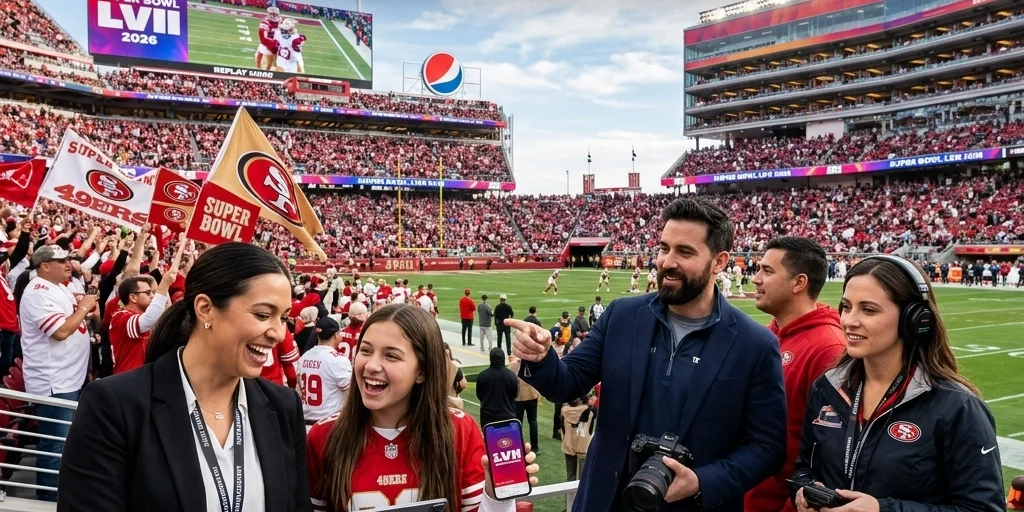
As the dust settles on Super Bowl LX, the industry is looking back at what was arguably the most technologically advanced and physically immersive sporting event in history. Held at Levi’s Stadium in Santa Clara, California, the 2026 Super Bowl wasn't just a game; it was a masterclass in modern fan engagement. For businesses and consultants looking to replicate this success, understanding the "phygital" (physical plus digital) landscape is no longer optional: it is a requirement.
At USA Entertainment Ventures LLC, we have closely monitored the evolution of these high-stakes branding strategies. The 2026 season proved that while digital reach is massive, the tangible, human connection is what truly cements brand loyalty.
The Shift to "Phygital" Engagement
The term "phygital" dominated the conversation leading up to and during Super Bowl 2026. This concept refers to the seamless integration of physical experiences with digital infrastructure. Fans in 2026 did not just want to watch a screen; they wanted to step inside the game.
The centerpiece of this strategy was the Super Bowl Experience at the Moscone Center. This was not merely a merchandise shop; it was an interactive laboratory. Brands that succeeded did so by offering experiences that fans could touch, feel, and participate in physically. Whether it was the 40-yard dash against virtual NFL players on massive LED screens or the opportunity to view the Vince Lombardi Trophy in a multi-sensory environment, the goal was clear: create a memory that exists outside of a smartphone.

Creating Connections: Tangible Fan Experiences
In our latest focus, "Creating Connections – Tangible Fan Experiences at Super Bowl 2026," we explored how brands moved away from passive observation. In an era where digital noise is at an all-time high, the physical world offers a rare opportunity for undivided attention.
Research indicates that multi-sensory engagement: incorporating sight, sound, and touch: leads to higher brand recall. During the Super Bowl festivities, local activations in San Francisco and San Jose focused on providing genuine utility. For instance, tech companies offered high-speed charging lounges that doubled as immersive brand galleries. This provided a "tangible" benefit to the fan while keeping them within the brand’s ecosystem.
To see how these connections come to life, watch this analysis of the fan journey:
https://www.youtube.com/watch?v=l6J-0zileKE
The Digital Backbone: NFL OnePass and Gamification
While the physical experience was the heart of the event, the NFL OnePass app served as the central nervous system. In 2026, the app evolved from a simple ticketing tool into an essential companion. It functioned as a digital passport, allowing fans to register for exclusive events, track their progress through gamified challenges at fan zones, and access augmented reality (AR) content.
Gamification was a critical driver of engagement. By turning the Super Bowl Experience into a series of achievable quests, the NFL and its partners ensured that fans remained active participants rather than passive spectators. This strategy aligns with findings in The Ultimate Guide to High-Stakes Branding, where we discuss the importance of interactive milestones in building brand equity.

Key Venues and Local Impact
The geographic spread of Super Bowl 2026 across the Bay Area presented unique challenges and opportunities. Key hubs included:
- Levi’s Stadium (Santa Clara): The main stage where digital infrastructure was pushed to its limits to support 5G-enabled real-time replays and in-seat AR experiences.
- Moscone Center (San Francisco): The home of the Super Bowl Experience, focusing on interactive exhibits.
- San Jose Convention Center: Hosted "Opening Night," which was notably made free to the public in 2026 to foster community inclusion.
- Chase Center: Home to the EA SPORTS Madden Bowl, bridging the gap between traditional sports and esports.
By spreading the engagement across multiple cities, organizers allowed for a broader range of "tangible" touchpoints, ensuring that even those without tickets to the game felt a physical connection to the event.
Entertainment and Cultural Significance
The 2026 event reached beyond sports fans by leveraging massive cultural icons. Charlie Puth’s performance of the national anthem and Bad Bunny’s high-energy halftime show brought in demographics that typically might not tune in for a football game.
For brands, these performances are more than just entertainment; they are engagement multipliers. Successful marketers utilized real-time response teams to capture "meme-able" moments from these performances, ensuring their brand was part of the cultural conversation as it happened. Using influencers on-site to provide "behind-the-scenes" access further humanized the experience for those watching from home.

Best Practices for Brand Engagement in 2026 and Beyond
Based on the data gathered from Super Bowl LX, here are the actionable takeaways for any business looking to lead in fan engagement:
1. Prioritize Utility Over Promotion
Fans are more likely to engage with a brand that provides a service. Whether it's a comfortable place to sit, a phone charging station, or exclusive access to information, utility builds trust.
2. Leverage Real-Time Analytics
The window for relevance is smaller than ever. Brands must have teams ready to react to game-day events in seconds, not hours. This requires a robust digital infrastructure and a clear understanding of the brand's voice.
3. Focus on "The Shareable Moment"
Every physical activation should have a digital "tail." If a fan participates in a tangible experience, there must be an easy, seamless way for them to share that experience on social media. This turns every fan into a brand ambassador.
4. Accessibility is Key
As seen with the free Opening Night in San Jose, removing barriers to entry can significantly increase a brand’s reach and foster long-term loyalty among a wider audience.

Looking Forward: The Future of Sports Marketing
The lessons learned from Super Bowl 2026 indicate a future where the line between the physical and digital worlds continues to blur. As we look toward future events, the emphasis will shift even more toward personalization. Fans will expect experiences tailored to their specific interests, driven by the data collected through platforms like OnePass.
At USA Entertainment Ventures LLC, we believe that the businesses that will thrive are those that view fan engagement not as a single event, but as an ongoing conversation. By combining the latest in digital innovation with the timeless appeal of tangible, physical experiences, brands can create connections that last far beyond the final whistle.
For more insights into how we help businesses navigate these complex landscapes, explore our page sitemap or visit our main website to see our portfolio of success.
The era of the passive fan is over. The era of the engaged participant is here, and it is more tangible than ever.





