
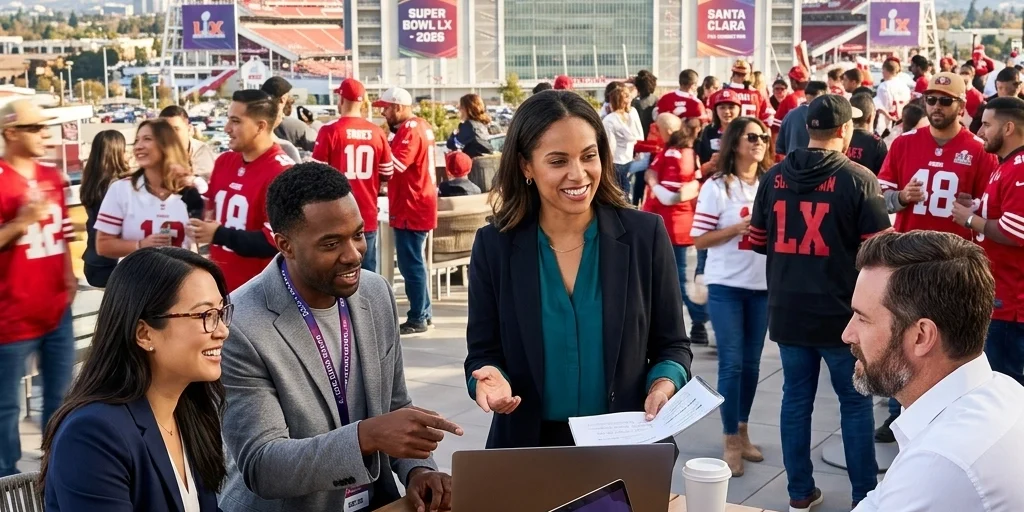
As we look back on the dust settling from the monumental Super Bowl LX in early 2026, one thing has become abundantly clear: the landscape of sports branding has shifted permanently. We are no longer in an era where a clever thirty-second television spot is enough to move the needle. Today, success is defined by "Creating Connections": the ability of a brand to weave itself into the literal fabric of the fan’s journey.
At USA Entertainment Ventures LLC, led by our CEO Dan Kost, we’ve spent years consulting businesses on how to navigate the intersection of entertainment, travel, and opportunity. Super Bowl 2026 served as the ultimate proof of concept for our philosophy: tangible fan experiences are the new gold standard. In this guide, we’ll break down the strategies that dominated the 2026 season and provide a roadmap for brands looking to win in the high-stakes world of sports marketing.
The New Era: From Passive Spectators to Active Participants
For decades, the Super Bowl was a "sit back and watch" event. In 2026, that dynamic was flipped on its head. Fans didn't just want to watch the game; they wanted to live it. This shift toward experiential branding is driven by a desire for authenticity and a "fear of missing out" (FOMO) that permeates social media culture.
According to recent industry data, campaigns that prioritized interactive, tangible experiences saw a significantly higher return on investment (ROI) compared to traditional broadcast-only strategies. Branding in 2026 became about creating a "halo effect" where the physical presence of a brand in a fan's life: at the airport, in the fan zone, or through their smartphone: created a sense of ubiquity and trust.
To get a better sense of how these tangible connections come to life, check out our latest feature on creating connections:
https://www.youtube.com/watch?v=l6J-0zileKE
Interactive Gamification: Winning the Fan Zone
One of the standout winners of the 2026 season was interactive gamification. By utilizing high-definition LED screens and motion-tracking technology, brands transformed standard booths into immersive fan hubs. Imagine a fan walking into a branded zone and testing their skills against a virtual avatar of an NFL star.
These weren't just games; they were data-capture powerhouses. Whether it was a "40-Yard Dash Challenge" or a precision passing contest, these activations allowed brands to collect valuable first-party data while providing the fan with a shareable social media moment. When a fan posts a video of themselves "beating" a virtual pro, your brand isn't just a logo on a wall: it's the host of their best memory of the week.

The Three-Wave Strategy: Building Momentum
A common mistake brands make is putting 100% of their energy into Game Day. Our approach at USA Entertainment Ventures LLC emphasizes a phased rollout that builds anticipation and maximizes retargeting opportunities.
Wave 1: The Audience Builder (January)
The first wave is about curiosity. Brands that succeeded in 2026 began their campaigns weeks before the kickoff. The goal here is to build "retargeting pools." By releasing teaser content or interactive digital puzzles, brands can identify who is interested and "tag" them for future messaging.
Wave 2: Product Proof (Two Weeks Out)
This is where credibility is established. Brands moved from "teasing" to "demonstrating." Whether through influencer partnerships or deep-dive content into the brand’s values, this phase ensures that by the time the fan reaches the Super Bowl city, they already have a positive association with the product.
Wave 3: The Game Week Retargeting Blitz
This is the final push. With the audience already primed, brands deployed high-conversion creative. This is where the physical meets the digital: geofencing around stadiums and hotels allowed brands to send targeted notifications to fans' phones the moment they entered a specific zone.
Influencer Integration: The Cultural Bridge
In 2026, the role of the influencer evolved. It was no longer about a celebrity holding a product; it was about the influencer acting as a cultural bridge. Research shows that influencer-driven content delivered a 70% higher efficiency in cost-per-click compared to standard brand-led creative.
Why? Because fans trust people, not corporations. The most successful branding at Super Bowl LX involved influencers who were authentically embedded in the game's culture. They weren't just there to shill; they were there to host the party, narrate the experience, and provide "behind-the-scenes" access that traditional media couldn't offer.

Physical Activations and the "Sleepover" Effect
Physical presence matters more than ever in a digital world. We saw brands transform traditional spaces into experiential destinations. For example, some brands created luxury "sleepover" experiences in stadium suites, while others, like Don Julio, utilized "trolley takeovers" to celebrate local rituals.
These activations work because they are tangible. When a fan can touch, taste, or sit inside a brand’s world, the connection becomes emotional rather than transactional. At USA Entertainment Ventures, we often point our clients toward these "out-of-home" (OOH) opportunities, such as those seen through 360 Sports Media, which blend physical visibility with high-impact digital messaging.
The Power of Nostalgia and Emotional Resonance
Interestingly, as technology advanced in 2026, so did the power of nostalgia. Messaging that referenced legendary players or local community resilience saw a 7% increase in effectiveness. In a fast-paced, tech-heavy environment, fans gravitate toward stories that ground them.
Successful brands used digital billboards and jumbotrons to tell these narrative-driven stories. They didn't just sell a product; they sold a feeling of belonging. By connecting a brand to the history of the sport or the city hosting the game, marketers tapped into a deep well of fan loyalty that persists long after the final whistle.

Actionable Takeaways for Future Branding
If you want to succeed in the high-stakes world of sports entertainment consulting, here are the practical steps to implement:
- Bridge the Gap: Ensure every physical activation has a digital component (QR codes, AR filters, or geofencing).
- Start Early: Don't wait for February. Begin building your audience in early January to maximize your retargeting data.
- Invest in Experience: Move budget away from passive ads and toward interactive zones where fans can participate.
- Humanize the Brand: Use influencers as narrators, not just faces. Let them tell your brand's story in their own voice.
- Use Data to Pivot: Establish a "war room" to adjust your social media and digital ad spend in real-time based on game events (e.g., a massive comeback or a controversial call).
Looking Ahead: The Future of Fan Connection
The lessons learned from Super Bowl 2026 are already shaping the preparations for Super Bowl LXI in 2027 at SoFi Stadium. The move toward "Physical-to-Digital" journeys is only accelerating. We expect to see even more integration of AI-driven personalization, where a fan’s experience in the stadium is customized based on their previous digital interactions with a brand.
At USA Entertainment Ventures LLC, we believe that the businesses that will thrive are those that view the fan not as a target, but as a partner in the entertainment experience. By focusing on tangible connections and authentic storytelling, your brand can transcend the noise of the marketplace and become a permanent part of the fan’s highlight reel.
Success in branding isn't about being the loudest; it's about being the most memorable. As we move further into 2026 and beyond, the opportunity for innovation has never been greater. It's time to step off the sidelines and into the game.

For more insights into business consulting and entertainment management, visit us at usaentertainmentventures.com.





