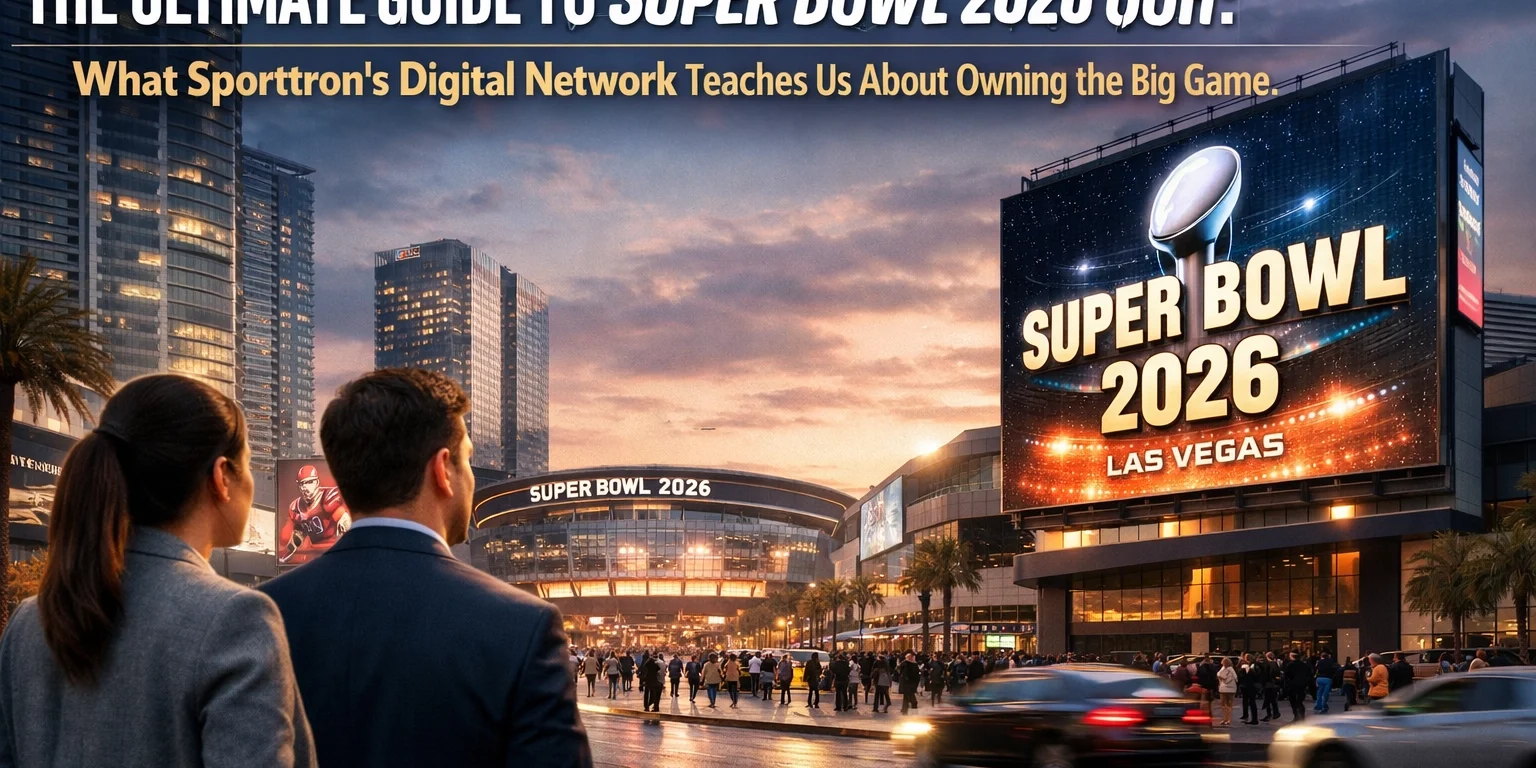
The Super Bowl remains one of the most coveted advertising opportunities in the world, but the game itself represents only a fraction of the available engagement window. While most brands focus exclusively on securing those precious seconds of airtime during the broadcast, a more sophisticated approach involves dominating the physical environment where fans actually experience the event. This is where Out-of-Home (OOH) advertising emerges as not just an alternative but potentially a superior strategy for brands seeking meaningful impact.
Sporttron's digital network exemplifies this environmental ownership approach, demonstrating that the most effective Super Bowl marketing campaigns extend far beyond the television screen. By examining their methodology, we can extract valuable insights applicable to any brand considering OOH investment for major sporting events.
The Fundamental Shift in OOH Strategy
Traditional billboard advertising operated on a simple premise: secure high-traffic locations and display static messaging. Sporttron's approach represents a fundamental departure from this model. Rather than treating OOH as isolated placements, their digital network integrates multiple formats into a cohesive environmental strategy that surrounds audiences throughout their entire Super Bowl experience.
This shift reflects a broader understanding of how people engage with major events. Super Bowl attendees don't simply appear at the stadium for three hours and vanish. They travel through airports, navigate urban centers via rideshare services, check into hotels, explore convention centers, dine at restaurants, and move through transportation hubs. Each of these touchpoints represents an opportunity for meaningful brand engagement, and when strategically orchestrated, these moments compound into a powerful cumulative effect.
Understanding Audience Movement Patterns
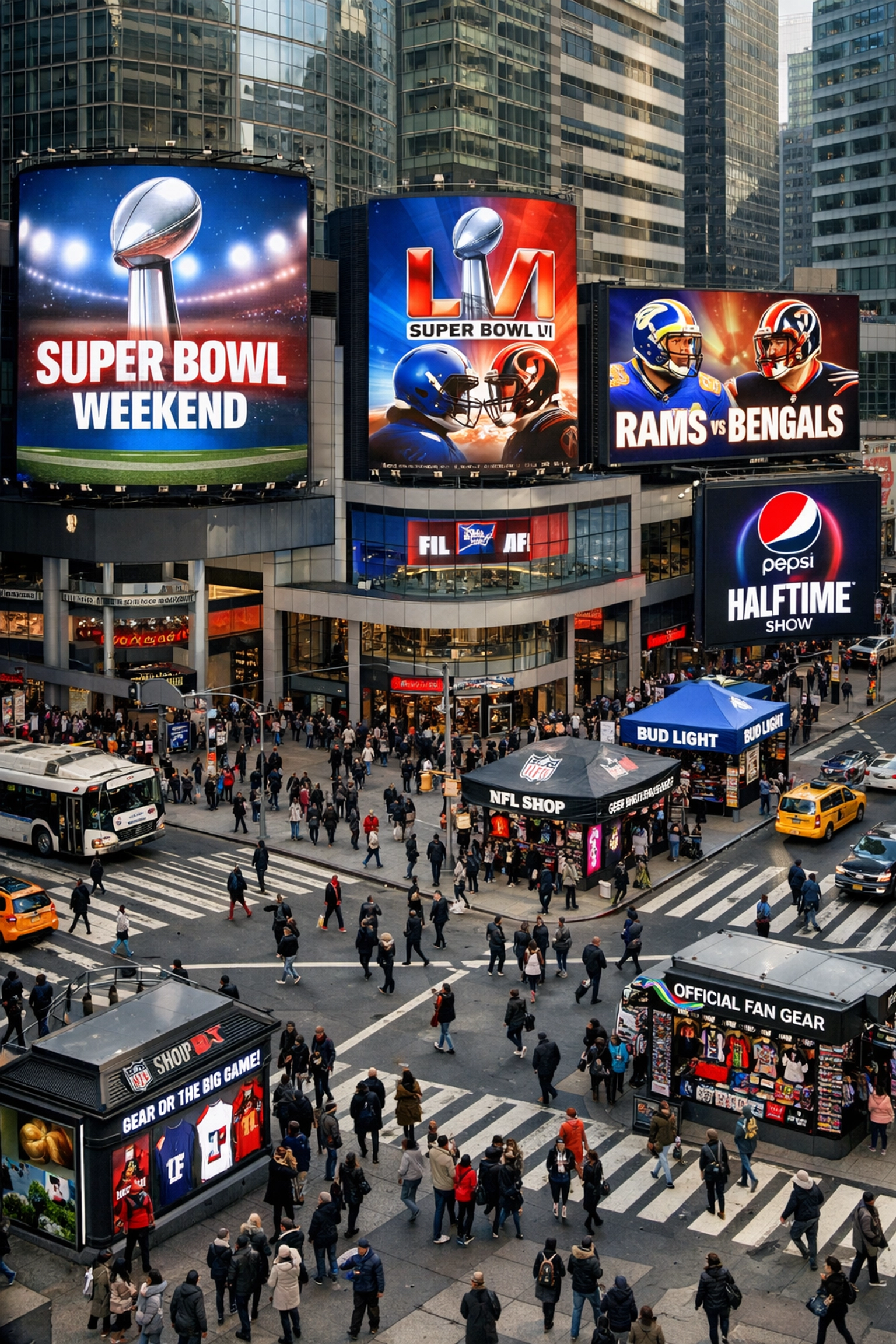
The foundation of effective Super Bowl OOH begins with mapping the physical journey of your target audience. Premium ticket holders, corporate guests, and general fans follow distinct but predictable patterns. Those arriving from out of town pass through airport terminals, where their mindset shifts from travel logistics to event anticipation. They queue for rideshare pickups, providing concentrated dwell time at specific locations. Hotel lobbies become social hubs where groups congregate and plan their activities.
Each stage of this journey corresponds to different demographic segments with varying receptivity to messaging. A business executive arriving Thursday afternoon occupies a different headspace than a local fan arriving Sunday morning. The most sophisticated OOH campaigns account for these variations, tailoring messaging not just to location but to the specific moment within the overall event experience.
This audience movement analysis enables layered placement strategies that build frequency through physical presence rather than digital interruption. When executed properly, attendees encounter your brand six, eight, or ten times through their natural movement patterns: not as repetitive noise but as a reassuring presence that becomes part of their Super Bowl narrative.
Multi-Format Environmental Ownership
Sporttron's network demonstrates the power of moving beyond traditional billboard placement to create true environmental ownership. This involves orchestrating multiple OOH formats into a synchronized brand ecosystem.
Digital billboards serve as the anchor, offering the flexibility to shift messaging throughout the day. A restaurant brand might promote breakfast specials at 8 AM, shift to game-time viewing party information at noon, and highlight post-game venue options by evening. This temporal adaptation ensures relevance while maximizing the utility of premium placements.
https://www.youtube.com/watch?v=l6J-0zileKE
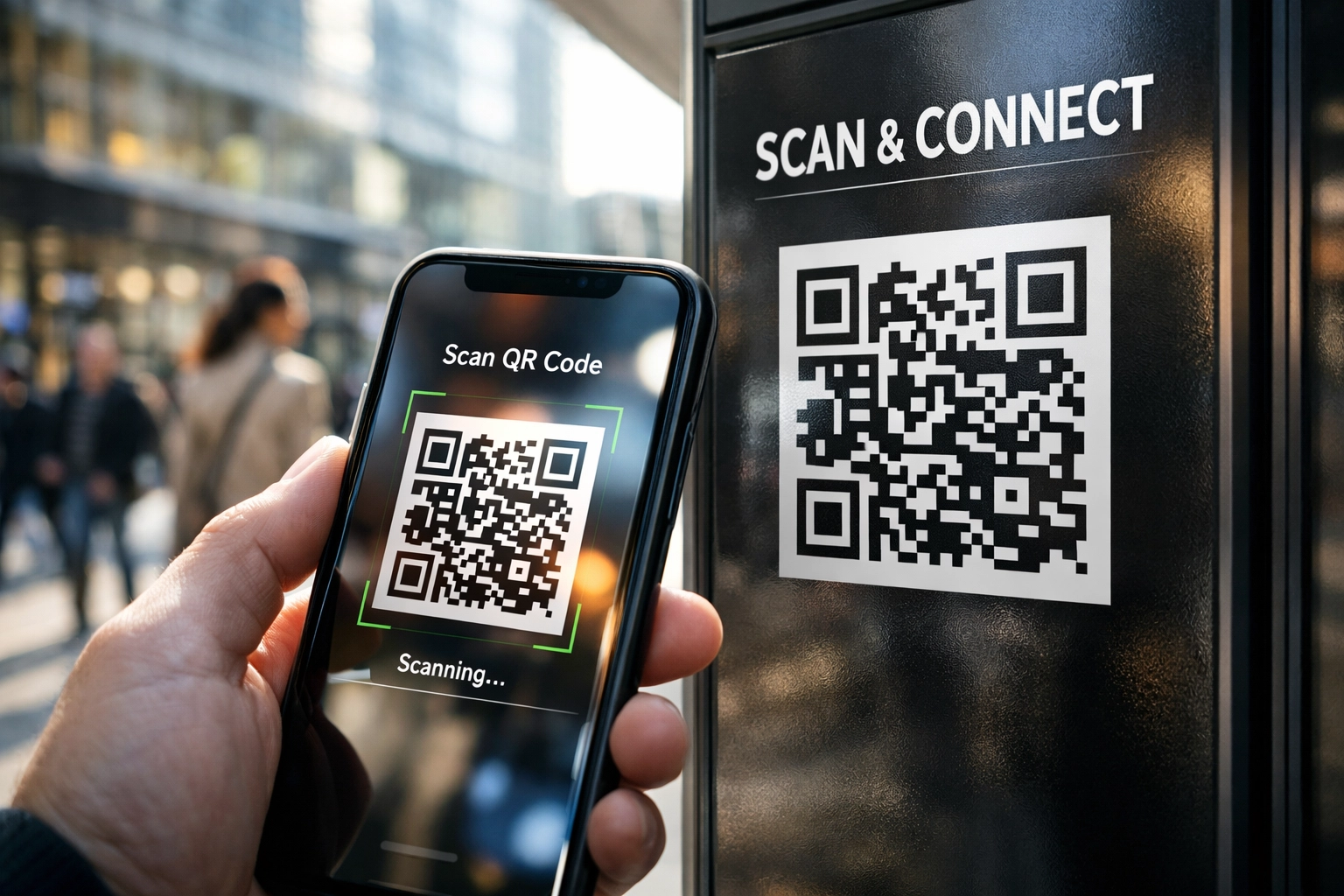
Street-level placements including transit shelters and kiosks capture pedestrian attention with more detailed messaging. Unlike highway billboards designed for split-second visibility, these formats accommodate longer copy, QR codes, and interactive elements that invite deeper engagement. Floor graphics in high-traffic areas like convention centers create impossible-to-ignore brand moments that disrupt expected environmental patterns and generate social sharing.
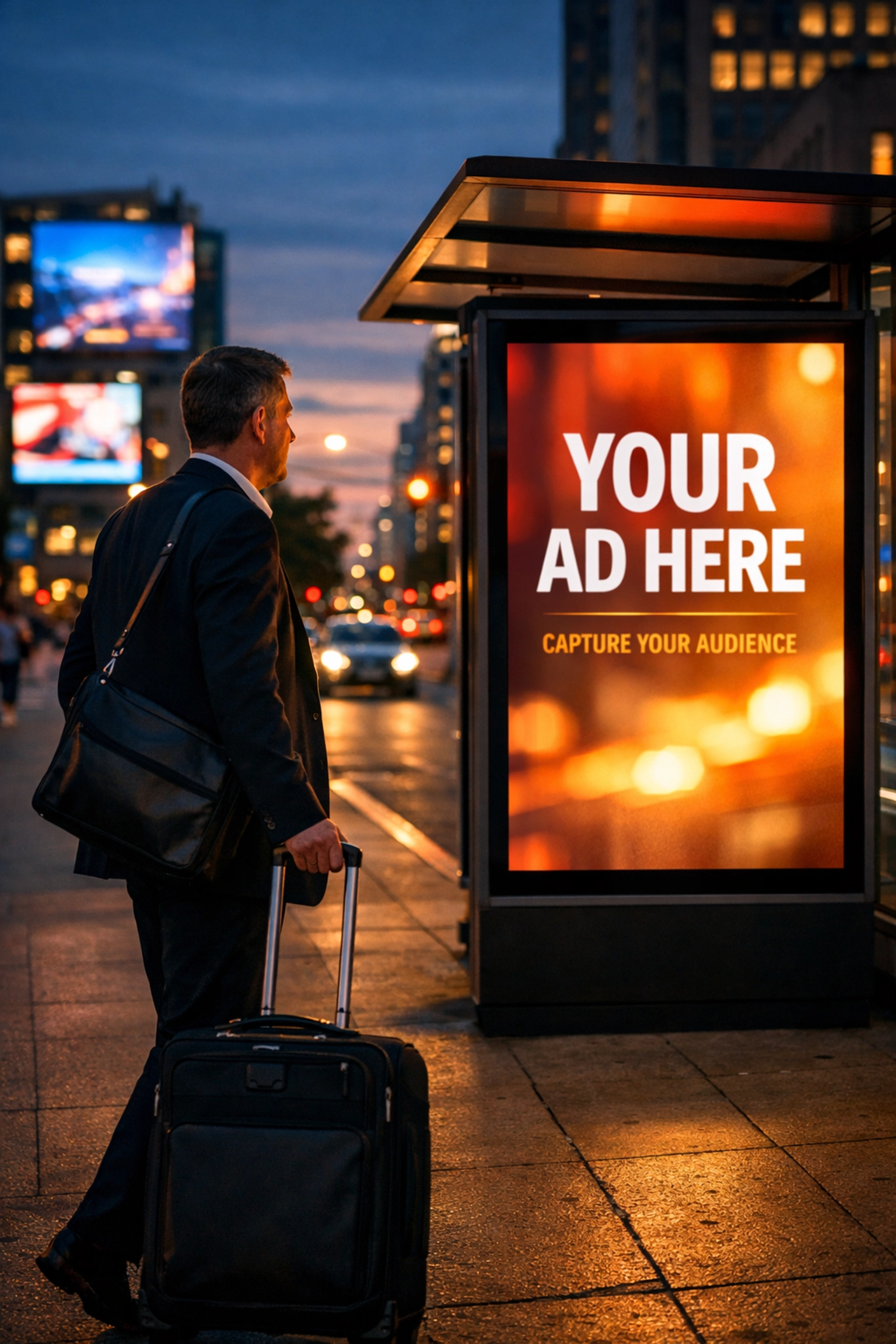
The objective transcends individual placement effectiveness. By creating a 360-degree brand environment, attendees experience your brand as an omnipresent part of the Super Bowl itself rather than as isolated advertisements competing for attention. This environmental saturation generates a psychological effect that individual placements cannot achieve: your brand becomes woven into the fabric of the event experience.
Bridging Physical and Digital Worlds
Modern OOH campaigns function as physical anchors for broader multi-channel strategies rather than standalone tactics. The most effective integrations transform OOH from one-way broadcasting into participatory experiences that audiences actively amplify.
QR codes on transit ads enable immediate mobile engagement, driving audiences from physical exposure to digital conversion within seconds. Branded hashtags displayed on digital billboards encourage social sharing, effectively turning every attendee into a content creator who extends your reach organically. Location-based mobile campaigns can retarget audiences who pass specific OOH placements, creating a seamless handoff from physical to digital engagement.
Some campaigns take this integration further by displaying live social media feeds on digital billboards, transforming OOH into dynamic, participatory content that reflects real-time audience reactions. This approach acknowledges that modern consumers expect to interact with brands rather than passively receive messaging, and it leverages OOH's physical presence to facilitate these interactions.
The Temporal Advantage of OOH
Perhaps the most underappreciated aspect of Super Bowl OOH advertising is its temporal scale. A 30-second television spot during the game, regardless of creative excellence, vanishes after half a minute. The brand has purchased a moment, not a presence.
OOH operates on an entirely different timeline. Campaigns can dominate the entire event window: from when the championship matchup is confirmed weeks before the game through the arrival period and even extending beyond to capture departing audiences. This sustained visibility accumulates impression value over days and weeks rather than seconds.
During the actual game day, while television advertisers compete for costly seconds amidst fierce competition for audience attention, OOH placements continue generating impressions among the millions of people in the host city who aren't watching the broadcast at that specific moment. Restaurants, bars, transportation hubs, and entertainment districts remain active throughout the day, each venue representing potential exposure that doesn't require fighting for share of voice during the broadcast itself.
This extended presence proves particularly valuable in an attention-scarce environment where audiences exercise increasing control over their media consumption. OOH exists in the physical world where audiences cannot swipe away, install ad blockers, or skip past your message. It occupies real estate in their environment, demanding at minimum passive exposure and often generating active engagement.
Implementing Your OOH Strategy
For brands considering OOH investment for Super Bowl 2027 and beyond, several practical considerations emerge from Sporttron's approach. First, begin planning significantly earlier than you would for broadcast advertising. Securing premium OOH placements in a Super Bowl host city requires negotiating months in advance, particularly for locations along predictable audience movement corridors.
Second, allocate budget across multiple formats rather than concentrating entirely on traditional billboards. The marginal impact of your fifth billboard placement diminishes significantly compared to introducing a complementary format like transit advertising or street-level activations that reach audiences in different contexts.
Third, design creative specifically for each format's strengths rather than adapting a single concept across all placements. Digital billboards accommodate animation and temporal messaging shifts. Transit ads support longer copy and QR code integration. Floor graphics benefit from unexpected, disruptive visual concepts. Treating each format as merely a different canvas for identical messaging wastes their unique capabilities.
Finally, integrate measurement from the outset. Modern OOH isn't the unmeasurable medium it once was. Technologies including mobile location data, attribution modeling, and digital integration enable sophisticated tracking of OOH campaign performance that rivals digital channels in accountability.
The Future of Event-Based OOH
As we look toward Super Bowl 2026 and beyond, the convergence of digital technology and physical media continues accelerating. Programmatic OOH purchasing, real-time creative optimization, and enhanced measurement capabilities are transforming what's possible within this channel.
Sporttron's digital network represents not an endpoint but a milestone in this evolution. The brands that will dominate future Super Bowls understand that the game itself is merely the centerpiece of a much larger experience, and that owning the environment means meeting audiences wherever they physically exist throughout that experience.
The question isn't whether OOH deserves consideration in your Super Bowl marketing strategy. The question is whether you can afford to cede environmental ownership to competitors who recognize that influence increasingly stems from presence in the physical world where people actually live, move, and gather.