
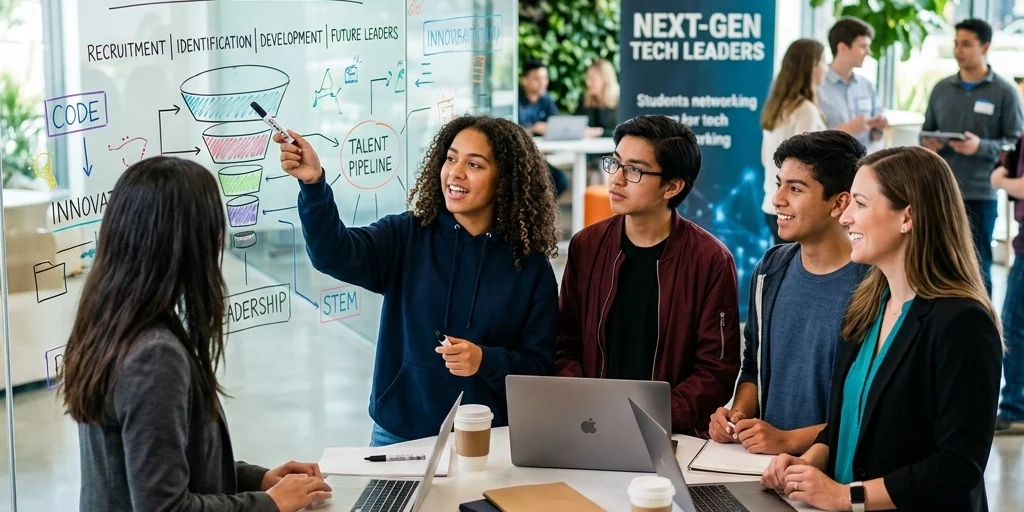
The landscape of corporate recruitment is shifting beneath our feet. As of April 2026, the demand for specialized skills in Cloud Computing, Artificial Intelligence (AI), and Data Analytics has reached a fever pitch. Traditional talent pipelines, which typically rely on four-year university degrees, are no longer sufficient to keep pace with the rapid acceleration of technology. For organizations to remain competitive, they must look further upstream: specifically toward high schools: to identify and nurture the tech leaders of tomorrow.
This strategy, known as the Next-Gen Talent Funnel, focuses on early identification and skill-based development. By engaging with students before they even set foot on a college campus, businesses can secure a loyal, highly skilled workforce that is natively comfortable with the tools of the future.
The Widening Tech Gap
The "tech gap" is a term frequently used by business consultants to describe the disparity between the number of available high-tech roles and the number of qualified candidates to fill them. According to industry research, the cycle of innovation in fields like AI and Data Analytics now moves faster than the standard four-year curriculum of most higher education institutions. By the time a student graduates, the specific frameworks or languages they learned in their freshman year may already be obsolete.
To bridge this gap, forward-thinking companies are adopting a "skills-first" approach. This philosophy prioritizes demonstrated capabilities over traditional credentials. When organizations begin their talent search in high schools, they are not looking for finished products; they are looking for raw potential, systems thinking, and a passion for problem-solving.

Why High School is the New Frontier for Recruitment
Engaging with high school students might seem premature to some, but the data suggests it is a strategic necessity. The current generation of students: Gen Z and the emerging Gen Alpha: are digital natives who have grown up with technology as an extension of their daily lives. Many of these students are already self-teaching advanced concepts through online platforms, coding bootcamps, and open-source communities.
1. Early Brand Loyalty
When a company provides a high school student with a scholarship, an internship, or even a simple mentorship opportunity, it creates a lasting impression. Building this relationship early ensures that your organization is at the top of their mind when they enter the professional workforce.
2. Diversifying the Talent Pool
The NextGen Talent model emphasizes that early intervention is critical for reaching underrepresented groups. By partnering with high schools in diverse communities, companies can provide career-related services and labor market literacy to students who might not otherwise have considered a career in Cloud or Data Analytics. This not only fulfills social responsibility goals but also brings fresh, diverse perspectives into the corporate environment.
3. Lowering Long-Term Recruitment Costs
The cost of hiring a mid-career Cloud Architect or AI Engineer is exceptionally high. By identifying talent early and helping to shape their education, companies can develop a pipeline of "home-grown" experts. This reduces the reliance on expensive external recruiting agencies and high-stakes bidding wars for established talent.
For more information on how strategic management can improve your business outcomes, you can visit USA Entertainment Ventures LLC.
Identifying Tech Leaders: Key Indicators
Identifying a future tech leader at age 16 or 17 requires a different set of criteria than hiring a veteran professional. High-level grades in mathematics are a positive sign, but they are not the only indicator of success.
Systems Thinking and Curiosity
The best tech leaders are those who want to know how things work. In a high school setting, this often manifests as students who take apart electronics, build their own gaming PCs, or experiment with home automation. These individuals possess "systems thinking": the ability to see how different components of a technological ecosystem interact.
Emotional Intelligence and "Cross-Campus" Fluency
Research from firms like Russell Reynolds highlights that top-tier tech leaders must possess emotional intelligence and the ability to communicate technical concepts to non-technical audiences. In a high school context, look for students who are active in clubs, leadership roles, or team sports in addition to their technical pursuits. This "cross-campus fluency" is an early indicator that they can bridge the gap between IT and business operations later in life.

The Core Pillars of the Next-Gen Funnel
To successfully implement a pre-college talent funnel, businesses should focus on three core pillars: Cloud, AI, and Data Analytics. These represent the foundation of the modern digital economy.
Cloud Computing
Cloud technology is the infrastructure of the future. High school students who understand the basics of virtualization, serverless architecture, and cloud security are already ahead of their peers. Companies can foster this by sponsoring "Cloud Days" or providing access to sandbox environments where students can experiment with platforms like AWS, Azure, or Google Cloud.
Artificial Intelligence (AI)
In 2026, AI is no longer a niche field; it is a fundamental business tool. Early talent identification in AI focuses on students who are comfortable with logic, data sets, and ethics. Encouraging high schoolers to participate in hackathons or AI ethics debates can help companies spot those with the potential to lead AI initiatives.
Data Analytics
Data is the "new oil," but it requires refinement. Students who show a natural aptitude for statistics and data visualization are prime candidates for future Data Science roles. By providing real-world, anonymized data sets for high school competitions, businesses can see firsthand how these students approach complex problems.
Practical Steps for Implementation
Transitioning to a pre-college talent strategy does not require a massive overhaul of your HR department. It starts with small, intentional actions.
- High School Partnerships: Reach out to local vocational schools or high schools with strong STEM programs. Offer to speak at career days or host "office hours" where students can ask questions about the tech industry.
- Micro-Internships: Traditional summer internships are often reserved for college juniors. Micro-internships: short, project-based assignments: are a great way for high schoolers to get their feet wet and for companies to assess their skills.
- Mentorship Programs: Pairing your current tech leads with promising high school students provides value to both parties. The student gains invaluable insight, and your employees develop their leadership and coaching skills.
- Skills-Based Assessments: Instead of looking at a student's GPA, use platforms that allow them to demonstrate their coding or analytical abilities through challenges. This levels the playing field and focuses on what truly matters: capability.
For examples of how integrated media and news can support corporate messaging, see Zoomedia News.

The ROI of Early Intervention
The return on investment (ROI) for a Next-Gen Talent Funnel is measured in both financial and cultural terms. Financially, the reduction in turnover and the decrease in time-to-fill for critical roles provide a clear benefit. Culturally, bringing in young, motivated individuals who are eager to learn can revitalize a company’s atmosphere and drive innovation.
Furthermore, this approach aligns with the global trend toward sustainable business practices. Investing in the education and career pathways of the local community builds social capital and reinforces a company’s reputation as an employer of choice.
Looking Toward 2030
As we look forward, the traditional boundaries between "schooling" and "work" will continue to blur. The most successful organizations of the 2030s will be those that viewed themselves as educators as much as employers. By reaching into high schools now, you are not just filling a vacancy; you are participating in the creation of the next generation of leadership.
The Ultimate Guide to the Next-Gen Talent Funnel is not a static document; it is a roadmap for an evolving world. Companies that embrace the challenge of finding tech leaders before they reach college will find themselves at the forefront of the next technological revolution.
The future of Cloud, AI, and Data Analytics is already sitting in classrooms today. The question for business leaders is simple: Will you find them first, or will your competitors?
For more strategic insights into business consulting and talent development, explore the resources at USA Entertainment Ventures LLC.





