
As we navigate the second quarter of 2026, the landscape of global industry has undergone a fundamental shift. For Fortune 100 executives, the primary challenge is no longer just digital transformation: it is the creation and maintenance of a human capital pipeline capable of sustaining it. The acceleration of artificial intelligence and cloud-native operations has left traditional educational systems struggling to keep pace. To remain competitive on a global scale, the United States requires more than just training programs; it requires a standardized, national workforce development infrastructure.
At USA Entertainment Ventures LLC, we view workforce development not as a series of isolated workshops, but as a logistics and distribution challenge. Scaling career readiness across the nation demands a sophisticated physical and digital network that delivers skills directly to the communities where they are needed most. This guide explores the blueprint for that infrastructure, focusing on high-tech literacy, physical distribution systems, and the strategic use of emerging platforms to bridge the talent gap.
The Infrastructure Gap in Modern Industry
Traditional workforce development has historically been localized, fragmented, and reactive. When a large-scale manufacturing plant or data center opens, the local labor market often lacks the specific technical competencies required for immediate operations. This results in costly recruitment cycles and delayed productivity.
A national career-ready infrastructure solves this by treating talent development as a supply chain issue. By implementing standardized certification frameworks, such as the ACT WorkKeys National Career Readiness Certificate (NCRC), enterprises can validate foundational skills: Applied Math, Graphic Literacy, and Workplace Documents: across a uniform metric. However, foundations are only the beginning. The modern executive must look toward specialized consulting to build a robust architecture that integrates these foundations with advanced technology.

Esports: The 'Trojan Horse' for Cloud and AI Literacy
One of the most significant breakthroughs in modern workforce infrastructure is the realization that the infrastructure for entertainment and the infrastructure for education are converging. Esports, once viewed merely as a competitive gaming phenomenon, has emerged as a "Trojan Horse" for high-level technical literacy.
To the untrained eye, an esports arena is a venue for entertainment. To a Chief Technology Officer, it is a high-density, low-latency testing ground for cloud computing, edge processing, and real-time data analytics. By integrating esports into national workforce initiatives, we are effectively training the next generation of cloud architects and AI specialists in a high-engagement environment.
The technical requirements of modern competitive gaming: managing high-concurrency traffic, optimizing server-side processing, and maintaining complex hardware arrays: mirror the operational requirements of a Fortune 100 data center. This "Trojan Horse" strategy allows for the organic development of:
- Edge Computing Proficiency: Understanding how to minimize latency in data transmission.
- AI Integration: Utilizing predictive analytics for performance optimization.
- Cybersecurity Awareness: Protecting high-value digital assets in a multi-tenant environment.
By investing in media and entertainment projects, organizations can cultivate a workforce that is inherently fluent in the technologies that drive the Fourth Industrial Revolution.
The Physical Distribution System for Workforce Development
Digital training is essential, but it is insufficient on its own. Scaling national career readiness requires a physical footprint. For many underserved or rural regions, the barrier to entry for high-tech careers is simply a lack of access to specialized equipment and high-speed infrastructure.
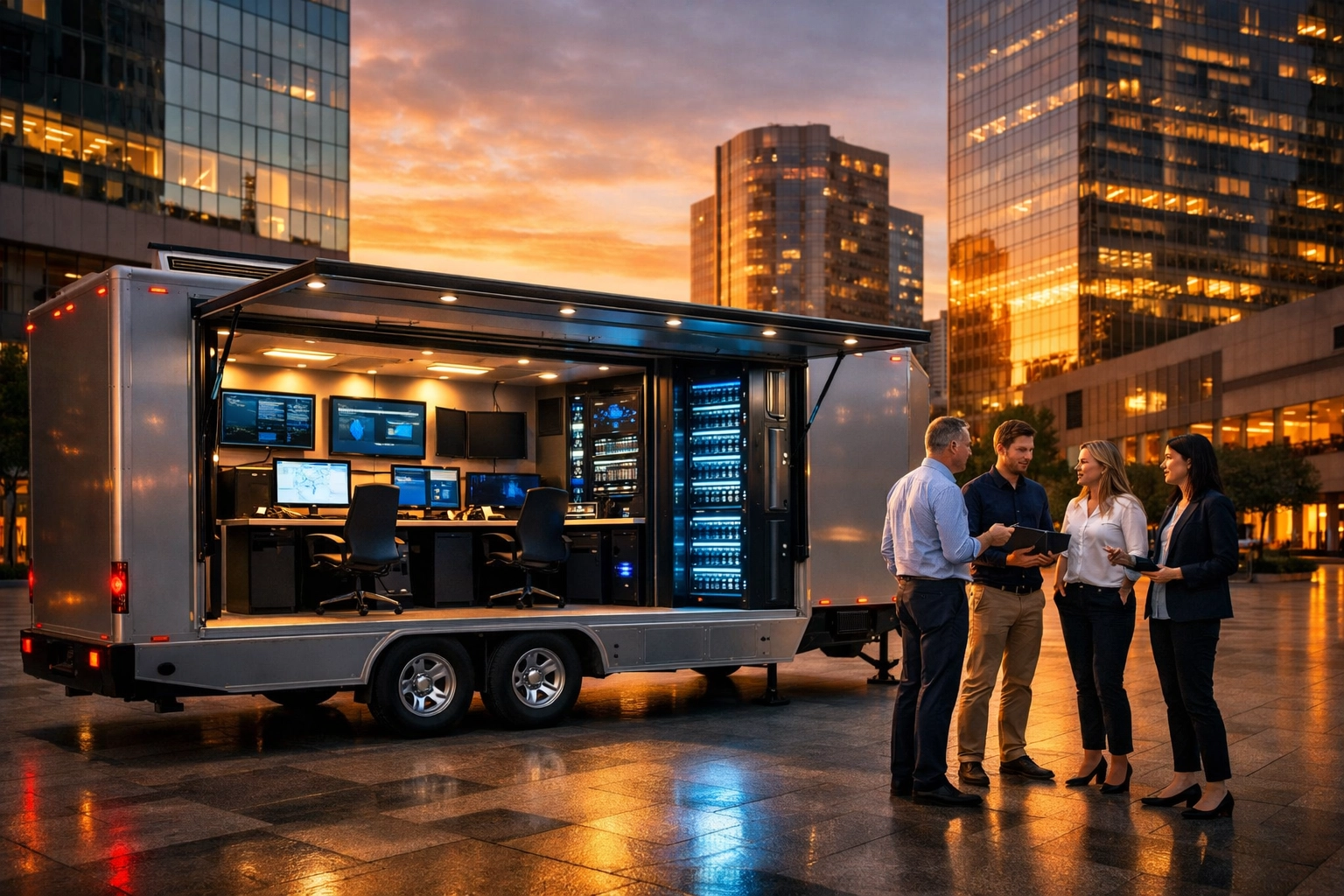
USA Entertainment Ventures LLC leverages a sophisticated distribution and trucking network to bridge this physical divide. We envision a national rollout of mobile career-ready units: highly advanced, self-contained laboratories capable of delivering hands-on training in robotics, AI hardware maintenance, and cloud infrastructure management directly to any zip code in the country.
Logistics of Learning
This physical distribution model mimics a retail supply chain. Just as a global logistics company moves goods across borders, a workforce development infrastructure moves "skill-acquisition nodes." These nodes provide:
- Hardware Access: Providing the actual servers and AI processing units for hands-on learning.
- Hybrid Connectivity: Delivering high-speed satellite or fiber-linked environments in digital deserts.
- Standardized Testing Sites: Providing mobile proctoring for national certifications.

Scaling National Career Readiness: A Corporate Mandate
For the Fortune 100 executive, the ROI of supporting a national infrastructure is clear. A standardized workforce reduces the "time-to-competency" for new hires. When a candidate in Ohio and a candidate in Texas hold the same nationally recognized credentials and have trained on the same mobile infrastructure, their utility to the enterprise is predictable and scalable.
The National Work Readiness Council (NWRC) has long advocated for credentials that validate both academic and soft skills. In 2026, we must expand this to include "Digital Fluency" as a third pillar. This includes the ability to collaborate in virtual environments, manage data privacy, and interact with automated systems.

Integrating Human Resources and Technology
The convergence of human resources and advanced technology is where the most significant gains in efficiency are found. By utilizing data-driven research into regional labor markets, companies can deploy workforce infrastructure proactively. If data suggests a rising demand for AI maintenance in the Midwest, the physical distribution of mobile training units can be pivoted to meet that demand before the shortage becomes a crisis.
The Role of Government and Private Partnership
No single entity can scale national career readiness alone. It requires a collaborative framework between government bodies and private enterprise. Current government-focused projects highlight the importance of aligning federal workforce grants with private-sector technological requirements.
Public-private partnerships (PPPs) should focus on three primary goals:
- Incentivizing Infrastructure: Tax credits for companies that provide mobile training nodes or open their private esports infrastructure for community educational use.
- Standardizing Curriculum: Ensuring that the "Trojan Horse" of esports leads to certifications that are recognized by major cloud providers and AI developers.
- Data Sovereignty: Maintaining a national database of career-ready talent that allows for rapid economic mobilization.
Future-Proofing the American Workforce
As we look toward 2030, the definition of "infrastructure" will continue to evolve. It will no longer be enough to provide roads and electricity; we must provide the "intellectual utility" of career readiness. The companies that thrive will be those that view their workforce not as a cost center, but as a dynamic asset nurtured by a robust, national distribution system.
USA Entertainment Ventures LLC remains committed to this vision. Through our work in manufacturing and digital consulting, we are building the frameworks that allow Fortune 100 companies to scale rapidly and responsibly.
The transition to a career-ready nation is a marathon, not a sprint. However, with the right infrastructure in place: combining the engagement of esports, the precision of AI literacy, and the reach of a national physical distribution network: we can ensure that the American workforce remains the most capable and innovative in the world.
Strategic Takeaways for Executives
- Evaluate your current talent pipeline: Move beyond localized recruitment and toward supporting standardized national credentials.
- Invest in "Engaged Learning": Look at esports and gaming platforms not as distractions, but as sophisticated training environments for high-tech roles.
- Prioritize Physical Reach: Support mobile and distributed learning models to tap into talent pools that are currently inaccessible due to geographical barriers.
- Leverage Data: Use research and analytics to predict regional skill shortages and deploy resources accordingly.
The path to scaling national career readiness is through infrastructure. It is time to build it.
For more information on our initiatives and to explore our portfolio of workforce solutions, visit our consulting category or view our latest updates via ZooMedia News.