

In the current economic landscape of March 2026, the traditional methods of talent acquisition have reached a breaking point. For Fortune 100 executives, the challenge is no longer just finding "the right person" for a vacancy; it is about the systemic lack of a career-ready population capable of operating within increasingly complex technological ecosystems. The transition from reactive hiring to proactive workforce development is no longer a luxury: it is a core operational requirement.
As we look at the national rollout of career-ready infrastructure, it becomes clear that the companies winning the "war for talent" are those treating human capital with the same strategic rigor they apply to their physical and digital supply chains. By viewing the workforce as a form of national infrastructure: comparable to power grids, fiber-optic networks, or interstate highways: leading organizations are securing a steady pipeline of talent before that talent even enters the open market.
The Economic Reality of the Middle-Skill Gap
Recent data indicates that infrastructure investments across the United States are projected to create more than 11 million direct and indirect jobs over the next decade. However, a significant bottleneck has emerged: nearly half of these roles require education and training beyond a high school diploma but fall outside the scope of a traditional four-year degree. This "middle-skill gap" represents the single greatest risk to corporate scaling in the late 2020s.
The incentive for solving this gap is not merely operational; it is socio-economic. Infrastructure-related occupations often offer a 30% higher wage to workers at lower income levels compared to other sectors. This wage premium creates more equitable career pathways, yet the retirement cliff and a lack of specialized vocational training have left many organizations with more vacancies than viable candidates.
To navigate this, USA Entertainment Ventures LLC views business consulting through the lens of long-term sustainability. The solution lies in building strategic sector partnerships that bridge the gap between industry needs and candidate readiness.
Esports: The Trojan Horse for Cloud and AI Literacy
One of the most misunderstood components of modern workforce development is the role of digital entertainment in skill acquisition. For the executive suite, esports should not be viewed merely as a gaming subculture, but as a sophisticated "Trojan Horse" for high-level technical literacy.
The infrastructure required to support elite-level gaming: low-latency cloud computing, real-time data analytics, and complex AI-driven environments: is the same infrastructure that powers modern logistics and automated manufacturing. When young professionals engage in high-stakes esports, they are inadvertently training in the precise digital competencies required for 21st-century roles.
These competencies include:
- Cloud Fluency: Understanding how data travels across distributed networks.
- AI Interaction: Collaborating with algorithmic systems to optimize performance.
- Complex Problem Solving: Making split-second decisions within highly variable digital parameters.
By integrating these "on-ramps" into national workforce infrastructure, we can transition digital natives from leisure activities to high-value career paths in cloud architecture and AI management. This is a physical and digital distribution system for skills that bypasses the friction of traditional classroom models.
The Physicality of Workforce Development
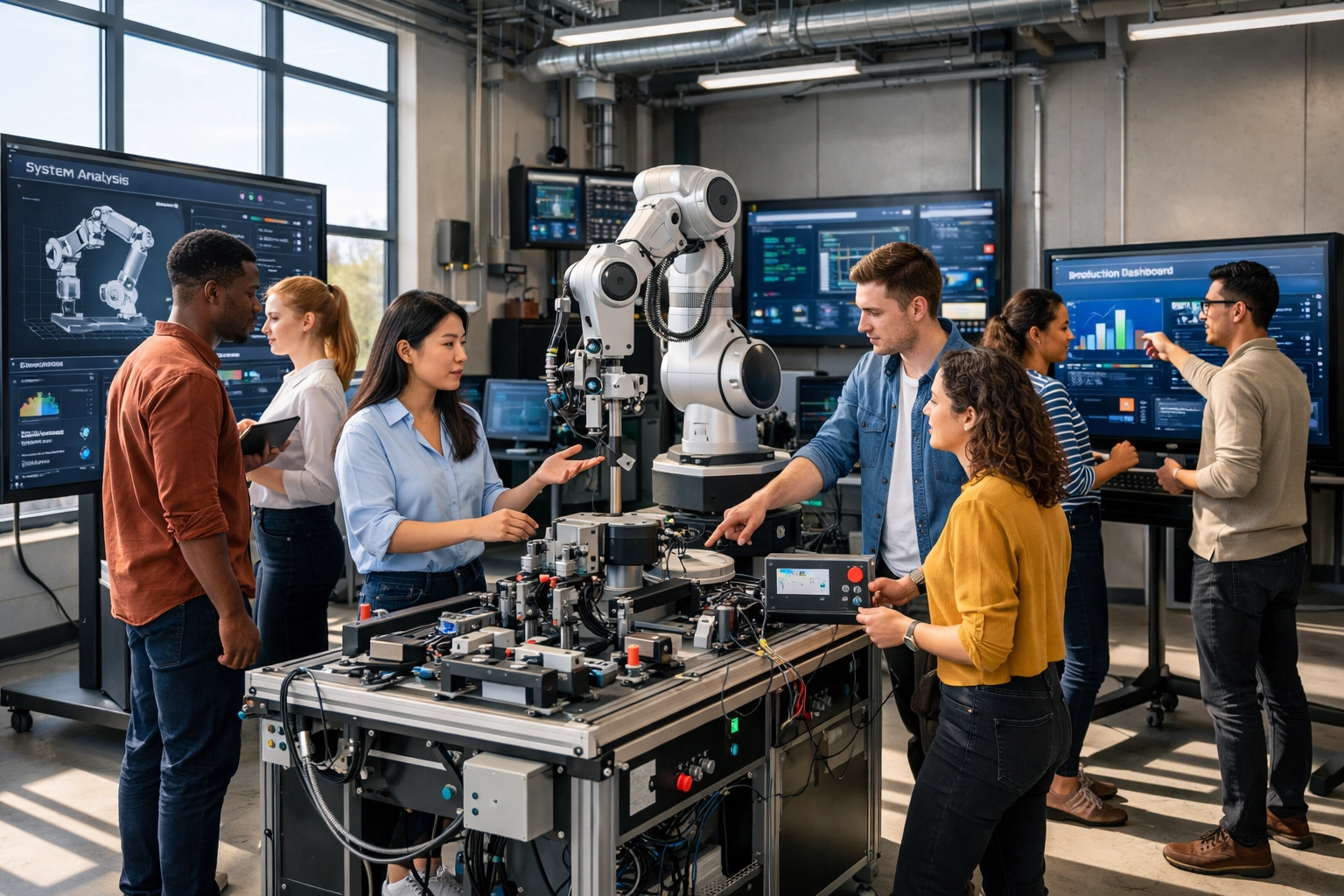
While the digital on-ramp is essential, the physical distribution of training remains a critical pillar. The most successful national models involve leveraging logistics hubs and regional centers as localized training grounds. This physical footprint ensures that workforce development is not a centralized, distant concept, but a tangible part of the local community.
Organizations are now looking at their physical assets: warehouses, regional offices, and distribution centers: and asking how these spaces can double as career-ready infrastructure. This involves:
- Localized Training Pods: Creating hands-on environments where candidates can interact with the specific hardware and software used by the firm.
- Strategic Sector Partnerships: Collaborating with community colleges and government boards to ensure the curriculum reflects real-world operational needs.
- Apprenticeship Programs: Moving away from the "internship" model toward a more rigorous, infrastructure-aligned apprenticeship that guarantees a pipeline of qualified labor.
For more information on how these physical strategies are being implemented, you can explore our services page to see how we consult on large-scale business infrastructure.

Leveraging Federal Funding as a Strategic Asset
The financial landscape for workforce development has shifted dramatically with the rollout of the Infrastructure Investment and Jobs Act (IIJA), alongside the Inflation Reduction Act and the CHIPS and Science Act. These legislative frameworks have collectively allocated over $1 billion specifically for workforce training.
Despite the availability of these funds, many local and state leaders remain significantly underutilized in accessing them. For Fortune 100 executives, this represents a massive strategic opportunity. By engaging with these funding streams, organizations can influence the supply of candidates with the exact skill sets required by their specific sectors.
Influencing the curriculum at the state level ensures that the "product" coming out of the workforce pipeline: the career-ready candidate: is optimized for the hiring organization’s internal tech stack and operational culture. In this context, HR becomes a procurement function for human infrastructure, funded in part by public-private partnerships.
Actionable Strategies for the C-Suite
To capitalize on these shifts, executives should consider the following practical changes to their talent acquisition and retention strategies:
- Audit Your Middle-Skill Requirements: Identify which roles in your organization require specialized technical training but not necessarily a four-year degree. These are the positions most at risk from the current labor gap.
- Invest in Digital On-Ramps: Support or sponsor programs that utilize esports and gamified learning to build AI and cloud literacy among the next generation of workers.
- Develop Physical Training Hubs: Evaluate your current real estate footprint and determine if portions of your logistics or regional centers can be converted into "career-ready" training sites.
- Engage with Public Policy: Actively participate in state and local workforce boards to ensure that federal training dollars are being directed toward skills that align with your industry's future.
For companies interested in the intersection of business, technology, and regional growth, our business consulting section offers further insights into managing these transitions.

Moving from Recruitment to Development
The shift we are witnessing in 2026 is a move away from the idea of "recruitment" as a standalone activity. In an era of talent scarcity, recruitment is the final stage of a much longer developmental process. If the infrastructure does not exist to produce the talent, no amount of recruitment spending will bridge the gap.
As CEO Dan Kost often emphasizes, the goal is to simplify the complex. Building a national workforce infrastructure sounds like a daunting, multi-decade project, but it is actually a series of localized, strategic decisions that start with a commitment to long-term talent cultivation. By treating the workforce as a core operational pillar: no different than your supply chain or your IT stack: you ensure that your organization remains resilient, regardless of market volatility.
Conclusion: The Path Forward
The rollout of national workforce infrastructure is not just a government initiative; it is a corporate mandate for those who intend to lead in the second half of this decade. By embracing the "Trojan Horse" of digital literacy, leveraging physical distribution systems for training, and tapping into significant federal funding, Fortune 100 companies can move from a defensive posture to an offensive one.
The organizations that will thrive are those that recognize the workforce is not a resource to be "hired," but an infrastructure to be "built."
If you are looking to refine your corporate strategy or explore how these national trends impact your specific sector, we invite you to contact us at USA Entertainment Ventures LLC. Together, we can build the infrastructure that secures your top talent for years to come.

For more insights on the intersection of technology, business, and entertainment infrastructure, visit our main site or explore our about page to learn more about our mission.





