
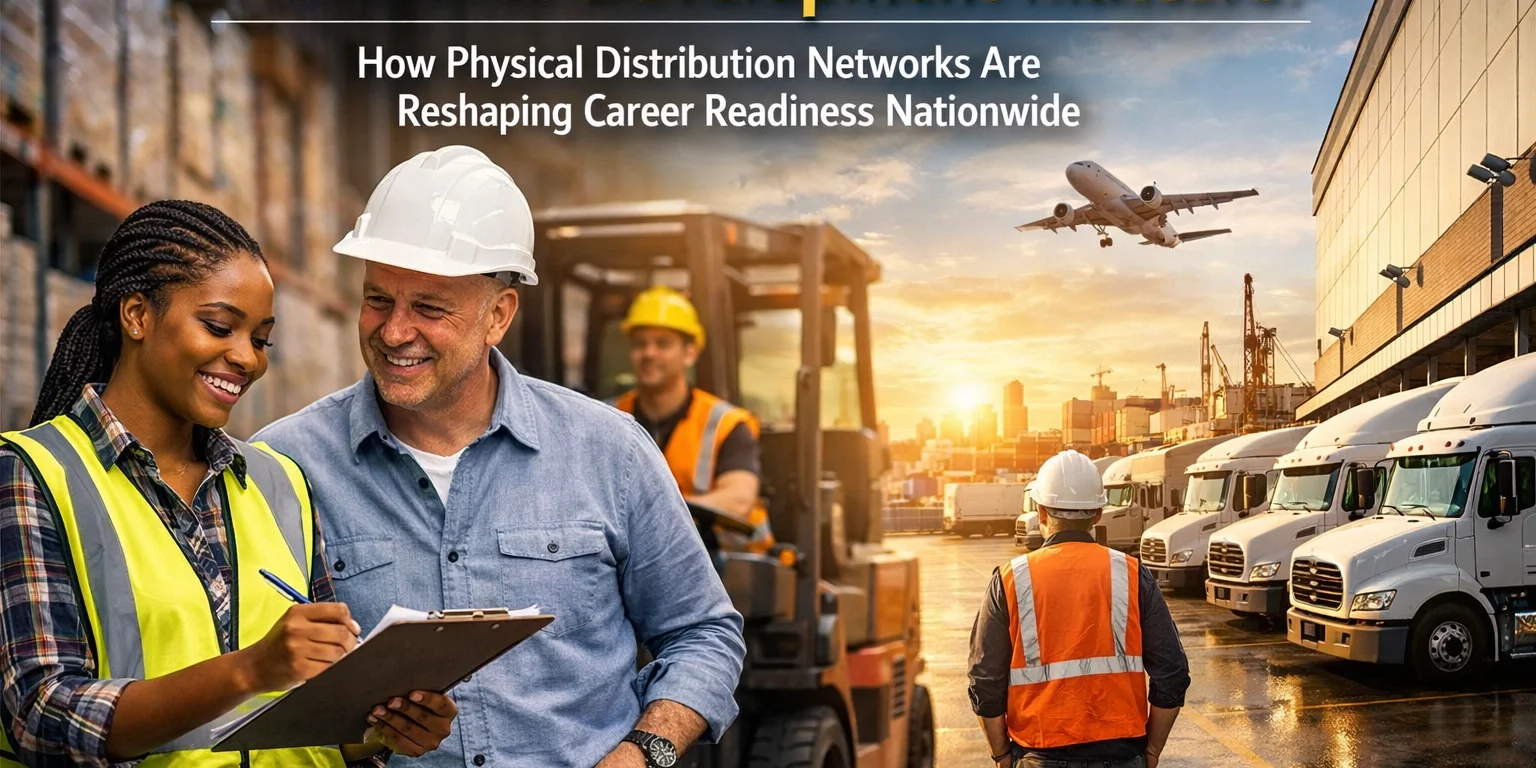
The landscape of American workforce development is undergoing a fundamental transformation. As enterprise organizations expand their physical footprints across the nation, a parallel opportunity has emerged: one that positions physical distribution networks not merely as logistics infrastructure, but as the backbone of a new career readiness ecosystem.
For Fortune 100 executives evaluating long-term talent pipeline strategies, this shift represents both an urgent challenge and an unprecedented opportunity. The organizations that recognize this moment will secure access to the next generation of cloud-literate, AI-capable workers. Those that do not may find themselves competing for an increasingly scarce resource.
The Workforce Gap: A Problem of Skills, Not Compensation
The numbers paint a stark picture. Distribution operations reported approximately 375,000 unfilled positions in 2021-2022, despite offering average hourly wages 18.7% higher than comparable retail roles. This data point underscores a critical reality: the challenge facing enterprise organizations is not one of compensation. It is a skills mismatch of significant proportions.
Warehouse employee turnover has reached 43% annually in high-volume e-commerce operations. Replacement costs range from 25% to 150% of annual salary depending on position complexity. These figures represent not just operational friction, but a systemic failure in the talent pipeline connecting education to employment.

The future of work demands knowledge of programming, cybersecurity, digital networks, and cloud infrastructure: skills that extend far beyond traditional warehouse operations. As low-skill jobs decrease, high-skill activities are increasingly emphasized. This transformation extends beyond distribution facilities themselves. Data centers and logistics hubs create ripple effects across supporting sectors, driving demand for electrical technicians, cybersecurity professionals, network engineers, and systems administrators.
Physical Infrastructure as Talent Infrastructure
Here is where forward-thinking organizations have identified a strategic opportunity. The same physical distribution networks that move products across the country can serve a dual purpose: they can also distribute career-ready training and workforce development at scale.
Consider the logistics of traditional workforce development. Community colleges and vocational programs operate in fixed locations. Students must travel to training centers. Employers must wait for graduates to emerge from programs designed years prior. The result is a system perpetually lagging behind actual market demand.
Now consider an alternative model. What if career-ready infrastructure: physical learning environments equipped with cloud computing resources, AI training modules, and hands-on technical equipment: could be deployed using the same distribution logic that powers modern supply chains?
This is not a theoretical proposition. It is happening now.
Progressive organizations are establishing physical "pods" within schools, community centers, and workforce development facilities across the nation. These pods function as turnkey environments for cloud and AI literacy training, positioned precisely where the next generation of workers already spends their time.
Esports: The Trojan Horse for Technical Literacy
One of the most effective strategies emerging in workforce development involves meeting young people where they are: and increasingly, that means gaming and esports.

Esports facilities require the same technical infrastructure that powers enterprise cloud computing: high-speed networking, server management, cybersecurity protocols, and data analytics. When a student learns to configure a gaming network, they are learning transferable skills applicable to enterprise IT environments. When they troubleshoot latency issues, they are developing diagnostic capabilities valued across industries.
This "Trojan Horse" approach has proven remarkably effective. Students who might disengage from traditional computer science curricula demonstrate sustained interest when the same concepts are presented through the lens of competitive gaming. The learning outcomes are identical; the engagement pathway is simply more intuitive for contemporary learners.
The implications for enterprise workforce development are significant. Organizations that sponsor or support esports infrastructure in educational settings gain early access to emerging technical talent. They establish brand presence with future workers years before traditional recruitment would begin. Most importantly, they contribute to expanding the overall talent pool rather than simply competing for existing graduates.

The Rise of Public-Private Partnerships
The workforce development models producing the strongest outcomes share a common structure: formal public-private partnerships with employer-influenced curriculum design and work-based learning components.
Research consistently demonstrates that these partnerships produce significantly better employment and retention outcomes than traditional academic approaches. The most effective programs typically include educational institutions, employer consortia, government funding sources, and community organizations working in coordination.
This collaborative approach addresses a fundamental limitation of conventional workforce development. Educational institutions, operating independently, cannot anticipate specific employer needs. Employers, acting alone, cannot efficiently train workers at scale. Government programs, without industry input, risk preparing workers for jobs that no longer exist.
Public-private partnerships resolve these inefficiencies by creating feedback loops between all stakeholders. Curriculum adapts to employer needs. Employers gain input into training priorities. Government resources are directed toward outcomes with demonstrated market demand.
The data supporting this approach continues to strengthen. Sixty-three percent of companies now cite workforce factors as primary or secondary concerns in site selection decisions: up from 37% a decade earlier. Organizations are actively seeking locations with robust workforce development ecosystems, creating competitive advantages for regions that have invested in these partnerships.
Hybrid Training Models and Career Pathway Development
The most progressive workforce development programs have moved beyond the traditional classroom model entirely. Organizations are now implementing 24/7 hybrid training programs that combine virtual coursework and VR training systems with critical hands-on instruction.
This approach accelerates skill development while accommodating the scheduling realities of adult learners. A distribution center employee can complete theoretical coursework during evening hours, then apply those concepts during supervised practical sessions. The result is faster progression from entry-level positions to technical roles.

Manufacturing career pathways now map out the shortest, most cost-effective routes to reskill displaced workers. These pathways allow individuals to build on existing skills and transition to adjacent jobs with better compensation and promotion prospects. Digital employment platforms help workers assess their current capabilities, identify career opportunities, and access appropriate upskilling resources.
For enterprise organizations, these developments represent an opportunity to cultivate internal talent pipelines. Rather than competing externally for scarce technical workers, organizations can develop existing employees into the roles they need most.
Strategic Implications for Fortune 100 Leadership
The transformation of physical distribution networks into workforce development infrastructure carries several strategic implications for enterprise leadership.
First, workforce capability has become as important to distribution network performance as physical infrastructure itself. Organizations that neglect talent pipeline development will find their operational capacity constrained regardless of facility investments.
Second, early engagement with educational institutions and community organizations creates sustainable competitive advantages. The relationships and brand presence established today will determine access to technical talent five and ten years hence.
Third, esports and gaming infrastructure represents an efficient entry point for cloud and AI literacy training. Organizations willing to invest in these unconventional approaches will reach populations underserved by traditional workforce development channels.
Community colleges and school districts are developing specialized curricula in IT, cybersecurity, networking, and programming: skills directly tied to high-tech infrastructure expansion. Enterprise organizations that partner with these institutions can shape curriculum to match their specific needs.
Looking Forward
The convergence of physical distribution networks and workforce development represents one of the most significant opportunities in contemporary talent strategy. Organizations that recognize this moment: and act decisively: will secure access to the technical workers they need to remain competitive.
The infrastructure is being built. The partnerships are being formed. The question for Fortune 100 leadership is straightforward: will your organization participate in shaping the next generation of American workers, or will you wait and compete for whatever talent emerges?
The answer to that question will likely determine competitive positioning for decades to come.
For organizations interested in exploring career-ready infrastructure partnerships, USA Entertainment Ventures LLC provides consulting services focused on workforce development strategy and implementation at scale.





