
The landscape of professional recruitment has shifted. As we navigate 2026, the traditional methods of securing tech talent, relying on university career fairs and third-party recruiters, are increasingly falling short. Organizations across the globe are finding that the "talent gap" isn't just a temporary hurdle; it is a structural failure in the way we cultivate and acquire human capital.
For companies specializing in Cloud, AI, and Data Analytics, the stakes are even higher. These fields evolve at a pace that traditional education systems struggle to match. When the shelf life of a technical skill is estimated at just two and a half years, a four-year degree can sometimes result in graduates entering the workforce with knowledge that is already nearing its expiration date.
To secure the future of your organization, the focus must shift from "finding" talent to "founding" it. This requires looking earlier in the educational journey. High schools represent the most underutilized resource in the modern talent strategy.
The Broken Pipeline: 10 Reasons Your Current Strategy is Failing
Before we can discuss the solution, we must identify the specific points of failure in the current tech talent funnel.
1. The Speed of Innovation vs. Academic Lag
Traditional higher education curricula are often years behind industry standards. While universities excel at teaching fundamental logic and theory, the specific applications of Cloud infrastructure and AI modeling change monthly. By the time a curriculum is approved by a university board, the technology it covers has often moved to its next iteration.
2. The High Cost of the "Experience War"
Most companies compete for the same pool of "mid-level" developers with 3–5 years of experience. This creates an inflationary bubble. Businesses are paying a premium not necessarily for innovation, but for the safety of a proven track record. This "Experience War" is unsustainable and leads to inflated payrolls without a corresponding increase in productivity.
3. Passive Candidate Fatigue
Relying on LinkedIn and job boards means you are fighting for the 5% of the market that is actively looking or the 20% that is willing to be poached. This reactive approach ensures that you are always behind your hiring goals, leading to burnout among your existing engineering and data teams.
4. The Soft Skills Deficit
A significant percentage of entry-level workers enter the tech field with technical proficiency but lack critical professional skills. According to data from the Society for Human Resource Management, nearly half of employers report that new hires struggle with teamwork, communication, and adaptability. These skills are best cultivated through long-term exposure to professional environments, not just classroom theory.

5. Geographic and Remote Work Limitations
While remote work has expanded the talent pool, it has also increased competition. You are no longer just competing with local firms; you are competing with global giants. Without a local "talent engine" that feeds directly into your organization, you remain vulnerable to global market fluctuations.
6. Degree Inflation
Many organizations still require a four-year degree for roles that do not strictly require one. In fields like Data Analytics or Cloud Management, certifications and hands-on project experience can be more indicative of success than a diploma in an unrelated field. By requiring degrees for every role, companies arbitrarily shrink their own talent pool.
7. Lack of Early Brand Loyalty
In a hyper-competitive market, brand loyalty is a powerful tool. If the first time a candidate hears about your company is when they graduate college, you have no competitive advantage over any other employer. Loyalty is built through early investment and mentorship.
8. Homogeneous Thinking
Relying on the same three or four universities for recruitment leads to "culture cloning." Innovation in AI and Data Analytics requires diverse perspectives and different ways of problem-solving. A narrow pipeline limits the creative potential of your tech teams.
9. The Poaching Cycle
When you hire talent from a competitor, you are participating in a cycle that ultimately hurts the industry. Poached talent often leaves as quickly as they arrived, seeking the next marginal increase in salary. This high turnover rate destabilizes projects and erodes institutional knowledge.
10. Misaligned Expectations
New hires often enter the tech workforce with a skewed perception of what daily life in Cloud or Data roles looks like. This leads to early attrition when the reality of the work, which often involves maintenance, debugging, and data cleaning, doesn't match the "glamour" of AI innovation they were sold in school.
Why High Schools are the Fix
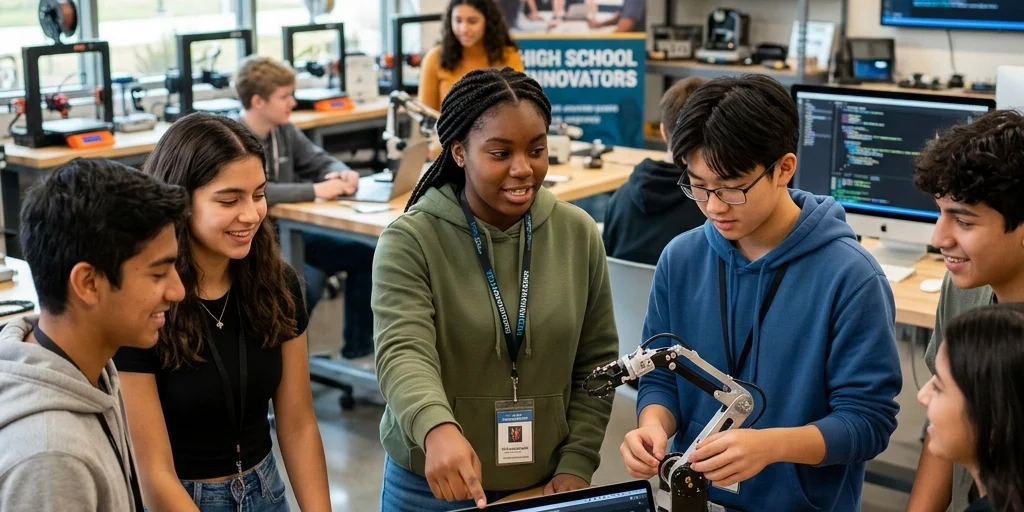
The solution to these ten challenges is the "Next-Gen Talent Funnel." This strategy involves reaching into high schools to identify, mentor, and train talent before they even enter the traditional workforce or higher education system.
Early Exposure to Cloud and AI
High school students are digital natives. By introducing them to Cloud architecture and AI logic during their formative years, companies can help shape their foundational understanding. Programs like Career Technical Education (CTE) allow businesses to partner with schools to ensure the "basics" being taught actually align with the tools the company uses daily.
Building a Proprietary Pipeline
When a company engages with high schoolers through internships or dual-enrollment programs, they are essentially building their own farm system. By the time these students reach college age, they have already spent two or three years learning your company’s specific workflows and culture.

Reducing the Cost of Entry-Level Talent
Training a high schooler or a recent graduate through an apprenticeship is significantly more cost-effective than hiring a mid-level professional. While it requires an initial investment in mentorship, the long-term ROI is found in a loyal, highly skilled employee who has been "built" for your specific needs.
Closing the Soft Skills Gap
Professionalism is a practiced behavior. By bringing students into a business environment early, they learn the nuances of corporate communication, project management, and collaborative problem-solving. This eliminates the "culture shock" often seen in older entry-level hires.
How to Implement the High School Strategy
For a business to successfully pivot to this model, it doesn't need to become an educational institution. It simply needs to become a partner.
- Work-Based Learning (WBL): Partner with local school districts to offer internships that count for high school credit. This provides students with real-world experience and provides you with a first look at emerging talent.
- Micro-Credentials: Encourage and fund students to earn industry-recognized certifications in AWS, Azure, or Google Cloud while they are still in high school.
- Mentorship Programs: Assign your senior engineers to spend two hours a month mentoring high school tech clubs. This not only helps the students but also improves the leadership and communication skills of your current staff.
- Curriculum Advisory: Join local school board advisory committees to ensure that the "Data Analytics" or "Computer Science" tracks are teaching relevant, modern languages and methodologies.
At USA Entertainment Ventures LLC, we understand that business consulting isn't just about fixing today’s problems, it’s about anticipating tomorrow’s needs. Building a robust talent funnel is the single most important long-term investment a tech-driven company can make.
The Long-Term Benefit: A Sustainable Ecosystem
By the year 2027, the companies that thrive will be those that stopped complaining about the talent shortage and started creating their own solutions. Investing in high school talent isn't just a "nice" thing to do for the community; it is a cold, calculated business strategy to ensure operational continuity in an increasingly volatile market.

When you look at your recruitment budget for the next fiscal year, ask yourself how much of that is being spent on "finding" talent that might leave in twelve months, versus "growing" talent that will stay for years. The transition from a reactive hiring model to a proactive talent-founding model is the key to mastering Cloud, AI, and Data Analytics in the modern era.
If your organization is ready to rethink its approach to human capital, we are here to help. You can explore our services to see how we help businesses streamline their operations and prepare for the future.
Conclusion
The tech talent pipeline isn't just clogged; for many organizations, it’s completely broken. The reliance on traditional, slow-moving educational institutions cannot sustain the rapid growth required by today's AI and Cloud sectors. By shifting your focus to high schools, you solve the issues of skill lag, high costs, and low loyalty all at once.
It is time to stop waiting for the "perfect candidate" to appear on a job board and start building them yourself.
For more information on how to optimize your business strategy or to learn about our current initiatives, please contact us or visit our about page. To see how we’ve helped other organizations navigate these shifts, view our showcase.
The future of tech talent isn't in the university lecture hall; it's in the high school classroom. Be the company that gets there first.





