
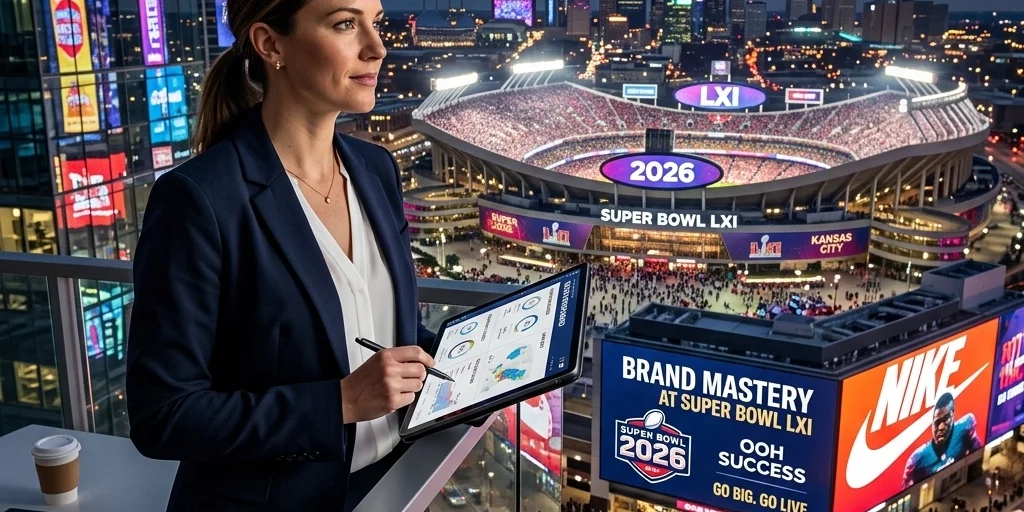
The dust has settled on Super Bowl LX, and the marketing world is still buzzing about the sheer scale of engagement seen in 2026. For brand managers, the "Big Game" has always been the ultimate proving ground. However, as we look at the landscape of modern sports marketing, a significant shift has occurred. While the 30-second television spot remains a prestigious (and expensive) bucket-list item, the real battle for consumer attention in 2026 was won on the ground, in the streets, and within the very architecture of the host city.
At USA Entertainment Ventures LLC, we’ve watched this evolution closely. Our CEO, Dan Kost, has always championed the idea that entertainment isn't just something you watch; it’s something you live. This philosophy was on full display during the most recent championship cycle. To truly dominate an event of this magnitude, brands must move beyond the screen and into the environment. This is the era of Out-of-Home (OOH) mastery.
The Shift: From 30 Seconds to 4 Hours
For decades, the narrative surrounding Super Bowl advertising was centered on the television broadcast. However, the modern fan journey has changed. In 2026, the average attendee spent over four hours inside the stadium on game day. These four hours represent a captive audience: a "dwell time" that television simply cannot replicate.
Think about the psychology of the fan. Between the gates opening and the final whistle, fans are navigating concourses, waiting for concessions, and moving between levels. During these transition moments, they aren't looking at their phones or watching commercials; they are looking at their surroundings. Research from the 2026 season shows that brands utilizing comprehensive stadium coverage saw a staggering 144% increase in purchase intent among exposed audiences compared to those who only saw traditional digital ads.
Owning the Environment with Sporttron Digital Network
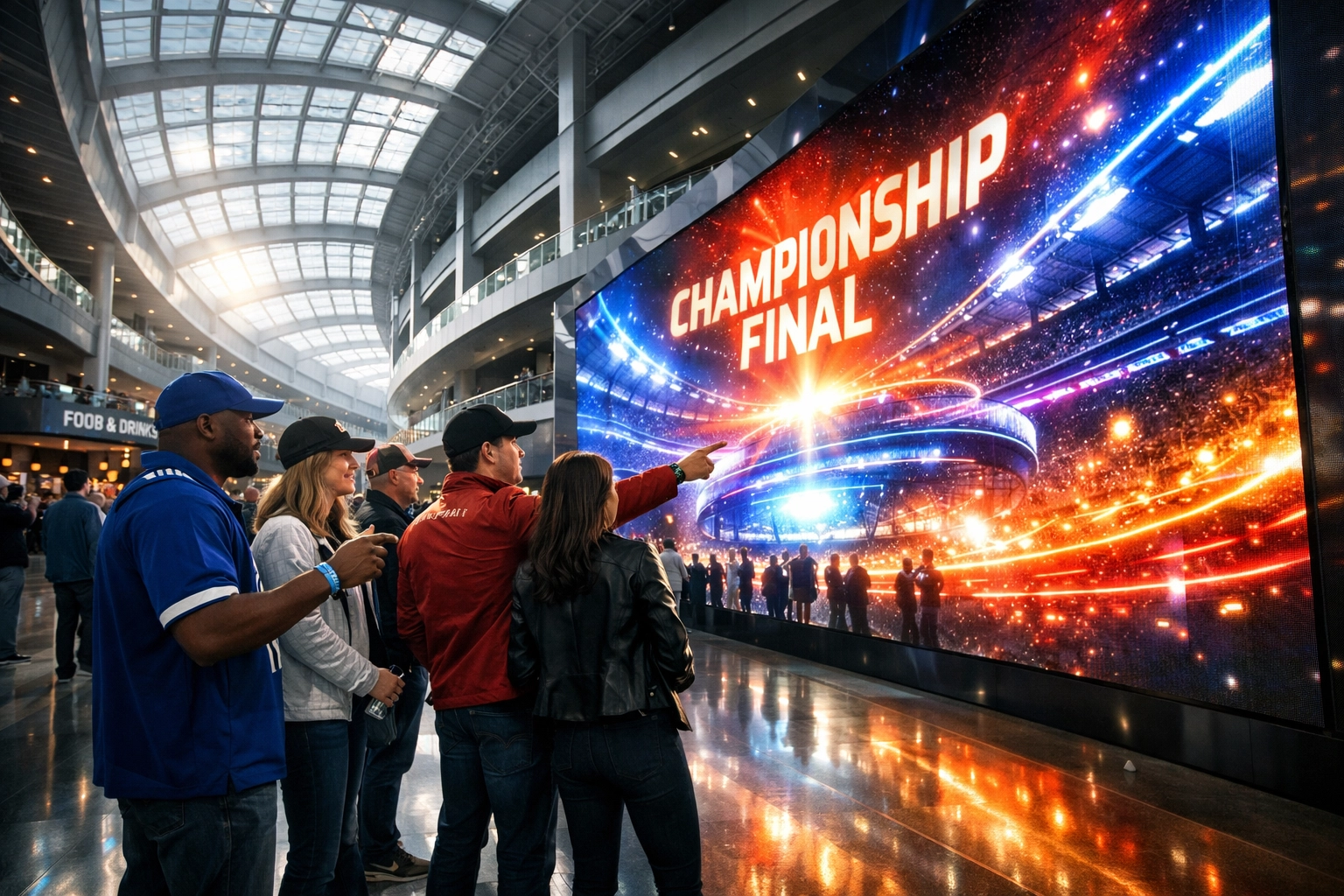
One of the most effective tools in the arsenal for OOH mastery is the Sporttron Digital Network. By integrating high-impact digital displays with the physical environment of the stadium, brands can achieve what we call "Environmental Ownership."
Owning the environment means that from the moment a fan steps off the shuttle or enters the perimeter, your brand is a part of their story. This isn't just about placing a logo on a wall; it’s about a multi-sensory experience.
Take a look at how this manifests in real-world application through the Sporttron Digital Network:
https://www.youtube.com/watch?v=l6J-0zileKE
As seen in the video, the integration of digital assets allows for a dynamic presence that static billboards can't match. This is professional-grade brand placement that feels organic to the sporting experience.
The Strategic Blueprint: A Four-Step Guide to Mastery
For brand managers looking to replicate the success of the 2026 leaders, a structured approach is required. It isn't enough to simply "buy space." You must design an experience.
1. Map the Citywide "Halo Effect"
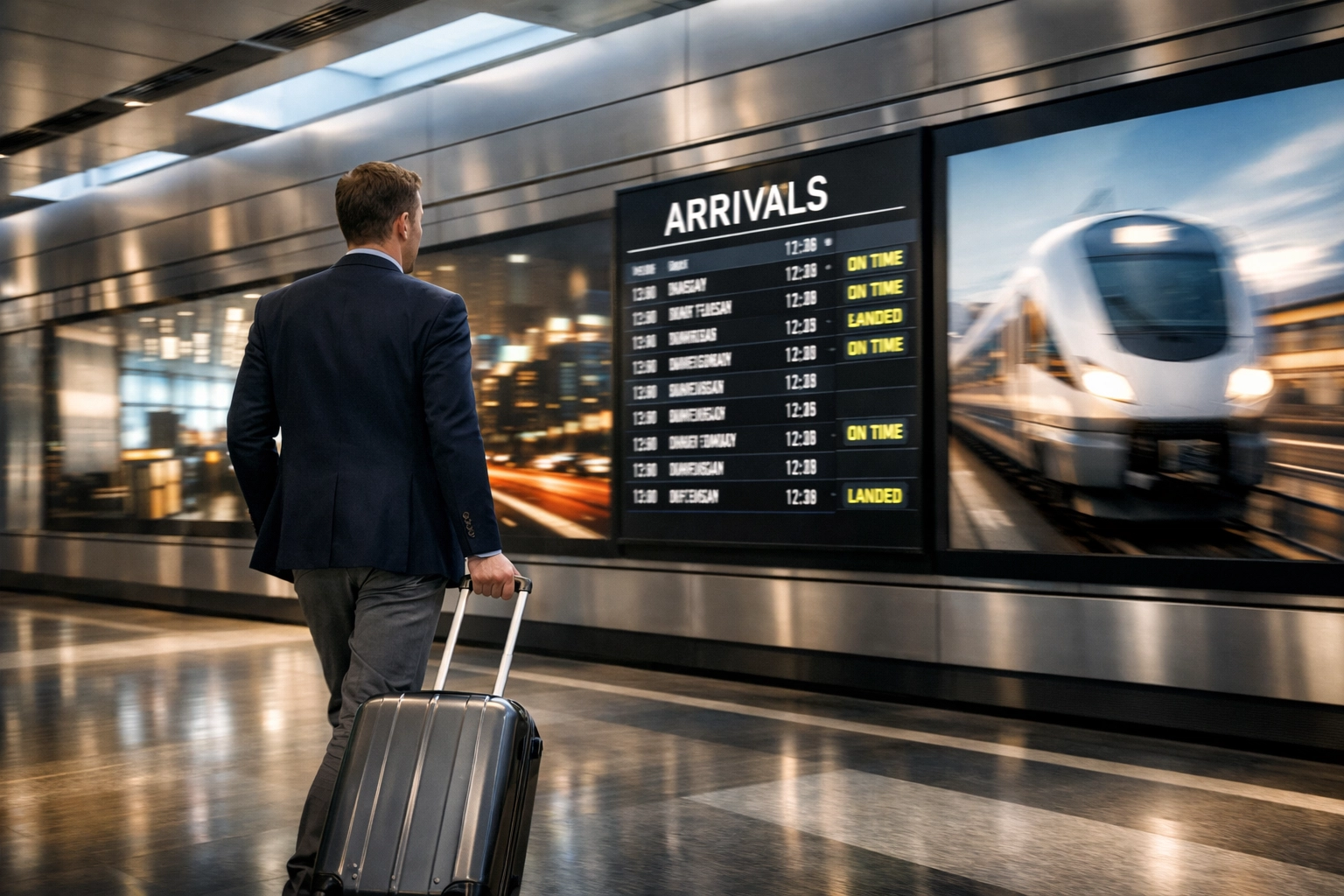
Long before the kickoff, the host city becomes a branded playground. Mastery begins at the transit hubs. In 2026, the most successful brands mapped out the fan’s entire journey: starting at the airport. By securing placements at arrival gates and baggage claims, brands established a "halo effect" that followed the fan to the hotel and eventually to the entertainment districts.
When you position your brand at high-traffic arteries, you aren't just reaching the 70,000 people in the stadium; you are reaching the hundreds of thousands of tourists who have flocked to the city just to be near the action.
2. Stadium Venue Saturation
Once inside the stadium, the strategy shifts to saturation. We recommend a four-pillar approach to venue placement:
- Ground-Level Domination: Utilize floor graphics at main entrances. These create immediate impressions at the start of the fan experience.
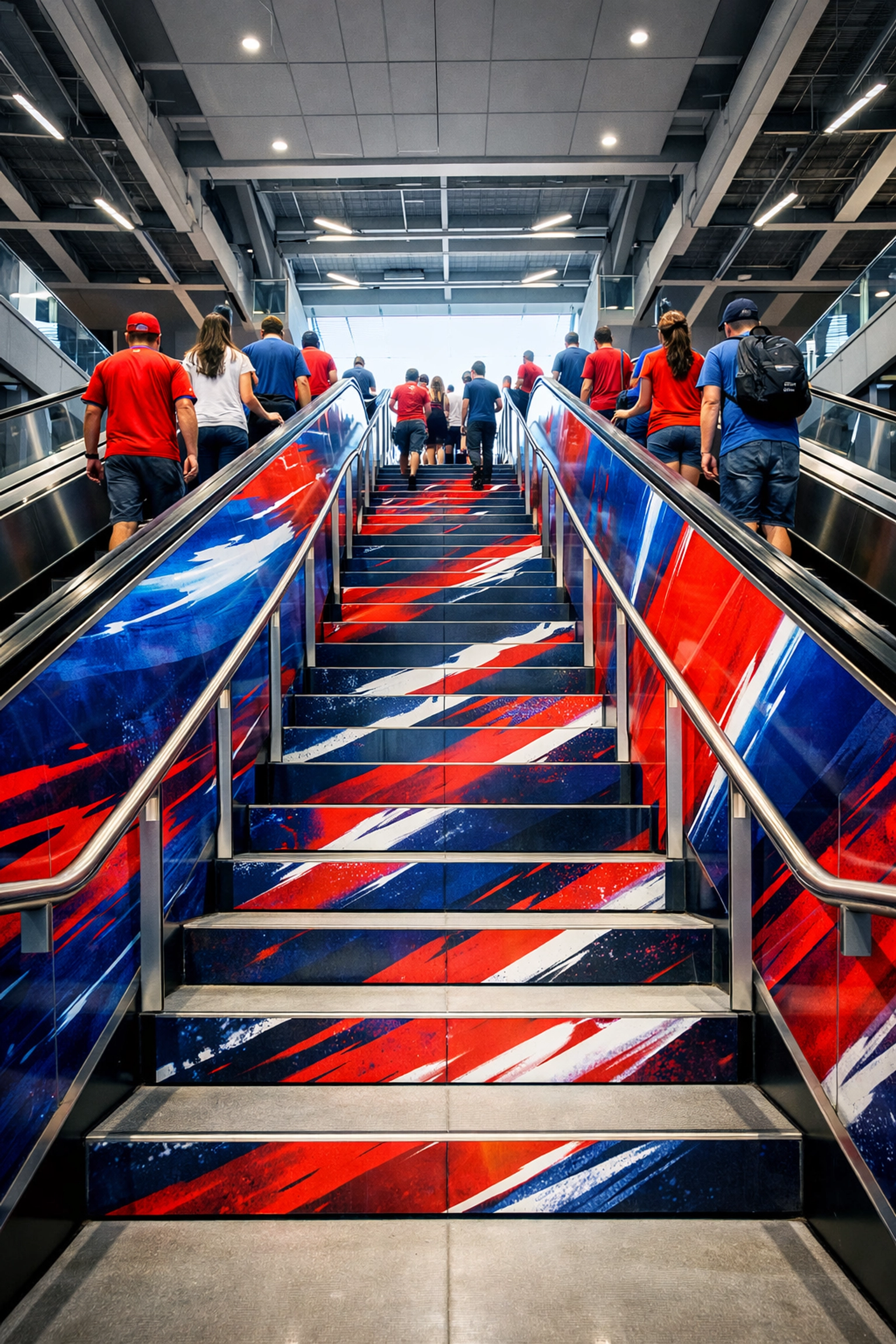
- Vertical Integration: Use vinyl wraps on stairs and escalators. As fans move between levels, your brand moves with them.
- Concourse Saturation: This is where the dwell time is highest. Positioning digital screens near concessions and restrooms ensures your message is seen when fans are most relaxed.
- Perimeter Presence: LED displays that rotate during the game reach both the physical attendees and the millions watching the broadcast at home.
3. Creative Simplicity and Boldness
In OOH, the rules of creative design are different. A brand manager's biggest mistake is trying to cram a TV script onto a billboard. In the high-energy environment of a Super Bowl, "less is more."
The most effective creative for the 2026 Big Game followed three rules:
- High Contrast: Use bold colors that cut through the visual noise of the stadium.
- One Core Message: If a fan can’t understand your message in three seconds, you’ve lost them.
- Contextual Design: Tailor the creative to the location. A floor graphic should look different than a hanging banner.
4. Real-Time Digital Integration
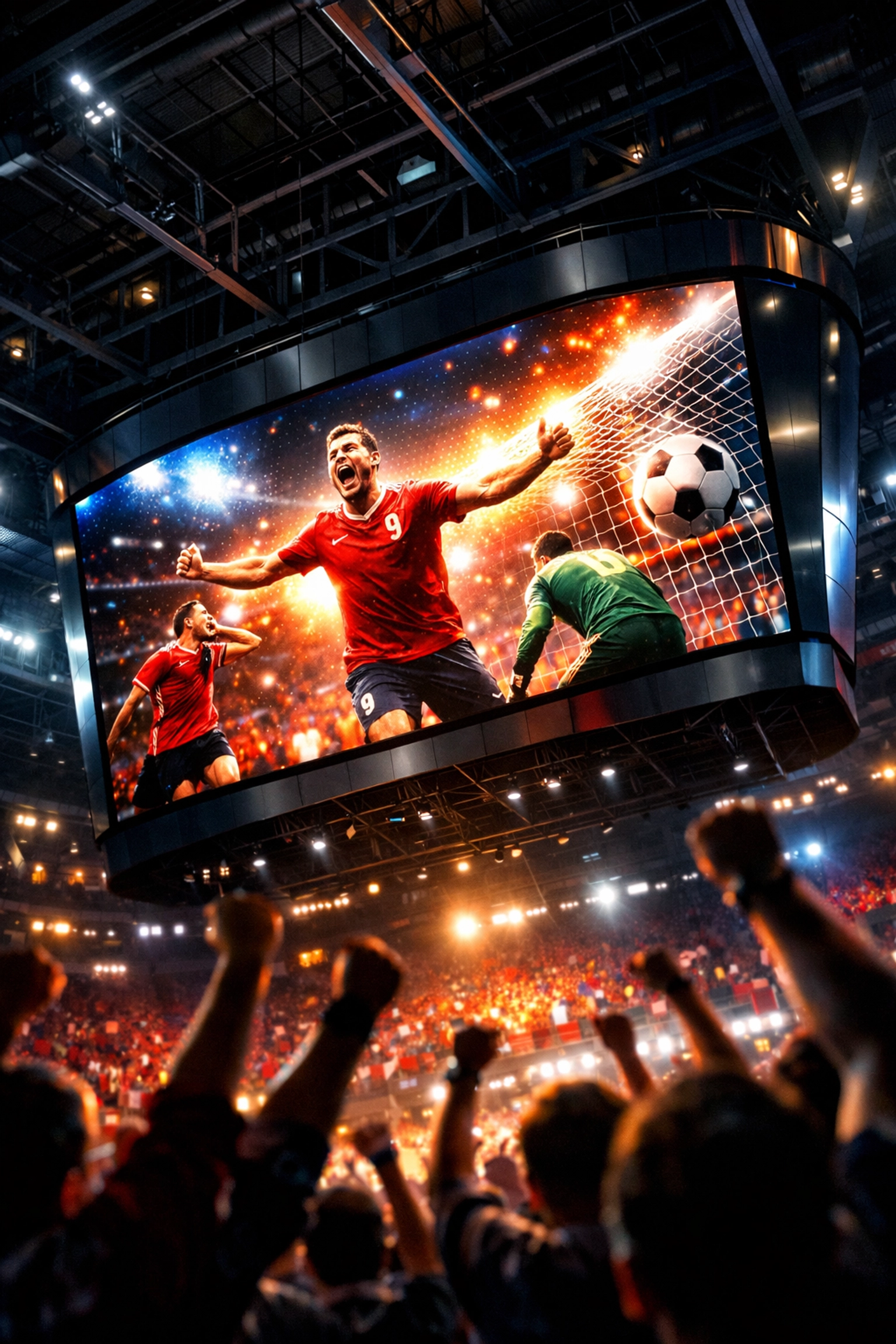
The true differentiator in 2026 was the use of dynamic content. The Sporttron infrastructure allows brand managers to update messaging in real-time. Did a star player just make a historic catch? Your digital OOH assets should reflect that within minutes.
This level of responsiveness creates a connection with the fan. It shows that the brand is watching the game with them, sharing in the emotion of the moment.
The Social Media Multiplier
One of the most overlooked benefits of masterful OOH is its impact on social media. In 2026, OOH placements weren't just ads; they were "Instagrammable moments." Large-scale murals, 3D digital displays, and interactive floor graphics invite fans to take photos and share them with their followers.
When a fan takes a selfie in front of your branded stadium wrap, they are providing you with free, authentic distribution. This turns a physical placement into a global digital campaign. To maximize this, brand managers should design OOH assets with photography in mind: considering lighting, height, and "share-worthy" visual elements.
A Data-Driven Approach to Business Consulting
At USA Entertainment Ventures LLC, we don't just guess what works; we use data to drive our business consulting strategies. The success of OOH at Super Bowl 2026 wasn't accidental. It was the result of meticulous planning and a deep understanding of consumer behavior.
We've seen that when brands move away from traditional "interruptive" advertising and toward "integrated" environmental branding, the ROI is significantly higher. This is especially true for our partners in the Zoomedia and Mobile Highway Ads networks, where the focus is on capturing attention during the "in-between" moments of life.
Actionable Takeaways for the Next Big Event
If you are a brand manager looking to take your OOH game to the next level, here are three things you can implement right now:
- Audit Your Dwell Time: Identify where your customers are standing still. Is it at a transit stop? A stadium concourse? A hotel lobby? Focus your highest-impact creative there.
- Think Digitally, Act Physically: Use digital OOH to stay relevant. If you aren't using dynamic creative that changes based on time of day or live events, you are leaving engagement on the table.
- Partner with Experts: Navigating stadium logistics and city permits for a major event is complex. Work with a consulting firm like USA Entertainment Ventures LLC to ensure your execution is flawless.
Looking Forward: The Future of Fan Engagement
As we look toward the rest of 2026 and into 2027, the lessons from the Super Bowl are clear. Fans want to be immersed in the experience. They want brands that add value to the event, not just those that shout for attention.
By mastering Out-of-Home advertising, brand managers can create an omnipresent brand experience that feels like a natural part of the game. Whether it’s through the Sporttron Digital Network or citywide saturation, the goal remains the same: Own the environment.
The future of sports marketing isn't just on the screen in your living room; it's under your feet, above your head, and all around you.

For more insights on sports media and entertainment consulting, explore our full portfolio of services at USA Entertainment Ventures.





