
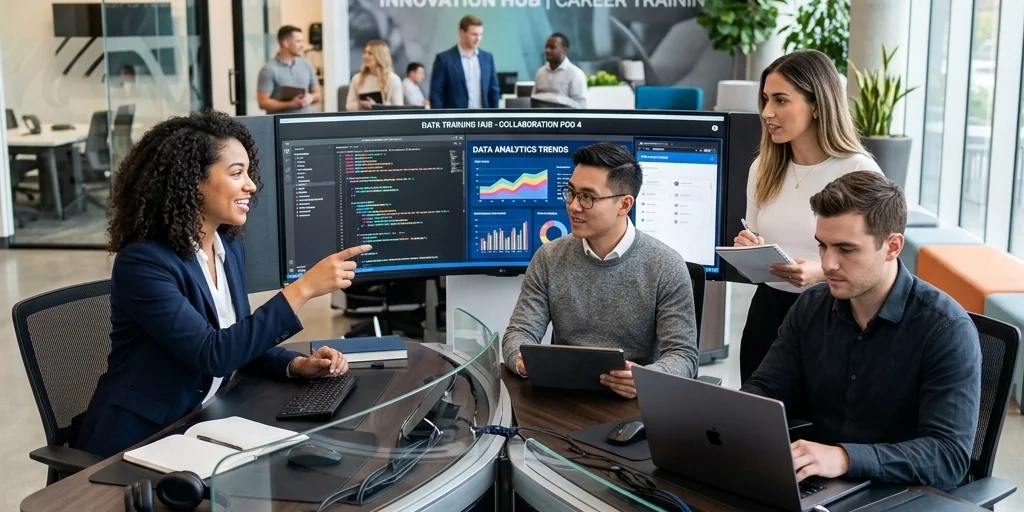
If you close your eyes and think of a "computer lab," you probably picture a cavernous, windowless room filled with rows of beige monitors, the faint hum of a hundred spinning hard drives, and that distinct smell of ozone and recycled air. For decades, this was the gold standard of education. It was the place where you learned how to type without looking at your fingers and how to make a turtle draw a square in Logo.
But it’s 2026, and the "Traditional Computer Lab" is starting to look less like a hub of innovation and more like a museum exhibit of the early digital age.
The world is moving faster than a fiber-optic connection, and the way we train people for careers is undergoing a radical structural shift. At USA Entertainment Ventures LLC, we spend a lot of time looking at how infrastructure meets opportunity. Right now, the data is telling us that the monolithic lab is out, and the specialized, high-tech "Pod" is in.
Why? Because traditional labs are expensive, inflexible, and: to be blunt: a giant waste of space. Let’s dive into why the future of career training is being built one modular pod at a time.
The Slow Death of the "One-Size-Fits-All" Lab
To understand why the lab is dying, you have to look at the math. According to recent institutional data, major universities and training centers are slashing their physical computer footprints. The Illinois Institute of Technology, for instance, cut its lab count by nearly 50% in favor of remote models and specialized setups.
The problem is three-fold:
- Real Estate is Pricey: Dedicating 2,000 square feet to a room that sits empty for half the day is a financial nightmare.
- The HVAC Trap: Keeping 40 high-end PCs cool requires industrial-strength air conditioning. That’s a massive energy drain.
- The Obsolescence Cycle: A high-end computer has a shelf life of about four years. When you have 50 of them, you’re looking at a massive hardware refresh bill every few years that never ends.
Traditional labs were built for "computer literacy": the basics. But in 2026, we don’t need to teach people how to use a computer; we need to teach them how to use specific, high-intensity technology to solve specific, high-value problems.
Enter the Pod: The "Shipping Container" of the Digital Workspace
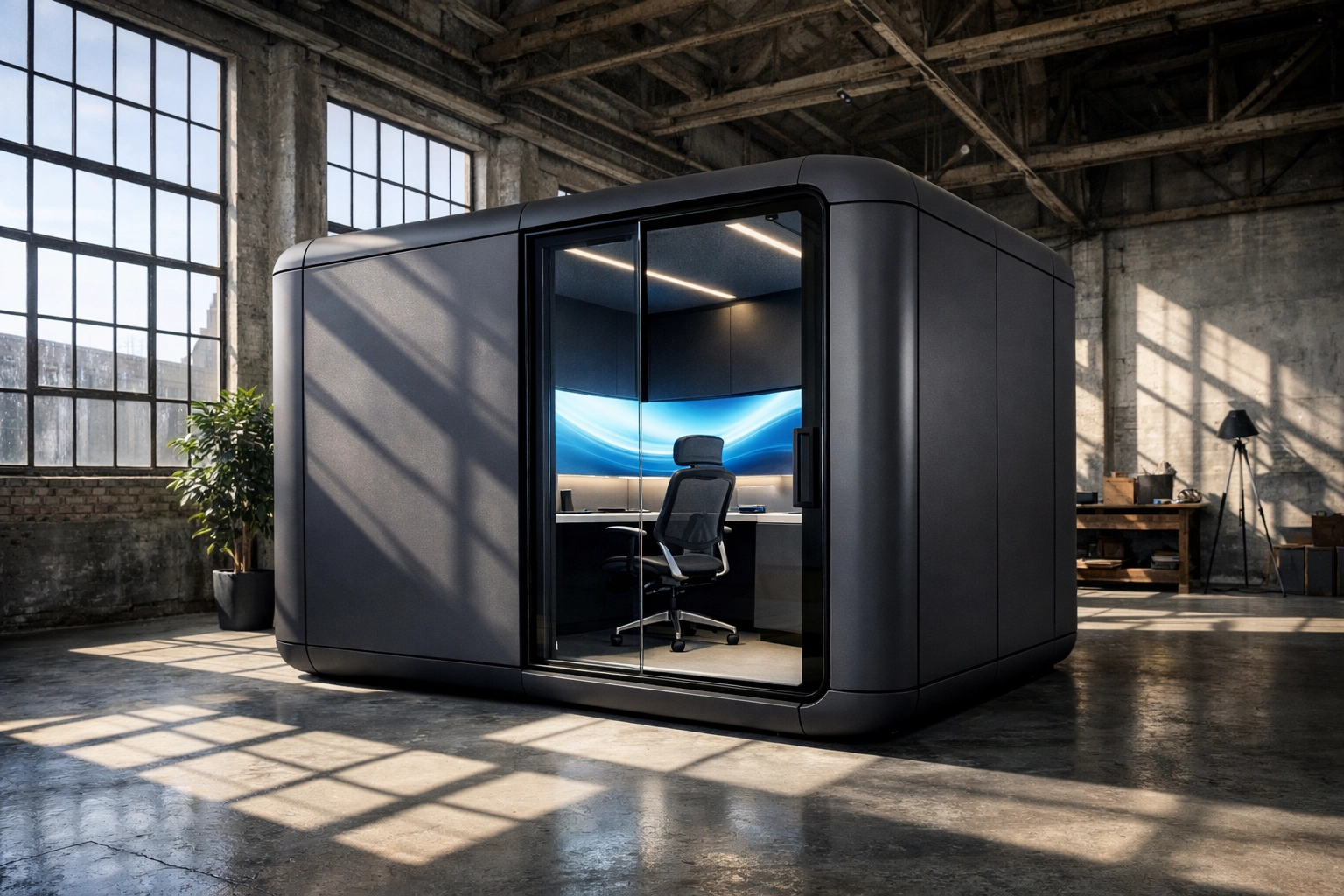
Imagine a workspace that is modular, purpose-built, and can be dropped into almost any environment. That is a Pod. Think of it as the shipping container of the digital world: standardized on the outside, but infinitely customizable on the inside.
Unlike the open-plan chaos of a traditional lab, a Pod is a controlled environment. It’s designed for one thing and one thing only: high-performance training. Whether it’s sound-dampened walls for a content creator or high-security server racks for a cybersecurity analyst, the Pod provides exactly what is needed and nothing more.
1. The Logistics Pathway: Command and Control
Logistics isn't just about driving trucks anymore; it’s about managing complex, AI-driven supply chains. Training someone for a career in modern logistics requires more than a laptop. It requires a "command center" environment where they can simulate real-time routing, drone fleet management, and warehouse automation.
High-tech pods allow students to step into a simulated global logistics hub. Because the space is compact and modular, you can fit three specialized logistics pods into the space of one traditional lab. This allows for smaller class sizes, more focused instruction, and hardware that is actually up to the task of running heavy simulation software.
As we explore at https://usaentertainmentventures.com, the intersection of physical space and digital efficiency is where the real money is made.
2. The Cybersecurity Pathway: The Digital Bunker
Cybersecurity is perhaps the best argument for the "Pod" model. You cannot: and should not: train high-level security analysts on a general-purpose network. To learn how to defend against a ransomware attack, you need a "sandbox": an isolated environment where you can break things without bringing down the whole building’s Wi-Fi.
A cybersecurity Pod acts as a digital bunker. It’s equipped with its own dedicated servers, high-speed encrypted lines, and the kind of processing power that would melt a standard desktop. This isn't just about learning to code; it’s about tactical defense. By moving this training into specialized pods, institutions can provide a high-stakes, realistic environment that a traditional lab simply can't offer.

3. The Content Creation Pathway: The Micro-Studio
We’ve moved past the era where "content creation" was a hobby. It’s a multi-billion dollar industry. From high-end video editing to podcasting and 3D rendering for the metaverse, the hardware requirements are staggering.
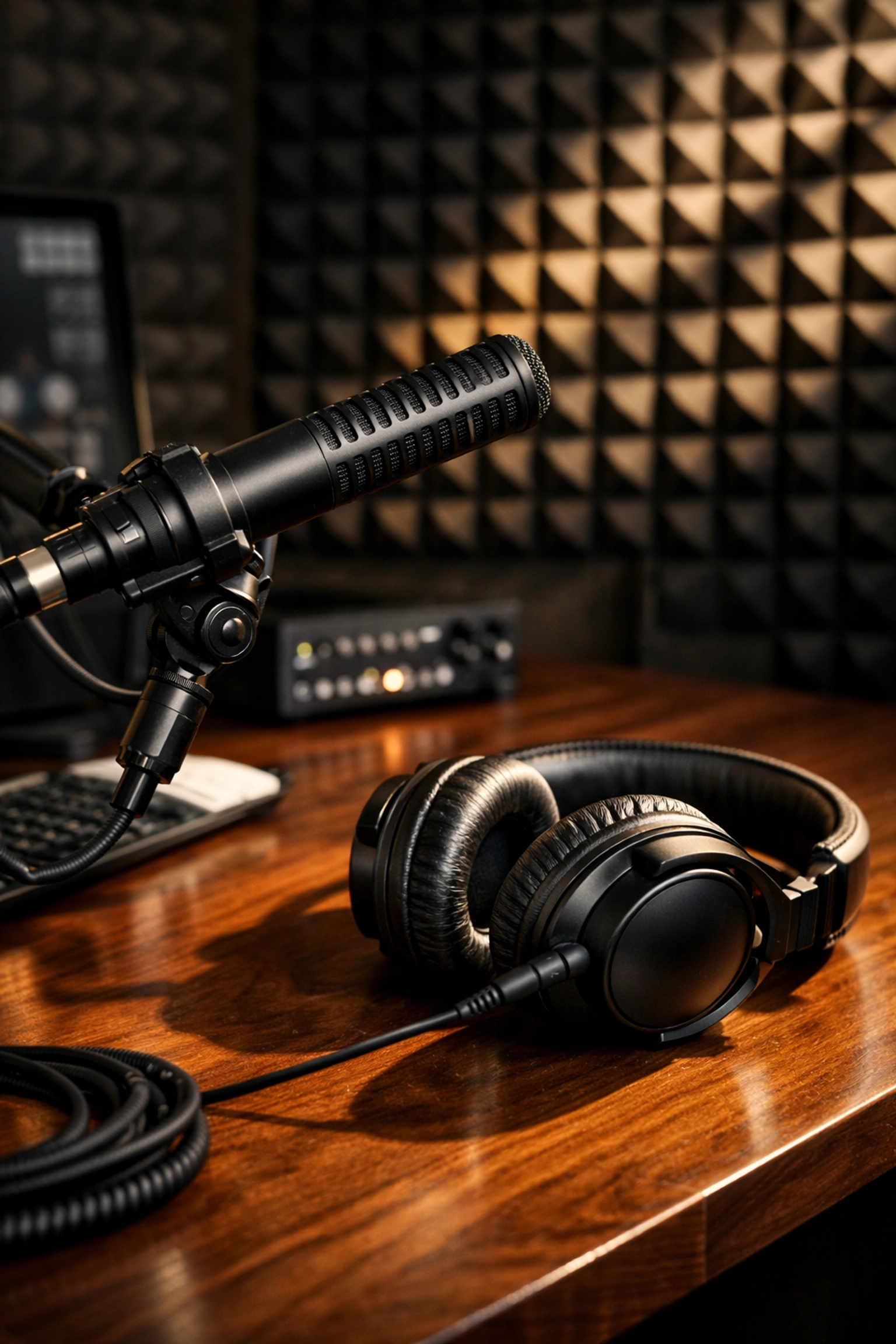
Try recording a professional podcast in a traditional computer lab while 30 other people are typing and talking. It’s impossible. Content creation pods solve this by being acoustically treated and equipped with professional-grade lighting, 4K cameras, and GPUs that can handle real-time 8K video rendering.
For schools and training centers, these pods are a goldmine. They allow them to offer "Studio Time" as a career-track resource, giving students the tools they need to enter the workforce as professional creators, not just "people who know how to use YouTube."
Why Businesses are Pivoting to Pods
At USA Entertainment Ventures LLC, we help businesses navigate the complexities of modern infrastructure. We see it every day: corporations are ditching the "training room" for the "pod cluster."
The ROI is simple:
- Scalability: If you need to add 10 more training spots, you don't need to renovate a wing of your building. You just order more pods.
- Portability: Need to move your training program to a different city? You can literally ship the pods.
- Specialization: You can have a Logistics Pod next to a Cybersecurity Pod, each optimized for its specific task.
It’s about "Right-Sizing." Why build a massive infrastructure for a general need when you can build a precise infrastructure for a specific career path?
The Hybrid Future: Virtual Meets Physical
Now, some might argue that everything is moving to the cloud and "virtual labs" are the answer. And they aren't wrong: virtual labs are great for accessibility. You can access a simulated environment from your couch.
However, virtual labs lack the "tactile reality" required for high-level career training. You can't feel the ergonomics of a command center or experience the sensory isolation of a high-security bunker through a browser window. The future is a hybrid model: use virtual labs for the basics and high-tech pods for the hands-on, career-defining mastery.
As Dan Kost, our CEO, often says, "Efficiency isn't about doing more with less; it's about doing the right things in the right space."
Actionable Takeaways for 2026
If you are an educator, a business owner, or a facility manager, here is how you should be thinking about your next infrastructure move:
- Audit Your Current Space: How many of your current workstations are actually being used to their full potential? If the answer is "not many," it’s time to consolidate.
- Focus on "High-Value" Skills: Don't build a general lab. Identify the top three career paths you want to support (like logistics, cyber, or media) and build specialized pods for those.
- Think Modular: When you invest in hardware, think about how it can be moved, upgraded, or repurposed. Modular pods allow you to swap out tech without tearing down walls.
- Explore the Resources: Check out our sitemaps and portfolios at https://usaentertainmentventures.com/post-sitemap.xml to see how we are tracking these trends across different industries.
The "Traditional Computer Lab" served us well for thirty years. It gave us the internet, the office suite, and the basic digital skills we take for granted today. But as we look toward the next decade of career training, the rows of beige monitors are fading into the background.
The future is smaller, smarter, and much more specialized. It’s time to step out of the lab and into the pod.
For more insights into the future of business infrastructure and entertainment ventures, keep an eye on our latest updates at https://usaentertainmentventures.com/logosliderwp/zoomedia-news. The future is being built today( one pod at a time.)





