
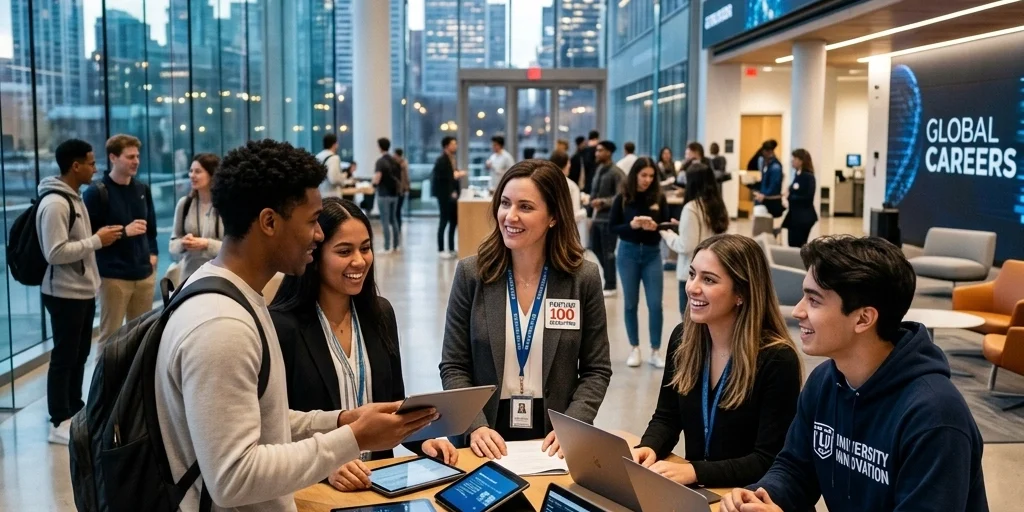
The race for talent has reached a breaking point. For decades, Fortune 100 companies have relied on a predictable, albeit narrow, recruitment strategy: focus on a handful of elite universities, attend the same career fairs, and compete for the same top 5% of graduates. However, the data suggests this model is no longer sustainable.
Recent shifts in the educational landscape are moving the starting line from the college campus to the high school classroom. "Future-Ready" schools are emerging as the new primary source for high-level talent. These institutions aren't just teaching standard curriculum; they are building talent pipelines years before a student even considers a university.
At USA Entertainment Ventures LLC, we see this shift as a fundamental change in how business consulting and talent acquisition intersect. By positioning a company as an anchor for these Future-Ready programs, organizations can secure their workforce of tomorrow, today.
The Traditional Recruitment Crisis
The conventional approach to hiring is becoming increasingly concentrated and competitive. Research indicates that over a quarter of Fortune 100 companies now recruit from a select list of approximately 30 schools. When you consider there are over 4,000 universities in the United States, the math doesn't work in favor of diversity or long-term growth.
This concentration creates a "limited pipeline" problem. By the time students reach their junior or senior year of college, their brand preferences are already set. If a Fortune 100 company hasn't engaged with them yet, they are likely already looking toward a competitor. This results in skyrocketing costs-per-hire and a constant battle for the same pool of candidates.

What Makes a School "Future-Ready"?
A Future-Ready school is defined by its ability to integrate physical learning infrastructure with modern workforce requirements. This goes beyond having a computer lab. We are talking about dedicated spaces for:
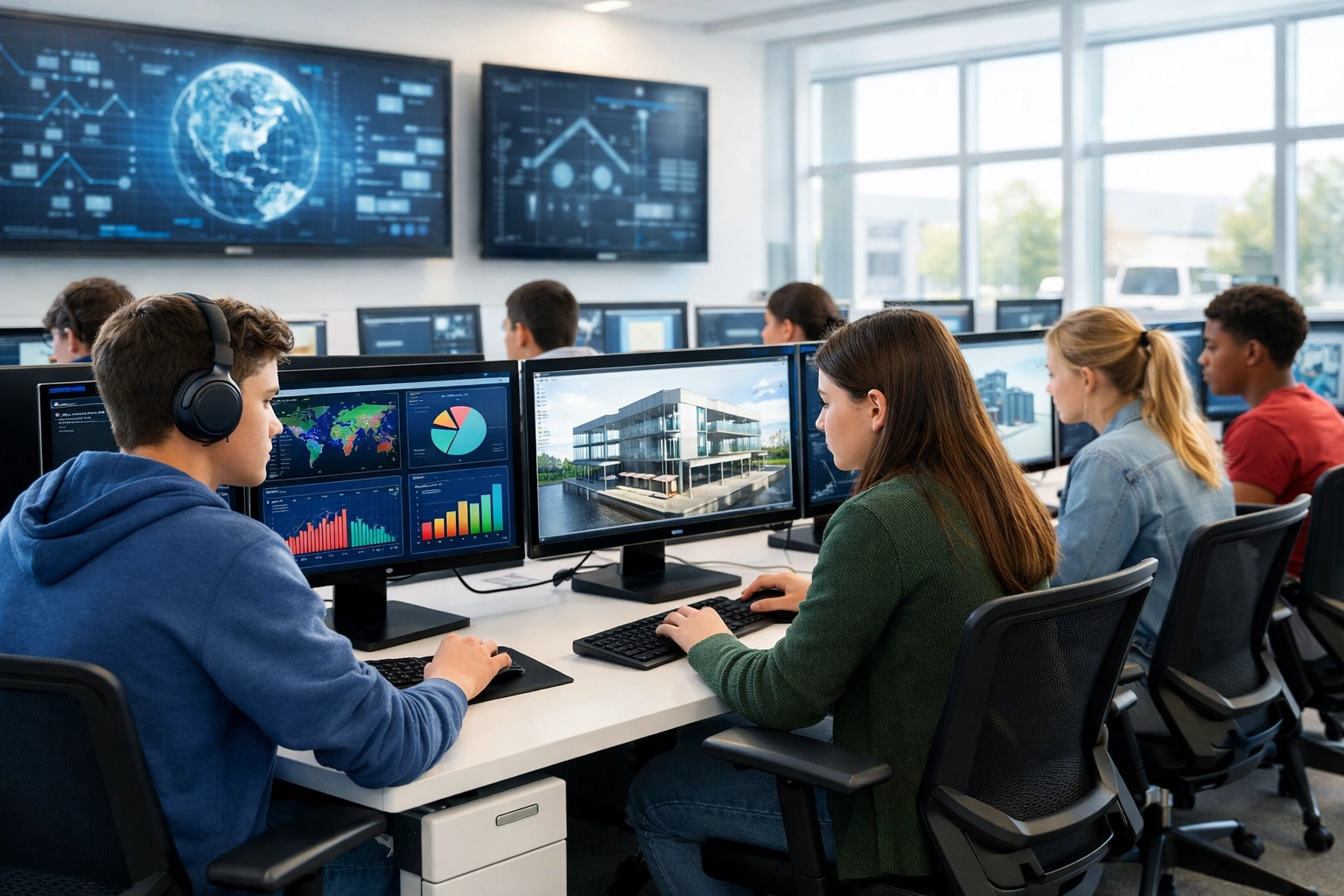
- Esports and Cloud Learning Labs: Combining competitive gaming with cloud curriculum and AI literacy.
- Data Analytics Training: Teaching students how to interpret complex data sets.
- Content Creation Suites: Developing media literacy through hands-on production.
By establishing these environments, schools provide students with job-ready skills before they even graduate high school. For companies like USA Entertainment Ventures LLC, being involved at this stage isn't just about philanthropy: it’s about strategic business alignment.
Data Analytics Dashboards: The New Resume
In the future of recruitment, a standard resume will be secondary to a data analytics dashboard. Future-Ready schools track specific metrics that allow recruiters to identify high-performing talent with surgical precision.
One of the most critical metrics is the Career Pathway Alignment Percentage. This measures how closely the skills being taught in the classroom match the skills requested in current Fortune 100 job postings. Schools that score above 70% on this metric are essentially functioning as pre-onboarding centers for major corporations.
Another key metric is Student Engagement Velocity. This tracks how quickly a student masters new technologies or platforms. Instead of guessing a candidate's potential during a 30-minute interview, recruiters can look at four years of performance data. This data-driven identification allows organizations to build a "portfolio" of talent, watching prospective hires grow and develop over time.
NIL Education and Media Literacy
The landscape for young talent has been permanently altered by Name, Image, and Likeness (NIL) developments. While often associated with college sports, NIL education is becoming vital at the high school level.
Students today are professionalizing earlier than ever. They are managing personal brands, navigating social media influence, and entering into legal contracts while still in their teens. Future-Ready schools prioritize NIL education and media literacy as core outcomes of their programs.
Why does this matter to a Fortune 100 recruiter?
- Brand Safety: Students with high media literacy understand the consequences of their digital footprint. They are "corporate-ready" in terms of professional conduct.
- Communication Skills: These students are trained to be content creators and effective communicators, skills that are invaluable in any modern business role.
- Financial Literacy: NIL education often includes components of financial management, making for more mature and business-savvy entry-level employees.
For more information on how media and sports intersect with education, you can explore our work at 360 Sports Media.
The ROI of Early Talent Development
The shift toward recruiting from Future-Ready schools isn't just a trend; it's a proven strategy with measurable returns.
Data shows that companies excelling at internal advancement through these early-stage partnerships promote employees 2.5 times more frequently than their competitors. Furthermore, firms in the top tier for entry-level hiring are 4.3 times more likely to hire entry-level workers than other large organizations.
When a student completes a branded certification or training program within a Future-Ready school, they arrive on Day 1 already understanding the company culture and the tools required for the job. This drastically reduces onboarding expenses and shortens the "time to productivity."
Position Your Company as an Anchor
At USA Entertainment Ventures LLC, we believe that the most successful companies of the next decade will be those that act as "anchors" for these educational ecosystems. Being an anchor means more than just putting a logo on a wall; it means being the bridge between the classroom and the boardroom.
By providing the curriculum, the tools, and the real-world data challenges for these students, you aren't just recruiting: you are cultivating. You are ensuring that the talent pipeline is filled with individuals who are already familiar with your brand's mission and technical requirements.

Conclusion: A New Era of Talent Acquisition
The transition to Future-Ready schools represents a massive opportunity for Fortune 100 companies to move away from the traditional, high-stress recruitment cycles. By focusing on data analytics, NIL education, and media literacy at the high school level, businesses can create a sustainable, diverse, and highly skilled workforce.
Recruiting is no longer an event that happens once a year on a college campus. It is a continuous process of engagement and education. As we move further into 2026, the companies that thrive will be the ones that recognized the value of the high school talent market early on.
If you are ready to explore how these pipelines can be integrated into your business strategy, visit our main website to learn more about our consulting services and how we help organizations navigate the future of entertainment and business.

The future of work is being written in our schools today. The question is, will your brand be part of the story?





