
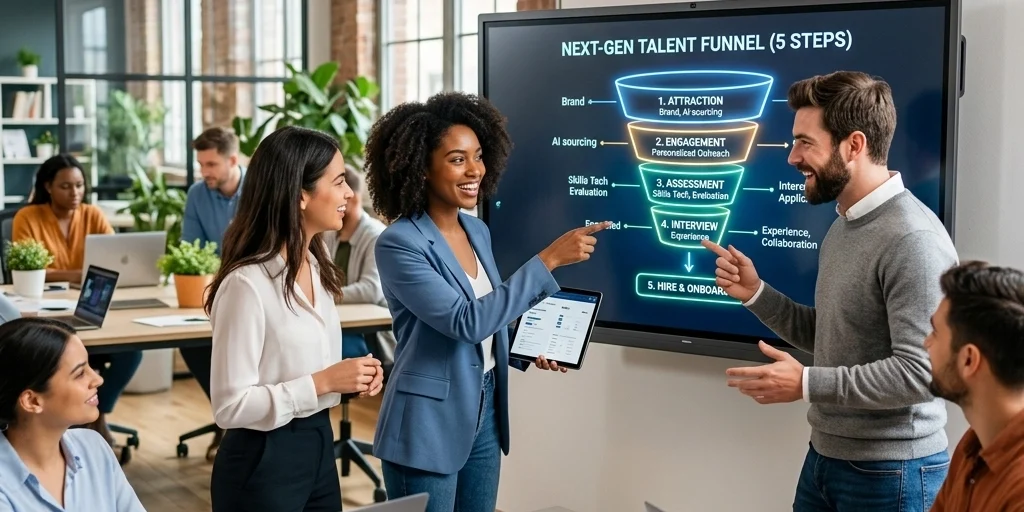
The global landscape of technology is moving faster than the traditional education system can produce specialized workers. In sectors like Cloud Computing, Artificial Intelligence (AI), and Data Analytics, the demand for skilled professionals has created a hyper-competitive environment. For most companies, the standard recruitment strategy involves waiting for students to graduate from four-year universities or hiring seasoned veterans from competitors. However, by the time a student reaches their senior year of college, they are often already scouted by industry giants.
To secure a sustainable future, forward-thinking organizations are moving "upstream." The concept of the Next-Gen Talent Funnel shifts the focus from college graduates to high school students. By identifying potential early and nurturing skills before they enter the traditional workforce, companies can build a loyal, highly skilled pipeline that is insulated from market fluctuations.
This guide outlines five actionable steps to build a high-school-to-career talent funnel that ensures your organization stays ahead in the tech race.
Why the High School Level Matters Now
The logic is simple: the foundational logic required for AI and Data Analytics is often developed during the teenage years. Students today are digital natives who experiment with sophisticated software and coding languages long before they step onto a college campus. According to recent industry trends, firms that engage with students at the K-12 level see higher retention rates and lower recruitment costs over a ten-year period.
The traditional "wait and see" approach is no longer viable. If your company requires expertise in Cloud architecture or Data science, you are not just competing with other tech firms; you are competing with every industry that is undergoing digital transformation. Building a funnel at the high school level allows you to shape the curriculum and the culture of your future workforce.

Step 1: Audit Your Current Pipeline and Identify Friction
Before reaching out to schools, you must understand where your current recruitment strategy is failing. An internal audit reveals the "leaks" in your talent pipeline. Are you struggling to find entry-level candidates with specific technical logic? Is your time-to-hire for Cloud engineers exceeding six months?
A thorough audit involves looking at your turnover rates and the performance of recent hires. If your organization relies solely on headhunters or university job fairs, you are likely paying a premium for talent that is already in high demand.
Key actions for the audit:
- Map your technical needs: Identify which roles will be hardest to fill in 3–5 years (likely AI and Data Analytics).
- Analyze cost-per-hire: Compare the cost of traditional recruiting versus the long-term investment of an early-career program.
- Identify skill gaps: Determine if college graduates are entering your firm with the practical, "hands-on" skills your specific stack requires.
By identifying these gaps, you can tailor your high school outreach to solve specific business problems rather than just acting as a general community partner. You can learn more about how we view these structural shifts on our services page.
Step 2: Establish Strategic High School Partnerships
The second step is to move beyond passive "career days" and toward active collaboration. Building a next-gen funnel requires a formal partnership with local high schools, vocational centers, and Career and Technical Education (CTE) programs.
Educational institutions are often eager to partner with businesses because it provides their students with real-world relevance. Your goal is to become a fixture in the classroom. This is not about a one-time donation of old laptops; it is about providing the technical resources and mentorship that schools often lack.
Effective ways to partner:
- Guest Speaking and Mentorship: Send your senior developers or data scientists to lead workshops. Hearing from a professional working in AI makes the career path tangible for a student.
- Curriculum Advisory: Many schools are looking for industry input to ensure their computer science curriculum matches modern standards. Help them integrate Cloud fundamentals into their lesson plans.
- Resource Sharing: Provide access to "sandbox" environments where students can experiment with your technology in a safe, controlled way.

Step 3: Prioritize Skills Over Credentials
One of the biggest hurdles in tech recruiting is the "degree barrier." While a university degree has value, it is no longer the only indicator of technical proficiency. To build a successful next-gen funnel, your hiring criteria must evolve to prioritize demonstrated skills over academic credentials.
Many high school students are self-taught experts in Python, R, or Cloud management. If your recruitment process automatically filters out anyone without a Bachelor’s degree, you are missing out on some of the most innovative and dedicated talent available.
How to implement skills-based identification:
- Technical Challenges: Use coding assessments or data sets that require students to solve a specific problem.
- Portfolio Reviews: Look at what students have built on their own time. A GitHub repository or a personal AI project often says more than a GPA.
- Behavioral Indicators: Look for persistence, logical reasoning, and a "growth mindset." These traits are the best predictors of long-term success in the ever-changing tech landscape.
Shifting to a skills-first mindset allows you to identify "diamonds in the rough" before they are even on the radar of your competitors. For more insights on how roles are evolving, visit our career opportunities section.
Step 4: Develop Specialized Micro-Internships
A common concern for companies is the risk of hiring young, inexperienced talent. The solution is the "micro-internship." These are short-term, project-based engagements that allow students to experience your company culture and technical expectations without a long-term commitment from either party.
Micro-internships during summer breaks or even "externships" during spring break provide valuable data. You can see how a student handles a real Data Analytics task or how they collaborate with a team on a Cloud migration simulation.
Structure of a micro-internship:
- Defined Scope: Give the student a specific, non-critical task (e.g., cleaning a non-sensitive data set or documenting a piece of code).
- Mentorship Loop: Pair the student with a junior employee. This provides the student with guidance and gives your junior employee leadership experience.
- Clear Feedback: Provide an objective evaluation at the end of the project. This builds the student’s professional maturity and gives you a record of their progress.

Step 5: Implement Data-Driven Tracking and Engagement
The final step is to treat your talent funnel like a sales funnel. You need to track engagement over time to see which students are progressing and which interventions are working. A "set it and forget it" approach will not result in a sustainable pipeline.
Create a database of the students you interact with through workshops, competitions, and internships. Monitor their progress as they move through high school and into their early professional lives.
Metrics to track:
- Engagement Levels: Which students are consistently attending your webinars or completing your technical challenges?
- Skill Growth: Are students improving their proficiency in key areas like AI or Data Analytics over time?
- Conversion Rate: How many students who participated in a high school workshop eventually apply for a micro-internship or a full-time role?
By maintaining a dedicated talent pipeline team: comprised of HR and technical leads: you ensure that the strategy remains aligned with the company’s long-term goals. This data-driven approach removes the guesswork from hiring and replaces it with a predictable stream of qualified candidates. If you have questions about setting up these systems, feel free to contact us.
The Future of Recruiting is Early and Ethical
Building a Next-Gen Talent Funnel is not just a business strategy; it is a commitment to the future of the industry. By reaching into high schools, companies help bridge the digital divide and provide opportunities to students who might not have realized a career in Cloud or AI was within their reach.
The companies that will dominate the next decade are those that stop competing for the same 1% of college graduates and start building their own workforce from the ground up. It requires patience, data, and a willingness to rethink traditional hiring norms, but the payoff is a resilient, skilled, and loyal team ready to tackle the challenges of tomorrow.
As we look toward 2030 and beyond, the integration of AI and Data Analytics into every facet of business is inevitable. The only question is: will you have the talent to lead the way, or will you still be searching for them in a crowded market? The choice to start building your funnel today determines your success tomorrow. For further information about our organizational mission, you can visit our about page.





