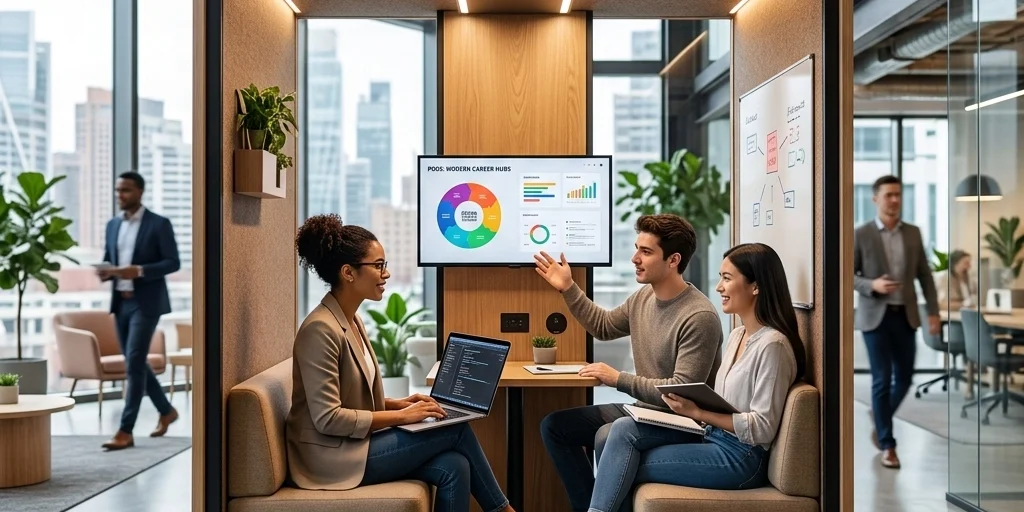
If you close your eyes and think of a "computer lab," what do you see? If it’s a room filled with rows of beige towers, flickering fluorescent lights, and that distinct smell of ozone and old carpet, you’re not alone. For decades, the computer lab was the sanctuary of the "tech-savvy." It was where you went to type a paper, play Oregon Trail, or: if you were feeling particularly rebellious: check your MySpace page.
But let’s be honest: the traditional computer lab is currently on life support, and the plug is about to be pulled.
As of April 2026, the way we work, learn, and create has fundamentally shifted. We don’t need a room full of shared PCs anymore because most of us carry more processing power in our pockets than it took to land a man on the moon. However, that doesn’t mean we don’t need physical spaces to work. It just means the "lab" has evolved. Enter: The Pod.
The Beige Box Apocalypse
Recent data shows that traditional university and corporate computer labs are operating at less than 40% capacity. Why? Because the Bring Your Own Device (BYOD) revolution won. Why sit in a stiff plastic chair using a mouse that hasn’t been cleaned since the Obama administration when you can sit on your couch with a MacBook Pro?
The Illinois Institute of Technology recently slashed its physical PC inventory by nearly 50%, moving toward remote lab models. They realized what we’ve all suspected: maintaining a room full of aging hardware is a money pit. But there’s a catch. While personal laptops are great for writing emails or scrolling through ZooMedia News, they often fall short when it comes to the heavy lifting required by modern careers.
This is where the "Pod" comes in. Instead of a room full of identical, mediocre machines, the Pod is a specialized, high-performance hub designed for collaboration and high-intensity tasks. It’s the difference between a cafeteria and a Michelin-starred kitchen.
What Exactly is a "Pod"?
Think of a Pod as a modular workstation on steroids. It’s not just a desk; it’s an integrated environment. We’re talking about dedicated high-speed fiber lines, ergonomic setups that don’t destroy your spine, and specialized hardware: like triple-monitor setups or high-end GPUs: that your average laptop simply can’t match.
More importantly, Pods are designed for collaboration. Traditional labs were built for isolation: rows of people staring straight ahead, forbidden from speaking. Modern Pods are circular or clustered, encouraging the kind of "shoulder-to-shoulder" teamwork that actually drives innovation.
Career Pathway #1: The Logistics Command Center
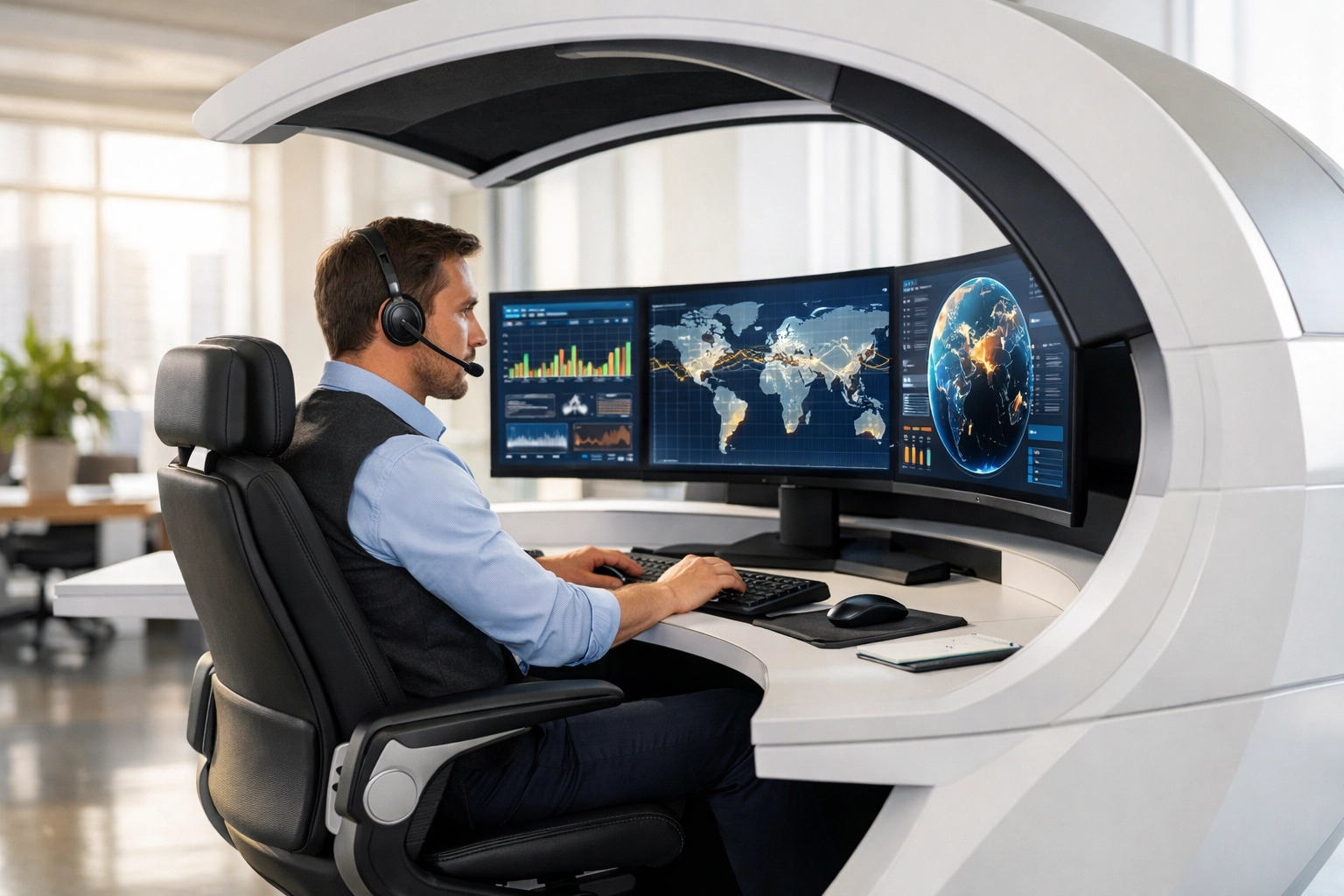
Logistics isn't just about moving boxes from A to B anymore; it’s about managing massive amounts of real-time data. Whether it's tracking a fleet of autonomous trucks via MobileHwyAds or managing global supply chains, the "office" for a logistics professional is becoming a Pod.
In a logistics Pod, you aren't just looking at a spreadsheet. You have a multi-screen setup showing weather patterns, traffic data, fuel prices, and warehouse levels simultaneously. You need the physical infrastructure to handle low-latency communication. You can’t do that effectively from a coffee shop Wi-Fi connection. These Pods act as mini-mission control centers, allowing professionals to pivot in real-time when a storm hits the Atlantic or a port gets backed up.
Career Pathway #2: The Cybersecurity War Room
If logistics is about movement, cybersecurity is about the wall. As we move further into 2026, the threats are getting weirder and more frequent. A cybersecurity Pod is essentially a digital bunker.
Why a Pod instead of a home office? Because of the "War Room" effect. When a breach occurs, you need your "Red Team" and "Blue Team" in the same physical space. You need air-gapped workstations and hardware-level security protocols that you simply can't guarantee in a standard home setup.
Cybersecurity Pods allow for rapid-fire communication and shared visualization of network attacks. It’s about creating an environment where "the lab" isn't just a place to use a computer, but a tool in itself to fight off digital intruders.
Career Pathway #3: The Content Creation Studio
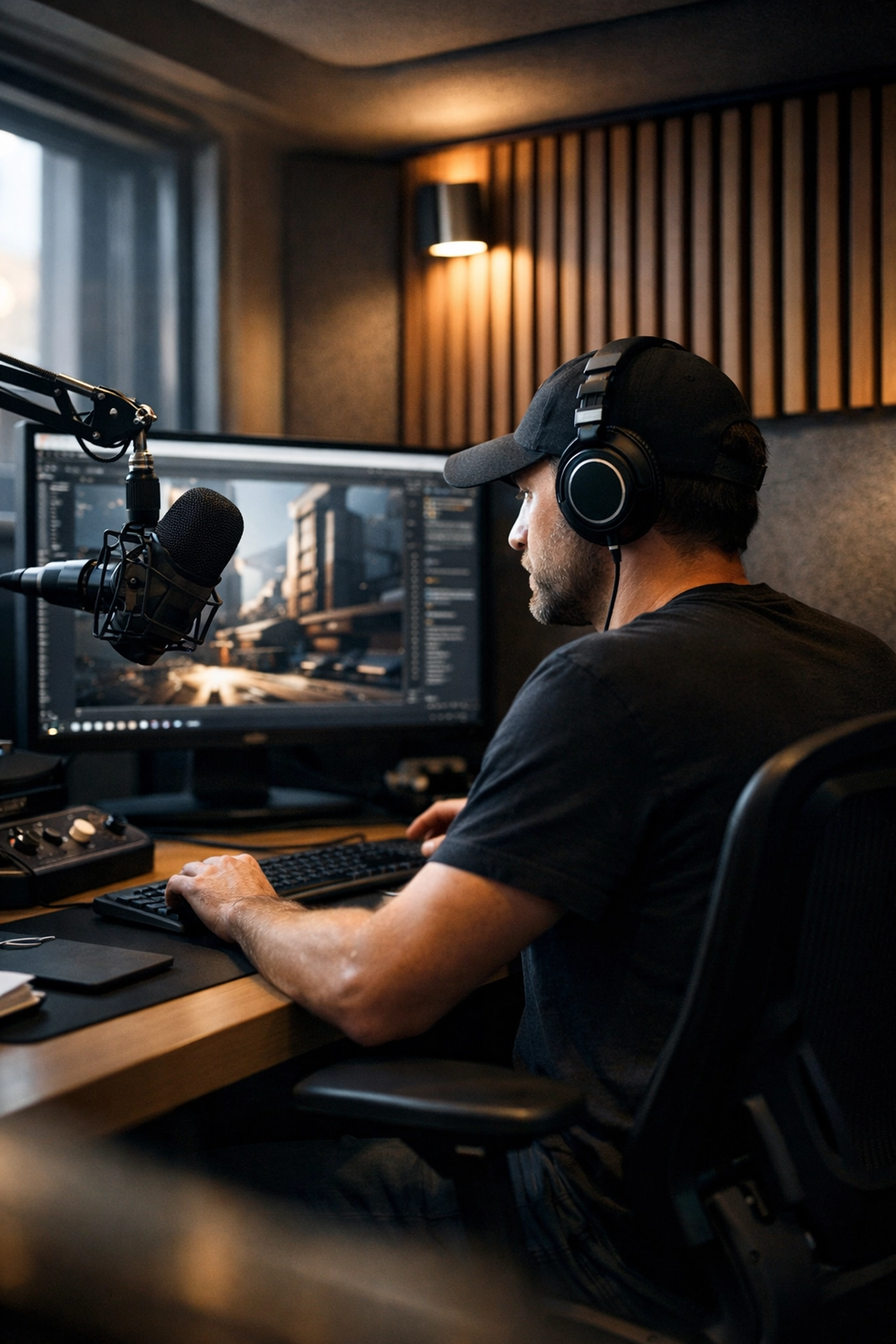
This is where the "old school" lab really fails. Content creation: 4K video editing, 3D rendering, and live streaming: requires massive amounts of power and specific environmental controls.
Modern creative Pods are outfitted with sound-dampening materials, professional-grade lighting, and the kind of rendering power that would make a gaming PC blush. For those working in spaces like 360SportsMedia, these Pods are the new standard. They allow creators to move from a "bedroom hobbyist" setup to a professional production environment without the overhead of a full-scale television studio.

Why Businesses are Making the Switch
As a business consulting firm, USA Entertainment Ventures LLC sees the writing on the wall. Companies are moving away from the "assigned desk" model. Why pay for 10,000 square feet of office space when 60% of your staff is remote?
However, fully remote work has its own set of problems: isolation, "Zoom fatigue," and a lack of spontaneous creativity. The solution is the "Hub and Spoke" model. The "Spokes" are the remote workers, and the "Hub" is the physical office filled with specialized Pods.
Businesses are finding that investing in 10 high-end Pods is more cost-effective and provides a better ROI than maintaining 50 "standard" workstations that nobody wants to use. It’s about quality over quantity.
The ROI of the Pod:
- Reduced Real Estate Costs: You need less space when you optimize for specialized tasks rather than "butts in seats."
- Attracting Talent: Top-tier talent in logistics, cyber, and creative fields want top-tier tools. A laptop and a prayer won’t cut it.
- Collaboration: Physical proximity in a Pod environment leads to faster problem-solving.
The Death of "One Size Fits All"
The biggest mistake of the 1990s computer lab was the assumption that everyone needed the same thing. A computer science major needed the same PC as an English major. That’s nonsense.
The Pod era is defined by specialization. A logistics Pod looks nothing like a creative Pod. One is focused on data streams and communication; the other is focused on visual fidelity and audio precision. By moving away from the "general purpose" lab, we are finally acknowledging that technology should be a specialized extension of the human doing the work.
Looking Ahead: The Future of the Infrastructure
So, are computer labs dead? The old ones certainly are. They are the dinosaurs of the digital age, waiting for the asteroid to finish the job. But the need for centralized technology is stronger than ever.
As we look toward the rest of 2026 and beyond, expect to see the "Pod" become the standard unit of the modern office. We’re moving toward a future where "going to work" means plugging into a specialized environment that enhances your specific skills.
Whether you’re managing a fleet of trucks, defending a network from a state-sponsored hack, or editing the next viral sports documentary, the Pod is your new home. It’s time to stop mourning the rows of beige monitors and start embracing the modular, high-powered future.
The lab is dead. Long live the Pod.
For more insights into the shifting landscape of business infrastructure and entertainment management, check out our page-sitemap.xml or learn more about our team at the author page.
At USA Entertainment Ventures LLC, we believe the right tools don't just help you do the job( they change what the job can be.)