
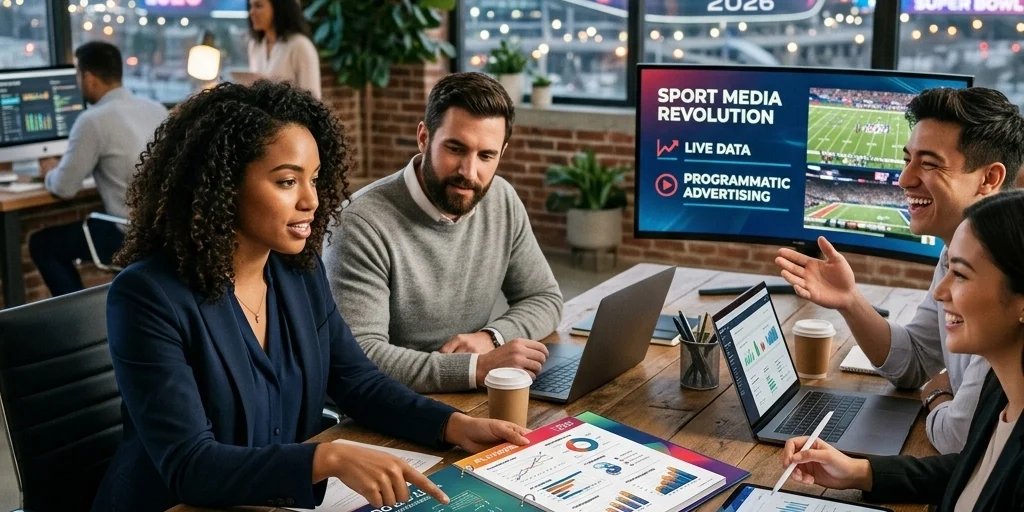
The dust has settled on the 2026 sporting season, and the data is clear: the traditional rules of sports media advertising have been fundamentally rewritten. For decades, the Super Bowl was viewed as a singular, thirty-second window of opportunity, a high-stakes gamble where a brand’s entire annual sentiment rested on one creative execution. However, the 2026 season served as a definitive pivot point.
At USA Entertainment Ventures LLC, we have monitored these shifts closely. The "Super Bowl 2026 Playbook" is no longer just about the game day broadcast; it is about a multi-layered, narrative-driven strategy that begins weeks before kickoff and resonates for months after. This evolution is not merely a trend, it is the new baseline for any business looking to navigate the complex intersection of sports, entertainment, and consumer attention.
The $8 Million Strategic Shift
In 2026, the price of a 30-second spot reached a record-breaking $8 million. While the price tag is staggering, the true story lies in how brands justified this investment. Leading advertisers no longer treat the Super Bowl as an isolated event. Instead, the "Big Game" has become the crescendo of a carefully orchestrated campaign arc.
Recent industry data suggests that brands who released their content or teasers at least 14 days prior to the game saw a 250% increase in earned media value compared to those who opted for a "surprise" reveal during the broadcast. This shift from a one-time reveal to a campaign arc is the first major lesson of the 2026 playbook. Advertising in sports media is now about building narrative momentum.

From Linear Reach to Omnichannel Engagement
The 2026 playbook highlights a critical reality: linear television reach, while still massive, is no longer sufficient on its own. The "second screen" has become the primary screen for engagement. During the 2026 broadcast, over 80% of viewers engaged with social media or specialized apps while watching the game.
The most successful brands utilized an omnichannel approach, integrating Connected TV (CTV), social platforms, and even out-of-home (OOH) digital displays to create a seamless experience. This approach acknowledges that the modern consumer does not just watch sports; they participate in them. For businesses seeking to understand these complexities, our services focus on navigating this fragmented landscape to ensure messaging reaches the right audience at the right moment.
Storytelling Before Branding
One of the most notable trends of the 2026 season was the prioritization of narrative over overt branding. Influential campaigns took significant creative risks, often delaying the reveal of the company logo until the final seconds of the spot.
Experts note that in a high-density advertising environment, the human brain is wired to filter out "sales pitches" but remains highly receptive to stories. By focusing on engagement first and branding second, companies were able to bypass consumer skepticism. This "narrative-first" approach is a cornerstone of the 2026 playbook. It requires a deep understanding of audience psychology and a willingness to step away from traditional corporate messaging.
For a deeper dive into these strategies, we recommend exploring The Ultimate Guide to High-Stakes Branding: Everything You Need to Succeed in 2026.
The Fragmentation of Fame: Creators vs. Celebrities
For years, the Super Bowl was synonymous with A-list Hollywood cameos. However, 2026 saw the rise of "fame fragmentation." Brands began to weigh the massive reach of a traditional celebrity against the deep, authentic credibility of digital-native creators and influencers.

This shift is grounded in data. Digital creators often command a more loyal and engaged niche audience than broad-spectrum celebrities. By partnering with voices that have built-in trust within specific communities, whether in tech, fitness, or lifestyle, advertisers achieved a higher level of authentic engagement at a fraction of the cost of a traditional celebrity endorsement. The 2026 playbook proves that in sports media, credibility is the new currency.

Real-Time Agility and the "Second Screen"
The ability to respond in real-time to in-game events has become a mandatory skill for modern marketing teams. The 2026 playbook emphasizes agility. Whether it was a power outage in years past or a specific historical play in 2026, the brands that "won" were the ones with social media war rooms ready to deploy content within seconds of a viral moment.
This requires a departure from the "set it and forget it" mentality of traditional media buying. It demands a sophisticated infrastructure where data analytics and creative execution happen simultaneously. Advertising is now a living, breathing process that must adapt to the unpredictability of live sports.
The Super Bowl Playbook: Sports Media's Advertising Strategy
As part of our commitment to keeping our clients and partners informed, our latest newsletter focuses specifically on these emerging strategies. We have curated insights that break down the technical execution of these multi-phase campaigns.
To see these concepts in action and understand the visual language of 2026 advertising, please view our detailed analysis video below:
https://www.youtube.com/watch?v=l6J-0zileKE
This video provides an engaging and informative look at how the biggest brands in the world are currently positioning themselves. It is not just about the "what": it is about the "how."
Practical Takeaways for Your Business
While most businesses do not have an $8 million budget for a single ad spot, the principles of the 2026 playbook are scalable and applicable to any organization:
- Extend Your Campaign Life Cycle: Do not rely on a single launch date. Build anticipation through teasers and maintain the conversation after the initial reveal.
- Focus on Narrative: Identify the story your brand tells. Why should the consumer care? If you lead with value and emotion, the brand recognition will follow naturally.
- Leverage Authentic Voices: Look beyond traditional endorsements. Seek out creators who have a genuine connection to your industry.
- Embrace Multi-Channel Thinking: Ensure your message is consistent across linear, social, and digital platforms. Your audience is moving between screens; your message should too.
- Be Agile: Invest in the capability to respond to current events. Relevance is often a matter of timing.

Conclusion: A Future-Focused Outlook
The 2026 Super Bowl has proven that sports media advertising is no longer a spectator sport for brands. It is an active, immersive, and highly strategic endeavor. The move toward purpose-driven messaging, creator-led authenticity, and real-time responsiveness represents a permanent shift in the industry.
At USA Entertainment Ventures LLC, we believe these changes offer an unprecedented opportunity for businesses to connect with their audiences in more meaningful ways. By adopting a "playbook" mentality: one that values strategy and narrative over simple reach: companies can navigate the complexities of the modern media landscape with confidence and clarity.
The future of sports advertising is here, and it is more dynamic than ever. To discuss how your organization can implement these high-level strategies, we invite you to contact our team for a consultation. Let us help you turn the lessons of 2026 into your growth strategy for the years to come.





