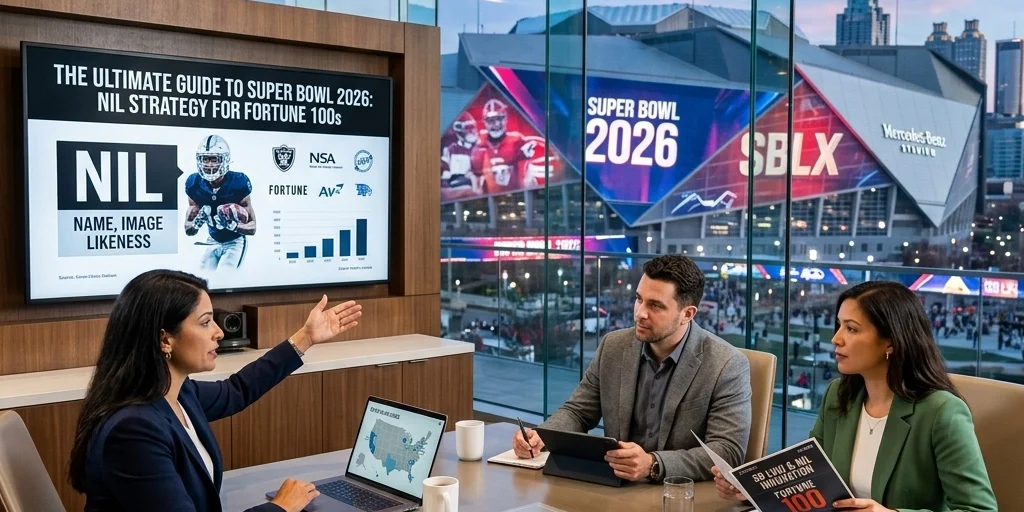
As the dust settles on Super Bowl LX, the marketing landscape for Fortune 100 companies has reached a definitive turning point. The traditional playbook: centered almost exclusively on high-budget television commercials: has been fundamentally disrupted. In 2026, the most successful brands didn’t just buy airtime; they bought influence through Name, Image, and Likeness (NIL) partnerships.
For elite brands, the Super Bowl is no longer a single-day event but a multi-month campaign cycle where the "Second Screen" often carries more weight than the primary broadcast. This guide explores the NIL revolution and provides a strategic blueprint for high-stakes branding in this new era of sports marketing.
The NIL Revolution: Bridging the Gap
The concept of NIL has evolved from a collegiate compliance hurdle into a powerhouse marketing engine. For Fortune 100 brands, the NIL revolution represents a shift from mass-broadcast "shouting" to targeted, authentic "conversation." While a 30-second spot during the game provides massive reach, NIL partnerships provide something more valuable: sustained resonance.
By leveraging athletes who own their digital rights and command highly engaged communities, brands can bridge the gap between the stadium and the consumer’s living room. This isn't just about hiring a spokesperson; it's about integrating a brand into the cultural narrative of the Super Bowl through the voices that fans trust most.
To see this dynamic in action, watch how the NIL landscape has bridged the gap at the Super Bowl:
https://www.youtube.com/watch?v=l6J-0zileKE
Why Fortune 100 Brands are Shifting Budgets
In previous cycles, the Super Bowl was a "top-of-funnel" awareness play. Today, CMOs at leading corporations are demanding more accountability and a clearer line to ROI. According to industry data, while the average Super Bowl ad costs upwards of $7 million for 30 seconds of attention, an integrated NIL strategy can achieve higher engagement rates at a fraction of the cost: or, more effectively, can amplify that $7 million investment to ensure it doesn't vanish the moment the whistle blows.
The shift is driven by three primary factors:
- Second-Screen Dominance: Over 70% of viewers engage with social media during the game. NIL athletes live on these screens.
- Authenticity Metrics: Modern consumers, particularly Gen Z and Millennials, are increasingly skeptical of polished corporate ads but respond positively to athlete-driven content.
- Data-Driven Precision: Unlike traditional TV metrics, NIL campaigns offer real-time tracking, sentiment analysis, and direct conversion data.
For brands looking to master these high-stakes environments, our Ultimate Guide to High-Stakes Branding offers deeper insights into the 2026 market dynamics.

The Three-Phase NIL Strategy for Super Bowl Success
Success in the NIL space requires a structured approach that spans before, during, and after the Big Game. At USA Entertainment Ventures LLC, we advocate for a three-phase framework.
Phase 1: The Pre-Game Build (The Momentum Phase)
The Super Bowl doesn't start on Sunday; it starts months in advance. Fortune 100 brands use this period to build "narrative equity."
By partnering with elite athletes during the playoff run, brands can create "Road to the Championship" content series. This phase is about building a "warm" audience. When the Super Bowl finally arrives, your brand is already a familiar part of the athlete’s story. This strategy significantly lowers the cost of customer acquisition compared to trying to capture attention in a saturated game-day market.
Phase 2: Game Day Activation (The Real-Time Phase)
On game day, the goal is agility. While a television commercial is static, an NIL roster is dynamic. Athletes and influencers can react to live game moments: spectacular catches, controversial calls, or halftime show highlights: in real-time.
This "Second-Screen Dominance" ensures that when a viewer looks down at their phone during a commercial break, they see your brand being discussed or promoted by their favorite athlete. This provides a layer of social proof that a traditional commercial simply cannot replicate.
Phase 3: Post-Game Saturation (The ROI Phase)
The week following the Super Bowl is often a missed opportunity for many brands. However, for those utilizing NIL, it is the peak time for conversion. Athletes can share "recap" content, behind-the-scenes footage, and exclusive post-game offers.
Using tracked links and athlete-specific promo codes, brands can measure the direct impact of their Super Bowl investment on digital sales and lead generation. This phase transforms the emotional high of the game into tangible business growth.

Selecting the Right Talent: Data Over Hype
One of the biggest mistakes a Fortune 100 brand can make is selecting NIL partners based on "star power" alone. In 2026, talent selection must be a data-driven process. The goal is to find the intersection between an athlete's audience and the brand’s target demographic.
Key metrics to evaluate include:
- Audience Sentiment: Does the athlete’s community view them as authentic or "bought"?
- Engagement Depth: Are followers merely scrolling past, or are they commenting, sharing, and clicking?
- Platform Alignment: A TikTok-heavy athlete might be perfect for a youth-focused beverage brand, while an X (formerly Twitter) influencer might be better for a financial services firm looking to capture real-time sports conversation.
For brands seeking professional guidance on navigating these complex selections, our Business Consulting team specializes in aligning talent with corporate objectives.
Measuring Success in the NIL Era
The "spray and pray" method of advertising is obsolete. To succeed with NIL at the Super Bowl, brands must implement robust measurement frameworks.
At USA Entertainment Ventures LLC, we focus on several key performance indicators (KPIs):
- Share of Voice: How much of the digital conversation surrounding the Super Bowl did your brand and its athletes capture?
- Conversion Attribution: How many sales can be directly traced back to an athlete’s post?
- Sentiment Lift: Did the partnership improve the public’s perception of the brand?
By focusing on these metrics, Fortune 100 companies can justify their spend and refine their strategies for future events. Our specialized work in Sports Advertising provides the infrastructure needed to track these high-level campaigns.

Forward-Looking Perspectives: Beyond 2026
As we look toward the 2027 season and beyond, the integration of AI and augmented reality into NIL partnerships is the next frontier. We are already seeing the emergence of "Virtual NIL," where athletes’ digital avatars engage with fans in the metaverse during the game.
Fortune 100 brands that adopt these technologies early will not only lead the market but will also define the future of sports fandom. The opportunity for growth is immense for those willing to innovate and move away from the safety of traditional advertising models.
Conclusion
The 2026 Super Bowl has proven that NIL is no longer an "experiment" for big brands: it is a core pillar of a successful marketing strategy. By bridging the gap between traditional media and authentic athlete influence, Fortune 100 companies can achieve unprecedented levels of engagement and ROI.
Success requires a shift in mindset: moving from being a spectator of the culture to becoming an active participant in it. Whether through strategic Consulting or cutting-edge Digital Strategy, the path to Super Bowl dominance now runs through the power of NIL.
For more information on how to scale your brand's presence in the world of sports and entertainment, visit USA Entertainment Ventures LLC.