
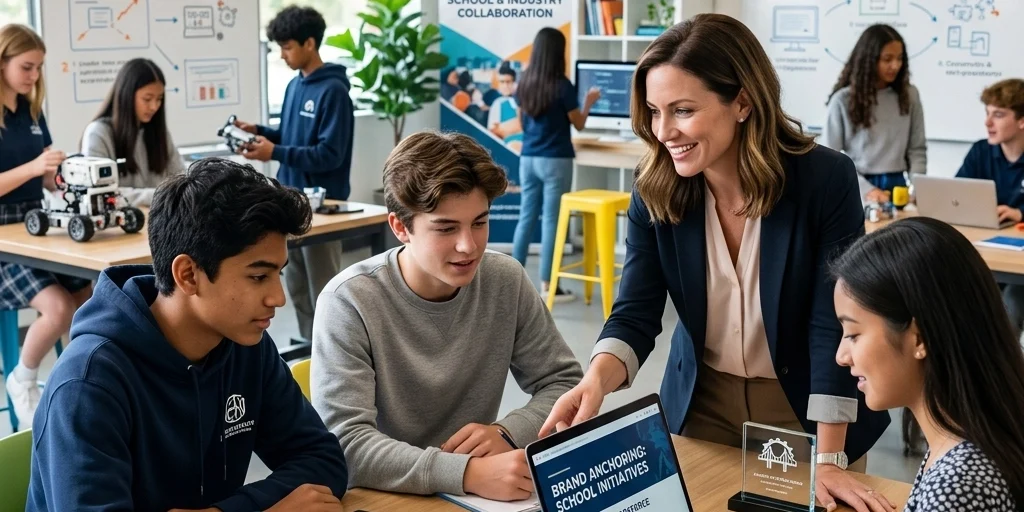
As we navigate the second quarter of 2026, the intersection of education and corporate development has reached a critical inflection point. No longer are schools merely institutions of academic instruction; they have evolved into essential incubators for the global workforce. For businesses, the challenge is no longer just "hiring" talent, but "cultivating" it long before a student enters the job market.
At USA Entertainment Ventures LLC, we recognize that building a "Future Ready" workforce requires a strategic anchoring of brands within the educational ecosystem. This is not about traditional advertising or sponsorship; it is about creating a symbiotic relationship where industry-specific literacy, data-driven insights, and personal brand management become part of the student’s daily curriculum.
To achieve this, executives must move beyond philanthropy and toward strategic integration. Here are five essential steps to anchoring your brand in schools while fostering a workforce that is prepared for the complexities of the modern economy.
1. Deploy Real-Time Data Analytics Dashboards
The foundation of any "Future Ready" initiative is data. To bridge the gap between education and industry, stakeholders need visibility into student progress, engagement, and skill acquisition. Implementing integrated data analytics dashboards allows both educators and corporate partners to monitor how effectively the curriculum is preparing students for real-world applications.
These dashboards provide more than just grades. They offer insights into behavioral trends, aptitude for specific technical tasks, and long-term engagement with industry-standard tools. When a brand is "anchored" through data, it creates a feedback loop where the curriculum can be adjusted in real-time to meet the shifting demands of the business world.
For executives, this transparency is vital. It ensures that investments in educational programs are yielding measurable results. By utilizing advanced analytics, companies can identify high-potential talent early, allowing for a more streamlined recruitment process once these students graduate.

Visual representation: A modern, high-tech dashboard displaying real-time student engagement metrics and workforce readiness scores.
2. Institutionalize Media Literacy and Digital Verification
In 2026, information is the most abundant resource and the greatest risk. For a workforce to be truly "Future Ready," students must possess a high degree of media literacy. This goes beyond understanding social media; it involves the ability to verify sources, detect algorithmic bias, and navigate the complexities of AI-generated content.
By anchoring your brand in media literacy programs, you position your organization as a guardian of truth and professional integrity. The outcome of these programs is a workforce capable of making informed decisions based on verified data: a skill that is invaluable in any business sector.
Strategic media literacy initiatives focus on several key outcomes:
- Source Verification: The ability to distinguish between credible journalism and misinformation.
- Cognitive Bias Recognition: Understanding how digital environments can influence decision-making.
- Technical Competency: Proficiency in using digital tools to cross-reference and validate information.
Companies like USA Entertainment Ventures LLC focus on providing the consulting necessary to implement these outcomes effectively within school districts, ensuring that students are not just consumers of content, but critical evaluators of it.
3. Implement Comprehensive NIL Education and Personal Branding
The rise of Name, Image, and Likeness (NIL) has fundamentally changed the landscape of student life. While initially focused on collegiate athletics, the principles of NIL: personal branding, contract law, and financial literacy: are now essential for all students.
A "Future Ready" workforce is one where individuals understand the value of their own intellectual property. When a brand anchors itself in NIL education, it teaches students how to manage themselves as professional entities. This entrepreneurial mindset is exactly what modern corporations look for in new hires.
NIL education programs should include:
- Personal Brand Architecture: Helping students define their professional identity.
- Financial Literacy: Understanding the tax and investment implications of personal earnings.
- Legal Safeguards: Teaching students how to read and negotiate contracts.
By supporting these programs, brands help create a generation of workers who are self-aware, business-savvy, and ready to contribute to a company’s growth from day one.

4. Foster Strategic Industry Partnerships as an Educational Anchor
To be truly "anchored" in a school, a brand must move from being a guest to being a permanent fixture of the educational environment. This is achieved through strategic partnerships that integrate professional standards into the classroom.
Schools that are "Future Ready" operate with the same efficiency and technological rigor as the private sector. This requires a business consulting approach to education. Organizations should look to establish laboratories, digital media suites, or innovation centers within schools that mirror the professional environment.
This immersion serves two purposes. First, it familiarizes students with the tools and culture of the brand. Second, it provides a "living lab" where companies can test new technologies and methodologies in a controlled, educational setting. This level of integration is a core component of the services offered by USA Entertainment Ventures LLC, helping schools and businesses find a common language for progress.

Visual representation: Students collaborating in a futuristic, corporate-sponsored digital media lab equipped with advanced technology.
5. Measure Outcomes and Scale Through ‘Future Ready’ Frameworks
The final step in anchoring your brand is the transition from pilot programs to scalable frameworks. A successful initiative is one that can be measured by its outcomes: Are students more likely to find employment in their field? Do they possess higher-than-average technical skills? Is the brand recognized as a leader in community and workforce development?
Measuring ROI in education requires a long-term perspective, but the benefits are profound. A brand that is consistently present in a student’s journey from middle school through graduation creates a level of brand loyalty and professional alignment that traditional recruiting cannot match.
Executives should focus on:
- Employment Rates: Tracking the percentage of students from "Future Ready" programs who secure high-quality jobs.
- Skill Certification: Measuring the number of industry-standard certifications earned by students.
- Economic Impact: Analyzing how these programs contribute to the local and national economy.
By focusing on these five steps, businesses can ensure that they are not just reactive to the labor market, but proactive in shaping it. The "Future Ready" school is the primary engine of economic stability in 2026, and the brands that anchor themselves there now will be the leaders of the next decade.
The Path Forward
The relationship between schools and industry is no longer transactional; it is foundational. As we look toward the remainder of the decade, the demand for media-literate, brand-aware, and data-fluent graduates will only increase. Brands that take the initiative to anchor themselves in the educational process will find themselves with a surplus of talent that is already aligned with their corporate values and technical requirements.
For those ready to explore these opportunities, the focus should remain on simple, effective, and data-driven strategies. Whether it is through enhancing digital literacy or providing a roadmap for career opportunities, the goal is a more capable and resilient workforce.

Visual representation: A group of diverse young professionals entering a modern office building, symbolizing the successful transition from school to a "Future Ready" career.
Building a "Future Ready" workforce is an ongoing commitment to excellence, transparency, and innovation. By following these five steps, your organization can become an anchor for progress, ensuring a prosperous future for both your business and the community at large.





