
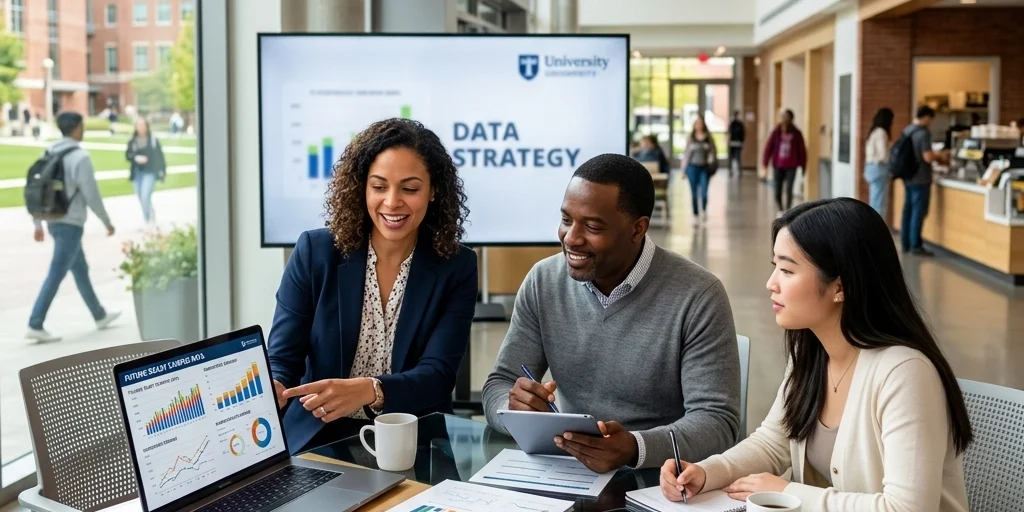
As we navigate the midpoint of 2026, the landscape of higher education and workforce development has shifted from a theoretical discussion about "preparedness" to a data-driven mandate for "readiness." For university administrators and corporate partners alike, the challenge is no longer just providing an education; it is about building a campus ecosystem that functions as a high-performance workforce engine.
At USA Entertainment Ventures LLC, we view the campus not merely as a collection of classrooms, but as a strategic hub where data, media literacy, and emerging economic trends like Name, Image, and Likeness (NIL) converge. To lead a "Future-Ready" school, executives must master the art of workforce strategy: a discipline grounded in real-time analytics and forward-thinking curriculum integration.
The Foundation: Aligning Campus Data with Career Outcomes
Strategic workforce planning on a campus level is the process of aligning student capabilities and institutional resources with the evolving needs of the global economy. This requires a departure from traditional, siloed academic tracking toward an integrated data model.
Effective workforce strategy focuses on what industry experts often call the "7 Rs": ensuring the right students gain the right skills in the right environment at the right time, moving into the right roles at the right cost for the economy. For a campus to be "Future-Ready," it must utilize data to bridge the gap between degree completion and career placement.

The Power of Data Analytics Dashboards
In 2026, the "gut feeling" approach to campus management is obsolete. Executives now rely on sophisticated data analytics dashboards to monitor student progress and workforce alignment. These dashboards do more than track grades; they provide a high-level view of:
- Skill Gap Analysis: Identifying where student competencies fall short of current industry demands.
- Engagement Metrics: Measuring how students interact with career services and professional development infrastructure.
- Placement Velocity: Tracking how quickly graduates enter high-growth sectors.
- Resource Allocation: Determining if investments in physical and digital infrastructure are yielding a measurable return on student readiness.
By centralizing this data, institutional leaders can move from reactive troubleshooting to proactive strategy. As Dan Kost, CEO of USA Entertainment Ventures LLC, often emphasizes, simplicity in data presentation is key. An executive dashboard should tell a story at a glance, allowing for quick pivots in strategy as the market shifts.
NIL Education: Beyond the Playing Field
One of the most significant shifts in the modern campus environment is the mainstreaming of Name, Image, and Likeness (NIL). While initially a concern for collegiate athletics, NIL has evolved into a blueprint for workforce readiness across all disciplines.
NIL education is, at its core, a masterclass in personal branding, digital entrepreneurship, and contract law. A "Future-Ready" campus recognizes that every student is now a brand. By integrating NIL education into the broader workforce strategy, schools provide students with the tools to manage their professional identity in a digital-first world.
NIL as a Workforce Skill
The skills required to navigate an NIL deal: negotiation, content creation, audience analytics, and financial literacy: are the exact same skills required by the modern workforce. When a campus provides robust NIL education, it is essentially providing:
- Entrepreneurial Literacy: Understanding the value of one’s own intellectual property.
- Media Savvy: Learning how to communicate effectively across multiple platforms.
- Legal Awareness: Navigating the complexities of modern employment and endorsement contracts.
USA Entertainment Ventures LLC positions itself as an anchor for these schools, providing the consulting expertise needed to turn NIL from a compliance hurdle into a competitive advantage for the entire student body.
Media Literacy: The Critical Outcome of 2026
In an era dominated by rapid information flow and AI-generated content, media literacy has become a non-negotiable workforce requirement. A "Future-Ready" campus must ensure that its graduates are not just consumers of media, but sophisticated analysts of information.
Media literacy outcomes are now a primary metric for workforce readiness. Employers in 2026 are looking for individuals who can discern credible data from misinformation, understand the nuances of digital distribution, and leverage media platforms to drive business goals.
Integrating Media Literacy into the Campus Infrastructure
This is where physical and digital infrastructure meet. For a campus to foster true media literacy, it must provide environments where students interact with modern media tools. Whether it is through digital signage, campus-wide news networks, or interactive labs, the environment itself must serve as a teaching tool.
We have long advocated that career-ready infrastructure matters. Why? Because physical distribution: the way information and opportunities are physically presented to students: is the future of workforce development. When a campus utilizes tools like Zoomedia or 360 Sports Media, it creates a high-visibility environment that reinforces media literacy through constant, professional-grade engagement.

Building the Future-Ready Infrastructure
The transition to a Future-Ready campus requires a strategic overhaul of how we think about "campus space." It is no longer enough to have a career center in a basement. Career readiness must be visible, accessible, and integrated into the daily life of every student.
The Anchor Model
USA Entertainment Ventures LLC serves as a strategic anchor for institutions. Our approach involves a multi-layered strategy that includes:
- Consulting: Aligning institutional goals with market data.
- Infrastructure: Implementing physical media assets like MobileHwyAds and campus-specific networks that provide real-world media experience.
- Content: Delivering daily executive insights and educational programming that keeps students and faculty ahead of the curve.
By positioning the company as an anchor, we help schools stabilize their workforce strategy against the volatile nature of the modern economy. This isn't just about software; it’s about a holistic ecosystem where the physical campus reflects the digital reality of the 2026 workplace.
Actionable Steps for Campus Executives
To master workforce strategy, institutional leaders should consider the following practical shifts:
- Audit Your Data: Is your current data actionable? If your dashboards don't show real-time skill gaps, it’s time to upgrade your analytics suite.
- Democratize NIL: Move NIL education out of the athletic department and into the business and communications schools.
- Invest in "Living Labs": Turn your campus into a media-rich environment. Use your physical space to broadcast student achievements, market trends, and professional opportunities.
- Partner for Scalability: Leverage external expertise. A partnership with a business consulting firm like USA Entertainment Ventures LLC can provide the outside-in perspective necessary to validate internal strategies.
The Path Forward
The "Future-Ready" campus is a proactive entity. It doesn't wait for the economy to demand new skills; it anticipates those needs through the rigorous application of data analytics. It views every student as a professional-in-training, using NIL and media literacy as the twin pillars of a modern identity.
As we look toward the remainder of the decade, the schools that thrive will be those that view workforce strategy as an institutional priority rather than a departmental footnote. By mastering data and embracing the new digital economy, these campuses will not only graduate students with degrees but will launch professionals with the literacy and agility to lead.
The future of workforce development is built on the integration of data, the empowerment of the individual brand, and a physical infrastructure that reflects the speed of the modern world. At USA Entertainment Ventures LLC, we are proud to be the partners in that transformation, ensuring that today's campuses are ready for tomorrow's challenges.

For more information on transforming your campus infrastructure and workforce strategy, explore our post-sitemap for the latest insights from Dan Kost and our consulting team.





