
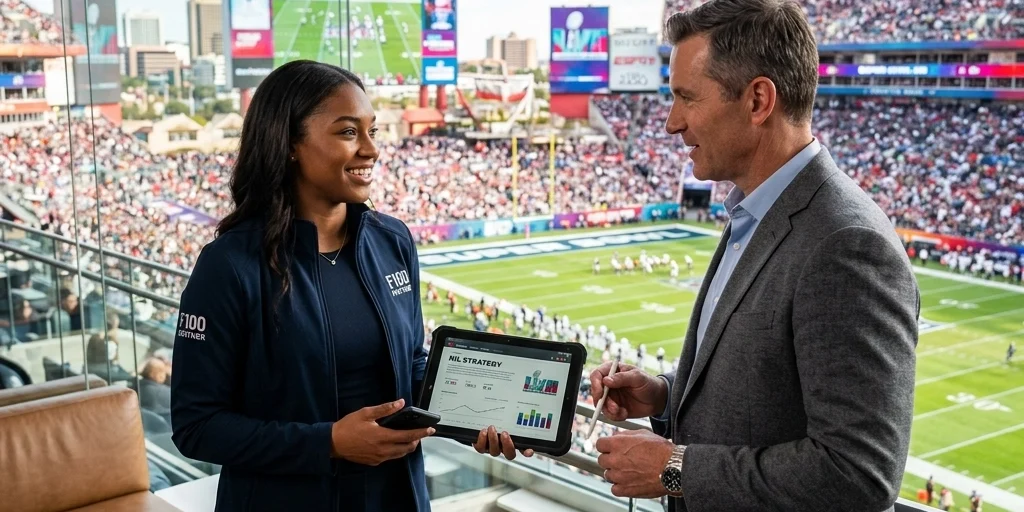
The landscape of sports marketing has undergone a seismic shift. As we look back on the data from Super Bowl LX in early 2026, one thing is abundantly clear: the era of the isolated, high-budget 30-second television spot is over. For Fortune 100 brands, the "Big Game" is no longer just a broadcast event; it is the culmination of a multi-month narrative driven by Name, Image, and Likeness (NIL) partnerships.
In this guide, we explore how the world’s most successful brands are bridging the gap between traditional media and the NIL revolution to capture the attention of Gen Z and Millennial audiences. At USA Entertainment Ventures LLC, we have seen firsthand how integrating college athletes into national campaigns creates a level of authenticity that traditional celebrity endorsements simply cannot match.
The New Super Bowl Paradigm: Why $7 Million Isn't Enough
For decades, the gold standard of marketing was the Super Bowl commercial. In 2026, the cost of a 30-second spot remains near the $7 million mark. However, industry data suggests that brands relying solely on these spots are seeing diminishing returns. The "second screen" experience: where viewers engage with social media while watching the game: has become the primary battlefield for consumer attention.
Research into recent Super Bowl performance indicates that brands allocating at least 20% of their total campaign budget toward NIL and influencer-led content achieved a 15% higher Return on Ad Spend (ROAS). This isn't just about spending more; it’s about spending smarter by creating a content ecosystem that lives where the audience lives.

The NIL Revolution: Bridging the Gap
The NIL revolution has provided a bridge between the prestige of the Super Bowl and the grassroots authenticity of college sports. For a Fortune 100 brand, partnering with a high-profile college athlete allows for a "long-tail" marketing strategy. Instead of a one-day spike in visibility, brands can build "narrative equity" starting as early as the college football playoffs.
As discussed in our recent analysis, the NIL strategy focuses on community over celebrity. While a Hollywood A-lister brings fame, a star quarterback from a major university brings a dedicated, geographically concentrated, and highly engaged community.
Video Insight: The NIL Strategy in Action
To understand the mechanics of this shift, watch our deep dive into how these partnerships are structured:
https://www.youtube.com/watch?v=l6J-0zileKE
A 5-Step Framework for NIL Success at the Super Bowl
To succeed in this high-stakes environment, Fortune 100 brands must move beyond transactional relationships. Here is the framework currently used by top-tier consultants at USA Entertainment Ventures.
1. Establish Narrative Equity Early
Success at the Super Bowl starts in November and December. Brands like Levi’s and Budweiser have successfully used athlete partners to document their journeys toward the end of the season. By the time the Super Bowl arrives, the audience is already invested in the athlete’s story, making the brand integration feel like a natural part of the narrative rather than an interruption.
2. Implement a Dual-Track Strategy
The most effective campaigns utilize a two-pronged approach:
- National Reach: High-production value content for broadcast and major digital platforms.
- Local Impact: Hyper-localized NIL activations in key markets.
By leveraging college athletes with strong regional followings, brands can drive market-specific growth that national ads often miss. An athlete might have a national presence, but their influence in their home state or university town is unparalleled. This is where 360 Sports Media strategies become vital for localized engagement.
3. Prioritize Authenticity Over Scripts
Gen Z and Millennials have developed a sophisticated "BS detector." They are significantly more receptive to recommendations from "real" athletes who showcase how a product fits into their actual training or lifestyle. In fact, the State Farm collaboration with natural, personality-driven content achieved a 56% proper attribution recall: far higher than many heavily scripted celebrity spots.

4. Real-Time "Second Screen" Activation
During the game, the conversation moves fast. Fortune 100 brands now deploy hundreds of NIL athletes simultaneously to respond to live game moments. This creates "social proof" in real-time. When 500 athletes authentically react to a game-winning play while mentioning a brand, it creates a cultural wave that a pre-recorded commercial cannot replicate.
5. Data-Driven Optimization
Modern NIL branding is not a "set it and forget it" endeavor. Success requires tracking:
- Website Traffic Spikes: Often seeing 300% to 1,000% increases during athlete-driven activations.
- Social Mentions: Targeted increases of 200% to 500%.
- Branded Search Volume: Jumps of 400% to 800% when NIL content is synchronized with broadcast spots.
The Role of Business Consulting in NIL
Navigating the regulatory and logistical hurdles of NIL at the Super Bowl level requires expert guidance. USA Entertainment Ventures LLC specializes in helping brands manage these complex relationships. From compliance to creative direction, the goal is to ensure that every partnership aligns with the brand’s core values while maximizing ROI.

Case Studies: Success in the 2026 Season
Levi’s: The "Off-Field Uniform"
Levi’s successfully repositioned itself as the "uniform of the off-field athlete" by partnering with 50 top-tier college prospects. These athletes shared "fit checks" arriving at Super Bowl events, generating millions of impressions among fashion-conscious younger viewers. The campaign felt organic because it focused on the athletes' personal style rather than a forced sales pitch.
Budweiser: The Legacy Narrative
Budweiser used NIL partners to bridge the gap between their traditional "Clydesdale" heritage and a younger demographic. By partnering with athletes who embody the "hard work" ethos of the brand, they successfully transitioned their legacy image into a modern context, seeing a significant uptick in brand sentiment scores among 21–27-year-olds.

Future Outlook: Beyond Super Bowl LX
As we look toward the 2027 season and Super Bowl LXI, several trends are emerging that Fortune 100 brands must prepare for:
- Long-Term Equity Deals: Athletes are increasingly seeking "skin in the game," moving from one-off post fees to equity-based partnerships.
- AI-Enhanced Personalization: Using data to match athletes with specific consumer segments at a granular level.
- AR/VR Integration: Allowing fans to "interact" with NIL athletes in virtual Super Bowl environments.
The shift toward NIL is not a temporary trend; it is a fundamental realignment of how influence is brokered in the sports world. Brands that embrace this change: moving away from the "interruption" model of advertising toward an "integration" model: will be the ones that define the next decade of sports marketing.
Practical Takeaways for Your Brand
If your organization is looking to dominate the next Super Bowl cycle, consider these immediate steps:
- Audit your current athlete roster: Are they mere endorsers, or are they authentic brand advocates?
- Shift your timeline: Begin your 2027 planning now, focusing on the "narrative build" phase starting in the fall.
- Evaluate your local reach: Identify key markets where regional NIL talent can amplify your national message.
- Invest in measurement: Ensure you have the tools to track second-screen engagement and social proof in real-time.
For more information on how to navigate the evolving world of sports media and business consulting, visit our news section or explore our full range of services.

The Super Bowl remains the greatest stage in marketing, but the way we perform on that stage has changed forever. By leveraging the power of NIL, Fortune 100 brands can ensure they aren't just seen: they are heard, trusted, and remembered.





