
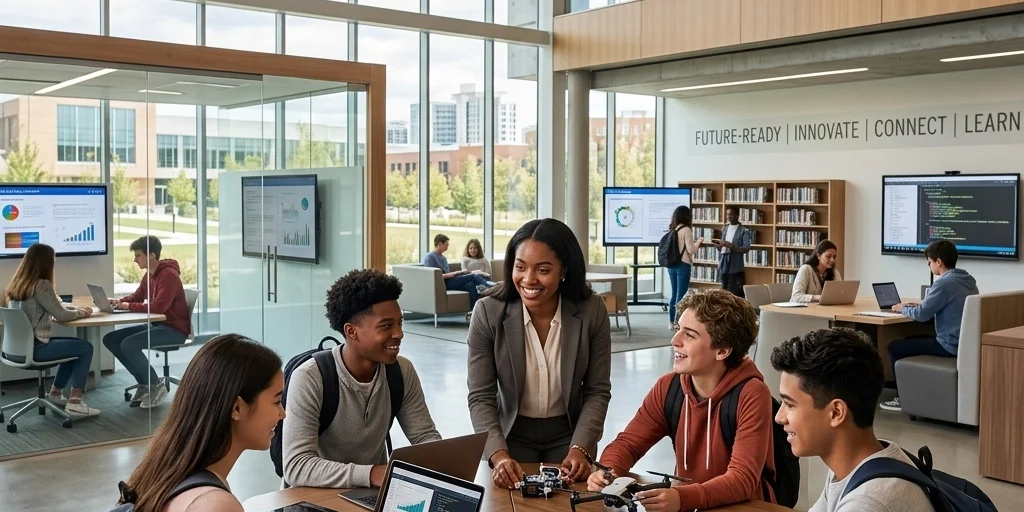
As we navigate the middle of 2026, the disconnect between traditional classroom instruction and the rapidly evolving global workforce has never been more apparent. For school administrators, school boards, and executive leadership, the priority has shifted from mere "digital adoption" to the creation of "future-ready" ecosystems. The talent gap is no longer just a buzzword; it is a measurable economic challenge that requires a structured, data-driven response.
Building a future-ready school requires more than just new hardware. it demands a fundamental redesign of how we define success, how we measure progress, and how we prepare students for a world where their "Name, Image, and Likeness" (NIL) and media literacy are as critical as their math scores.
Here are the five essential steps to building future-ready schools and closing the talent gap.
1. Define the "Future-Ready" Graduate Profile
The first step in closing the talent gap is defining exactly what "talent" looks like in the modern era. You cannot align learning to workforce needs if the destination is unclear. Executive leadership must move beyond standardized test scores and co-create a "Graduate Profile" that reflects the specific skills required by today’s employers.
A modern graduate profile should prioritize:
- Data Literacy: The ability to interpret and act on information.
- Media Literacy: Navigating a complex digital landscape with discernment.
- Financial and Contractual Fluency: Understanding the business side of personal branding and professional engagements.
- Adaptability: The resilience to pivot as technology shifts.
By mapping these competencies backward from graduation to the early years, schools can identify where the curriculum falls short. For instance, if local industries require high levels of data interpretation, the math curriculum should shift its focus toward statistics and probability. USA Entertainment Ventures LLC serves as a strategic anchor in this process, helping schools align their educational goals with real-world economic demands. More information on these alignment strategies can be found on our services page.
2. Integrate NIL Education and Professional Branding
In 2026, the concept of Name, Image, and Likeness (NIL) has moved far beyond the collegiate athletic department. Every student graduating today is a digital entity. Whether they are entering the workforce, starting a business, or heading to university, their digital footprint is their resume.
Future-ready schools must integrate NIL education into their core programming. This isn't just about sports; it’s about professional identity, personal branding, and the legalities of the digital economy.
Key NIL Education Outcomes:
- Contractual Literacy: Understanding what it means to sign away rights or enter into an endorsement.
- Monetization Strategy: Learning how value is created and captured in a digital-first world.
- Reputation Management: Recognizing that a digital "record" is permanent and impacts future employability.

By treating students as "brands in training," schools provide a layer of practical education that traditional models ignore. This prepares students not just for jobs, but for careers in a creator-driven economy.
3. Prioritize Media Literacy as a Core Competency
The ability to consume, analyze, and create media is no longer an elective skill: it is a survival skill. The talent gap is often widened by a lack of critical thinking in digital spaces. Employers consistently report that they need workers who can distinguish between credible data and misinformation.
A future-ready school embeds media literacy into every subject. In history class, students analyze the source and bias of primary documents. In science, they evaluate the credibility of online health claims. This outcome-based approach ensures that students aren't just using technology, but mastering it.
USA Entertainment Ventures LLC emphasizes media literacy as a cornerstone of our consulting framework. When schools prioritize these outcomes, they produce graduates who are less susceptible to digital manipulation and more capable of high-level strategic thinking.
4. Implement Executive Data Analytics Dashboards
You cannot manage what you do not measure. One of the greatest hurdles in education is the "data silo" problem: where attendance, grades, and career readiness metrics are stored in different, uncommunicative systems. To close the talent gap, school leaders need a "single source of truth."
Future-ready schools utilize data analytics dashboards that provide real-time insights into student progress. These dashboards shouldn't just track who is passing; they should track outcomes.
What an Executive Dashboard Should Monitor:
- Skill Mastery vs. Seat Time: Are students actually learning the competencies defined in the Graduate Profile?
- Engagement Metrics: Which programs are driving the highest levels of student participation?
- Work-Based Learning Success: Tracking the effectiveness of internships, apprenticeships, and industry partnerships.
- NIL and Media Literacy Benchmarks: Measuring student growth in these non-traditional but essential areas.
By moving to a data-informed model, administrators can make agile adjustments to the curriculum. If the dashboard shows a dip in media literacy scores across a specific grade level, resources can be reallocated immediately rather than waiting for the end-of-year review.
5. Forge Deep, Interactive Industry Partnerships
The final step in closing the talent gap is removing the walls between the school and the community. Future-ready schools function as hubs where local businesses, entrepreneurs, and educators interact daily.
These partnerships must go beyond the occasional guest speaker. They should involve:
- Co-Designed Projects: Local businesses provide real problems for students to solve as part of their coursework.
- Mentorship Pipelines: Connecting students directly with professionals in their fields of interest.
- Real-World Feedback Loops: Employers provide feedback on student portfolios, ensuring the "talent" being produced actually meets their current needs.
Positioning a school as a "Future-Ready" institution requires a commitment to being an active participant in the local economy. USA Entertainment Ventures LLC helps facilitate these connections, acting as a bridge between educational institutions and the entertainment, media, and business sectors. For schools looking to start this journey, reaching out via our contact page is a practical first step.

The Path Forward: Schools as Innovation Anchors
The transition to a future-ready model is not an overnight process, but it is an essential one. By defining clear graduate profiles, integrating NIL and media literacy, leveraging advanced data analytics, and fostering deep industry ties, schools can effectively close the talent gap.
The goal is to move away from a "one-size-fits-all" approach and toward a personalized, competency-based system that treats every student as a future professional. This systemic change ensures that when students walk across the stage at graduation, they aren't just holding a diploma: they are holding the keys to a successful career in the 21st-century economy.
At USA Entertainment Ventures LLC, we believe that education is the ultimate business consulting challenge. By applying executive-level strategy and data-driven insights to the classroom, we can ensure that the next generation is prepared for the opportunities of tomorrow.
For more information on our initiatives and how we support school districts in their transformation, visit our about page or explore our career opportunities to see how you can join our mission to redefine what it means to be "Future Ready."





