
The landscape of corporate recruitment and talent development is undergoing a fundamental transformation. For decades, the barrier between the classroom and the boardroom was clearly defined, with businesses waiting at the end of the educational conveyor belt to pick up finished talent. However, as the pace of technological innovation outstrips traditional curriculum cycles, this passive approach is no longer sustainable.
Modern executives are realizing that to secure a competitive workforce, they must move further upstream. The emergence of "Future Ready" school partnerships represents a shift from reactive hiring to proactive talent cultivation. These partnerships are not merely philanthropic gestures; they are strategic business investments that utilize data analytics, specialized education modules, and collaborative governance to build a resilient, industry-aligned workforce.
The Urgency of a New Workforce Paradigm
The traditional workforce strategy is currently facing a dual crisis: a skills gap and a disconnect in media literacy. According to recent industry reports, a significant percentage of employers struggle to find candidates with the necessary technical skills and the "soft" critical thinking skills required to navigate a digital-first economy. This is particularly evident in high-stakes sectors such as cybersecurity, defense, and business management.
For organizations like USA Entertainment Ventures LLC, which focuses on managing complex divisions and facilitating DOD skill bridge recruitment, the need for "Future Ready" talent is immediate. The transition from academic environments to professional roles: especially within military and government contracting frameworks: requires a level of preparation that traditional high school and college models often fail to provide. By anchoring workforce strategies in school partnerships, companies can influence the development of these essential competencies long before a candidate ever submits a resume.
Leveraging Data Analytics: The Executive’s Dashboard
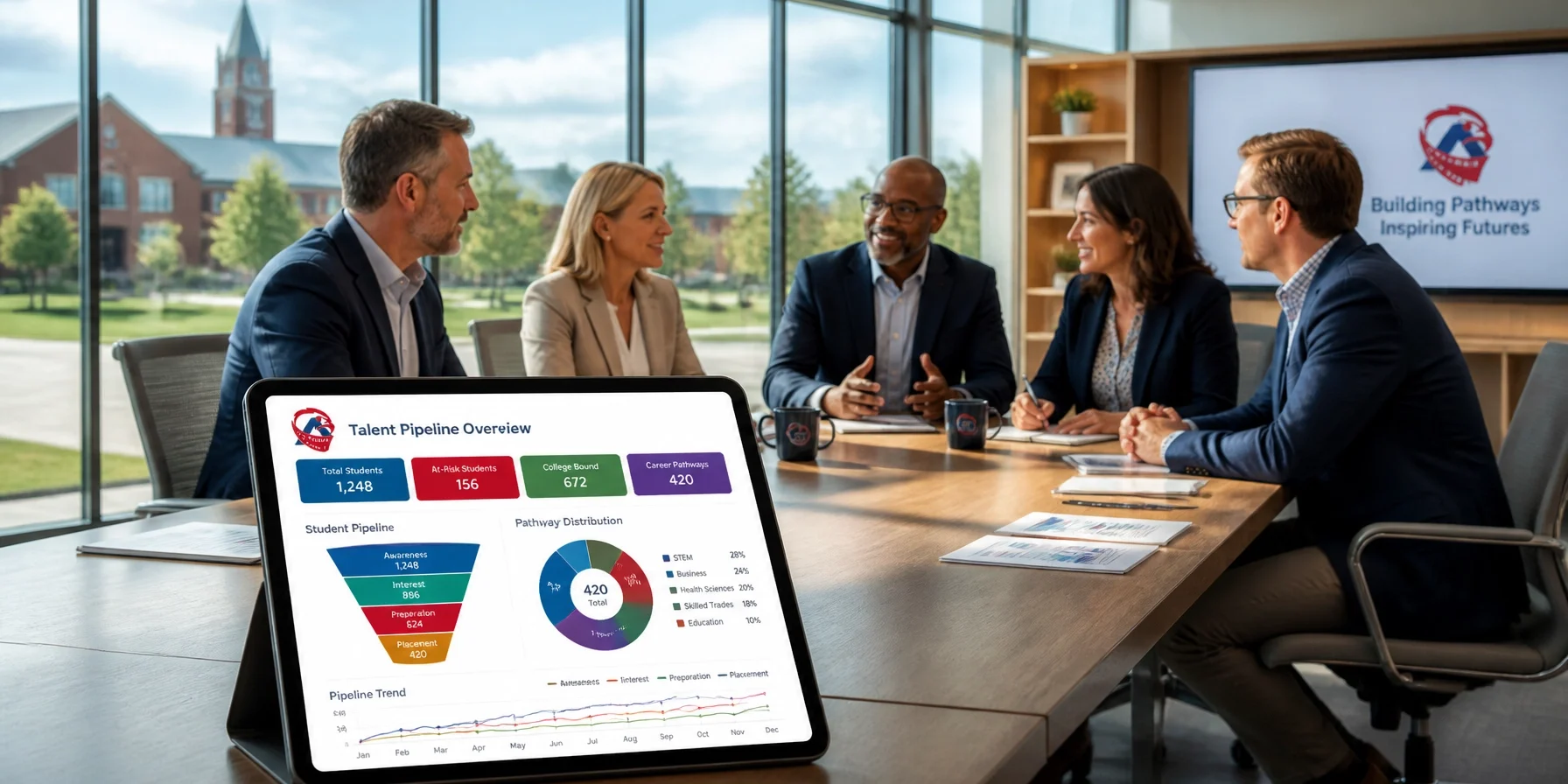
One of the most significant advantages of formal school partnerships is the ability to integrate high-level data analytics into the talent pipeline. Executive leadership can no longer rely on anecdotal evidence or broad regional demographics to guide recruitment. Instead, the implementation of comprehensive data dashboards allows for real-time tracking of student progress, equity, and pathway alignment.

Forward-thinking organizations are now monitoring specific performance indicators that predict long-term success. As noted in recent analysis regarding dashboard metrics Fortune 100 executives track, tracking milestones such as industry-recognized credential attainment and participation in work-based learning projects provides a clearer picture of future workforce readiness than standardized test scores.
These dashboards serve as the "nervous system" of a partnership, allowing both educators and business leaders to identify where students are excelling and where they may be falling behind. When business leaders have visibility into the talent funnel at the high school level, they can make data-driven decisions about where to allocate resources, such as mentorship programs or specialized training equipment. This level of transparency effectively eliminates the "7 mistakes you're making with workforce strategy," as discussed in recent corporate strategy reviews.
NIL Education: Beyond the Playing Field
A burgeoning area within Future Ready partnerships is the integration of NIL (Name, Image, and Likeness) education. While historically associated with collegiate athletics, NIL principles are increasingly relevant to the broader student population. In an era where digital presence is synonymous with professional identity, every student is effectively managing their own brand.
Integrating NIL education into school partnerships teaches students essential business skills, including:
- Contractual Literacy: Understanding the legal implications of professional agreements.
- Financial Stewardship: Managing income, taxes, and long-term financial planning.
- Personal Branding: Developing a professional digital footprint that aligns with career goals.
As organizations navigate the complexities of NIL platforms and strategies, bringing these concepts into the classroom prepares students for the entrepreneurial realities of the modern economy. This education ensures that when students enter the workforce: whether through a direct corporate hire or a DOD skill bridge program: they possess the business acumen to manage their professional trajectories effectively.
Media Literacy and Digital Citizenship in a Post-Truth Era
Complementing NIL education is the critical need for media literacy. In a workforce increasingly reliant on remote collaboration and digital communication, the ability to discern credible information from misinformation is a non-negotiable skill.
Executives are prioritizing media literacy because it directly impacts security and productivity. A workforce that lacks the ability to critically evaluate digital content is a liability, particularly in industries handled by USA Entertainment Ventures LLC, where precision and security are paramount. Future Ready schools embed media literacy across their curricula, teaching students to analyze algorithms, understand data privacy, and engage in ethical content creation.

Industry experts suggest that "media literacy is the new foundation of digital citizenship." By supporting programs that prioritize these outcomes, businesses contribute to a more stable and discerning society while simultaneously reducing the risk of internal security breaches and communication failures within their own teams.
Infrastructure for the Future: Modular Pods and Learning Spaces
Executing a Future Ready workforce strategy also requires a rethinking of the physical learning environment. The traditional computer lab is becoming obsolete, replaced by flexible, high-tech environments that mimic modern workspaces.
USA Entertainment Ventures LLC has been a proponent of modular pods as the new hotspot for cyber careers. These pods allow for "anywhere, anytime" learning, providing students with the tools necessary to engage in high-level cybersecurity training and data analysis in an environment that reflects the actual conditions of the tech and defense industries.

These modular environments are more than just furniture; they represent a commitment to professional-grade training. When businesses partner with schools to implement these technologies, they ensure that the learning environment is directly aligned with the tools the student will use in their professional life. This reduces the "onboarding lag" often experienced when new hires transition from outdated educational facilities to cutting-edge corporate offices.
Actionable Steps for Executive Leadership
For executives ready to change the way they execute workforce strategy, the path forward involves three critical actions:
- Anchor the Strategy in Formal Frameworks: Utilize established models such as the Future Ready Schools framework to ensure that your school partnerships are research-based and scalable.
- Demand Data-Driven Accountability: Do not settle for "feel-good" PR moments. Implement data sharing agreements that allow your recruitment teams to track real-world outcomes and student progress through shared dashboards.
- Invest in Relevant Curriculum: Support the integration of NIL education and media literacy. These are the skills that define the modern worker’s ability to navigate a complex, digital, and often decentralized economy.
Conclusion: A Vision of Mutual Prosperity
The shift toward Future Ready school partnerships is an admission that the success of the American business sector is inextricably linked to the quality of its public and private education systems. By taking an active, managing role in the development of talent, organizations like USA Entertainment Ventures LLC are not just preparing for the future: they are actively building it.
This approach offers a future defined by optimism and possibility. When students are equipped with data-driven career pathways, financial literacy through NIL education, and the critical thinking skills provided by media literacy, both the economy and society at large stand to benefit. The choice for today's executive is simple: wait for the talent of tomorrow to arrive, or partner with the schools of today to create it.





