
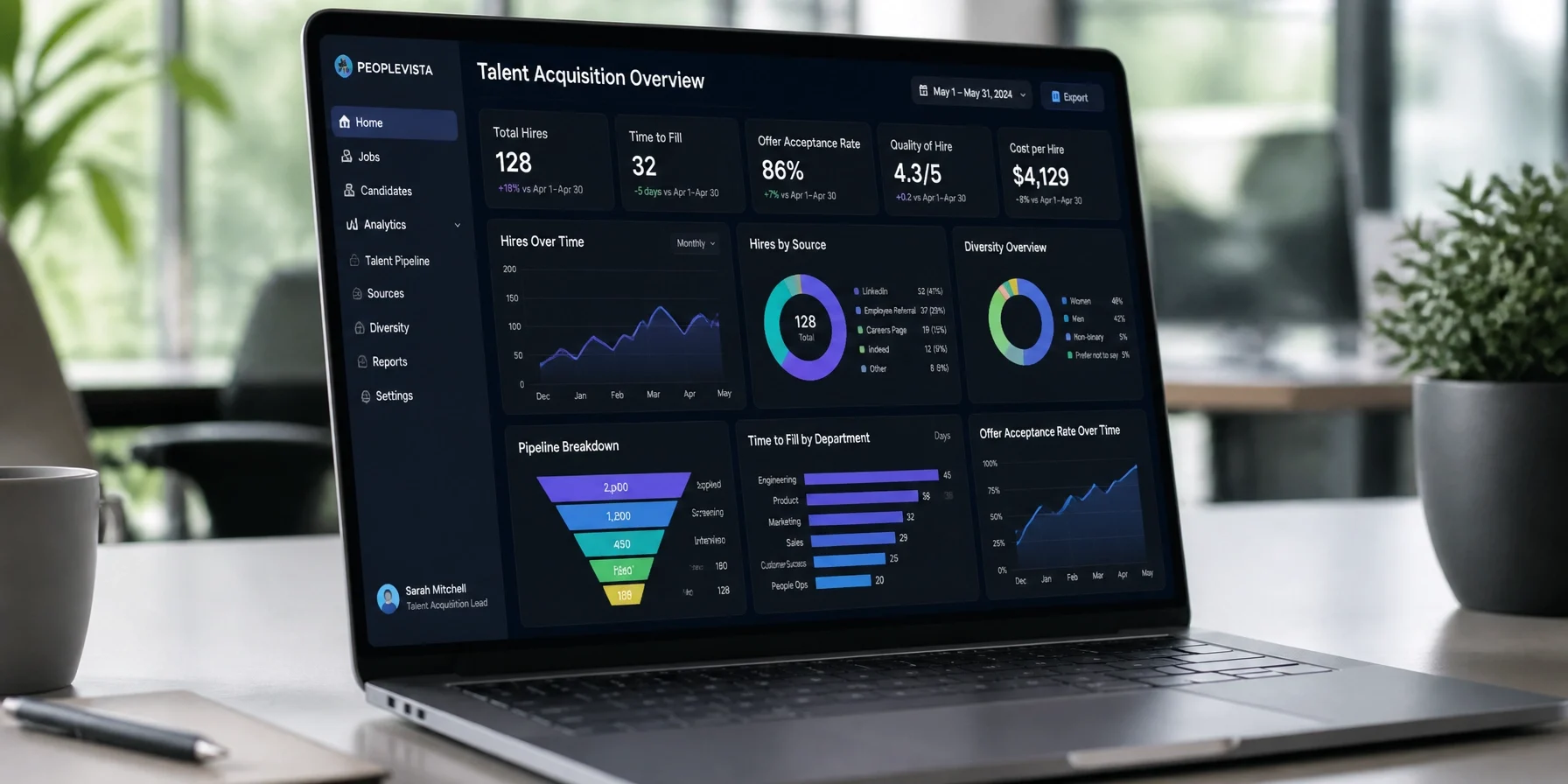
In the current economic landscape, the delta between a high-performing organization and a struggling one is often defined by the precision of its talent analytics. For Fortune 100 leaders, the challenge is no longer a lack of data, but rather a lack of distilled data. As businesses pivot toward a more agile, "Future Ready" workforce, the traditional metrics of time-to-fill and cost-per-hire are becoming secondary to more strategic indicators of human capital health.
At USA Entertainment Ventures LLC, we see this transformation firsthand through our work in managing talent ecosystems and facilitating specialized recruitment programs like the Department of Defense (DOD) SkillBridge. The modern executive dashboard must now account for emerging literacies: such as NIL (Name, Image, and Likeness) education and media literacy: while maintaining a rigorous focus on the financial outcomes of every hire.
Below are the 10 essential dashboard metrics that every Fortune 100 leader should monitor to ensure their organization remains a magnet for top-tier talent.
1. Revenue Per Employee (RPE)
This is the ultimate benchmark for workforce efficiency. Revenue Per Employee (RPE) provides a high-level view of how effectively your talent is being converted into business value. According to industry financial standards, a rising RPE indicates that the organization is successfully scaling its human capital without bloating its operational costs. For leaders, this metric serves as the primary pulse check on the overall health of the talent strategy.
2. Quality of Hire (Performance Improvement Delta)
Generic volume metrics often mask the true value of a recruitment function. Instead, Fortune 100 leaders should track the "Performance Improvement Delta": the measurable difference in performance between new hires and the existing team average over their first 12 months. When this delta is positive, it signifies that your next-generation talent funnel is effectively upgrading the organization’s collective skill set.

3. Media Literacy Proficiency Index
As the digital landscape becomes increasingly saturated with misinformation and AI-generated content, media literacy has transitioned from a soft skill to a critical business competency. A "Media Literacy Proficiency Index" tracks the workforce's ability to evaluate information, manage brand safety, and navigate complex digital environments. Organizations that act as anchors for "Future Ready" schools often lead the way here, ensuring their talent pipeline is equipped to handle the nuances of modern corporate communication.
4. NIL Education Compliance & Brand Engagement
For organizations interacting with the sports and entertainment verticals, NIL (Name, Image, and Likeness) education is paramount. This metric measures the percentage of the talent pool: especially student-athletes and early-career influencers: who have completed rigorous NIL training. Proper education reduces brand risk and ensures that talent is prepared for the commercial responsibilities of the modern era. Leaders can explore more about this in our guide to NIL platforms.
5. Transition Success Rate (DOD SkillBridge)
The DOD SkillBridge program offers a low-risk, high-reward pathway to access disciplined, high-caliber military talent. The "Transition Success Rate" monitors the conversion of SkillBridge participants into full-time employees and their subsequent retention rates. Given that these individuals often bring proven leadership and operational discipline, this metric is a key indicator of a company’s ability to tap into non-traditional, high-performance pipelines.

6. Skill Gap Closure Rate
In an era where technology evolves faster than curriculum, "Future Ready" schools and modular learning environments are becoming the new standard. The Skill Gap Closure Rate measures the speed at which employees acquire new, business-critical skills: such as cybersecurity or data analytics: often through innovative learning spaces. For instance, the shift from traditional labs to modular cyber pods has significantly accelerated the training of technical talent.
7. Cost of Vacancy in Revenue-Critical Roles
While most HR teams track cost-per-hire, Fortune 100 leaders focus on the cost of vacancy. This metric quantifies the daily revenue lost when a critical role remains unfilled. By attaching a dollar value to "vacancy days," leadership can prioritize recruitment resources where they have the most significant financial impact, moving away from a first-come, first-served hiring model to one driven by ROI.
8. Offer Acceptance Rate (OAR) in High-Competition Verticals
The OAR is a direct reflection of your employer brand’s competitiveness. However, it should be segmented by "High-Competition Verticals" (e.g., AI Research, Strategic Management, or Digital Media). A declining OAR in these segments is an early warning sign that your brand positioning or compensation structures are losing ground to competitors. It is a critical metric for any Fortune 100 workforce strategy.
9. Diversity in Customer-Facing & Brand-Impact Roles
Diversity is not just a social imperative; it is a business strategy. Tracking representation in "Brand-Impact" roles ensures that the people representing the company reflect the diversity of the global market. Data from Visier and other leading analytics firms suggest that companies with diverse customer-facing teams often see higher brand loyalty and better market penetration.
10. Leadership Readiness Score
The final, and perhaps most vital, metric is the Leadership Readiness Score. This tracks the percentage of "ready-now" internal candidates for executive-level positions. A high score indicates a robust succession plan and a culture of internal development, reducing the reliance on expensive external executive searches and ensuring institutional knowledge is preserved.

Integrating Analytics for Long-Term Growth
The transition from reactive hiring to proactive talent management requires more than just a new set of KPIs; it requires a cultural shift toward data-driven decision-making. As Dan Kost, CEO of USA Entertainment Ventures LLC, often emphasizes, managing talent is about creating an environment where high performance is the natural outcome of the systems in place.
By focusing on these 10 metrics, Fortune 100 leaders can move beyond the "intuition-based" hiring of the past and build a "Future Ready" workforce. Whether it is leveraging the discipline of DOD SkillBridge participants or ensuring that your early-career talent is well-versed in NIL and media literacy, the goal remains the same: sustainable, high-impact growth.
Actionable Takeaways for Your Next Executive Review:
- Audit Your Current Dashboard: Identify which of these 10 metrics are currently being tracked and which are missing.
- Prioritize Media Literacy: In an age of AI and deepfakes, consider integrating media literacy assessments into your standard onboarding and development tracks.
- Explore SkillBridge: If you haven't already, investigate the DOD SkillBridge program as a source for high-discipline, pre-vetted talent.
- Link Talent to Revenue: Shift the conversation from "HR costs" to "Workforce ROI" by highlighting RPE and Cost of Vacancy.
The future of recruitment is not just about finding people; it's about finding the right people through the right data. To learn more about optimizing your human capital strategy, explore how data fixes common workforce mistakes.





