
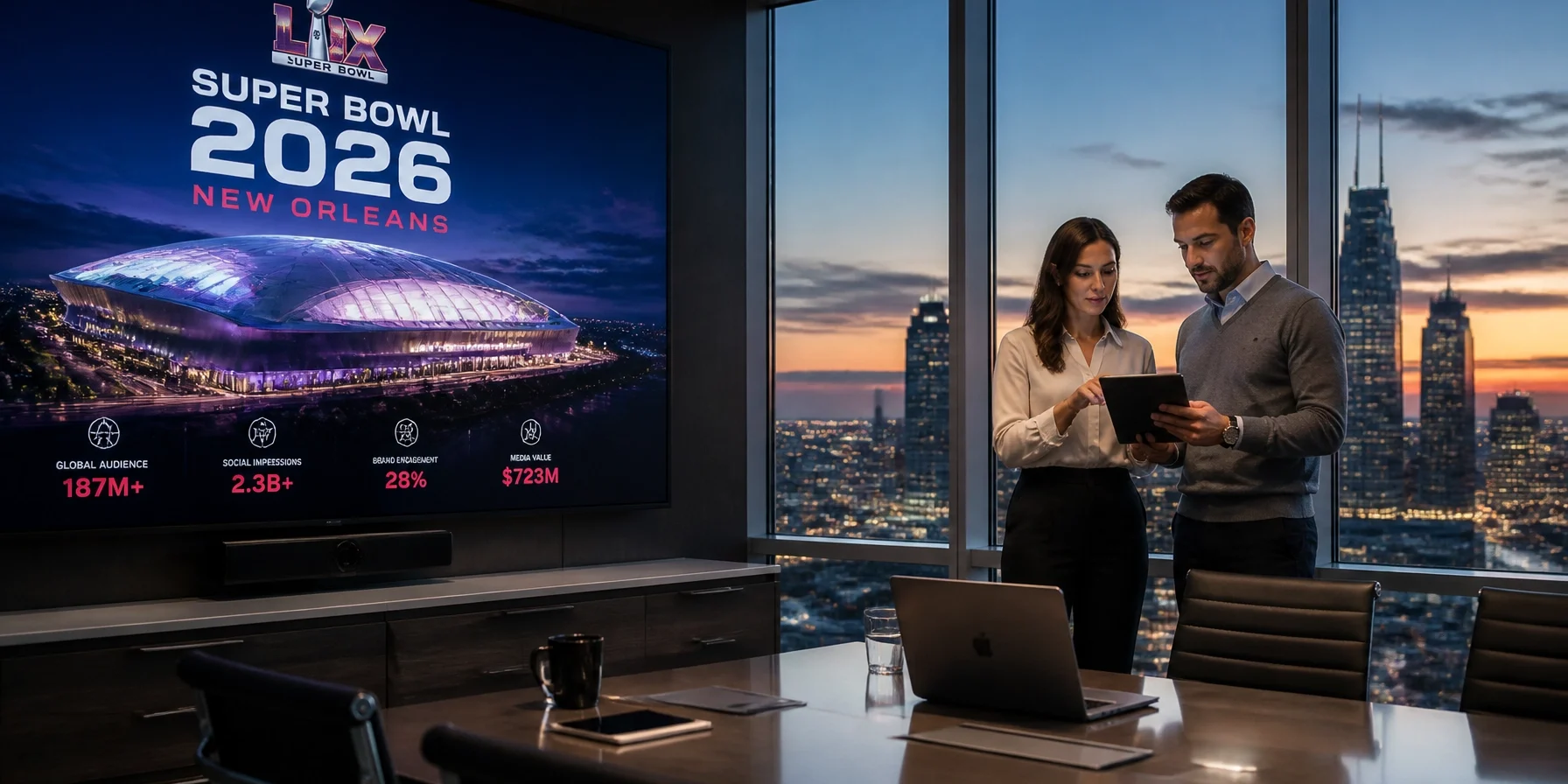
As the spotlight shifts toward Levi’s Stadium in Santa Clara for Super Bowl LX, the landscape of sports marketing is undergoing a seismic transformation. For brands and advertisers, the 2026 "Big Game" represents more than just a television milestone; it is the ultimate intersection of cultural zeitgeist, technological innovation, and strategic workforce excellence.
With national 30-second spots projected to command approximately $8 million, the stakes have never been higher. Navigating this environment requires more than just a creative hook: it demands a holistic advertising strategy that balances high-impact media buys with sophisticated, multi-platform engagement. At USA Entertainment Ventures LLC, led by veteran entrepreneur Dan Kost, we specialize in bridging these complex gaps through expert business consulting and innovative recruitment pipelines, including the DOD SkillBridge program.
The $8 Million Second: Understanding the Value Proposition
In 2026, the question for CMOs is no longer "Should we be at the Super Bowl?" but "How do we maximize the ecosystem surrounding it?" While the $8 million entry fee for a national spot may seem daunting, industry data suggests that the Super Bowl remains one of the few remaining "mass reach" moments in a fragmented media world.
According to Ipsos, nearly 78% of Super Bowl viewers actively watch the commercials, with nearly a quarter of those viewers engaging with them more intently than the game itself. However, the true value is found in the "halo effect." A successful Super Bowl presence in 2026 is no longer a single 30-second story; it is a months-long campaign that begins with social teasers and concludes with data-driven re-targeting.
Strategic Pillar 1: The "Human" AI Integration
The 2026 advertising landscape is dominated by Artificial Intelligence. However, the most successful brands have moved past technical jargon. Data from Kantar indicates that AI platforms now account for more ad volume during the game than traditional pillars like automotive or beverage categories.
The key takeaway for 2026 is relatability. Brands like Meta and Microsoft have pivoted their Super Bowl strategies to showcase AI as a helpful, everyday partner. For your strategy to succeed, you must ensure that technology serves the narrative, not the other way around. Whether you are leveraging AI for hyper-personalized social media responses or using it as a central theme in your creative, it must ground itself in human benefit.

Strategic Pillar 2: The Multi-Screen Ecosystem
Gone are the days when a viewer’s attention was fixed solely on the television screen. The "Second Screen" experience: utilizing smartphones and tablets during the broadcast: is now the primary arena for brand interaction. To truly boost your brand loyalty instantly, advertisers must create content that is "thumb-stopping" and shareable in real-time.
- Real-Time Engagement: Use social platforms to react to live game moments.
- Extended Narratives: Release long-form "Director’s Cuts" on YouTube to drive post-game traffic.
- QR Integration: Seamlessly bridge the gap between the TV screen and your digital storefront or NIL platform.
Strategic Pillar 3: Building the Workforce of Tomorrow
Executing a world-class Super Bowl strategy requires world-class talent. As a Service-Disabled Veteran-Owned Small Business (SDVOSB), USA Entertainment Ventures LLC and our parent company, DAKDAN Worldwide, recognize that military-to-civilian transition programs are a goldmine for the marketing industry.
Through the DOD SkillBridge recruitment initiative, we help businesses tap into the leadership, discipline, and technical proficiency of transitioning service members. In an era where "purpose-driven marketing" is a prerequisite for Gen Z and Millennial consumers, demonstrating a commitment to veteran employment is not just a social good: it is a competitive advantage. Integrating veterans into your production and strategy teams ensures a level of operational excellence that is critical for high-pressure campaigns.

The Super Bowl Playbook: A Strategic Framework
To succeed at the highest level, brands must follow a disciplined framework. As outlined in the Super Bowl Playbook, the most effective campaigns are those that integrate tangible connections with their audience.
The following video provides an in-depth look at how sports media's advertising strategy has evolved to meet the demands of the modern consumer:
The Super Bowl Playbook: Insights into the future of sports media and advertising strategy.
Actionable Takeaways for Super Bowl 2026
To ensure your brand doesn’t just participate but dominates, consider these three actionable steps:
- Audit Your Talent Pipeline: Consider how programs like SkillBridge can provide the logistics and project management expertise needed for large-scale activations. Learn more about building a next-gen talent funnel.
- Invest in "Meaningful Difference": Research from EDO shows that ads which provoke high engagement (search and site visits) during the game can outperform the median ad by 9x. Focus on creative that is distinct and brand-relevant rather than just funny.
- Optimize for 15-Second Units: While the 30-second spot is the hero, 15-second cut-downs across streaming and social media are proving to have equal brand lift in 2026. This allows for higher frequency without the exponential cost of a second national TV buy.

Conclusion: The Future of Big Game Branding
The road to Super Bowl 2026 is paved with both immense challenge and unprecedented opportunity. Success requires a marriage of bold creative storytelling and the "SMART" application of emerging technologies. By focusing on a multi-screen approach, leveraging the power of AI responsibly, and building a resilient, veteran-supported workforce, your brand can secure its place in the history books of Super Bowl LX.
As Dan Kost often emphasizes, growth at this scale is a product of strategic management and vision. Whether you are a Fortune 100 firm or a burgeoning innovator, the time to finalize your 2026 strategy is now. For more expert guidance on navigating the complexities of the sports and entertainment media landscape, explore our comprehensive guide to big game branding.





