
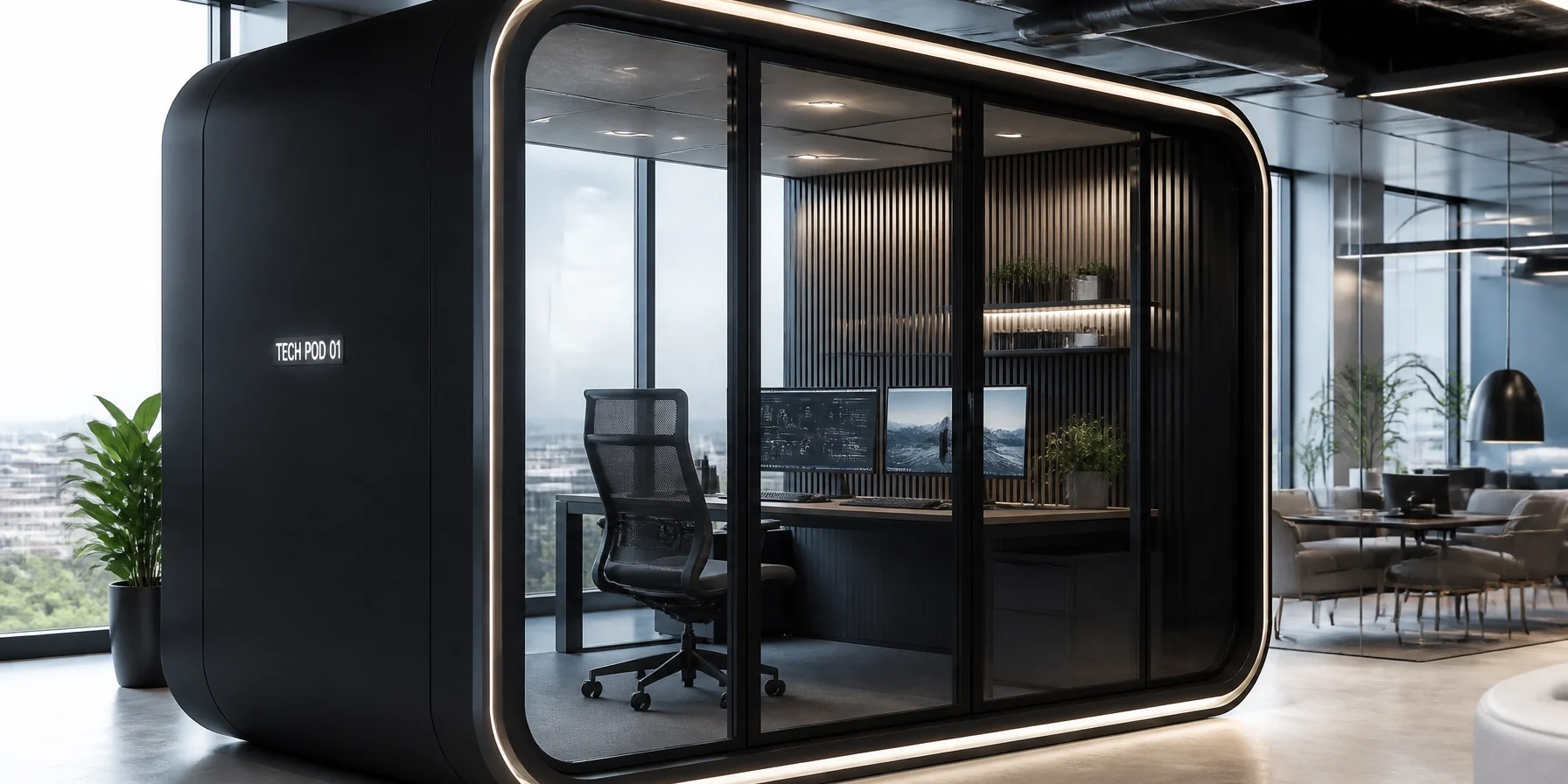
Remember the traditional computer lab? That windowless room smelling faintly of ozone and floor wax, filled with rows of beige desktop towers and those "ergonomic" chairs that were anything but. For decades, this was the blueprint for technical training and high-density computing. But as we move further into the 2020s, that blueprint isn’t just looking dusty: it’s becoming a liability.
The world has shifted toward mobility, modularity, and high-stakes specialization. Enter the "Pod." These aren’t just smaller rooms; they are self-contained, mission-ready infrastructure units designed to handle the specific rigors of cybersecurity, content creation, and complex logistics. At USA Entertainment Ventures LLC, we’ve observed that the shift from static labs to modular pods is more than a design trend: it’s a fundamental rethinking of how we work and learn.
The Death of the "Rows of PCs" Model
Traditional computer labs were designed for a world of single-use tasks. You sat down, you typed a document, you left. However, modern industry demands more. Open-plan labs suffer from significant drawbacks in today’s professional landscape:
- Security Risks: In an era of "shoulder surfing" and unauthorized physical access, open labs are a nightmare for sensitive data.
- Acoustic Chaos: Trying to record a high-quality podcast or attend a remote SOC (Security Operations Center) briefing in a room with thirty other people is an exercise in futility.
- Inflexible Infrastructure: Hard-wired desks and fixed partitions make it nearly impossible (and incredibly expensive) to reconfigure a space for a new project or technology.
As industries evolve, the "one-size-fits-all" approach to computing environments is being replaced by a "fit-for-purpose" modular model.
Cybersecurity: The Physical Side of Zero Trust
When we talk about cybersecurity, we usually focus on firewalls and encryption. But physical security is the foundation of the entire stack. You can have the most advanced Zero Trust architecture in the world, but if a visitor can glance at an analyst’s screen while walking to the water cooler, your security posture is compromised.
Modular pods are the physical manifestation of Zero Trust. These units can be engineered to SCIF-grade standards (Sensitive Compartmented Information Facility), featuring electromagnetic shielding and biometric access controls.

For SOC analysts and incident responders, a pod serves as a dedicated command center. It provides a controlled, distraction-free environment where sensitive data remains localized and secure. In the event of a breach, having a team "podded up" in a secure environment allows for faster, more focused triage without the "white noise" of a traditional office or lab setting. This physical segmentation is no longer a luxury; it is a requirement for high-compliance industries.
Content Creation: Beyond the Desktop
The definition of "work" has expanded to include high-end media production. Whether it’s an internal training video, a client-facing podcast, or a live-streamed technical demonstration, content creation is now a core business function.
A traditional computer lab is arguably the worst place to record audio or video. The hard surfaces bounce sound everywhere, and the background hum of dozens of cooling fans creates a persistent "whir" that’s impossible to edit out.
Modular tech pods solve this through integrated acoustics and lighting. A media-specific pod isn't just a desk; it’s a soundproofed studio with built-in softbox lighting, high-end microphones, and specialized editing hardware.

By moving creative tasks into pods, organizations allow their teams to produce professional-grade assets without needing to rent expensive external studio space or disrupt the rest of the office. It turns a "computer lab" into a "production house."
The Logistics of the Modular Revolution
Perhaps the most significant change brought by pods isn't what happens inside them, but how they are deployed. In the traditional model, building a computer lab was a major construction project. It involved months of planning, electrical contractors, HVAC adjustments, and permanent furniture installation.
Pods turn infrastructure into a logistics product. They are manufactured off-site, shipped as complete units, and "plugged in" to existing facilities. This "plug-and-play" nature allows companies to scale their technical capacity in days rather than months.

Managing a "fleet" of pods requires a new kind of logistics expertise. Organizations now need professionals who understand the intersection of facilities management and technical infrastructure. From coordinating the supply chain of pod components to managing the lifecycle of these units across multiple global sites, the logistics of pods is a burgeoning career field in its own right.
Career Pathways: The Pod Economy
The shift to modular infrastructure is creating new specialized roles that didn't exist ten years ago. If you are looking to future-proof your career, these three pillars are where the growth is:
1. Cybersecurity Operations
As pods become the default for secure environments, the demand for SOC Analysts and Threat Hunters who can operate in these specialized enclaves is skyrocketing. This isn't just about knowing how to code; it’s about understanding the operational tempo of a secure pod environment.
2. Logistics & Infrastructure Management
We are seeing a surge in demand for Human Resources and operations specialists who can manage the deployment of modular tech. This includes site planning, pod maintenance, and the integration of modular units into larger corporate or government networks. For those transitioning through programs like DOD SkillBridge, these roles offer a perfect bridge between military logistics and civilian tech infrastructure.
3. Technical Content Creation
The world needs people who can explain complex systems. Content creators who can use pod-based studios to produce high-quality training modules, technical documentation, and "operational stories" are becoming indispensable. They are the ones who translate "technical jargon" into "actionable insight."
Conclusion: Emboldening the Future
The traditional computer lab served its purpose in the era of the floppy disk and the dial-up modem. But today’s challenges: from sophisticated cyber threats to the need for rapid content iteration: demand a more flexible, secure, and professional solution.
Modular pods represent a shift toward intentionality in workspace design. They acknowledge that different tasks require different environments. By adopting pod-based infrastructure, organizations aren't just buying "better desks"; they are investing in the security, productivity, and future-readiness of their workforce.
Whether you are a business leader looking to upgrade your facility or a professional looking for your next career move in logistics or cyber, it’s time to stop thinking in "rows" and start thinking in "pods." The future of the lab is modular, and it’s already here.





