
For decades, the university career fair was the undisputed cornerstone of corporate recruiting. Every autumn, thousands of students would don their first suits, print stacks of resumes, and stand in long lines for a thirty-second pitch to a recruiter. For companies, it was the primary funnel for the next generation of leadership.
However, as the global economy pivots toward Artificial Intelligence (AI), Cloud Computing, and Data Analytics, the traditional recruitment timeline is undergoing a radical shift. The question is no longer just which university to visit, but whether the talent search should begin much earlier. In 2026, the traditional college career fair is not necessarily dead, but it is being outpaced by a more agile, upstream strategy: high school recruitment.
The State of the University Career Fair
To suggest that college career fairs have vanished would be factually incorrect. Data from the National Association of Colleges and Employers (NACE) indicates that for the 2024–25 academic year, 93.9% of institutions continued to hold in-person career fairs. Furthermore, research from Boston University confirms that over 90% of U.S. firms still utilize these events as a foundational hiring tool.
Despite their continued presence, the effectiveness of these fairs is under intense scrutiny. The primary criticisms involve their inability to scale with the speed of technical innovation and their tendency to reinforce existing socioeconomic inequalities. As technology cycles shorten, the four-year degree lag often means that by the time a student reaches a senior-year career fair, their foundational training in specific AI frameworks may already be outdated.
Industry experts suggest that the "ballroom and booth" model is increasingly ill-suited for identifying specialized technical talent. "The current model is often too generic," notes one campus recruiting strategist. "We are seeing a move toward more personalized, tech-driven interactions where the focus is on demonstrated skill rather than the prestige of the institution."
Why High Schools Are the New Talent Hotspots
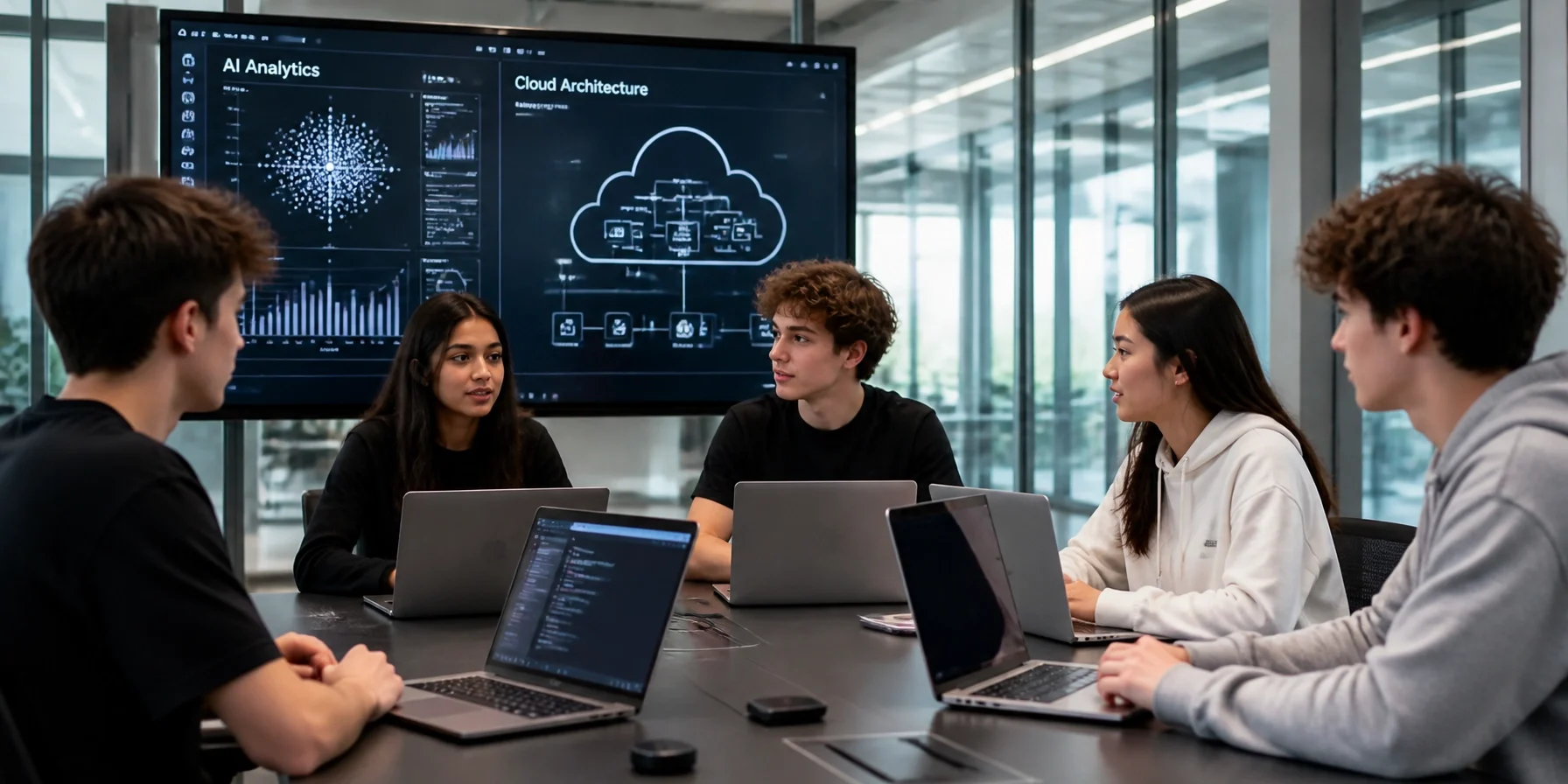
The shift toward high school recruitment is driven by a simple reality: the tools of the modern economy are now democratized. In previous generations, access to high-level computing or specialized data sets required university resources. Today, a motivated 16-year-old with a basic laptop can access the same cloud environments and AI training modules as a doctoral student.
1. Earlier Skill Acquisition
The digital-native generation is learning Python, SQL, and cloud architecture before they receive their driver’s licenses. By targeting talent at the high school level, companies can identify individuals who have already spent years honing their craft in self-directed environments. This "Next-Gen Talent Funnel" allows businesses to secure commitments from high-performers before they are even on the radar of traditional university recruiters.
2. Solving the AI Talent Shortage
The demand for AI and cloud expertise far outstrips the supply produced by universities. Relying solely on college graduates creates a bottleneck that limits business growth. Reaching into high schools allows companies to build their own pipelines through sponsored bootcamps, pre-apprenticeships, and certification pathways.

3. Cultivating Brand Loyalty
In a competitive labor market, brand affinity is a powerful asset. When a company supports a high school’s AI club or sponsors a cloud-computing hackathon, they establish themselves as a mentor and an innovator in the eyes of the students. This early engagement creates a level of loyalty that is difficult to replicate through a single interaction at a crowded university fair four years later.
4. Improving Diversity and Inclusion
Traditional campus recruiting often centers on elite institutions, which can inadvertently exclude talented individuals from underrepresented backgrounds. By expanding outreach to diverse high school districts, companies can democratize access to high-paying careers in technology. This aligns with broader societal trends emphasizing corporate responsibility and the necessity of diverse perspectives in AI development.
The Cloud, AI, and Data Analytics Connection
The nature of AI and Cloud work is uniquely suited for early-stage recruitment. Unlike traditional fields such as law or medicine, technical proficiency in data science is often more visible through a GitHub portfolio or a Kaggle competition rank than through a transcript.
At USA Entertainment Ventures LLC, we recognize that the management of modern ventures requires a deep understanding of these shifting talent dynamics. Our focus on business development includes advising organizations on how to navigate the evolving recruitment landscape, including specialized sectors like the DOD SkillBridge recruitment, which similarly bridges the gap between structured service and civilian technical roles.
Data Analytics, in particular, is a skill set that benefits from early immersion. Students who begin analyzing data sets in their mid-teens develop a "data intuition" that is highly valuable to firms looking to integrate AI into their core operations. Companies that wait until the college senior year to engage these individuals are often finding that the most innovative talent has already been "scouted" by more aggressive firms years earlier.

Actionable Strategies for the New Recruitment Era
For companies looking to move upstream into the high school talent pool, the transition requires a shift in mindset. It is not about "hiring" 17-year-olds in the traditional sense, but about building an ecosystem that supports their development.
- Implement Pre-Apprenticeships: Create structured programs where high school students can earn industry-recognized certifications (such as AWS or Google Cloud badges) while gaining exposure to your company’s culture.
- Host Targeted Hackathons: Move away from general career fairs and toward skill-specific competitions. These events allow you to see how students solve real-world problems in real-time.
- Partner with Vocational and STEM Programs: Many modern high schools have robust technical programs. Developing a direct relationship with these instructors can provide a steady stream of vetted talent.
- Leverage Digital Portfolios: Move beyond the resume. Train your recruiting teams to evaluate GitHub repositories and project-based portfolios as the primary metrics for technical capability.
The transition to high school recruitment is not merely a trend; it is a strategic response to a faster-moving world. By the time a student enters a university career fair, they have already formed their professional identity. For companies that want to shape the future of AI and Cloud Computing, that identity needs to be formed in partnership with your brand.
The Future of the Funnel
The traditional university career fair will likely remain a part of the recruitment landscape for the foreseeable future, but its role is changing. It is becoming a secondary touchpoint rather than the primary point of entry.
As we look toward 2030, the most successful organizations will be those that view talent acquisition as a long-term investment that begins early. Whether it is through career opportunities that start with internships or strategic partnerships in the educational sector, the goal is to create a seamless transition from student to professional.

In conclusion, while the rumors of the death of the college career fair may be premature, the birth of the high school AI talent hotspot is well underway. Companies that recognize this shift today will be the ones leading the innovations of tomorrow. The "Next-Gen Talent Funnel" is no longer a distant concept; it is a current reality that requires immediate attention and action.
Investing in early-stage talent is not just a benefit for the individual business: it is a contribution to a more robust, skilled, and equitable global economy. The future of business is digital, and that future is currently sitting in a high school classroom, waiting for the right opportunity to lead.






