
As we navigate the midpoint of 2026, the traditional roadmap to professional success is undergoing a profound transformation. For decades, the four-year college degree was the undisputed gatekeeper to the corporate world. However, a shifting economic landscape, the rapid acceleration of Artificial Intelligence (AI), and a persistent technical skills gap have forced organizations to rethink their talent acquisition strategies.
Today, forward-thinking enterprises are realizing that waiting for a candidate to graduate from university is often too late. The "talent war" has moved upstream. To secure the specialized skills required for the modern economy: specifically in Cloud, AI, and Data Analytics: the recruitment funnel must now begin in high school.
The 2026 Reality: Degree vs. Skill
The question of whether a college degree still matters is not a simple binary. According to recent economic data, workers with a bachelor’s degree still earn approximately 61% more than those with only a high school diploma. The return on investment (ROI) for degrees in quantitative fields remains high, with median annual wages for computer science and engineering graduates often exceeding $120,000.
However, the utility of the degree as a primary filter is eroding. In a survey of recent tech hires, nearly 40% of employers reported prioritizing demonstrable skills, certifications, and portfolio work over the name on a diploma. As the industry faces a critical shortage of cloud architects and AI specialists, the exclusivity of the degree is being replaced by a "skills-first" philosophy.
At USA Entertainment Ventures LLC, we observe this trend across various industries, from business consulting to government sectors. The focus is shifting toward a future-ready workforce strategy that balances traditional education with early technical immersion.
The Next-Gen Funnel: Starting in the Classroom
The "Next-Gen Funnel" is a recruitment framework that identifies and nurtures talent years before they enter the traditional workforce. By the time a student reaches their junior year of high school, they are already making pivotal decisions about their technical trajectory.
Why High School?
- Skill Priming: The foundational concepts of Python, data modeling, and cloud infrastructure are increasingly being introduced at the secondary level.
- Brand Loyalty: Companies that engage with students early through workshops, "Learning Labs," or mentorship programs establish themselves as an employer of choice before the competition even starts looking.
- Diversity and Inclusion: Early outreach allows organizations to reach a broader demographic, breaking down the socio-economic barriers often associated with expensive four-year institutions.

The Core Pillars: Cloud, AI, and Data Analytics
The modern talent funnel is built on three specific pillars of expertise. These are no longer "niche" skills; they are the baseline requirements for business development and operational efficiency in 2026.
Cloud Computing
Cloud infrastructure is the backbone of the digital economy. Organizations are no longer just looking for "IT staff"; they need individuals who understand AWS, Azure, and multi-cloud environments. By integrating cloud certifications into high school curricula, we create a pipeline of "ready-to-work" individuals who can contribute to complex projects immediately upon graduation.
Artificial Intelligence (AI) Literacy
AI is the most significant shift in labor productivity in a generation. Recruitment in this area is not just about finding PhD-level researchers; it’s about finding "AI practitioners": those who can implement machine learning models, manage prompt engineering, and ensure ethical AI deployment.
Data Analytics
Data is the currency of 2026. High school students who are proficient in data visualization and statistical analysis are uniquely equipped to help businesses turn raw information into actionable strategy.
Strategic Integration: The Role of Learning Labs
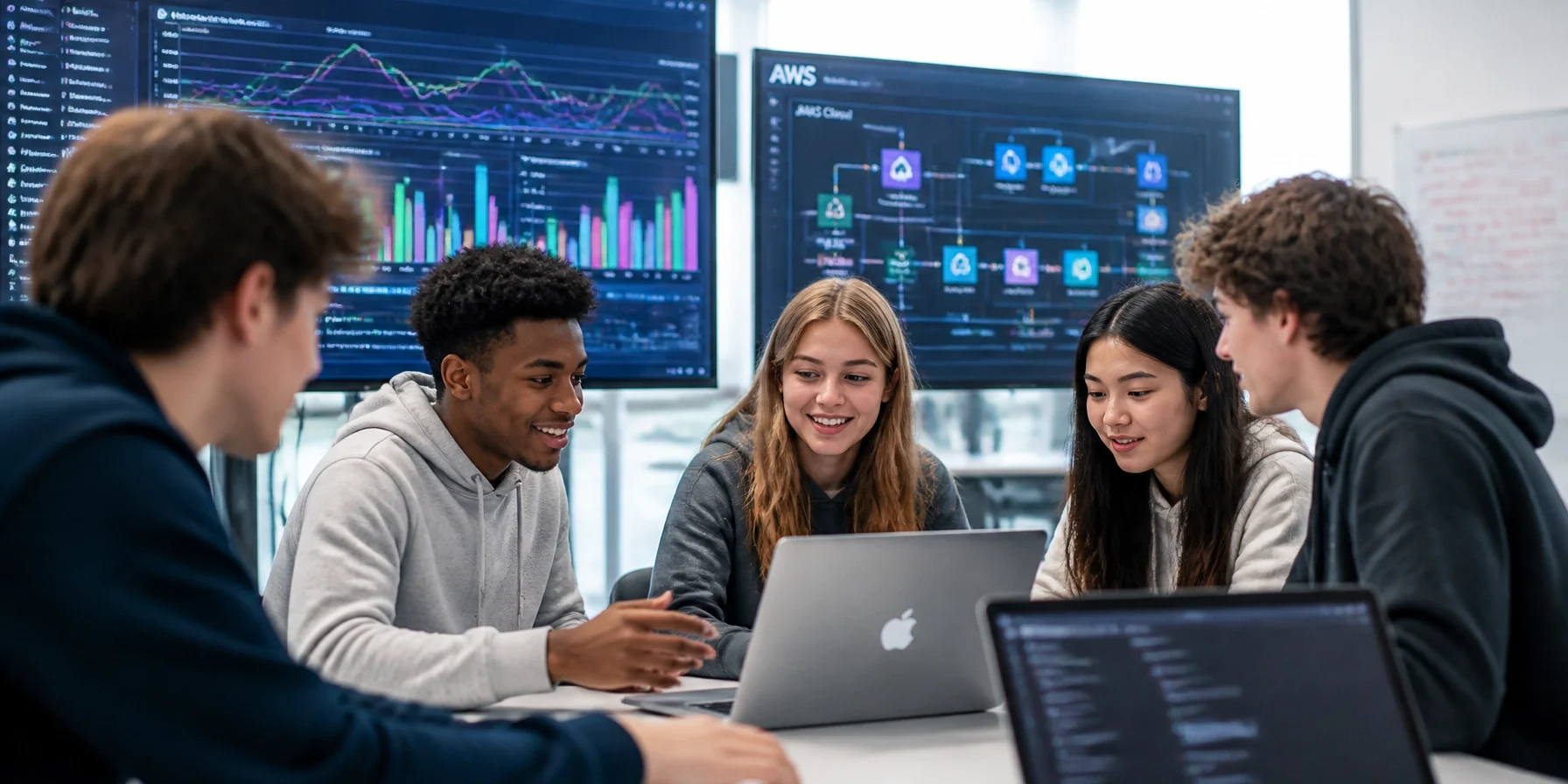
One of the most effective ways to build this funnel is through the implementation of specialized "Learning Labs" within schools. These environments go beyond the traditional computer lab. For instance, the integration of Amazon-powered Esports & Cloud Learning Labs allows students to engage with high-performance computing in a way that is both relatable and professionally relevant.
These labs serve as a sandbox for real-world scenarios, where students can earn AWS Educate certifications or explore careers in data analytics through interactive projects. For organizations, these labs provide a direct window into the emerging talent pool.

Bridging the Gap: The DOD Skill Bridge Model
The transition from education to employment is often the most significant friction point in a career. At USA Entertainment Ventures LLC, we emphasize models like the DOD Skill Bridge recruitment program. While traditionally focused on transitioning service members, the principles of Skill Bridge: providing real-world work experience during the final stages of a person’s current role: can be adapted for the high school to industry transition.
By creating "pre-apprenticeship" pathways, companies can provide high school seniors with micro-internships or project-based learning opportunities. This "try before you buy" approach reduces the risk for the employer and provides the student with invaluable industry context.
Actionable Takeaways for Organizations
To remain competitive in the 2026 labor market, organizations should consider the following steps:
- Establish Presence: Partner with local school districts to sponsor technical labs or extracurricular clubs focused on AI and Data.
- Decouple the Degree: Review job descriptions for junior-level roles. Ask whether a four-year degree is truly necessary or if a combination of certifications and a portfolio is sufficient.
- Invest in Apprenticeships: Develop structured pathways that allow high school graduates to enter the workforce while simultaneously pursuing higher education or specialized certifications.
- Leverage Existing Programs: Utilize resources like AWS Educate and Amazon Future Engineer to support classroom learning and identify high-potential candidates.

The Path Forward
The college degree still carries significant weight, particularly for those seeking a broad academic foundation and long-term economic stability. However, the degree is no longer the only path, and for many businesses, it is no longer the most efficient path.
The future of talent acquisition lies in the early identification and development of technical skills. By moving the funnel into high schools, companies can secure the next generation of cloud architects, data scientists, and AI leaders today. The organizations that thrive in the coming years will be those that view education and recruitment not as separate stages, but as a continuous, integrated journey.
At USA Entertainment Ventures LLC, we specialize in managing these transitions and helping organizations build robust, future-ready workforces. The talent of 2030 is in high school right now; the question is, will they be working for you?





