For decades, the "computer lab" was the undisputed temple of technology. It was a place defined by rows of beige towers, the hum of oversized cooling fans, and the distinct scent of ozone and floor wax. If you wanted to learn to code, manage a supply chain, or explore the nascent world of the web, you went to the lab. But as we move further into the 2020s, that static, row-and-column architecture is starting to look like a relic of the floppy disk era.
The truth is, traditional computer labs are struggling to keep pace with the hyper-specialized needs of modern industry. Whether you are training to defend against nation-state cyberattacks or managing a global logistics network, the requirement isn't just "a computer": it’s a mission-ready environment. Enter the Pod.
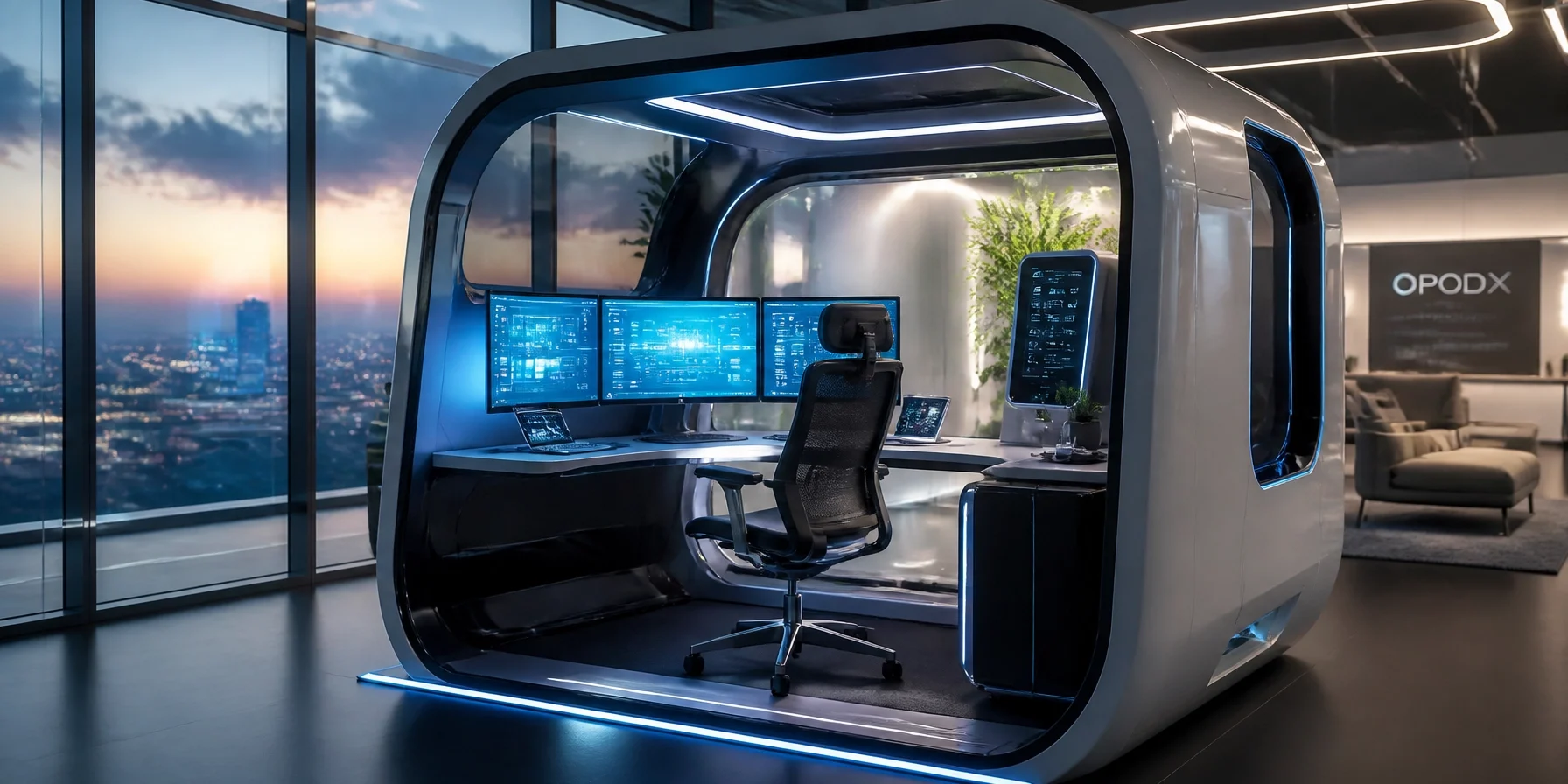
Modular, integrated, and designed for high-performance immersion, Pods are rapidly replacing the old-school lab. They aren't just furniture; they are self-contained ecosystems where the next generation of cybersecurity, logistics, and content creation professionals are being forged. At USA Entertainment Ventures LLC, we are seeing this shift firsthand as we move toward environments that mirror the intensity and precision of the real world.
The Evolution: From Rows to Hubs
The primary flaw of the traditional computer lab is its inherent lack of intentionality. These spaces were built for general access: a "one size fits all" approach that, in reality, fits very few modern professional paths.
According to industry data, the trajectory in technical training is moving away from static labs toward modular training pods and virtualized environments. Why? Because the modern professional doesn't work in a row. A cybersecurity analyst works in a Security Operations Center (SOC); a logistics manager works in a command node; a content creator works in a studio.
Pods solve the "Generalist Problem" by providing:
- Mission-Specific Infrastructure: Pre-configured networking and hardware tailored to the job.
- Acoustic and Visual Isolation: Eliminating the distractions of a 30-person room to allow for "deep work."
- Scalability: The ability to deploy a professional-grade station anywhere, from a university hallway to a warehouse floor.
The Cybersecurity Pod: Where Missions are Won

Cybersecurity is perhaps the most demanding discipline when it comes to physical and digital infrastructure. Training a "Blue Team" to defend a network while a "Red Team" attempts to breach it requires more than just an internet connection. It requires an environment that can be isolated, air-gapped, and pushed to its limits without crashing the building's main server.
Traditional labs sit on shared networks, making high-level cyber exercises risky. If a trainee accidentally releases a piece of malware in a standard lab, they might take out the entire accounting department’s payroll system. Pods eliminate this risk. They allow for the rapid deployment of air-gapped networks and dedicated server racks that mirror real-world job environments.
In a cyber pod, the focus is on situational awareness. Multi-monitor setups allow analysts to track network traffic, system logs, and threat intelligence feeds simultaneously. This isn't just about learning to type; it's about learning to see the battlefield. As we bridge the gap for veterans through programs like DOD SkillBridge recruitment, providing these high-fidelity environments is essential for translating military precision into civilian cyber defense.
Logistics in the Pod: Managing the Global Flow

If cybersecurity is about defending the network, logistics is about optimizing it. The modern logistics professional is no longer just someone who knows where the trucks are; they are data scientists managing complex supply chain nodes.
The traditional lab is ill-equipped for this. Logistics training requires integration with real-world systems: Transportation Management Software (TMS), IoT sensor feeds, and live global data. A logistics pod serves as a containerized operations center. It can be placed near a warehouse or a port, providing a "forward-deployed" training ground that mimics the high-stakes environment of a global distribution hub.
By using modular pods, organizations can create "Digital Twins" of their supply chains. Trainees can simulate a port strike or a fuel shortage and see the cascading effects across their network in real-time. This level of immersion fosters "systems thinking": the ability to see how a single delay in one corner of the globe impacts the entire machine.
The Content Creation Pod: Professionalism at the Push of a Button

We cannot talk about the new hub of professional work without mentioning content creation. In the modern business landscape, media is no longer an "extra": it is the engine of marketing and communication. However, the barrier to high-quality production is often the setup time and the lack of a controlled environment.
A content creation pod is essentially a professional studio in a box. It integrates high-end lighting, sound-dampening panels, and 4k camera systems into a single, user-friendly station. For the professional content creator or the marketing executive, this means the difference between a grainy Zoom call and a broadcast-quality presentation.
This modularity allows for "creative pods": small, cross-functional teams that can iterate quickly on a campaign without needing to book a full-scale television studio. It’s about democratizing professional-grade tools, ensuring that the only limit to a project’s success is the creator's imagination, not their equipment.
Bridging the Gap: Career Pathways and DOD SkillBridge
The shift toward pod-based training is particularly relevant for those transitioning into new careers. At USA Entertainment Ventures, we recognize that the transition from military service to a civilian career in cyber or logistics requires a "bridge."
The DOD SkillBridge program is a vital tool in this transition, allowing service members to gain valuable civilian work experience during their last 180 days of service. By utilizing Pods, these trainees can move from a military operations center to a civilian "Mission Pod" that feels familiar in its intensity and professional standard.
This isn't just about learning new software; it's about maintaining the "operational mindset" that veterans bring to the table. Whether it’s managing a fleet of trucks or hunting for vulnerabilities in a financial network, the Pod provides the structure necessary to succeed in high-pressure, high-value roles.
Why the "Lab" is Dead (and Why That’s a Good Thing)
The death of the traditional computer lab isn't a loss: it's an evolution. We are moving away from passive "access" and toward active "immersion."
| Traditional Lab | Modern Pod Hub |
|---|---|
| Static: Fixed rows and hardware. | Modular: Reconfigurable and mission-ready. |
| Generalist: Built for basic browsing. | Specialized: Built for Cyber, Logistics, or Media. |
| Noisy: Distractions and shared space. | Isolated: Focused environment for deep work. |
| Fragile: Shared networks pose security risks. | Secure: Air-gapped and isolated options. |
The future belongs to the modular. As we look forward, the businesses and educational institutions that thrive will be the ones that stop trying to fit modern problems into old rooms. They will be the ones that adopt flexible, pod-based strategies to develop a workforce that is ready for the challenges of 2026 and beyond.
Actionable Takeaways for Business Leaders
If you are looking to upgrade your professional development or infrastructure, consider these steps:
- Identify High-Intensity Roles: Which departments require the most "deep work" or specialized networking? These are your first candidates for Pod integration.
- Evaluate Your Network Security: If you are conducting cyber training, ensure your environment is isolated from your production data.
- Leverage Transition Programs: If you are hiring, look into SkillBridge recruitment to tap into a highly disciplined talent pool that thrives in mission-ready environments.
- Think Modular, Not Permanent: Avoid heavy investments in fixed "lab" furniture. Look for mobile, modular solutions that can grow with your company.
The era of the "beige row" is over. The era of the Pod has begun.