
In the rapidly evolving landscape of 21st-century education and professional development, the gap between traditional administrative data and actionable workforce intelligence is widening. For educational leaders and executive stakeholders, the challenge is no longer a lack of data, but rather the fragmentation of that data across disparate systems.
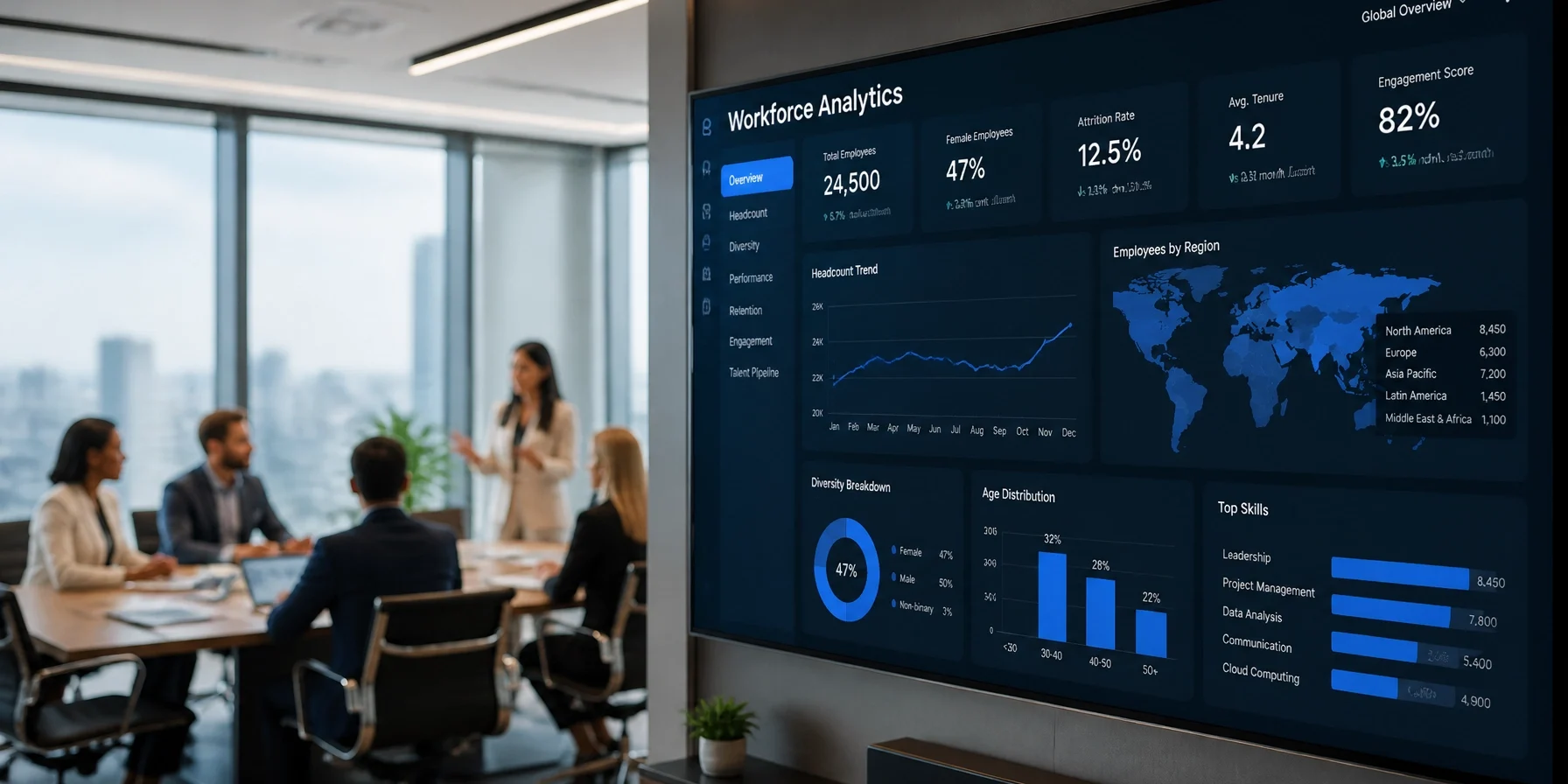
As institutions transition toward becoming "Future Ready," the integration of workforce strategy with specific educational outcomes: such as Name, Image, and Likeness (NIL) education and media literacy: has become a non-negotiable priority. The "simple trick" to improving your workforce strategy data analytics isn't a complex new algorithm; it is the implementation of a centralized, integrated data-analytics dashboard that bridges the gap between staffing, curriculum, and student career readiness.
The Shift Toward Integrated Data Intelligence
For decades, workforce strategy in the educational sector was often treated as a siloed human resources function. Metrics were limited to headcount, retention rates, and budget allocations. However, in a "Future Ready" ecosystem, workforce strategy must be viewed through the lens of student outcomes.
Industry experts suggest that organizations that leverage integrated dashboards to connect workforce capacity with strategic goals see a 20% higher efficiency in resource allocation. By centralizing data from recruitment, professional development, and student performance modules, executives can gain a holistic view of how their staffing decisions directly impact the readiness of their graduates.
This transition requires a move away from reactive reporting and toward predictive analytics. Instead of asking "How many teachers did we hire last year?" the question becomes "How does our current staffing expertise in media literacy correlate with our students' performance in digital branding assessments?"

NIL Education: A New Pillar of Career Readiness
One of the most significant shifts in the modern educational workforce strategy is the integration of Name, Image, and Likeness (NIL) education. What was once a niche concern for elite collegiate athletes has trickled down into high school and even middle school levels as digital branding and personal entrepreneurship become mainstream career paths.
NIL education is no longer just about sports; it is about financial literacy, contract law, and personal branding. At USA Entertainment Ventures LLC, projects like Money Smart and Money Smart TV are designed to provide the foundational knowledge required for students to navigate this complex environment safely and successfully.
When this education is integrated into a workforce strategy dashboard, leaders can monitor:
- Staffing Capacity: Do we have enough educators trained in financial literacy and NIL compliance?
- Student Engagement: How many students are actively participating in personal branding modules?
- Compliance Metrics: Are student-athletes meeting the necessary regulatory requirements for their NIL activities?
By treating NIL as a specialized competency area within the workforce strategy, "Future Ready" schools ensure they are not just teaching subjects, but preparing students for the actual economic realities of the modern world.

Media Literacy Outcomes: Measuring the Intangible
In an era of deepfakes, misinformation, and algorithm-driven content, media literacy has become a fundamental survival skill. For a school to be truly "Future Ready," it must produce students who are not just consumers of media, but critical thinkers and savvy creators.
The outcome of media literacy programs is often seen as "soft," but through integrated data analytics, these outcomes can be quantified. For instance, initiatives like Zoomedia and Sports Media provide platforms where student performance can be tracked through:
- Content Creation Proficiency: Scoring student media projects against industry-standard rubrics.
- Critical Consumption Rates: Pre- and post-assessment growth in identifying misinformation or biased reporting.
- Digital Citizenship Incidents: Tracking the reduction of social media-related disciplinary issues as a result of increased literacy.
When these metrics are visible on an executive dashboard, the value of the workforce: specifically the media specialists and technology coordinators: becomes clear. It allows for a data-driven justification for further investment in these critical roles.
Anchoring the 'Future Ready' School
The concept of a "Future Ready" school is built on the foundation of digital learning, personalized instruction, and career readiness. However, many schools struggle to move beyond the theory and into implementation. This is where USA Entertainment Ventures LLC acts as a strategic anchor.
Through its various divisions, including its involvement in DOD SkillBridge recruitment, the company provides the infrastructure and the expertise to help schools bridge the gap between education and the workforce. Whether it’s through E-Sports Pods that engage students in emerging tech or EV Across America which highlights sustainable technology, the goal is always the same: aligning the workforce strategy with the future of industry.

Actionable Steps for Improving Your Strategy
For executives looking to improve their workforce strategy data analytics right now, the following steps are recommended:
- Audit Your Data Silos: Identify where your workforce, curriculum, and student outcome data currently reside. In most cases, these are managed by different departments with little communication between them.
- Define Your Strategic KPIs: Move beyond simple headcount. Identify the key performance indicators that matter for a "Future Ready" institution. This includes teacher certifications in digital pedagogy, student participation in NIL modules, and media literacy growth scores.
- Implement a Unified Dashboard: Invest in a platform that can pull data from HR systems, Learning Management Systems (LMS), and external partnership platforms. Centralization is the "simple trick" that provides the clarity needed for executive decision-making.
- Forecast Future Needs: Use historical data to predict where your staffing gaps will be in three to five years. As programs like NIL and media literacy grow, will you have the specialists required to sustain them?
- Foster a Culture of Data Literacy: Ensure that your department heads and principals understand how to interpret and act on the data provided by the dashboard. Data is only as useful as the decisions it informs.
The Future-Focused Outlook
The integration of advanced data analytics into workforce strategy is not a temporary trend; it is the new standard for excellence in education and business management. As we look toward the future, the schools and organizations that will thrive are those that recognize the intrinsic link between their staff's capabilities and their students' preparedness for a digital, media-rich economy.
By adopting integrated dashboards and focusing on emerging fields like NIL and media literacy, institutions can move from a state of reactive management to one of strategic leadership. The "Future Ready" school is not a distant goal: it is a current reality for those willing to leverage the power of data to anchor their strategy in the needs of tomorrow’s workforce.






