
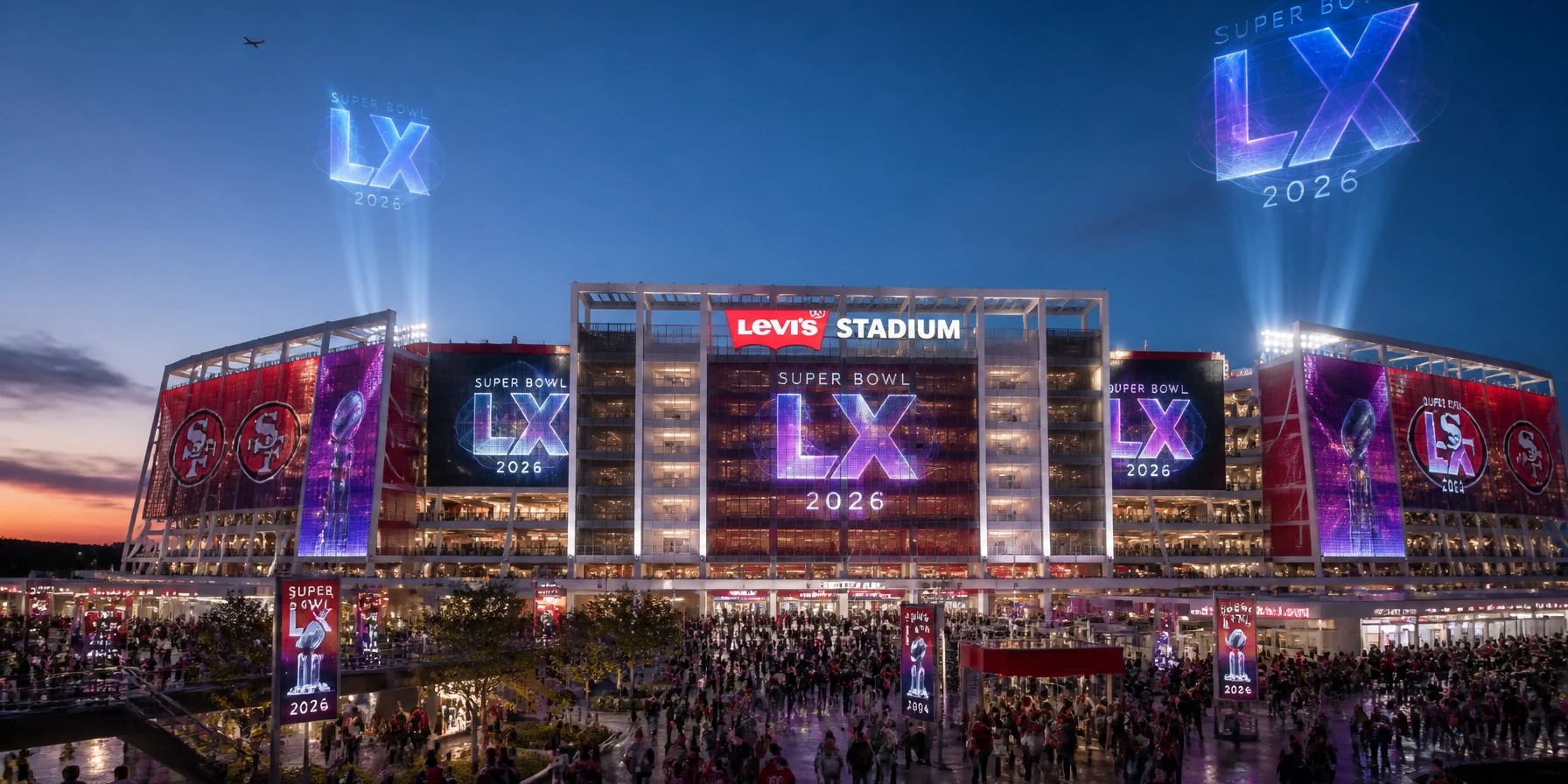
As we approach February 2026, the global sports landscape is bracing for a monumental milestone: Super Bowl LX. Hosted at the technologically advanced Levi’s Stadium in Santa Clara, California, this diamond anniversary is set to redefine the intersection of sports, technology, and consumer branding. For business leaders and marketing executives, the "Fan Experience" at Super Bowl 2026 is not merely a backdrop for the game: it is a live laboratory for the future of brand engagement.
The stakes are higher than ever. In an era of digital saturation, brands are no longer competing just for screen time; they are competing for "emotional stickiness" and tangible presence. As Dan Kost, CEO of USA Entertainment Ventures LLC, often emphasizes, the goal is to "create connections" that transcend the traditional 30-second advertisement.
If you are looking for branding inspiration, here are 10 critical trends and insights you should know about the Super Bowl 2026 fan experience.
1. Human-Centered AI: Empowering, Not Replacing
In 2026, Artificial Intelligence has moved past the "gimmick" phase. At Super Bowl LX, AI is being deployed as a helpful partner to simplify the fan journey. From personalized concession recommendations based on dietary preferences to AI-powered creative tools that allow fans to generate their own Super Bowl-themed art in real-time, the focus is on empowerment.
Data suggests that fans respond more positively to technology that serves a functional purpose rather than a flashy demonstration. Brands that integrate AI to solve friction points: such as wayfinding or wait-time management: will win the loyalty of the modern attendee.
2. The "Phygital" Bridge: Digital and Physical Integration
The distinction between the physical world and the digital sphere has all but vanished. Super Bowl LX will feature "phygital" activations where physical objects trigger digital experiences. Imagine a fan holding a limited-edition branded cup that, when scanned with a smartphone, unlocks an exclusive AR message from an NFL star.
This integration ensures that the brand experience follows the fan home. By bridging this gap, companies can extend their ROI far beyond the four quarters of play, turning a single-day event into a multi-week digital dialogue.

3. Creating Connections: Tangible Fan Experiences
One of the most profound shifts in 2026 branding is the return to the tangible. After years of digital-only focus, there is a burgeoning desire for physical touchpoints. This is where high-touch concession platforms and innovative out-of-home media become vital.
In the following video, we explore how Sports Media (a division of USA Entertainment Ventures LLC) is leading this charge by turning every interaction: from the jumbotron to the cup holder: into a meaningful connection.
https://www.youtube.com/watch?v=l6J-0zileKE
As highlighted in the video, features like "Cup Holders for Charity" allow brands to align with social causes, transforming a simple utility into a feel-good experience. It’s casual, it’s fun, and most importantly, it’s impactful.
4. Sustainability as a Brand Stage
Levi’s Stadium is already a leader in environmental design, but for Super Bowl LX, sustainability will be front and center. Brands are increasingly expected to provide "Sustainability Hubs": interactive zones where fans can learn about clean energy or participate in high-tech recycling programs.
Providing solar-powered charging stations or water-refill stations isn't just about utility; it’s about signaling corporate responsibility. In 2026, a brand’s environmental footprint is a key metric for consumer trust.

5. Multi-Generational Nostalgia
Branding for SB LX faces the unique challenge of appealing to Gen Z, Millennials, and Boomers simultaneously. The most successful campaigns are expected to use "legacy imagery": referencing classic football moments or vintage aesthetics: paired with modern, self-aware humor.
Nostalgia creates an emotional bridge. By celebrating the 60-year history of the Super Bowl while using contemporary platforms like TikTok and YouTube Shorts, brands can foster a sense of community that spans generations.
6. Photo-Forward Architecture
In the age of the "creator economy," the stadium is no longer just a venue; it is a film set. The fan experience at Super Bowl 2026 is being designed with "photo-forward" architecture. This includes neon-branded "content corners," high-impact lighting zones, and perfectly framed vistas of the Santa Clara skyline.
When the environment is designed for shareability, the fans become your most effective ambassadors. By providing the "stage" and the "lighting," brands can naturally integrate into the thousands of hours of user-generated content produced on game day.
7. Inclusivity as a Baseline
The 2026 audience is more diverse than ever. Inclusivity is no longer an optional "tagline" but a baseline requirement. Brands are creating "Everyone Plays" storytelling walls, featuring diverse fan portraits and inclusive casting in all experiential activations.
Industry professionals suggest that authentic representation is crucial. Fans can sense when inclusivity is performative. Branding that truly embraces diverse narratives: especially those tied to the local Bay Area culture: will resonate most deeply.
8. Tangible Concessions and Branded Merchandise
Merchandise is shifting from passive products to co-created keepsakes. Expect to see on-site customization hubs where fans can use laser engraving or 3D printing to add their names to "LX" memorabilia.
Furthermore, the concession experience is being elevated through collaborations. Zoo Media and other innovative divisions are looking at how food and beverage can become a "collaborative playground." Imagine limited-edition, co-branded snack stadiums or celebrity-curated menus that turn a simple meal into an event in itself.

9. Influencer and NIL Integration
The shift in influence is undeniable. By leveraging Name, Image, and Likeness (NIL) platforms, brands can tap into over 20,000 authentic voices. At Super Bowl 2026, student-athletes and local influencers will be the primary bridge between brands and the next generation of customers.
Rather than relying solely on high-priced celebrity endorsements, smart brands are partnering with creators who have genuine, niche followings. This leads to higher engagement rates and a more authentic brand voice.
10. Full-Funnel Shopper Marketing
The Super Bowl fan experience starts weeks before the game and continues long after. Branding at the stadium is just one part of a "full-funnel" strategy. Brands are using mobile highway advertising and digital out-of-home (OOH) media to reach fans as they travel, shop, and celebrate.
By maintaining a consistent presence across multiple touchpoints: from the highway to the jumbotron: brands can close the loop on consumer behavior, moving from awareness to purchase with measurable ROI.
Conclusion: The Future is Tangible
Super Bowl LX at Levi’s Stadium represents a paradigm shift in how we think about sports marketing. It is no longer enough to be seen; brands must be felt. By focusing on human-centered technology, tangible connections, and inclusive storytelling, businesses can create a legacy that lasts well beyond the final whistle.
As we look toward 2026, the opportunities for innovation are boundless. Whether it’s through digital ribbon boards, charity-linked concessions, or "phygital" activations, the goal remains the same: creating connections that matter.
For brands ready to dominate the arena, the time to plan is now. Align your vision with experts who understand the entire sports ecosystem. After all, Super Bowl 2026 will be the moment of a lifetime.
About USA Entertainment Ventures LLC
USA Entertainment Ventures LLC is a premier business consulting and management firm specializing in sports media, entertainment, and DOD skill bridge recruitment. Under the leadership of Dan Kost, the company manages a diverse portfolio of divisions dedicated to creating tangible fan experiences and innovative branding solutions. For more information, visit usaentertainmentventures.com.





