
The landscape of professional development and talent acquisition is undergoing a fundamental shift. As traditional recruitment methods yield diminishing returns, executive leaders are increasingly turning toward strategic workforce planning to navigate the complexities of a modern, "Future Ready" economy. This evolution is particularly visible in the rise of specialized sectors like NIL (Name, Image, and Likeness) education and media literacy, which demand a workforce that is not only technically proficient but also digitally fluent.
Building a workforce strategy is no longer a peripheral task for Human Resources; it is a central pillar of corporate longevity. According to industry research, organizations that align their talent strategy with their long-term vision see significantly higher retention and productivity rates. For executives, the challenge lies in moving beyond reactive hiring and toward a proactive model that anticipates the skills of tomorrow.
Step 1: Align Your Vision with the 'Future Ready' Ecosystem
The first step in any robust workforce strategy is defining what "Future Ready" means for your specific organization. In the context of USA Entertainment Ventures LLC, this often involves positioning the company as an anchor for educational institutions and corporate partners alike.
Executives must ask: What are our goals for the next three to five years? If your vision includes leading in NIL education or media literacy, your workforce must be built to support those specific outcomes. This involves more than just filling seats; it requires a commitment to building a "talent funnel" that connects educational milestones with professional opportunities. By aligning your corporate vision with broader social and economic trends: such as the digital transformation of high schools: you create a strategy that is both sustainable and impactful.
Step 2: Map the Skills of the Modern Economy (NIL and Media Literacy)
Once the vision is clear, the next step is to identify the critical roles and skills required to achieve it. In the current market, "soft skills" like media literacy and "hard skills" like data management are merging. For instance, in the realm of NIL education, staff must understand legal regulations, social media dynamics, and personal branding ethics.
Identify the mission-critical roles in your organization. Are you looking for instructional designers who understand next-generation talent funnels? Or perhaps data analysts who can interpret media literacy outcomes? Mapping these requirements independently of your current staff allows you to see the true "skills gap" that exists between where you are and where you want to be.

Step 3: Leveraging Data Analytics for Talent Assessment
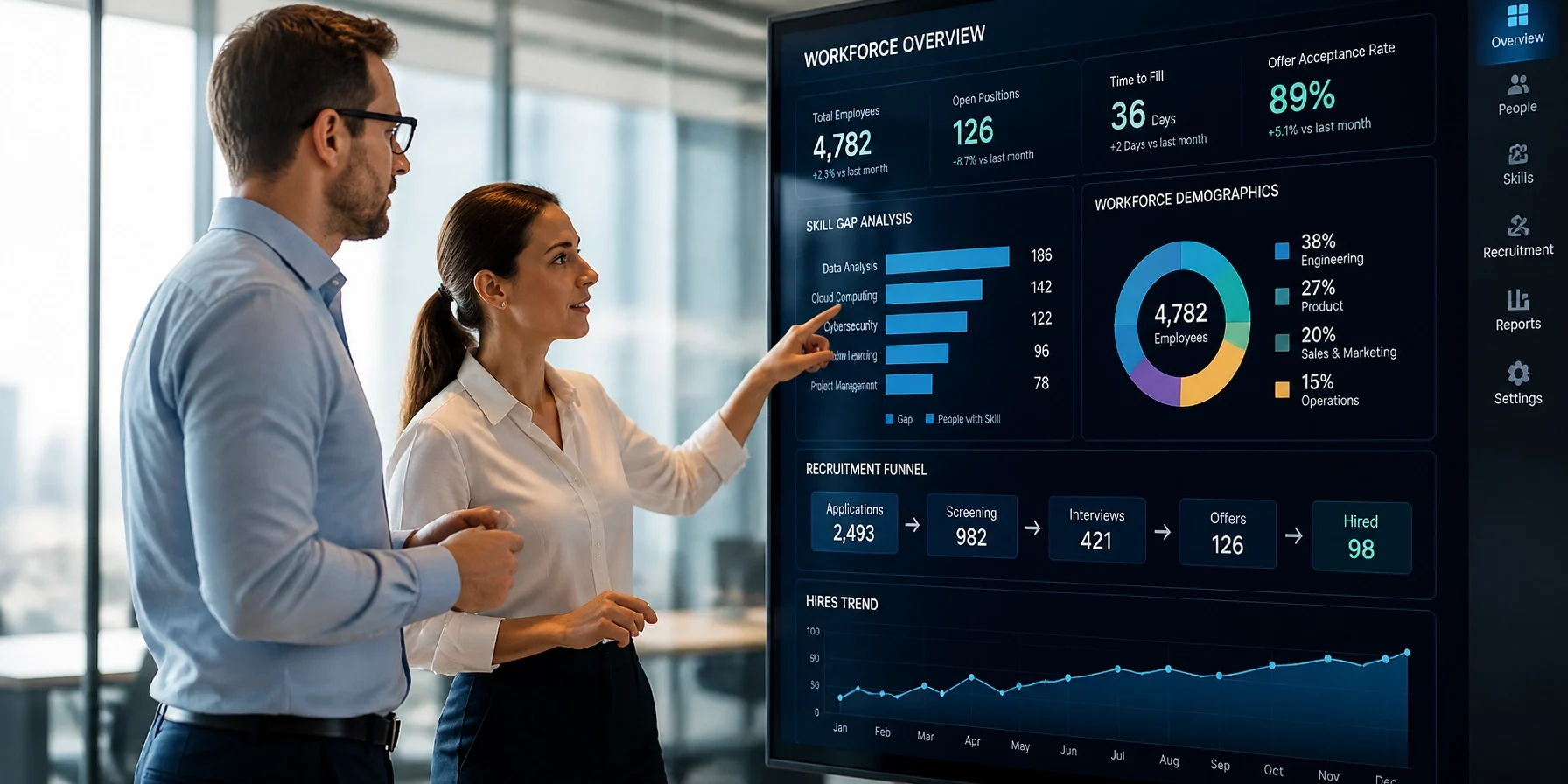
You cannot manage what you cannot measure. The third step involves a rigorous audit of your current workforce capabilities. This is where data analytics dashboards become indispensable. Rather than relying on anecdotal evidence of employee performance, executives should utilize comprehensive data tools to track competencies, certifications, and engagement levels.
By implementing data-driven fixes to your workforce strategy, you can pinpoint exactly where training is needed and where external recruitment is necessary. For schools and organizations focusing on media literacy, these dashboards can track how quickly staff and students are achieving "Future Ready" benchmarks, providing an authoritative view of the program's success.
Step 4: Accessing Untapped Talent via the DOD SkillBridge Program
One of the most effective ways to attract top talent is to look where others aren't. The DOD SkillBridge program represents a goldmine for executives seeking disciplined, highly skilled, and adaptable professionals. This program allows transitioning service members to gain civilian work experience through internships or apprenticeships during their last 180 days of service.
At USA Entertainment Ventures LLC, we emphasize DOD SkillBridge recruitment as a key component of a modern workforce strategy. These individuals bring a level of leadership and technical expertise that is often missing from traditional candidate pools. Integrating veterans into roles involving media literacy, logistics, or digital infrastructure not only serves the business but also provides a meaningful path for those who have served.

Step 5: Implementation and Measuring Media Literacy Outcomes
The final step is the phased implementation of your strategy. Start with pilot programs: perhaps in a single department or a specific "Future Ready" school partner: and use the results to refine your approach. The focus here should be on outcomes: Are your employees more proficient in media literacy? Are your NIL programs meeting compliance standards?
Continuous refinement is the hallmark of a successful executive guide. As platforms and regulations evolve, so too must your workforce. Regularly reviewing your analytics dashboards ensures that your talent strategy remains aligned with the shifting landscape of the digital economy.

The Path Forward
Building a workforce strategy is an act of looking forward. By integrating advanced data analytics, focusing on emerging fields like NIL education, and tapping into unique talent pipelines like DOD SkillBridge, executives can ensure their organizations are not just surviving, but leading.
The transition to a "Future Ready" model is both a business necessity and a societal good. It prepares the next generation for the complexities of the modern world while providing businesses with the intellectual capital they need to innovate. As Dan Kost, CEO of USA Entertainment Ventures LLC, often emphasizes, the goal is to create a seamless bridge between education and the professional world, ensuring that no talent goes to waste.
To learn more about how we can help your organization build a resilient workforce, explore our consulting services or contact us today.
Contact Information:
USA Entertainment Ventures LLC
Phone: tel:+19707030102
Dan Kost, CEO





