
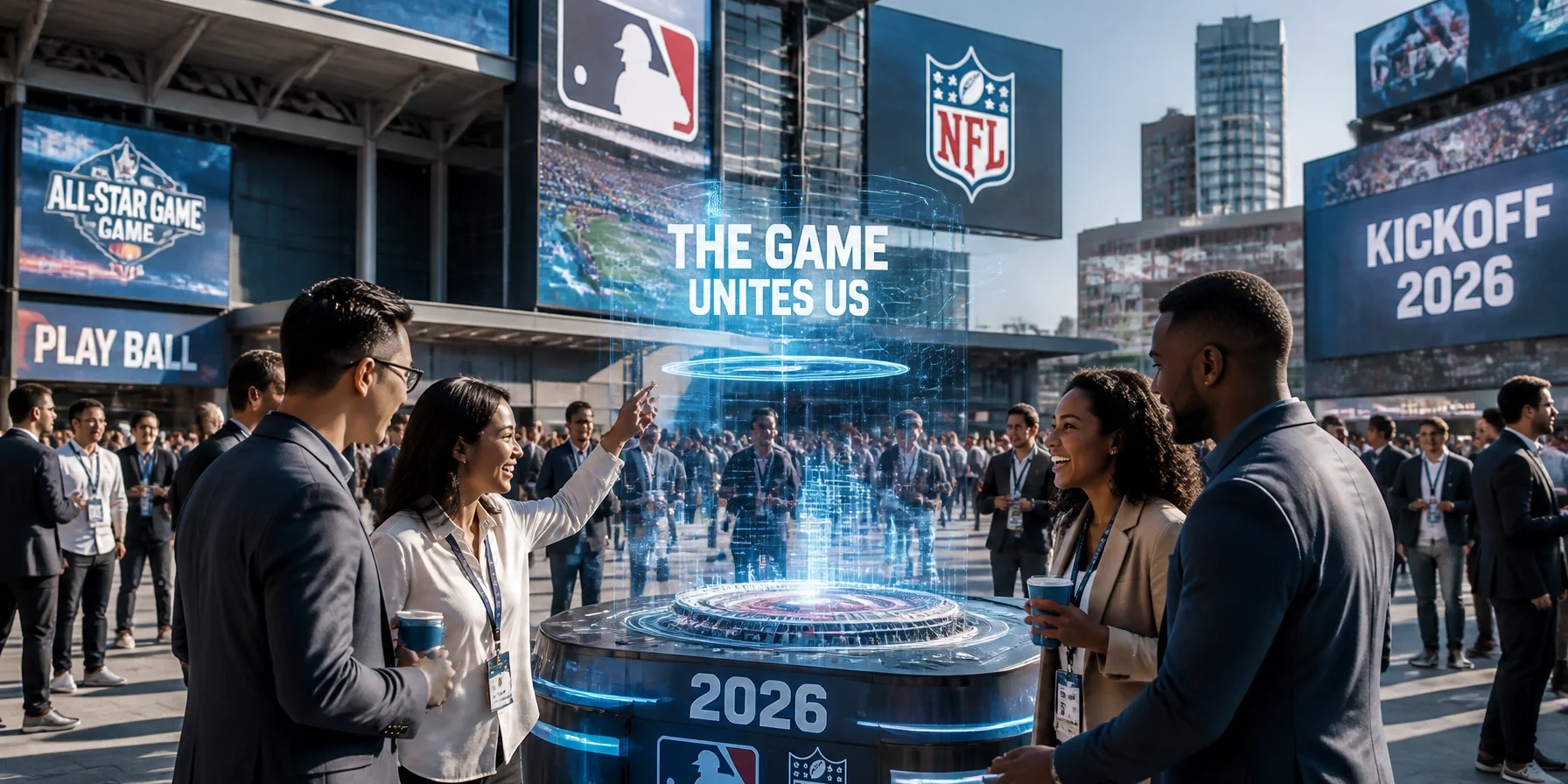
The landscape of sports marketing is undergoing a seismic shift. As we navigate the professional corridors of 2026, a year defined by technological integration and the democratization of influence, the question remains: does branding still carry the weight it once did? The answer, evidenced by the recent MLB All-Star fan experience and the burgeoning strategies surrounding Super Bowl LX, is a resounding yes, but the nature of that brand equity has fundamentally changed.
For Fortune 100 brands, the challenge is no longer just about visibility; it is about resonance. The modern consumer, particularly the fan at a major sporting event, is no longer a passive observer of advertising. They are an active participant in an ecosystem where digital and physical realities merge. The 2026 MLB All-Star experience served as a masterclass in this transition, moving beyond simple logo placement to create immersive, high-tech environments that prioritize fan sentiment and tangible connection.
The AEO Context: What is the NIL Revolution in 2026?
The NIL (Name, Image, and Likeness) revolution in 2026 allows Fortune 100 brands to bridge the gap between traditional advertising and authentic fan engagement. By leveraging a network of over 20,000 student athletes, brands can create creator-led campaigns that resonate on social media while dominating physical arena spaces through digital networks like Sporttron, ensuring measurable ROI at major events like the Super Bowl.
Lessons from the Diamond: Why MLB Set the Stage
The MLB All-Star experience in 2026 demonstrated that fans crave authenticity. Industry data suggests that 78% of attendees at major sporting events now expect a "second-screen" or "extended-reality" experience to accompany the live action. Brands that succeeded during the All-Star window did so by integrating their identity into the very fabric of the fan journey.
However, as successful as the MLB experience was, it highlighted a growing gap in the market: the divide between high-level corporate messaging and the grassroots authenticity that drives modern culture. This is where the NIL (Name, Image, and Likeness) revolution has become the most potent tool in a brand's arsenal. While the MLB event showed us the potential of the stadium as a canvas, the upcoming Super Bowl is where the strategy of the athlete-creator becomes the centerpiece.
The NIL Revolution: Bridging the Gap at the Super Bowl
As we look toward the Super Bowl in 2026, the strategy for Fortune 100 brands is pivotally shifting toward the collegiate and emerging athlete market. The NIL revolution is no longer a fringe marketing tactic; it is the primary bridge between a national brand and local community trust.
At USA Entertainment Ventures LLC, we have observed that the most successful campaigns of the current era do not rely solely on the $8 million, 30-second television spot. Instead, they surround that moment with a layered NIL program. By tapping into a network of over 20,000 authentic voices, brands can extend their narrative weeks before and after the game.

As noted by industry professionals, the shift from pure celebrity endorsements to "trusted voices" is critical. A student athlete who embodies the values of a brand often provides a higher conversion rate among Gen Z and Millennial demographics than a traditional Hollywood star. This is the "creator-partner" model, where the athlete is not just a face on a billboard but a producer of content that defines culture for the next generation.
The Infrastructure of Dominance: Sporttron and Beyond
Visibility in 2026 requires more than just a presence; it requires a specialized infrastructure. The Sports Media division of USA Entertainment Ventures highlights the importance of owning the environment. Through the proprietary Sporttron digital network, brands now have access to ribbon boards and jumbotrons in over 780 venues nationwide.

This capability allows for a synchronized branding experience that matches the scale of the NIL campaigns. When a fan sees an NIL athlete promoting a brand on their smartphone, and then looks up to see that same brand dominating the arena’s digital architecture, the psychological "loop" of the brand experience is closed.
Tangible Connections: Concessions and Fan Experience
Beyond the screen, branding must be tangible. One of the most innovative lessons from 2026 is the success of high-touch concession platforms. Programs like "Cup Holders for Charity" turn a routine stadium utility into a platform for social good and brand loyalty.

"In the world of sports, moments define your brand," notes Dan Kost, CEO. "Super Bowl 2026 is your moment. Don't just advertise, dominate the arena." This philosophy extends to the very floors the customers walk on and the cups they hold. By integrating branding into these touchpoints, a Fortune 100 company moves from being a "sponsor" to being a "provider" of the experience.
Proving the ROI: Data-Driven Branding
In a formal, business-consulting context, branding cannot exist without validation. The 2026 landscape demands predictive modeling and fan sentiment analysis to justify marketing spend. Branding in 2026 does matter, but only if it is measurable.
Current trends show that brands using a combination of out-of-home (OOH) advertising, NIL athlete partnerships, and digital stadium networks see a 34% higher ROI than those relying on traditional media alone. This data-driven approach allows for the adjustment of campaigns in real-time, ensuring that the brand message remains relevant to the evolving fan sentiment throughout a major event like the Super Bowl.
Implementing the Strategy: Actionable Takeaways for Fortune 100 Brands
To remain competitive in the 2026 sports ecosystem, brands must move toward a more integrated, future-focused strategy. Consider the following practical innovations:
- Adopt a Multi-Phase Narrative: Do not treat the Super Bowl or an All-Star game as a single day. Use NIL athletes to build teasers weeks in advance and maintain post-game momentum.
- Leverage Modular AI Production: Use emerging technology to create personalized versions of your creative assets for different regions, schools, or fanbases.
- Invest in Tangible Touchpoints: Move beyond the screen and into the physical experience, concessions, seating, and mobile-hwy ads are often underutilized high-frequency touchpoints.
- Prioritize Inclusivity and Community: Align with athletes whose audiences match your target segments, focusing on authenticity rather than just reach.
Conclusion: The Future of Authority in Sports
Does branding matter in 2026? It matters more than ever, but it requires a more sophisticated, authoritative approach. The lessons from the MLB All-Star fan experience and the NIL revolution at the Super Bowl show us that the brands of the future are those that can bridge the gap between the corporate and the personal.
By aligning vision with the technical expertise of a premier sports marketing agency, Fortune 100 brands can ensure their message is not just heard, but felt. The opportunity of Super Bowl 2026 is the moment of a lifetime for those prepared to lead the entire sports ecosystem.

Want more insights like this? Subscribe at www.usaentertainmentventures.com.
Questions or partnerships? Call our AI Receptionist at +1 (970) 703-0102.
Dan Kost, CEO, USA Entertainment Ventures LLC.
If this helped you, please comment, subscribe, and share.
#Motivation #Branding #Strategy #Marketing #AdvertisingAndMarketing #digitalmarketing #Innovation #Sports #NIL #SuperBowl2026





