
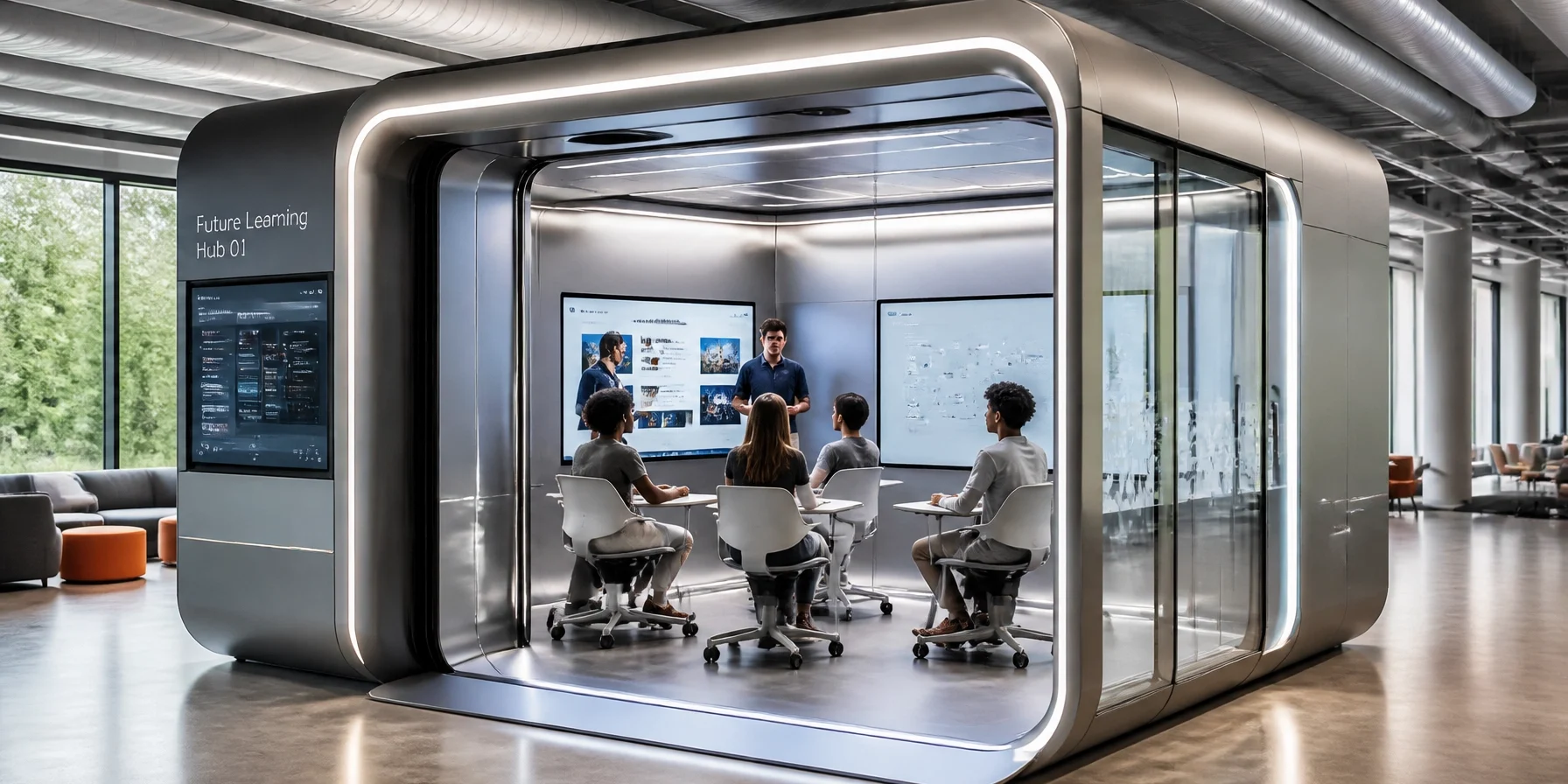
For decades, the "computer lab" was a sanctuary of beige towers, tangled VGA cables, and the rhythmic clicking of mechanical keyboards. It was a centralized destination: a room you visited to "do technology." However, as we navigate the landscape of 2026, the physical infrastructure of education and professional development has undergone a radical transformation. The static, row-based laboratory is being replaced by a more agile, decentralized successor: the Infrastructure Pod.
At USA Entertainment Ventures LLC, we observe this shift not just as a design trend, but as a fundamental realignment of how we prepare the modern workforce. Whether in high schools, corporate offices, or through our specialized DOD Skillbridge recruitment initiatives, the transition to modular "Pods" is redefining career pathways in logistics, cybersecurity, and content creation.
The Evolution of Learning Environments
The decline of the traditional computer lab is rooted in the ubiquity of mobile computing. According to 2026 educational design trends, the priority has shifted from providing hardware to providing high-density connectivity and flexible environments. Today’s students and professionals often possess more computing power in their pockets than the desktop arrays of yesteryear.
"The goal is no longer to house the machine, but to empower the user," notes one prominent facility planning expert. This sentiment is echoed across the industry, where "invisible technology": integrated power, high-speed Wi-Fi, and embedded displays: has become the standard. Infrastructure Pods are the physical manifestation of this philosophy. They are modular, reconfigurable zones that can transform from a private concentration nook to a collaborative group hub in minutes.
Logistics: The Physical Chain of the Digital World
When we discuss "Pods," we aren't just talking about furniture; we are talking about a logistical triumph. The shift toward modular infrastructure has opened significant career pathways in the logistics sector. Managing the lifecycle of these units: from manufacturing and global shipping to on-site assembly and maintenance: requires a sophisticated understanding of the modern supply chain.

Logistics professionals are now tasked with moving "smart infrastructure." This involves more than just freight; it requires coordination between hardware suppliers, IT installers, and facility managers. Careers in this field are evolving from simple coordination to complex systems analysis.
- Logistics Coordinators are now managing the deployment of modular labs across multiple sites.
- Inventory Analysts are leveraging AI to predict maintenance cycles for pod components.
- Supply Chain Managers are ensuring that the "brain" of the pod: the internal servers and connectivity hubs: remains secure and functional during transport.
For those transitioning through programs like DOD Skillbridge, the logistics of physical infrastructure offers a seamless bridge between military precision and corporate efficiency.
Cybersecurity: Building a Fortress in a Box
As infrastructure becomes more distributed, the attack surface expands. This is where the Pod-based model proves its worth in the cybersecurity arena. Unlike the open networks of traditional computer labs, modern Pods can be designed as "sandboxes": isolated, secure environments perfect for high-stakes testing and training.

Cybersecurity is no longer a peripheral IT concern; it is a business-critical function. In 2026, the demand for Supply Chain Cybersecurity Experts is at an all-time high, with salaries for specialists often ranging from $70,000 to $150,000. These professionals are responsible for securing the data flows that power modular labs.
The Pod serves as a controlled environment where cybersecurity trainees can practice incident response, penetration testing, and risk assessment without risking the integrity of the broader corporate network. By integrating hardware security modules directly into the Pod’s infrastructure, we create a "Fortress in a Box." This specialized focus is essential for protecting fleet management systems, warehouse automation, and sensitive educational data.
Content Creation: The Modular Studio
The third pillar of this infrastructure revolution is content creation. The traditional computer lab was a place to consume information; the Pod is a place to produce it. We are seeing a surge in "Content Pods": miniature, sound-dampened studios equipped with high-end cameras, lighting, and podcasting equipment.

This modular approach allows organizations to turn any corner of an office or school into a professional media suite. Zoomedia, a division within the USA Entertainment Ventures network, recognizes that content creation is now a "modular layer" for every career. Whether you are a logistics expert recording a tutorial on supply chain security or a student building a personal brand, the Pod provides the professional environment necessary for high-quality output.
Career pathways in this sector are no longer limited to "influencers." We are seeing growth in:
- Modular Infrastructure Educators: Professionals who design and record curricula for remote learning.
- Digital Content Architects: Experts who manage the software and hardware integration of these media pods.
- Technical Storytellers: Individuals who bridge the gap between complex industry data and accessible, engaging narratives.
Bridging the Gap with DOD Skillbridge
At USA Entertainment Ventures LLC, we believe that physical infrastructure should serve a larger societal good. This is why our focus on Pods is intrinsically linked to our work in veteran recruitment and career development. The DOD Skillbridge program is a vital tool for transitioning service members, providing them with the civilian training needed to excel in these emerging fields.
The modular nature of Pods mirrors the versatility and adaptability found in military service. By training veterans in the logistics, security, and creative use of these units, we are not just filling jobs; we are building the next generation of workforce leaders. Our "Amazon-powered Esports & Cloud Learning Labs" initiative is a prime example, where we bring state-of-the-art infrastructure into high schools and training centers to unlock new career opportunities.
Conclusion: The Return on Instruction
The transition from computer labs to Infrastructure Pods is not merely a change in furniture; it is a change in philosophy. It is an investment in "Return on Instruction" (ROI). By prioritizing flexibility, connectivity, and specialization, we ensure that our physical spaces keep pace with our digital ambitions.
As we look toward the future, the integration of AI-driven logistics, zero-trust cybersecurity, and modular content creation will continue to accelerate. Organizations that embrace these changes will find themselves at the forefront of innovation, while those clinging to the centralized labs of the past may find themselves left behind.
We invite you to consider how your organization can adopt these practical, achievable innovations. Whether you are looking to enhance your workforce development programs or transition into a high-tech career, the Pod is the platform for your next breakthrough.
For more information on our management services and recruitment initiatives, visit USA Entertainment Ventures LLC.





