
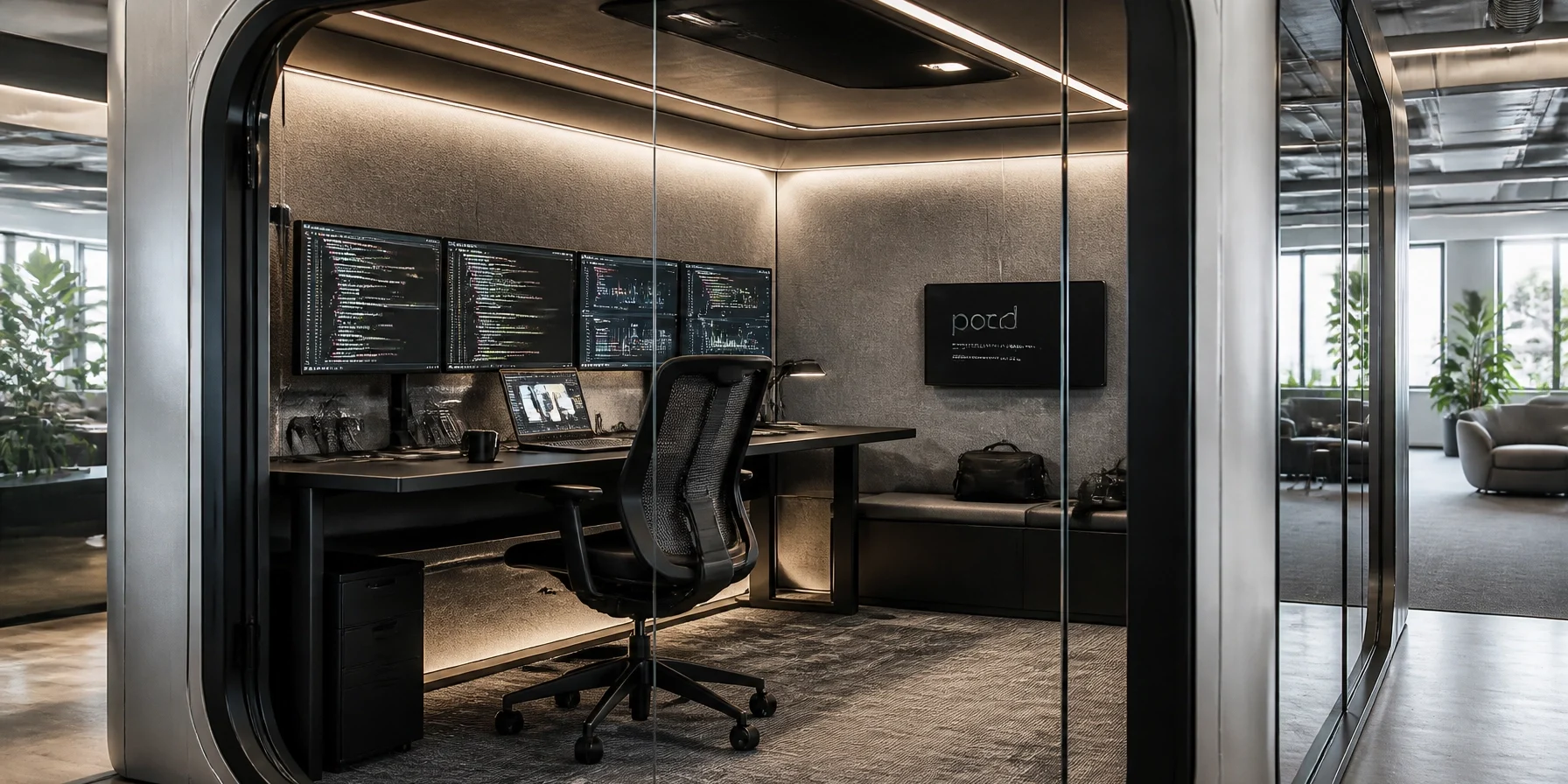
The traditional computer lab: a static room filled with rows of uniform desks and aging desktop towers: is rapidly becoming a relic of the past. As technology education evolves to meet the demands of a high-speed, specialized global economy, the physical infrastructure supporting it must also adapt. Enter the "pod": a modular, self-contained, and purpose-built environment that is redefining how we train for the careers of tomorrow.
At USA Entertainment Ventures LLC, we recognize that managing modern business development and specialized recruitment, particularly within our government and human resources divisions, requires a departure from one-size-fits-all infrastructure. Pods represent a significant shift toward flexible, career-aligned training spaces that provide the fidelity and security required by today’s most critical industries.
The Evolution of Physical Infrastructure in Tech Education
Historically, computer labs were designed for general digital literacy. They were optimized for word processing, basic internet browsing, and software introductory courses. However, the modern workforce requires more than basic literacy; it requires immersive environments that mirror real-world operations.
Traditional labs are often constrained by the building’s existing HVAC, power, and networking capabilities. Upgrading these facilities is frequently a multi-month, capital-intensive endeavor. In contrast, pods are prefabricated units that integrate compute, cooling, power, and security into a single deployable system. This modular approach allows organizations to deploy high-tech environments rapidly, often in spaces where traditional construction would be unfeasible.
Cybersecurity: The "Sandbox-in-a-Box"
One of the most compelling arguments for pod-based infrastructure lies in cybersecurity training. Traditional institutional networks are, by design, connected and often vulnerable. Training students to conduct "live-fire" exercises: such as malware analysis or penetration testing: on a shared network presents an unacceptable level of risk.

Pods provide a "sandbox-in-a-box" environment. Because they are physically and logically isolated from the main building network, they allow for high-risk simulations without endangering the core infrastructure. A dedicated cybersecurity pod functions as a miniature Security Operations Center (SOC), providing:
- Acoustic isolation for team-based coordination.
- Dedicated servers for localized attack/defense scenarios.
- Specialized network segments that allow Red and Blue teams to compete in a controlled, high-fidelity environment.
This isolation is not just a safety feature; it is a pedagogical requirement. By simulating a real SOC, pods prepare learners for the high-pressure environment of threat hunting and incident response.
Logistics and Operations: Forward-Deployed Learning
The field of logistics has undergone a digital transformation that requires complex data management and real-time decision-making. Standard computer labs rarely have the screen real estate or the data integration capabilities to simulate a modern logistics hub.

Modular pods can be configured with triple-monitor arrays and live dashboards to mirror global shipping routes and supply chain KPIs. Furthermore, the portability of pods allows them to be "forward-deployed." An organization can place a training pod directly at a port, a warehouse, or a manufacturing hub. This proximity allows for a seamless transition between theoretical training and operational reality, significantly reducing the "ramp-up" time for new hires.
For initiatives like the DOD Skill Bridge recruitment program, this is particularly valuable. Transitioning service members can train on the exact software and hardware configurations they will encounter in civilian logistics roles, ensuring their skills are immediately applicable to industry standards.
Content Creation: Beyond the Makeshift Studio
As the creator economy expands, content creation and media literacy have become essential components of tech education. While a traditional lab might allow for basic video editing, it lacks the specialized infrastructure required for professional-grade audio and video production.

Content creation pods are built as turnkey studios. They feature:
- Integrated acoustic treatment to ensure studio-quality sound.
- Lighting rigs and camera mounts for professional broadcasting and streaming.
- High-performance computing optimized for 4K video rendering and real-time encoding.
By providing a controlled environment, these pods allow students to master the technical nuances of media production: from sound engineering to live-stream management: in a space designed for excellence.
Why the Transition to Pods is Inevitable
The shift from computer labs to pods is driven by three primary factors: scalability, specialization, and career alignment.
- Scalability: Pods can be added incrementally. An institution does not need to renovate an entire wing to add a cybersecurity program; they can simply install a pod.
- Specialization: Each pod can be tuned to a specific industry. A pod for media production has vastly different hardware requirements than a pod for manufacturing simulations.
- Career Alignment: Pods provide the "industry-proximate" training that employers demand. They move education away from the abstract and toward the functional.
Conclusion: Building for the Future
As we look toward the future of technical training and business development, the physical infrastructure of our learning spaces must reflect the complexity of the careers they support. Pods are more than just modern furniture; they are sophisticated edge-computing nodes that provide the security, flexibility, and fidelity required for modern Tech Education.
At USA Entertainment Ventures LLC, we remain committed to strategies that bridge the gap between military service and civilian industry, and between education and employment. Embracing modular physical infrastructure is a critical step in ensuring that the next generation of professionals: whether in logistics, cybersecurity, or content creation: is prepared for the challenges of an ever-evolving digital landscape.
The era of the row-and-file computer lab is ending. The era of the specialized, high-performance pod has begun.





