
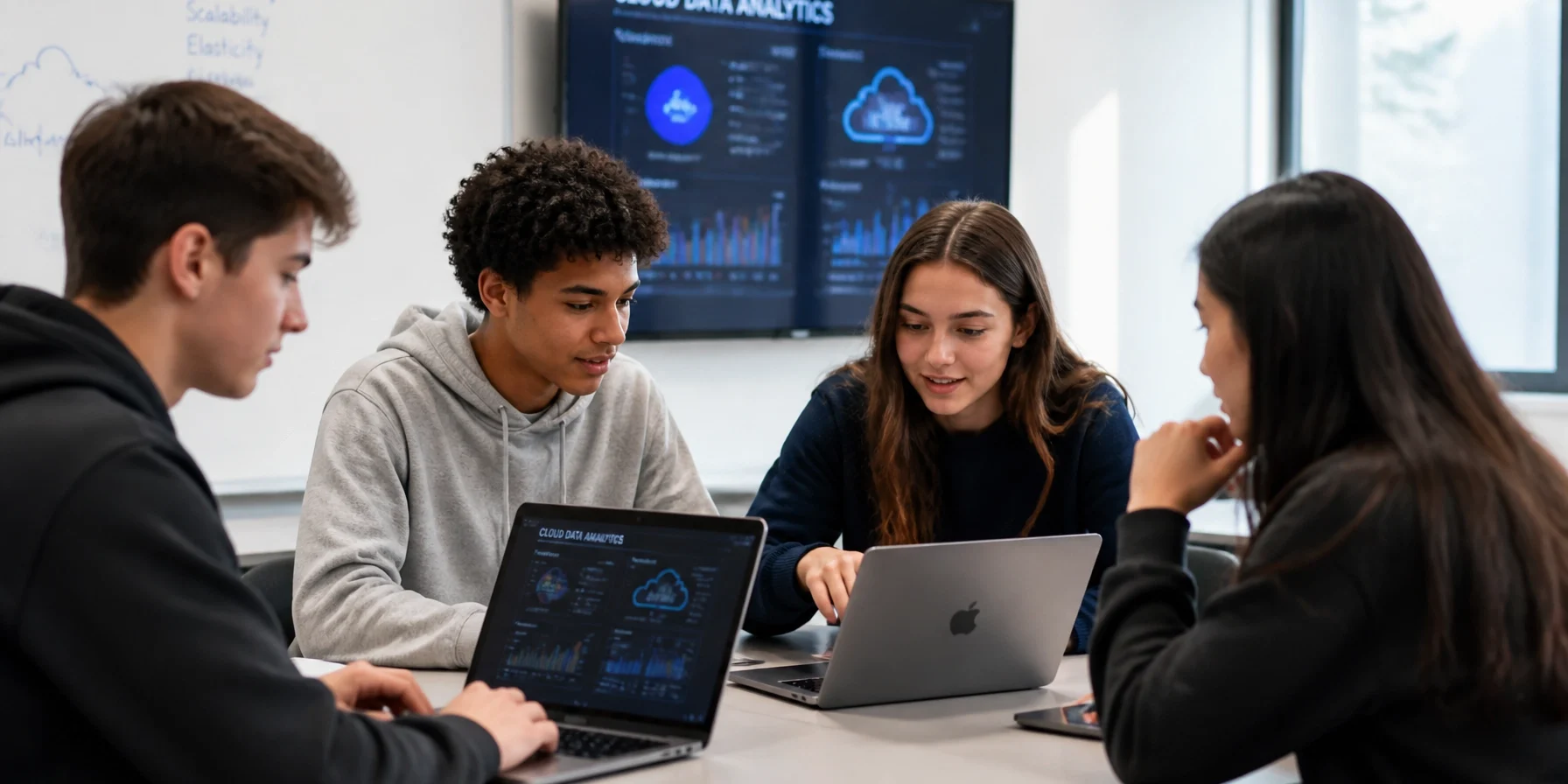
In today’s hyper-competitive digital economy, the race for top-tier talent in Cloud Computing, Artificial Intelligence (AI), and Data Analytics has never been more intense. Organizations across all sectors are transforming how they operate, yet many leaders face a persistent bottleneck: finding qualified professionals who possess both foundational technical skills and practical workplace readiness.
Traditional recruitment strategies: relying heavily on campus recruiting at the university level or poaching experienced professionals: are increasingly expensive and reactive. By the time a student graduates with a four-year degree, the technology stack they studied may have already evolved. To secure a sustainable competitive advantage, forward-thinking business leaders and human resources professionals are looking much earlier upstream. Engaging with students at the high school level is no longer just a corporate social responsibility initiative; it is a vital business strategy for building a resilient, future-ready talent funnel.
At USA Entertainment Ventures LLC, we understand that sustainable organizational growth relies on proactive management and robust pipeline development. Whether looking at business consulting or specialized workforce strategies, anticipating future skills requirements is paramount. To explore how comprehensive business solutions can support your organization's growth, visit our services page.
The Cost of Inaction: Why Waiting Until Graduation Puts You at Risk
For years, corporate talent acquisition has operated on a just-in-time model. Companies wait until a vacancy opens, post a job description, and compete in a crowded market for active job seekers. In emerging technological domains like AI and cloud infrastructure, this approach carries significant financial and operational risks.
According to workforce development studies, the demand for specialized cloud and data analytics roles continues to outpace the supply of traditional university graduates. When companies delay talent engagement until higher education or post-graduation, they encounter several critical hurdles:
- Talent Scarcity and Salary Inflation: Competing for experienced professionals drives up compensation costs while yielding diminishing returns on specialized skill alignment.
- Skill Mismatch: Rapid advancements in machine learning and cloud architecture mean university curricula often struggle to keep pace with enterprise software standards.
- Extended Time-to-Hire: Critical digital transformation projects stall because internal teams lack the junior support needed to scale data pipelines and cloud migrations.
As industry analysts frequently note, organizations that rely solely on reactive hiring find themselves continually playing catch-up. By shifting engagement earlier into secondary education, businesses can actively shape the competencies of tomorrow’s workforce rather than simply bidding for them later. Learn more about our organizational philosophy and leadership approach on our about page.
Early Outreach as a Strategic Investment
Investing in high school outreach allows companies to introduce students to Cloud, AI, and Data Analytics before career paths become rigid. High school is a formative period where students form impressions about what careers are accessible and exciting to them.

When businesses invest in early outreach, they achieve three major outcomes:
- Brand Affinity and Early Recruitment: Companies that establish a presence in local schools build strong brand recognition among students, educators, and parents, positioning themselves as employers of choice.
- Curriculum Alignment: By partnering with educators, companies ensure that students gain exposure to relevant tools: such as basic Python, SQL, cloud fundamentals, and ethical AI frameworks: that match actual industry demands.
- Diversity and Inclusion: Early intervention helps dismantle socioeconomic and demographic barriers to STEM careers, drawing a wider, more diverse talent pool into technology fields.
As educational researchers point out, early, consistent exposure is the single most effective predictor of whether a student will pursue a rigorous technical career path.
Actionable Frameworks: How Businesses Can Connect with High Schools
Transforming high school outreach from an occasional guest lecture into a structured talent funnel requires a deliberate, step-by-step approach. Busy business leaders do not need to build educational programs from scratch; instead, they can leverage existing structures.
1. Adopt "Role-Backward" Design
Begin by identifying the entry-level technical roles your organization will need in three to five years: such as junior data analysts, cloud support technicians, or ML-ops assistants. Work backward from those roles to identify the foundational skills required, then share these insights with local Career and Technical Education (CTE) directors and guidance counselors.
2. Form Sustainable Educational Partnerships
Move beyond one-off career day visits. Establish recurring relationships with local high schools and regional STEM academies. Co-design short, modular learning units (such as a two-week introduction to data analytics or cloud basics) that teachers can seamlessly integrate into existing math or computer science curricula.
3. Support Teacher Professional Development
Teachers are the force multipliers of any educational ecosystem. Providing educators with access to industry workshops, foundational cloud certifications, and modern learning resources ensures they feel confident teaching rapidly evolving technological concepts.
Real Work-Based Learning: Internships, Apprenticeships, and Mentorship
Classroom exposure must be paired with real-world application. High school juniors and seniors thrive when they can apply theoretical concepts to tangible projects.

Forward-thinking companies are successfully deploying several practical work-based learning models:
- Structured High School Internships: Scoping manageable, meaningful summer or part-time projects: such as maintaining basic business intelligence dashboards or assisting with cloud resource monitoring: gives students invaluable practical experience.
- Mentorship Pods: Employee volunteer programs where technical staff commit an hour per month to review student projects, answer questions, and guide school coding clubs.
- Datathons and Hackathons: Hosting weekend challenges where students use anonymized datasets or sandbox cloud environments to solve real-world business scenarios.
These initiatives demystify the corporate world and give students the confidence to step straight from high school into technical apprenticeships or entry-level roles.
Building a Sustainable Talent Ecosystem for Tomorrow
The transition toward a fully digitized economy requires businesses to rethink how talent is cultivated. Waiting for the market to supply ready-made professionals is no longer a viable long-term strategy for growth in Cloud, AI, and Data Analytics.

By investing in high school outreach today, organizations secure more than just future employees: they help build a thriving, capable local economy. Proactive workforce management bridges the gap between academic theory and enterprise reality, ensuring that your business remains innovative, agile, and well-staffed for decades to come.
To discuss how our team can help your organization design effective management and workforce strategies, reach out to us directly through our contact page.





