
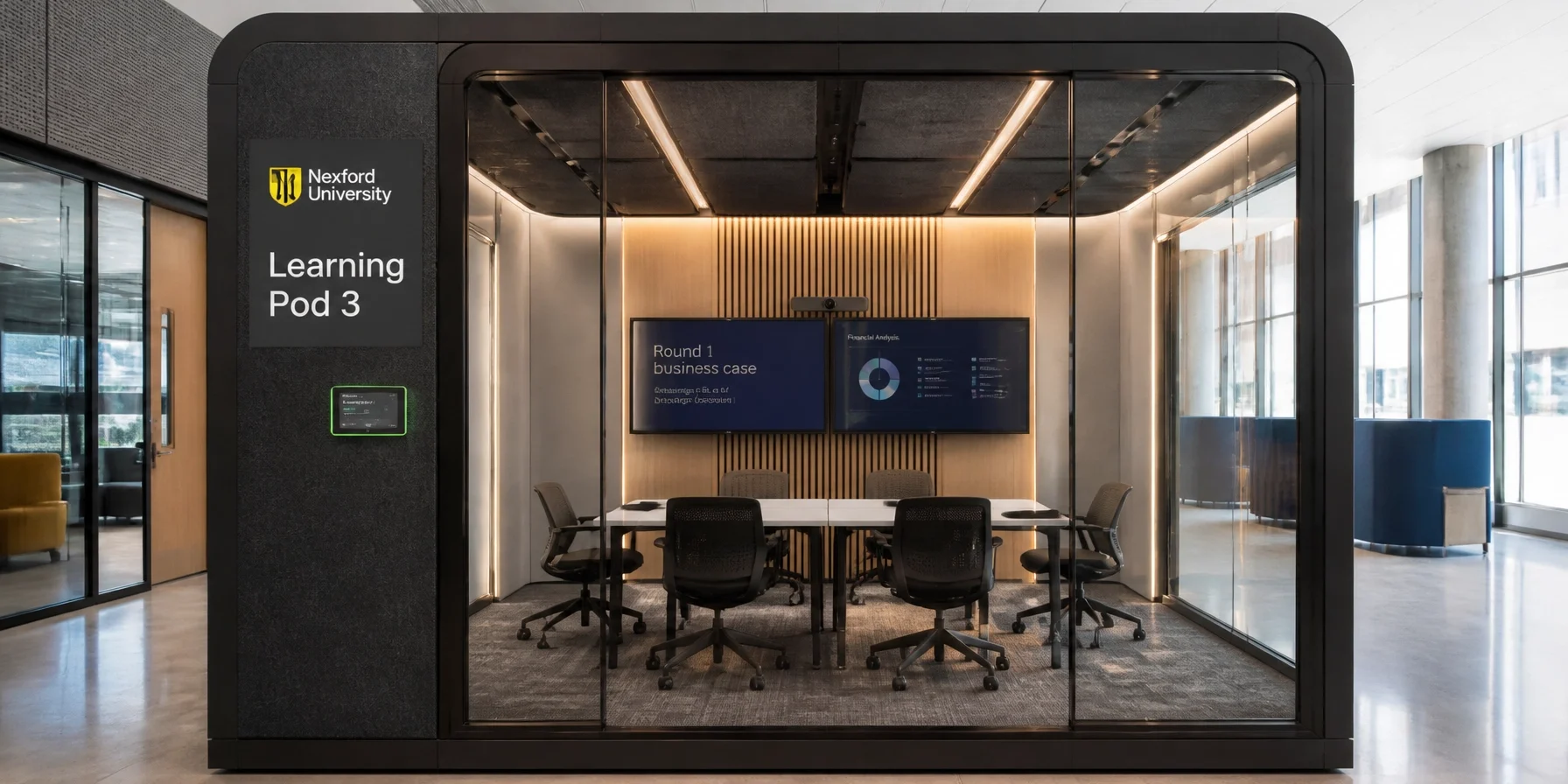
Remember the classic, nostalgia-drenched computer lab? Picture rows of identical beige towers, sticky keyboards that had survived a decade of spilled energy drinks, and that unmistakable hum of 40 desktop fans trying to lift off into orbit. It was the gold standard of tech education for decades. But let’s be honest: trying to train tomorrow’s elite workforce in a generic room of desktop PCs is a bit like teaching someone to pilot a fighter jet in a flight simulator from 1998.
Times have changed, and so has our Physical Infrastructure. Across institutions and progressive organizations, modular pods are officially replacing old-school computer labs. These self-contained, high-performance powerhouses are transforming how students and professionals train for the real world. Let’s dive into why these compact workspaces are taking over and how they are supercharging career pathways in logistics, cybersecurity, and content creation.
What Exactly is a Pod? (And No, We Don’t Mean Pod Coffee)
Before we get ahead of ourselves, let’s define the hardware. A pod in this context isn’t a capsule hotel or an espresso pod. It is a purpose-built, modular workspace engineered for a specific professional workflow.
Instead of a one-size-fits-all room where every student gets the exact same generic PC, pods are standardized on the outside and custom-tailored on the inside. Need a mini Security Operations Center? Drop in a cyber pod. Need a global shipping command hub? Slide in a logistics pod. They save space, slash maintenance headaches, and: best of all: they actually resemble the environments people will work in once they graduate.
For professional guidance on modernizing operational spaces and organizational design, exploring expert management consulting services can help bridge the gap between legacy setups and future-ready infrastructure.
Cybersecurity Pods: Where Playing Hacker is Encouraged

Let’s start with cybersecurity. In a traditional computer lab, running live penetration tests or simulating a ransomware attack on the shared campus network is a quick way to get uninvited from the university network forever.
Enter cybersecurity pods. These isolated environments act as mini Security Operations Centers (SOCs). They feature sandboxed networks and specialized toolsets that allow trainees to simulate large-scale data breaches, analyze malware, and practice incident response without risking the entire organizational grid.
Instead of reading textbooks about network vulnerabilities, students in cyber pods are actively defending simulated infrastructure in real time. It’s hands-on, high-stakes learning without the catastrophic collateral damage.
Logistics Pods: Global Domination from a Mini Command Center

Next up is logistics. Modern supply chains move at lightning speed, involving complex inventory flows, international freight tracking, and real-time route optimization. Putting students in front of a standard word-processing terminal doesn't quite cut it when they need to master global trade networks.
Logistics pods act as miniature command centers. Equipped with multi-monitor setups, touch interfaces, and live global tracking dashboards, these pods mimic the actual control rooms of major shipping hubs.
Trainees learn how to reroute cargo around bottlenecks, manage inventory fluctuations, and optimize supply-chain software in a space that looks and feels like an active corporate logistics floor. It turns abstract theories into visceral, operational decision-making.
Content Creation Pods: Hollywood Studio Power in a Compact Booth

Finally, let's talk about content creation. Whether it's high-end podcasting, 4K video editing, or live streaming, today's digital media creators need more than a basic webcam and a microphone with an identity crisis.
Content creation pods are turn-key media studios packed into a space roughly the size of a large executive office. They come fully loaded with acoustic foam, precision ring lights, high-end GPUs for lightning-fast video rendering, and pre-calibrated audio mixing gear.
Instead of wasting the first twenty minutes of a class troubleshooting audio drivers or hunting down cables, creators step inside and immediately start producing professional-grade media. It eliminates setup friction and lets talent focus purely on the craft.
The Future of Physical Infrastructure is Modular
The shift from sprawling, generic computer labs to sleek, purpose-built pods isn't just an aesthetic upgrade: it’s a complete revolution in how we approach learning and skill development. By mirroring actual professional environments in logistics, cybersecurity, and content creation, pods deliver unmatched ROI, superior security, and vastly better educational outcomes.
As industries continue to evolve, the spaces where we train our workforce must evolve right along with them. It turns out that upgrading your physical infrastructure is the smartest shortcut to the future.





