
For years, the standard setup for training and tech work looked pretty much the same everywhere: a big room, rows of desktop computers, harsh lighting, and enough cables to make anyone nervous about tripping. Back then, the classic computer lab felt modern. Now, in many workplaces and learning environments, it feels more like a relic from the era when people still got excited about a fax machine.
That shift matters because the way people work has changed. Teams are more mobile, training needs change faster, and organizations want spaces that can do more than one job. A room that is only useful when twenty people are sitting at fixed computers starts to look expensive very quickly.
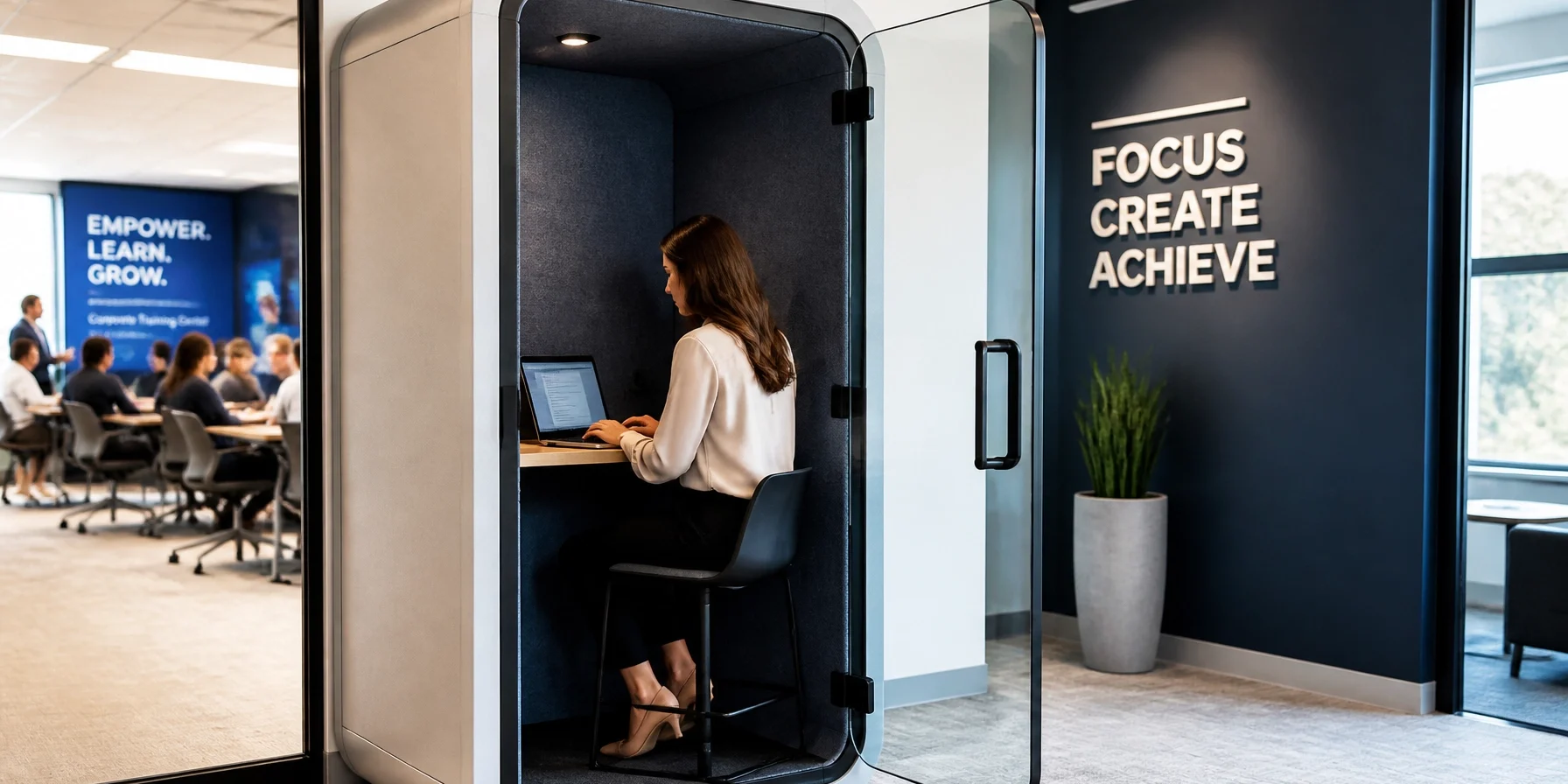
That is where pods come in. In simple terms, a pod is a self-contained, pre-fabricated workspace. Think of it as a mini-room that drops into an existing building without the drama of a full renovation. Most pods include built-in power, lighting, ventilation, and sound control. Some are designed for one person who needs quiet focus. Others fit small teams for training, collaboration, or specialized technical work. They are practical, flexible, and refreshingly free of the old computer-lab vibe.
The Hidden Inefficiencies of Traditional Computer Labs
Traditional computer labs are not exactly villains, but they do come with baggage. First, they are expensive to build and frustrating to change. A dedicated lab often needs construction work, electrical upgrades, furniture planning, and ongoing maintenance. Once all that is in place, the room becomes oddly permanent, even if the actual training program changes six months later.
Second, usage is often inconsistent. A lab may be busy during one class, one onboarding session, or one quarterly certification period, then sit empty the rest of the time like an overpriced museum exhibit. Empty square footage is still costly square footage.
Third, fixed labs are slow to adapt. If a team needs different hardware, more privacy, better acoustics, or a different layout, the answer is rarely simple. Rearranging a traditional lab can feel like performing surgery on office furniture. That is a problem in a business environment where needs shift quickly.
Workplace experts have been pointing this out for years. The broader lesson is straightforward: spaces that only do one thing tend to struggle in environments that need to do many things well.

Defining the Modular Pod Revolution
So what makes a pod different from a cubicle, a conference room, or a random corner with a desk and a prayer? The key difference is that a pod is built to function as a real, enclosed environment. It is not a partition pretending to be privacy. It is a defined space with acoustic control, ventilation, lighting, and a structure designed for focused work.
That gives pods a very specific advantage. They are plug-and-play. They can often be assembled quickly, moved when needed, and scaled without reworking an entire floor plan. Instead of redesigning a building every time a team grows or a training need changes, organizations can add or reposition pods as needed.
In other words, pods turn infrastructure into something more flexible. That is a big deal. Old-school labs ask people to adapt to the room. Pods let the room adapt to the work.
Why Pods Deliver Superior ROI and Performance
Pods are gaining traction because they solve practical problems without creating new ones. The return on investment is not just about saving money on construction, though that matters. It is also about making space more useful.
1. Incremental Scalability
Pods let organizations expand in smaller, smarter steps. Instead of building an entire new lab based on projected demand, teams can add one pod, then another, as needs become real. That reduces waste and lowers the risk of overbuilding. It is the difference between ordering exactly what you need and buying fifty folding chairs because you might host a banquet someday.
2. Better Fit for Specialized Work
Not every digital task belongs in the same room. Logistics planning, cybersecurity exercises, and content production all have different requirements. Pods can be configured around those needs.
A logistics team might use pods as focused planning stations for routing analysis, inventory coordination, or dispatch support. In fast-moving operations, a quiet environment helps people make accurate decisions without constant interruption.
A cybersecurity team may need a more controlled setting for simulations, secure testing, or incident-response drills. Pods can support separation, privacy, and concentration, all of which matter when the work is sensitive and the margin for error is small.
Content creators benefit in a different way. Editing audio, recording video, reviewing footage, or managing design projects all go better in a space with sound control and fewer distractions. Anyone who has tried to trim a podcast while listening to a nearby sales call already understands the value here.
3. Privacy, Focus, and Less Chaos
Open spaces are useful until they are not. Pods give people a place to train, meet, test, edit, or think without every background conversation becoming part of the experience. Research on workplace distraction consistently shows that noise hurts concentration and productivity. That may not be shocking news to anyone who has ever tried to focus near a ringing phone, but it is still important. Quiet spaces improve learning, retention, and task accuracy.

Real-World Applications Across Industries
The most interesting thing about pods may be how easily they fit into very different environments.
In logistics, pods can serve as compact coordination hubs. Small teams can monitor shipments, review schedules, and solve routing issues without being buried in the noise of a larger operations floor. When timing matters, fewer distractions can lead to better decisions.
In cybersecurity, pods work well as secure rooms for hands-on labs, red-team and blue-team exercises, or private review sessions. These activities require concentration and often involve controlled access. A pod provides that structure without requiring a permanent dedicated lab for every use case.
In content creation, pods can act as editing suites, recording booths, or creative review spaces. One day the space might be used for script reviews or post-production. The next day it can support virtual meetings or presentations. That kind of flexibility is hard to get from a traditional lab full of fixed stations.
Strategic Implementation: How to Make the Transition
For organizations considering the shift, the smartest first step is not to replace everything at once. It is to look at how current space is really being used.
- Audit actual usage: Find out which rooms are busy, which are mostly empty, and which spaces are doing one job when they could be doing several.
- Match pods to real work: Identify teams or programs that would benefit most from focus, privacy, or flexible configuration.
- Start small and scale intentionally: Test a few pods before making larger changes. This keeps costs manageable and helps refine the setup based on actual use.
- Support the rollout with scheduling tools: Booking systems and simple space management processes help make sure pods stay busy instead of becoming the next underused workplace trend.

Looking Ahead: The Future of Workspace Infrastructure
The bigger story here is not just that pods are replacing computer labs. It is that organizations are rethinking what physical space is supposed to do. Fixed, single-purpose rooms made sense in a more static era. Today, flexibility matters more.
Pods offer a practical middle ground between full construction and make-do improvisation. They create real working environments, support specialized tasks, and make it easier to adapt as needs evolve. That combination is why they are showing up in logistics, cybersecurity, content creation, and many other settings where focused work still needs a physical home.
The old computer lab had a good run. But if the future of infrastructure is about agility, efficiency, and spaces people actually want to use, pods are making a strong case for themselves. And unlike the old lab, they do not come with a side of buzzing fluorescent lights and a mysterious tangle of cords.





